@FEMSmicro
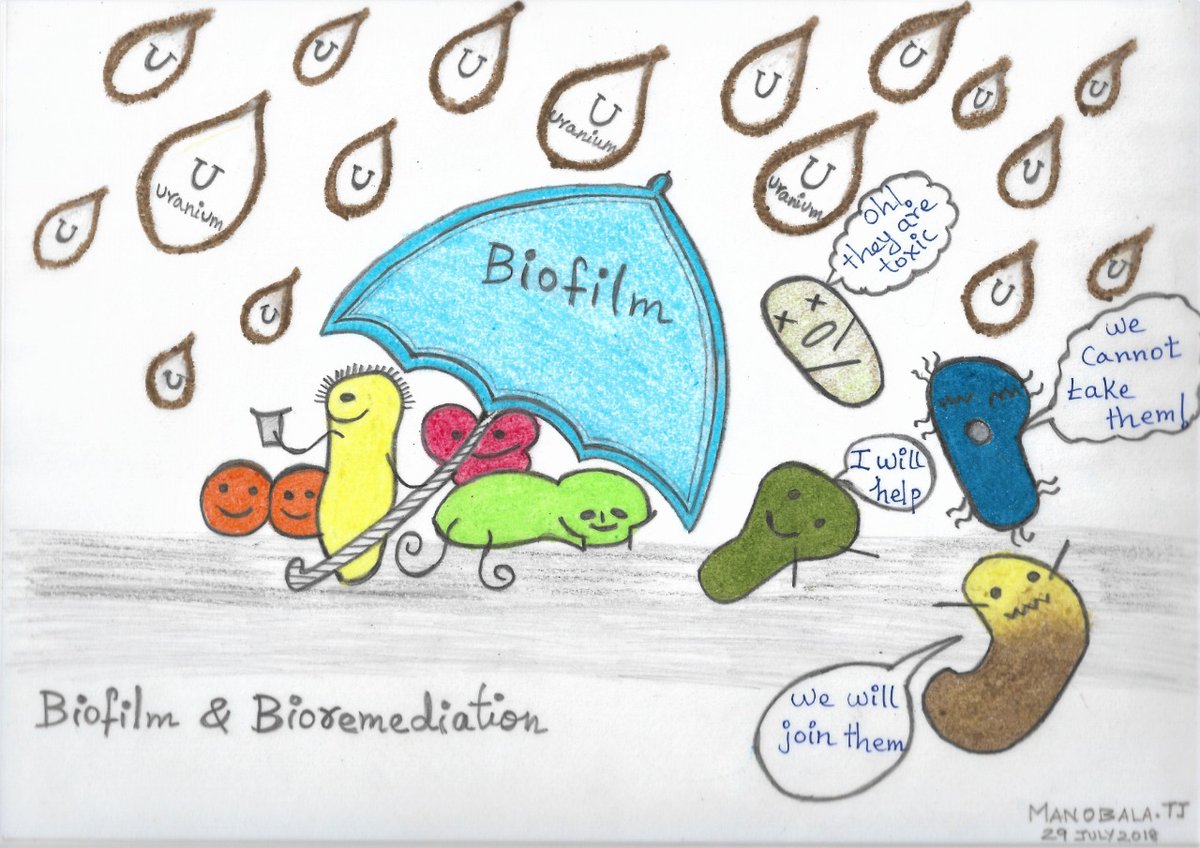
Contribution for the art competition #MicrobeArt2020#InternationalMicroorganismDay
A hand drawn oil pastels art showing how a biofilm(living in group)is beneficial over planktonic cells(free living)in tolerating harsh environments(Pic showing treatment with uranium)
We invite you to attend Dr. Swarna Rajagopalan's talk titled 'En-gendering Elections,' where she will explore how gender impacts political involvement, representation, and decision-making in electoral processes.
Zoom registration link: https://t.co/Sh6F3nvLZe
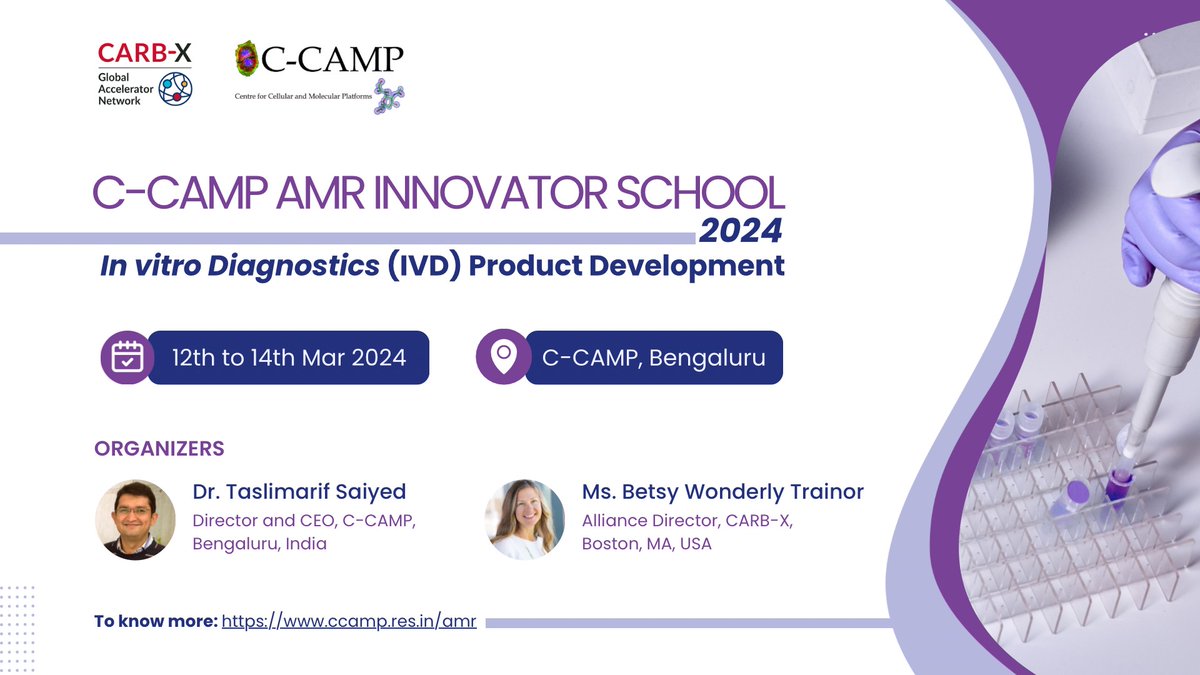
#Drumroll#StartingToday the first CCAMP @CARB_X AMR Innovator School 2024 on In Vitro Diagnostics, IVD product development.
From 12th to 14th March, our 20 participants will delve into the fundamentals of transforming a concept into a product, transitioning from academic or grant based research to full fledged ready-for-market quality compliant product development.
Sessions today - 1) Introductory module on IVD Product Development and (2) 2 modules on Product Development Process
Organized by Dr @Taslimarif, Dir-CEO C-CAMP and Betsy Trainor, Alliance Director, CARB-X
More glimpses soon!
Moving towards an India-specific database", the Department of Biotechnology (DBT) officially announced the completion of the ‘10,000 genome’ project on Tuesday (https://t.co/e6H0uUJ1nl).
Happy Science Day!
https://t.co/kG06o2XhZn
#Biotechnology#Genomics#ScienceDay
Today the UK approved a gene therapy to treat sickle cell disease and thalassemia. It’s the first treatment ever to be licensed using the gene editing tool Crispr and will have huge implications for people living with these conditions.
https://t.co/Ty4qauNT2d
Chandrayaan-3 Mission:
'India🇮🇳,
I reached my destination
and you too!'
: Chandrayaan-3
Chandrayaan-3 has successfully
soft-landed on the moon 🌖!.
Congratulations, India🇮🇳!
#Chandrayaan_3#Ch3
As its clinical study ends, @Peptilogics discusses PLG0206. The peptide breaches biofilms & aims to prevent life-threatening bacterial infections in patients undergoing knee replacements. 🧵1/3
🚨Read the story @CARB_X:
https://t.co/CS7qa7pcXe
Story by @RobinPBerghaus
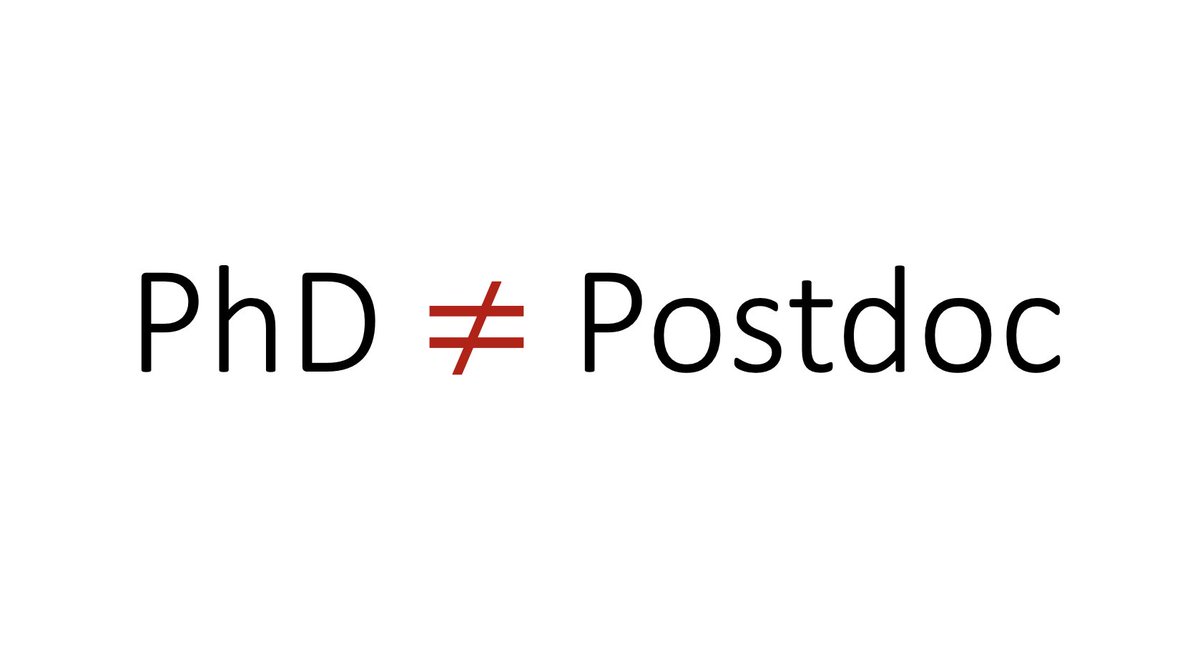
Postdoc is conceptually different from a #PhD position. Below are some key points to keep in mind before starting postdoc.
1️⃣ The harsh reality of being a postdoc:
1. Postdoc is a contractual (not educational) position. Your postdoc duties are defined by your contract & agreement with your advisor.
2. Usually, a contract is given for 1 year and renewed annually. It does NOT offer the same job security that PhD students enjoy. Be prepared to start searching for a new position in 1st year and leave anytime.
3. Postdoc is inherently a position for academia (with a few exceptions like in bio). Often, companies will assume that you’ve chosen an academic track, not industry. They’d rather hire a fresh PhD graduate from the same field than a postdoc. So, your job search outside academia may become challenging, especially if you do fundamental research.
4. If you want to be a faculty, your postdoc may require a lot more efforts than you originally expected, making it the most intense time of your life. Be prepared.
_________
2️⃣ If you take postdoc because you want to be more competitive for senior academic positions, keep in mind that:
0. Choosing the right lab & advisor is statistically MORE important than simply working hard and publishing papers during postdoc (esp. in the U.S.). However, working with an advisor who can write an excellent recommendation letter does NOT mean that you will also get prepared for a faculty life and become a great scientist. Your advisor should be a good mentor for this.
1. As the competition for faculty positions can easily reach over 1/300 and you have ~1 year before applying for positions, postdoc time often turns into a “race”. The worst part is that hard work does NOT necessarily lead to success.
2. Postdoc is NOT a must for being a faculty. Some students secure professor positions at the end of their PhDs (esp. at the top universities in the U.S.).
3. Postdoc lasts 1-3 years. If you’re a first-year postdoc and apply for faculty positions, committees will be OK with you showing your PhD work during interview. But starting from your 2nd year, they expect you to show successful postdoc results.
4. Some committees expect that a 3-year postdoc should complete as much work as a 5-year PhD student. It’s like a fast-track PhD.
5. Often (esp. in STEM), the expected number of “postdoc papers” is on average 1 paper per 1 year, unless the work is unusually complex. NOT 10 papers/year.
6. Publishing a lot of papers is normally viewed negatively. Coauthoring tens of papers will send a RED flag to the committee. For decent universities, it's (almost always) quality over quantity.
7. Doing a second postdoc is rarely helpful in landing a faculty position.
8. Ideally, postdoc should be in a different field than your PhD. Switching fields is viewed positively and can be helpful in landing a faculty position. But it is much more challenging because your time is very limited but you must do outstanding research. Also, I know many people who didn’t change fields but became faculties nonetheless.
Good luck!
#AcademicTwitter #AcademicChatter
.With the advent of rising #AMR across the globe, we are developing #phage bank in our lab & have phages against @WHO priority #pathogens. The #phages can be shared with patients in need across the globe coming through requests from @phagedirectory or any other means of contact.