No debería sorprendernos que cualquier destino del mundo, si se llena de turistas, se va a llenar de comercios-trampa y estafitas del tres al cuarto.
Se llame el sitio Benidorm, Praga, Kyoto o la puñetera base de Gabriel de Castilla en la Antártida, si se diera el caso.
Today we're announcing ESMFold2, an open scientific engine to power prediction, design, and discovery across protein biology.
The new model delivers state of the art performance on protein interactions, especially antibodies, a critical modality for therapeutics.
We have designed and validated miniprotein binders and single chain antibodies across five therapeutic targets that are important in cancer and immunology. We are seeing very high success rates, and affinities at levels consistent with therapeutic activity.
We’re also releasing an atlas of 6.8 billion proteins, and 1.1 billion predicted structures.
ESMFold2 is built on a state of the art language model that has been trained on billions of protein sequences.
A world model of protein biology emerges through language modeling.
We’ve used the techniques of mechanistic interpretability developed to understand large language models to understand the concepts ESM uses to represent proteins.
The model’s representation space has a compositional organization of features across scales, levels of complexity, and abstraction, that reflects and mirrors the understanding of protein biology developed through a century of empirical science.
This understanding emerges without prior knowledge, just from language modeling of protein sequences.
Language models are becoming a powerful substrate to understand and program biology.
The design of protein interactions is one of the most fundamental problems in biophysics, and has critical implications for the discovery of new medicines. A simple gradient based search with the model was able to discover high-affinity protein binders.
I'm excited by the potential this has to accelerate basic science and the understanding of proteins. And especially for the new avenues it opens up for therapeutic design and medicine.
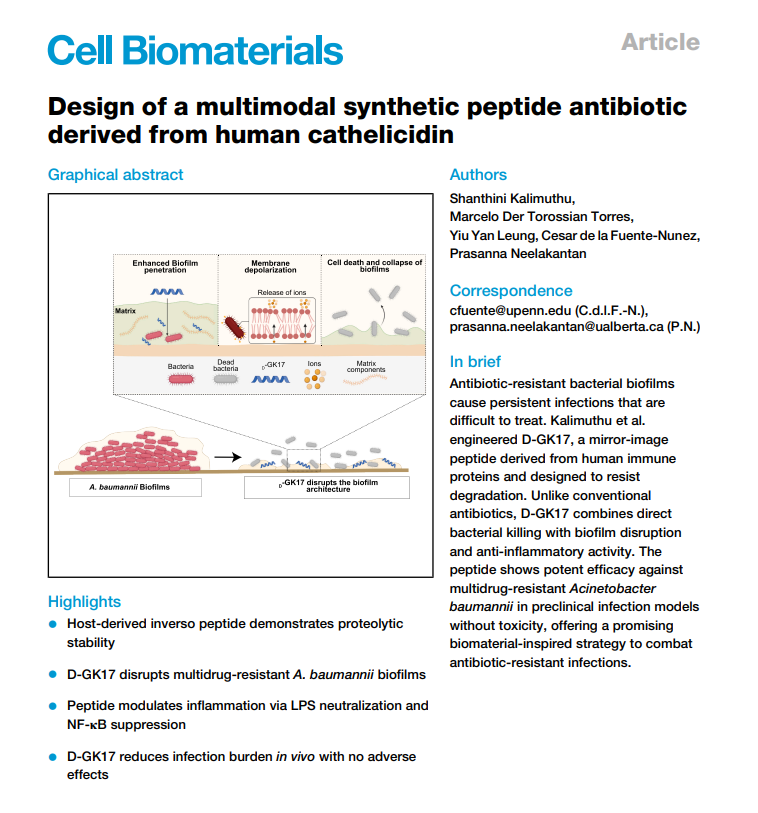
Soy un nostálgico de Acinetobacter, no puedo evitarlo.
Sigo los estudios que van saliendo como quien mira highlights de Zidane mientras se le cae una lagrimilla.
Prize Medal 2026 Lecture by Professor Paul Williams, 'Bacterial cell-cell communication: mechanisms and exploitation'. Begins at 18:30 in the Auditorium. Learn more about their work: https://t.co/HEHEGpVw3B
#Microbio26
I'm rebuilding AlphaFold2 from scratch in pure PyTorch.
No frameworks on top of PyTorch. No copy-paste from DeepMind's repo. Just nn.Linear, einsum, and the 60-page supplementary paper.
The project is called minAlphaFold2, inspired by Karpathy's minGPT. The idea is simple: AlphaFold2 is one of the most important neural networks ever built, and there should be a version of it that a single person can sit down and read end-to-end in an afternoon.
Where it stands today:
- ~3,500 lines across 9 modules
- Full forward pass works: input embedding → Evoformer → Structure Module → all-atom 3D coordinates
- Every loss function from the paper (FAPE, torsion angles, pLDDT, distogram, structural violations)
- Recycling, templates, extra MSA stack, ensemble averaging — all implemented
- 50 tests passing
- Every module maps 1-to-1 to a numbered algorithm in the AF2 supplement
The Structure Module was the most satisfying part to build. Invariant Point Attention is genuinely beautiful — it does attention in 3D space using local reference frames so the whole thing is SE(3)-equivariant, and the math fits in about 150 lines of PyTorch.
What's next:
- Build the data pipeline (PDB structures + MSA features)
- Write the training loop
- Train on a small set of proteins and see what happens
The repo is public. If you've ever wanted to understand how AlphaFold2 actually works at the level of individual tensor operations, this is meant for you.
Repo: https://t.co/k25vl5th1y
@AllThingsApx I think they come in pairs: a scientific way out and a non-scientific one.
During mine the option were consistently either opening a bakery or an algae biotech.
This is a supercool study about RsaM in P. fuscovaginae, an ortholog of the AbaM of Acineto, carried out by researcher at @ICGEB
It really questions how these regulators work and I feel it opens even more questions about how these QS architectures work.
https://t.co/rxP3T95YgU
And the mechanism of action and exact ecological role remains a mistery, of course.
Hope we see this little mistery fully solved soon, giving this huge step forward :)
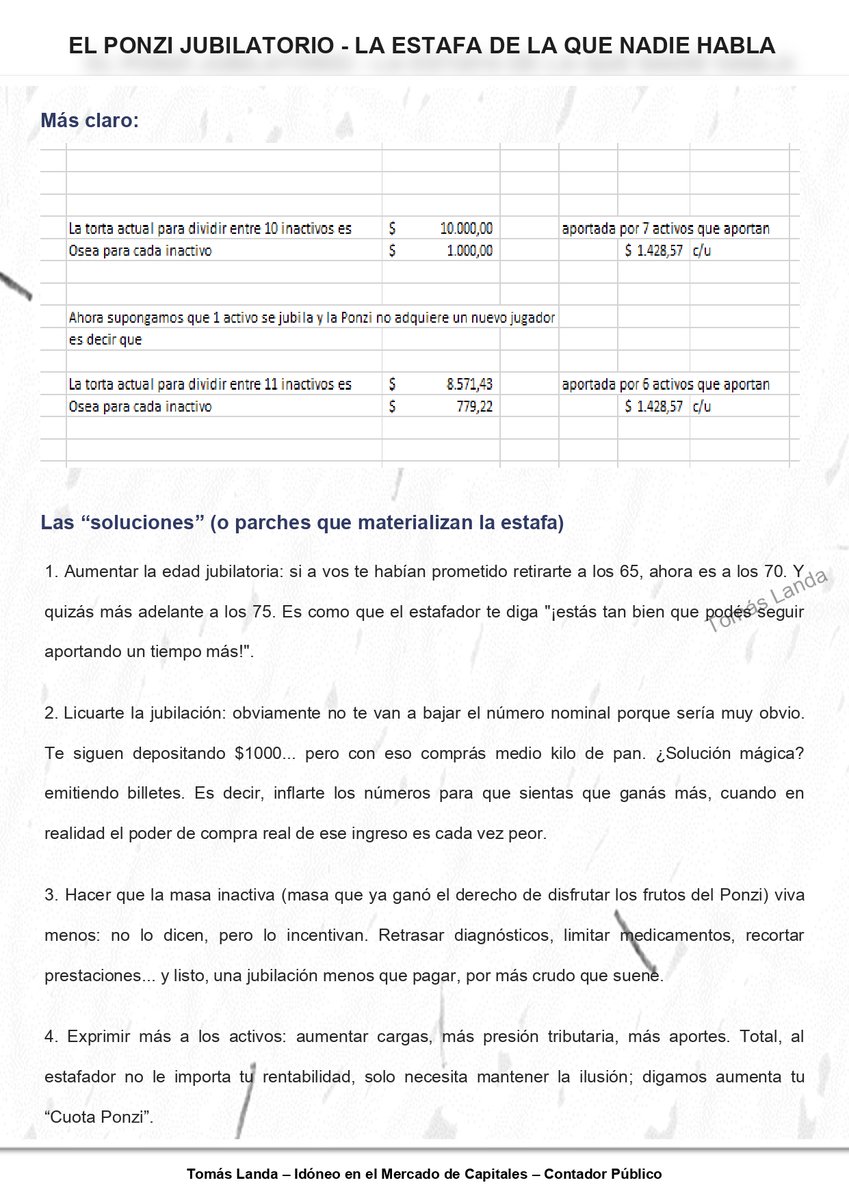
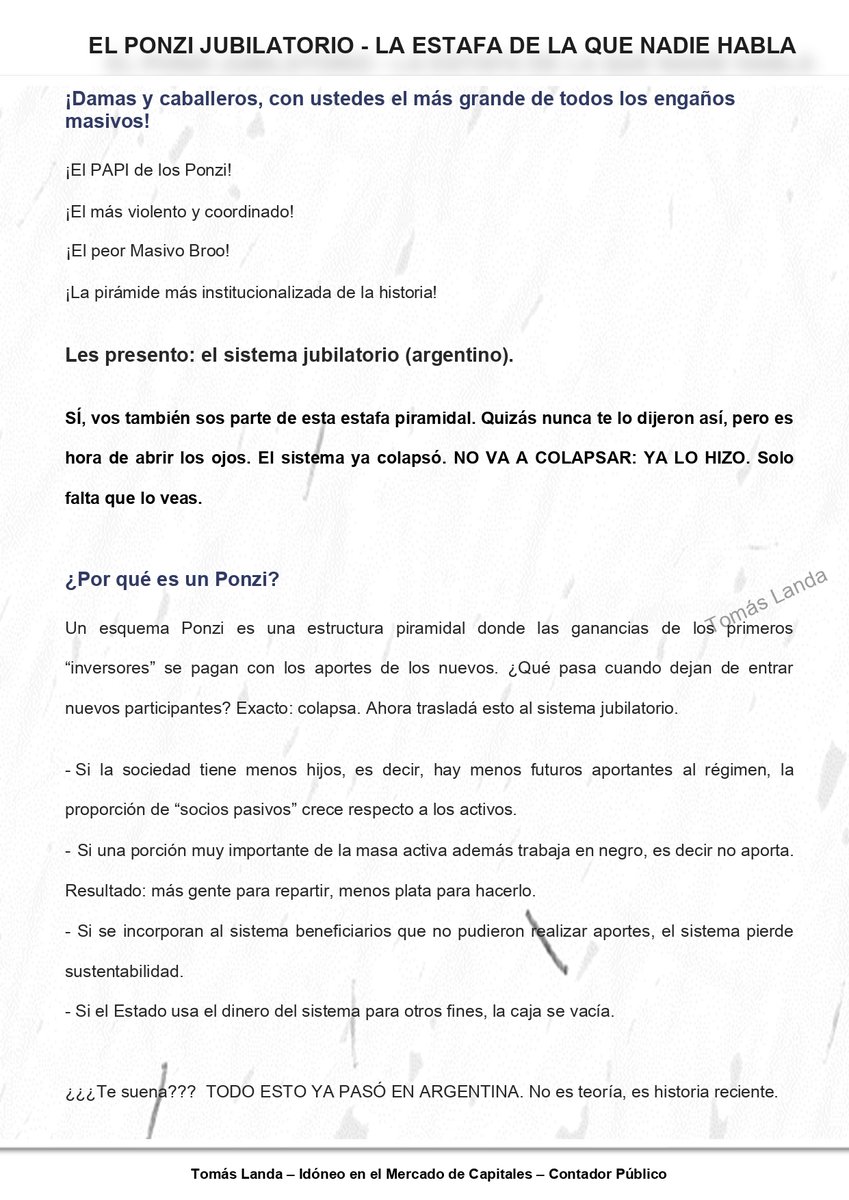
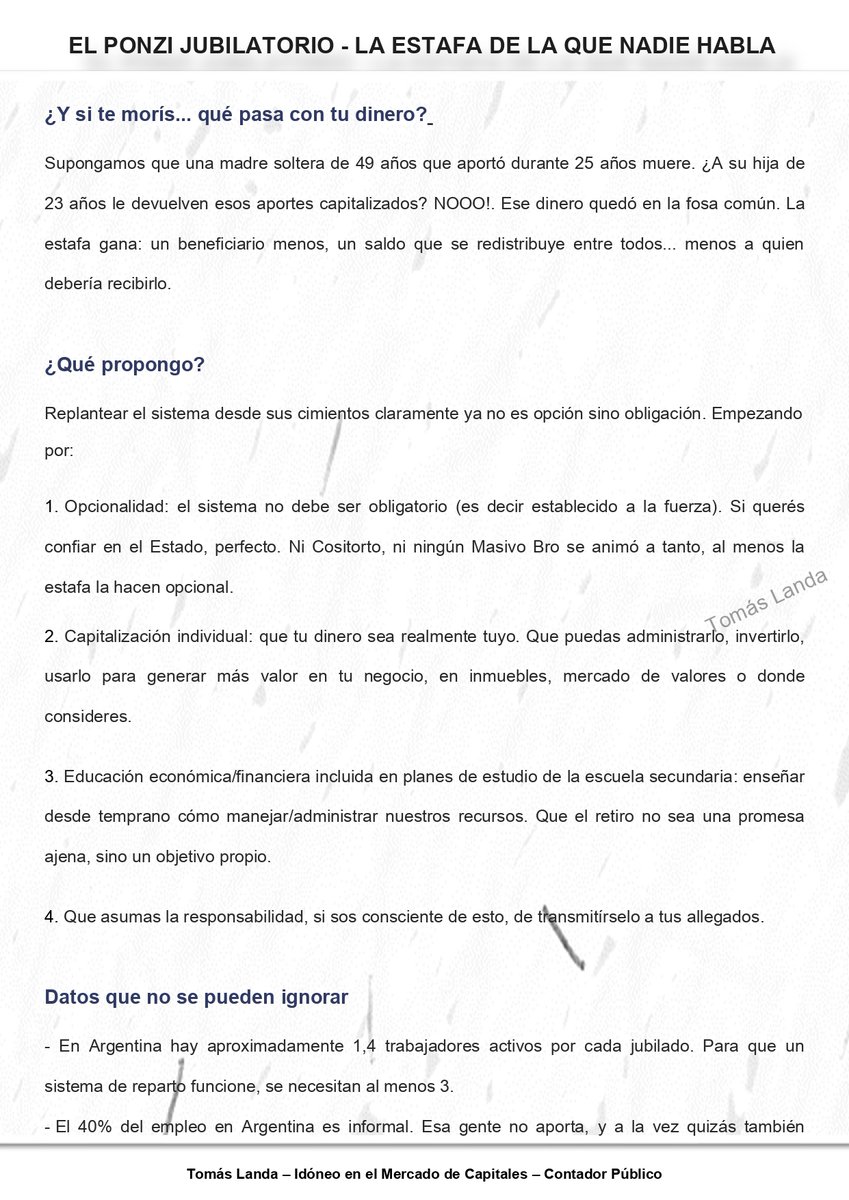
@FinanzasArgy El sistema jubilatorio de reparto es el peor de los Ponzis...ni hablar en Argentina.
Les comparto un Paper que escribí hace un tiempo profundizando sobre esta temática
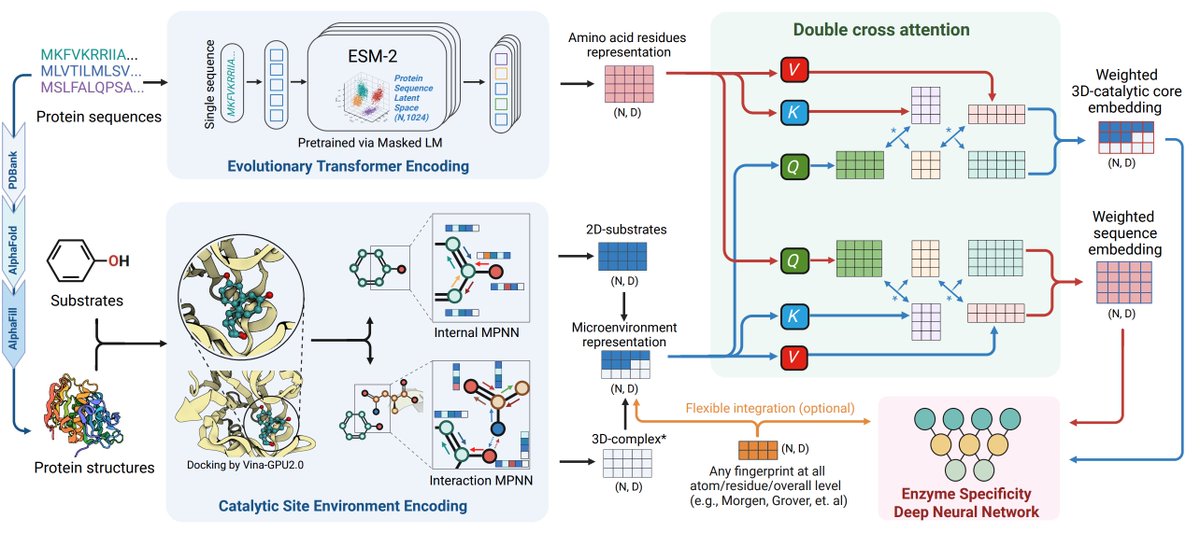
Enzyme specificity prediction using cross attention graph neural networks | @Nature
- Pretrain EZSpecificity, a cross-attention SE(3)-equivariant GNN, on 323,783 enzyme–substrate pairs (8,124 enzymes, 34,417 substrates) from BRENDA, UniProt, AlphaFold/AlphaFill, and AutoDock-GPU
- Encode enzyme sequences with ESM-2, substrates as molecular graphs, and catalytic pockets via SE(3)-GNN with bidirectional cross-attention to capture binding determinants; outperform ESP baseline across random and zero-shot splits (unknown enzyme/substrate)
- Fine-tune on halogenases (386 enzymes, 449 substrates) to yield 91.7% top-1 accuracy in wet-lab assays
- Apply to metabolome annotation and BGC inference, identifying correct enzymes for 29.4% of metabolites in top 5% ranking and 66.7% of BGC steps in top 3
Link: https://t.co/SrwrEYK1o2
What's the interplay between lipids and drugs in Transient Receptor Potential Vanilloid channels?
In our latest paper, @MemprotAPM we run CG Molecular Dynamics of all 6 TRPVs in a complex, asymmetric membrane mimicking real cell membranes.
https://t.co/5bsau333lb
Overall, we attempted to highlight:
- Lipids are active regulatory elements for TRPV channels.
- Many drugs exert their effect by binding precisely these lipid binding sites.
- Therefore, understanding the membrane protein "lipid code" open the possibility for drug design.