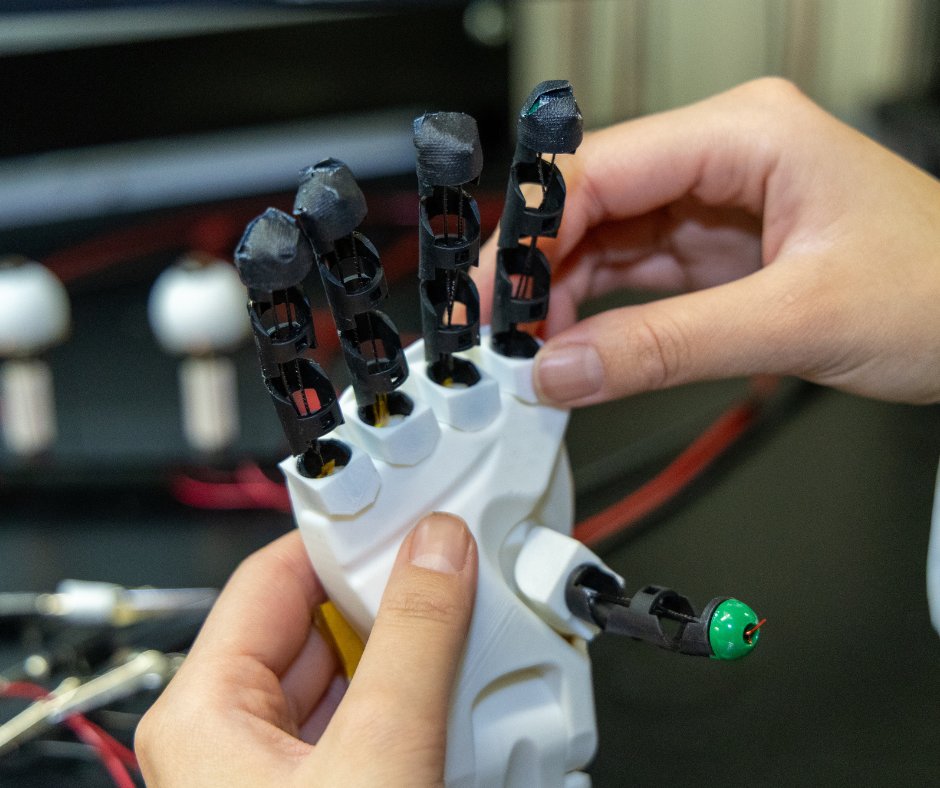
Penn Engineers have developed small, self-sensing artificial muscles that can hold precise positions and coordinate movements.
Led by Shu Yang (@mseatpenn) and Cynthia Sung (@meam_penn), the team developed fibers called CoilLCE that combine liquid crystal elastomers, graphene and an embedded copper coil to translate electrical signals into controlled, muscle-like motion.
The team demonstrated the technology with artificial fingers that play piano keys and artificial eyes that shift their gaze, using opposing pairs of artificial muscles to mimic how muscles work in the human body.
https://t.co/1XflUOkF1O
Inspired by cell membranes, Penn Engineers and collaborators developed a material that helps bioelectronic devices resist water damage while responding nearly 70 times faster.
Led by Yuanwen Jiang, the team included researchers from National Yunlin University of Science and Technology in Taiwan, @DrexelUniv and @RutgersU. Published in @NatureMaterials, the findings could help advance more reliable sensors for monitoring chemical and electrical signals in living tissue.
https://t.co/8vUksiQULR
Technology used in COVID-19 vaccines could help advance a new approach to Duchenne muscular dystrophy (DMD).
In a study led by @PennMedicine researchers, a team including @Pennbioeng’s @MJMitchell_Lab combined mRNA delivery with CRISPR gene editing to boost production of utrophin, a protein that can compensate for the dystrophin missing in people with DMD.
In mouse models, the approach improved muscle function and halted, or even reversed, signs of disease progression. Researchers are now exploring ways to deliver gene-editing tools to muscle cells more effectively.
https://t.co/iUZvL3MeDZ
A new placenta-on-a-chip model from Penn Engineers is helping researchers study how environmental toxins affect the placenta.
Led by Dan Huh (@pennbioeng), the team found that even relatively low levels of cadmium can impair placental function without killing cells. Published in @natbme, the study also identified a protective protein and metabolic changes that could offer clues to exposure-related damage.
https://t.co/Lfz5Z84jAI
Beginning in fall 2027, Penn Engineering and Oberlin College are launching a new partnership that will allow students to earn a bachelor’s degree from Oberlin and a Penn Engineering master’s degree in just five years The 4+1 partnership spans five fields, from biotechnology to energy and sustainability.
“Addressing complex challenges requires engineers who can bring together technical expertise, creative thinking, and an understanding of the broader world,” says Vijay Kumar, Nemirovsky Family Dean of Penn Engineering.
https://t.co/njFzUOc9sP
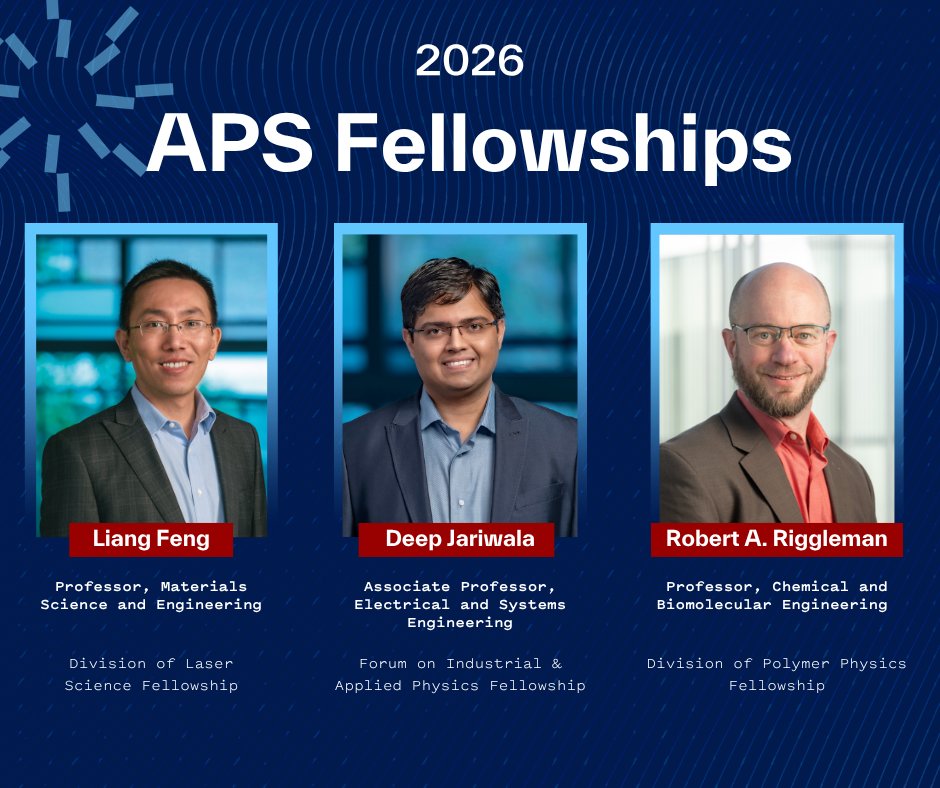
Three Penn Engineering faculty have been elected Fellows of the American Physical Society (APS):
Liang Feng (@mseatpenn), for pioneering contributions to photonics and structured light
Robert Riggleman (@cbe_penn), for research connecting molecular dynamics to materials behavior
Deep Jariwala (@eseatpenn), for advances in ferroelectric nitrides and excitonic metamaterials
The @APSphysics Fellowship recognizes outstanding contributions to physics through research, technological innovation, education and service. Each year, no more than 0.5% of APS members are elected. Congratulations to Professors Feng, Riggleman and Jariwala!
https://t.co/sMsLRbufqG
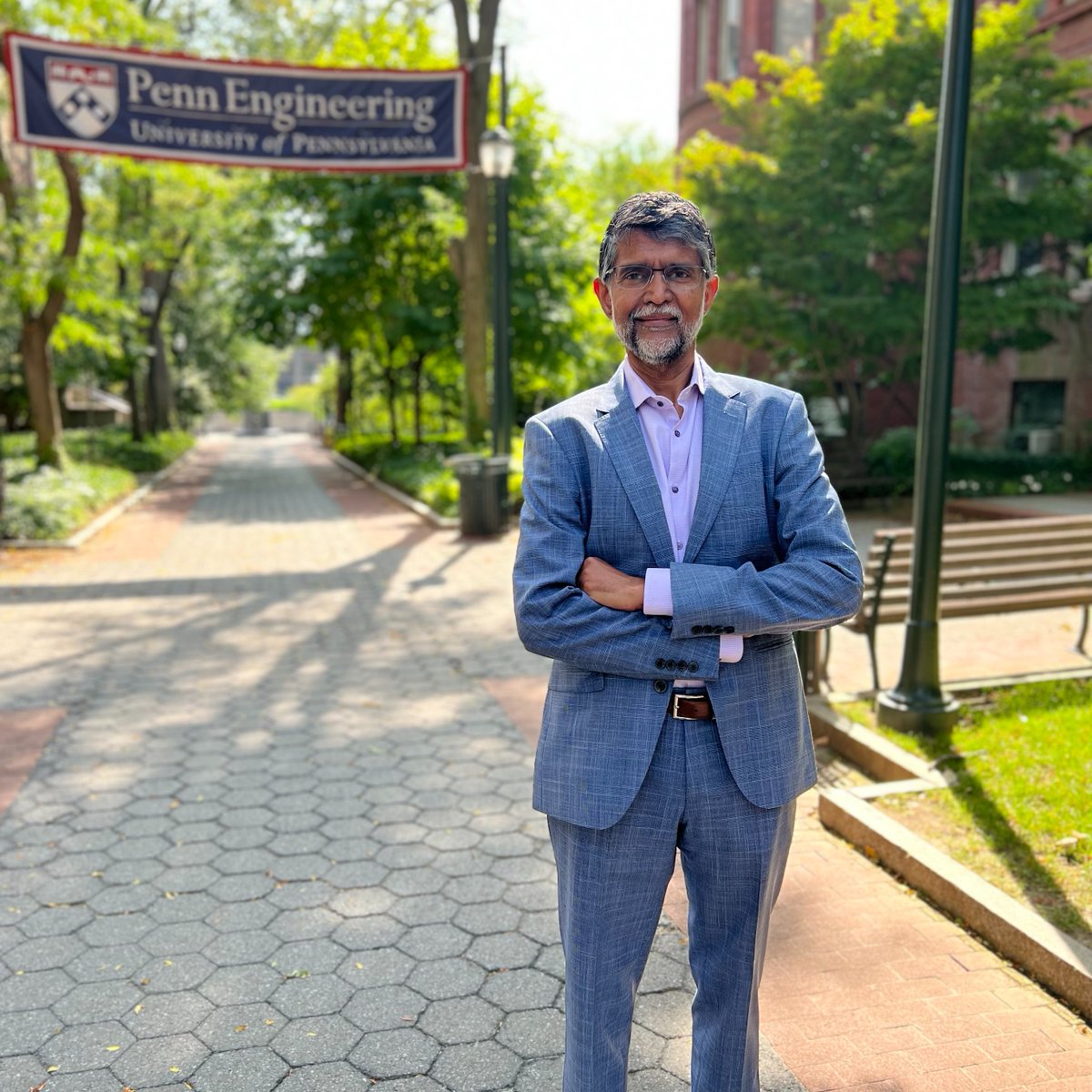
We are proud to share that Vijay Kumar will continue to lead Penn Engineering as the Nemirovsky Family Dean through June 30, 2029.
Under Dean Kumar’s leadership since 2015, Penn Engineering has executed an ambitious strategic vision, most recently guided by Penn Engineering 2030, a bold vision for the School's future grounded in Penn's "In Principle and Practice" framework. From expanding the School's leadership in AI to strengthening its innovation ecosystem and building new connections across Penn and beyond, he has positioned Penn Engineering as a prominent voice in engineering education and research.
Read more today. https://t.co/8VXvmD0Prg
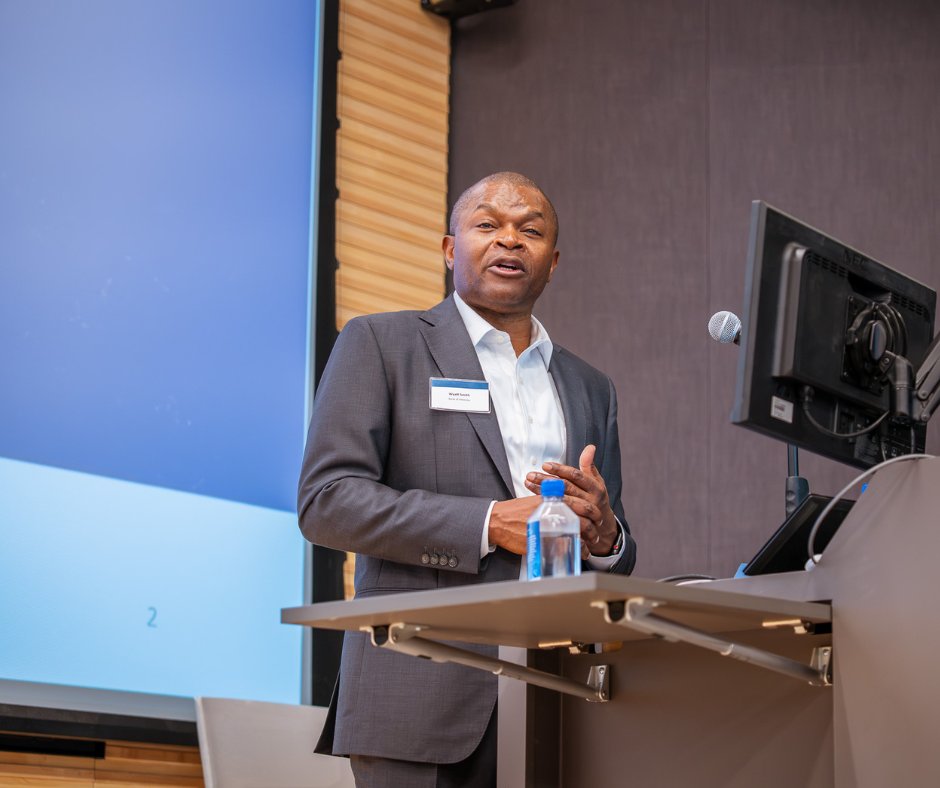
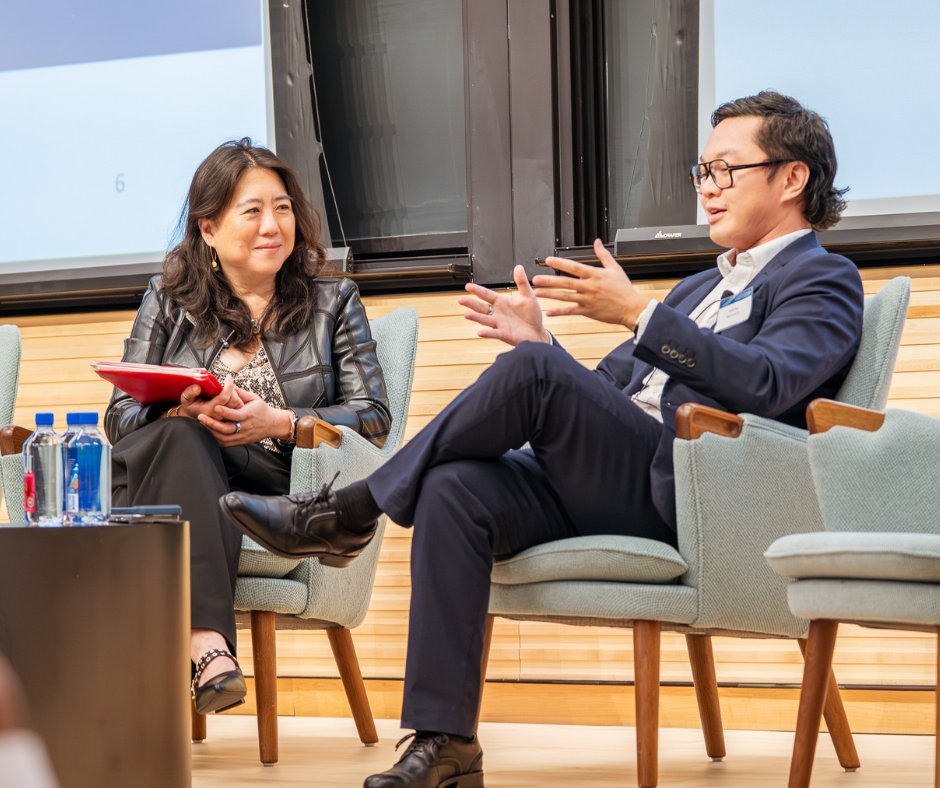
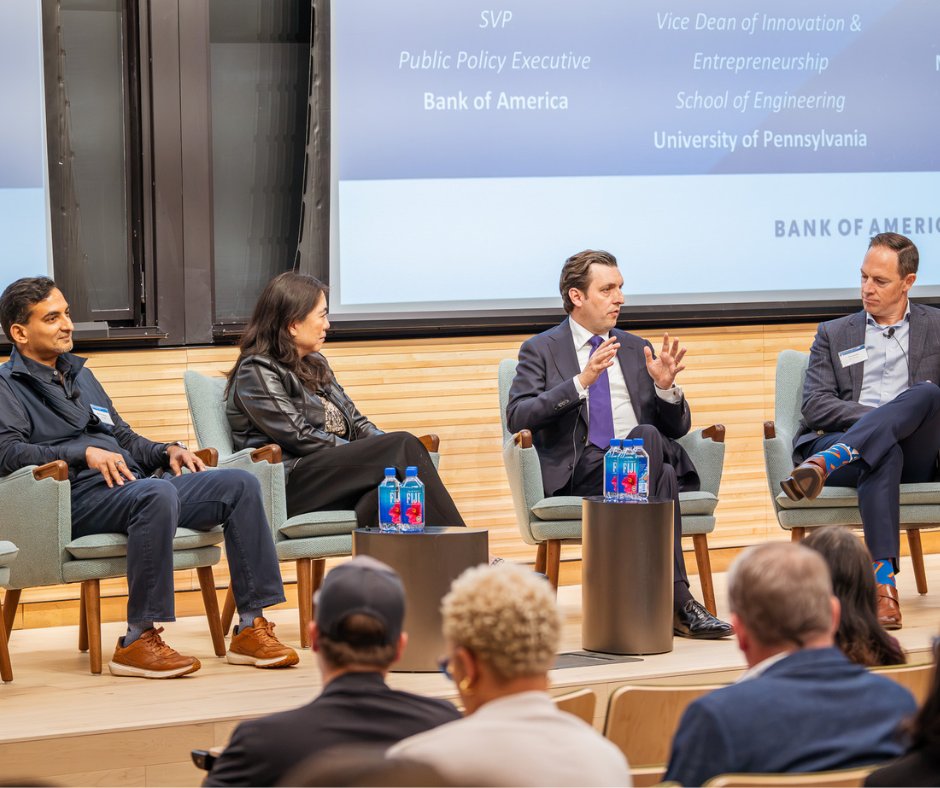
Last week, Penn Engineering and Bank of America brought together investors, industry leaders, researchers and students for the inaugural Philadelphia Tech & Innovation Summit.
“The consensus is that we have to do a better job connecting the ecosystem together, marketing what we are doing and continuing to bring our scrappy Philly mindset to do even more,” says Vanessa Chan, Jonathan and Linda Brassington Practice Professor.
#PennEngineeringProud #Philadelphia #Innovation
Penn Engineers found that quantum skyrmions, distinctive patterns in polarized light, can retain a key property even after entanglement between photons disappears. Published in @NaturePhysics, the finding could inform new ways to protect quantum information and build more resilient quantum networks.
"This discovery could not only deepen our understanding of quantum physics, but also help us develop new ways to protect quantum information," says Liang Feng, senior author and Professor in @MSEatPenn and @ESEatPenn.
https://t.co/PYKDWmYWd4
On "Innovation & Impact," Penn Engineering’s @Lee_BenjaminC discusses how computing efficiency has improved over time and whether generative AI could follow a similar path.
"We will see a burst of capability followed by long, sustained incremental improvement in efficiency," predicts Lee.
Listen to the full podcast today.
https://t.co/Ico9BLuGMj
Penn Engineers have developed a promising approach to lunar insulation: stacking hundreds of ultrathin Mylar sheets. The material combines thermal insulation with flexibility and durability, even after repeated compression, offering potential for future lunar habitats and space technologies.
“This material could open a pathway to inexpensive, durable and reusable insulation on the moon,” says first author Danielle R. Levin, a recent Penn doctoral graduate in chemistry who also earned a master’s in @MEAM_Penn.
Read more.
https://t.co/IxJCL6FWfB
Introducing the Schlein Center for Cybersecurity. Founded through a transformative gift from University Trustee Ted Schlein (C’86, PAR’20), the Center will bring together experts across disciplines to address emerging cyber threats and advance more secure technologies in the age of AI.
Read more.
https://t.co/i9SY0CKpfY
@PennEngAI | @CIS_Penn
From Penn Engineering to the Jeopardy! stage.
Kayla Patel (Eng'25, GEng’25), who earned her B.S.E. and M.S.E. in @PennBioeng at @Penn before completing an MSc at @UniofOxford, competes on @Jeopardy tomorrow, Oct. 21. Good luck, Kayla!
Chemical engineering sophomores Christopher Zhu and Daniel Zheng (ENG’29) took first place at Climate Week’s Transform Penn: Green Fund Pitch Competition with Penn Pause, a proposal to manage electricity use on Red Days, when the grid experiences peak stress.
Zhu and Zheng will receive mentorship to develop a full Green Fund proposal, helping move their campus sustainability idea toward implementation. @cbe_penn
Congratulations, Christopher and Daniel!
During Climate Week, Penn Engineering faculty explored climate solutions across materials science, water, policy, AI, energy and sustainability.
Highlights included nature-inspired robotic seeds from the Shu Yang Group, hands-on water-pollution demonstrations hosted by the McBride Lab, discussions on climate policy and AI’s environmental impact, a nuclear fusion panel and student sustainability pitches at Transform Penn.
Read the full Climate Week recap.
https://t.co/UQsqasQ6T3
As AI accelerates software development, other departments struggle to keep up.
In Episode 13 of Innovation & Impact, Byron Cook joins Penn Engineering Dean Vijay Kumar to discuss AI, autonomous systems and the evolving role of developers as managers of AI agents.
https://t.co/YNvz0TCoW4
@pennengai | @awscloud
Alexandra Oh, a graduate of Penn Engineering's inaugural B.S.E. in AI program, returned to campus for an Alumni Spotlight, sharing insights on her academic journey, internships and career opportunities. #PennEngineeringProud#AIStudents
Yuanwen Jiang (@JiangYuanwen), Assistant Professor in @MSEatPenn, has received a 2026 @NSF CAREER Award to develop implantable bioelectronic devices that continuously monitor peripheral nerve injuries, tracking signals associated with injury and recovery.
https://t.co/dI0n1isWpq
The @Comm4Rigor 2026 Conference brought together students, researchers and educators for three days focused on improving the rigor and transparency of scientific research.
“I loved seeing how people reacted to the awesome materials the C4R team was presenting. Science actually is self-correcting,” says Penn Engineering’s Konrad Kording.
https://t.co/el4Ud3D3UR
#C4R26 #ScientificRigor