I am leader of the research group: Molecular Genetics and Comparative Genomics at JKI-RS, focusing on: use of molecular genetics and comparative genomics method
Roger Federer broke the internet with one statistic that will change how you see every setback in your life.
1,526 singles matches.
Won almost 80% of them.
20 Grand Slams. 103 titles.
Now answer honestly:
What percentage of total points do you think he won across his entire career?
70%? 65%? 60%?
Try … 54%.
He lost literally almost EVERY SECOND POINT he ever played for 24 years.
And still became one of the greatest of all time.
Watch him explain it himself (2:07 of pure life-changing wisdom):
“In tennis, perfection is impossible… When you lose every second point on average, you teach yourself to say:
‘Okay, I double-faulted — it’s only one point.’
‘Okay I got passed at the net — it’s only one point.’
Even a screaming overhead smash that ends up on SportsCenter Top 10… still just one point.
So when you’re playing your point, it has to be the most important thing in the world.
The moment it’s over — it’s behind you.
That mindset frees you to attack the next point, and the next, and the next with absolute intensity and clarity.”
Then he looked at the crowd and said the line that hit a billion people in the soul:
“The real sign of a champion is not that they win every point.
It’s that they lose again and again and again… and have learned how to deal with it.
Negative energy is wasted energy.
Cry it out if you have to. Then force a smile.
Move on. Be relentless. Adapt. Grow.
Work harder — and work smarter.”
Save this post.
The next time you lose a deal, bomb a presentation, get ghosted, miss a deadline, or just have “one of those days” — come back here and read it again.
You’re not falling behind.
You’re just in the 46%.
And the 46% is exactly where every single legend has spent most of their career.
Keep playing the next point.
(full 2:07 clip — sound on)
AvH Fellowship collaboration update!
Our work with Peter Dracatos (La Trobe University), initiated during his AvH Fellowship, has produced a new paper: KASP marker for Rph7 using a pangenome approach
🔗 https://t.co/0Vc60Ib9eB
Great progress for barley rust resistance! 🌾🔬
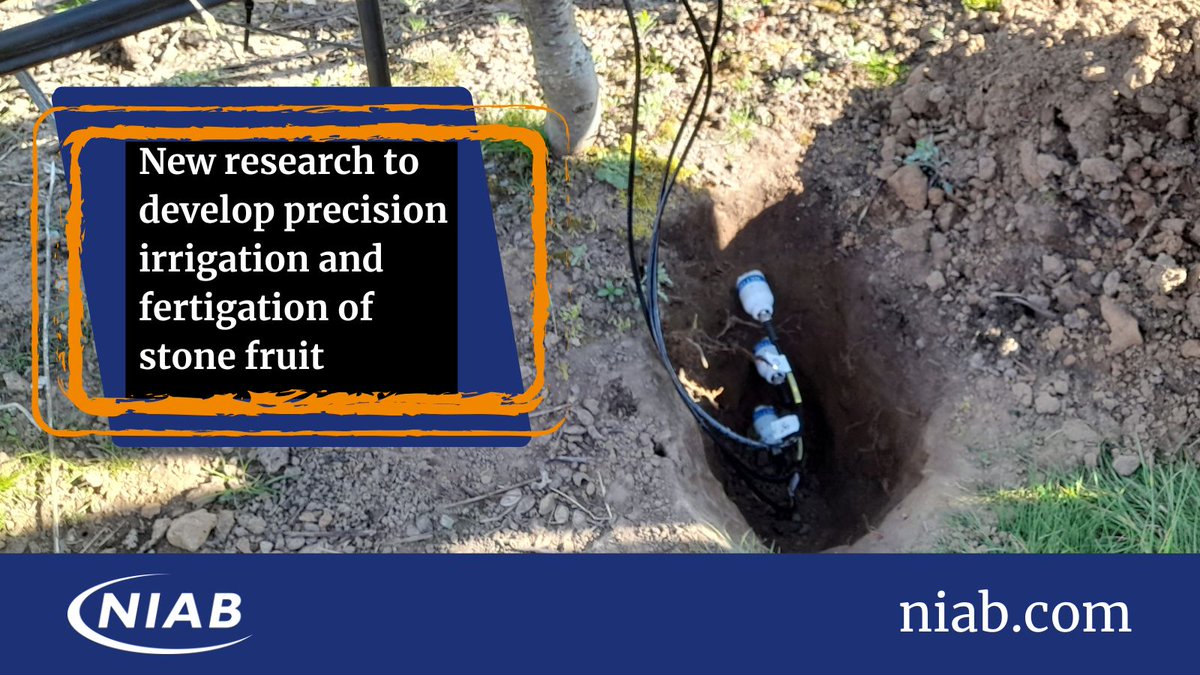
Plum and cherry growers could soon start matching the supply of water, nitrogen, phosphorus and potassium to a tree’s demand with the start of a new, three-year long, industry consortium research project led by Niab ➡️https://t.co/yi2DJip32n
In the #BioSam project, 3 @JKI_bund institutes (RS, SB, A), with @NIABGroup & @INRAE_France, developed molecular markers to ID major Puccinia striiformis “Warrior(-)” subraces. 4 KASP markers Validated in 🇩🇪 & 🇬🇧 Strong geographic signal of adaptation
https://t.co/rvadGgyuRK
The 2024 ERC Advanced Grants will help 281 researchers set up their own teams and conduct research on the topics of their choice.
We selected 5 examples of projects; based in Spain, the Netherlands, Germany and the UK.
Find out more 👉 https://t.co/Wl3owRZdgZ
The topic of a workshop at the @LeibnizIPK starting on Monday is how findings from genome research can be used to breed resistant cereals. Martin Mascher explains the challenges faced by science and the aims of the event.
➡️Read more: https://t.co/qnyu4p6RW7
Thrilled to share our new article on using GBS to trace the history of pepper on the Iberian Peninsula! Grateful to have contributed and especially thankful for the inspiring long-term collaboration with Cristina.
[Link to article]
https://t.co/XQy1XqB491
Serious about impactful research? Here are outstanding #PhD opportunities in Bioinformatics and Genomic, Trait Discovery & Pre-Breeding. Work with one of the absolute best in the Genomics-Assisted Breeding domain. This is the kind of mentorship that changes careers. #scicomm
🌾 Honoured to have played a small part in this impressive 𝘚𝘤𝘪𝘦𝘯𝘤𝘦 study, led by an outstanding international team. Grateful to the lead authors for including us — and especially pleased to see my postdoc @lubegajib’s contribution recognised.
🔗 https://t.co/kh2xF7DfGd
The final version of our work on the in-cell architecture of the mitochondrial respiratory chain is now online in @ScienceMagazine 🎉
You can find the full story here https://t.co/5DaDHXjE6z
@luminous_lab did a wonderful job on the cover and animation👩🎨
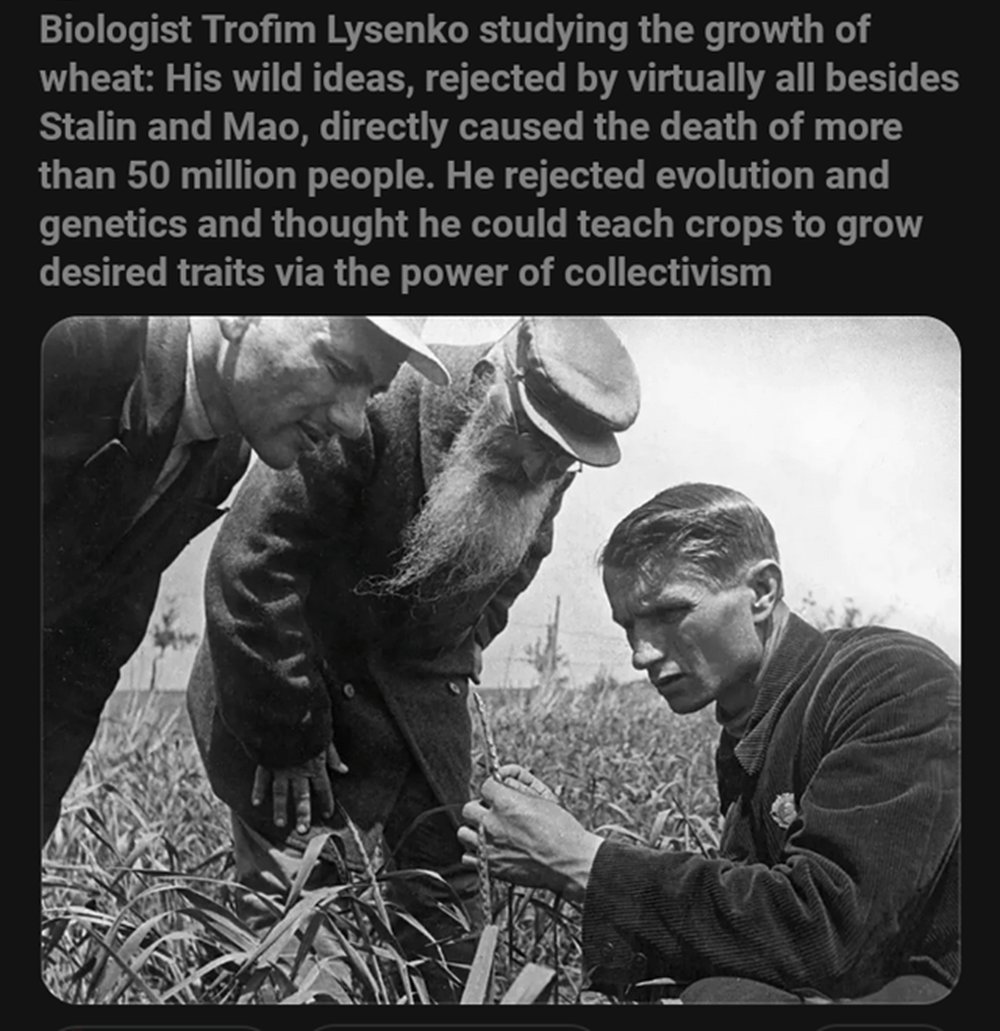
1. Who was Trofim Lysenko?
🚜 A Soviet agronomist who rejected genetics and evolutionary biology.
🚨 He claimed crops could be “trained” to grow better - without needing selective breeding or genetics.
📢 Stalin loved it.
The problem? Lysenko was completely wrong.
Excited to share our latest work on the barley pan-transcriptome and its role in understanding functional diversification across genotypes!
https://t.co/TCcqbGOsjX
Please spread the word. We're looking at recruiting a structural biologist (any level) @KamounLab to study plant-pathogen protein complexes especially in the context of coevolution.
Direct inquiries welcome.
Please include a cover letter.
https://t.co/Kebk8ygXTp
We are delighted to announce the publication of our manuscript " Temperature-driven changes in membrane fluidity differentially impact FILAMENTATION TEMPERATURE-SENSITIVE H2-mediated photosystem II repair" as a Breakthrough Report in The Plant Cell.
https://t.co/v9Tx1XsqOC
This is like AlphaFold, but for protein localisation rather than folding
It's a deep learning model that predicts a protein's subcellular compartment based on its amino acid sequence alone: