The Mermaid Nebula (ESO 217-25):
A Ghostly Echo of Stellar Death Drifting silently through the darkness of space lies one of the cosmos’s most hauntingly beautiful creations — the Mermaid Nebula.Captured in stunning detail by astrophotographer Marshall Huang, this ethereal veil of gas and dust marks the dramatic final act of a massive star that exploded in a ferocious supernova roughly 14,000 years ago.Nestled in the constellation Centaurus, about 4,500 light-years from Earth, the nebula unfurls like flowing cosmic silk. Its delicate, wispy filaments and glowing clouds shimmer in soft blues and delicate pinks — the lingering fingerprints of titanic shockwaves still rippling outward across the https://t.co/RJcMhi0h1f
This isn’t just pretty stardust. It’s a living testament to stellar death and rebirth. Those shimmering tendrils are rich with heavy elements forged in the star’s explosive heart — carbon, oxygen, iron — the very building blocks of new stars, planets… and perhaps even life itself.What we’re witnessing is the universe in its most poetic cycle: destruction giving birth to creation.
This is one of the best space images ever.
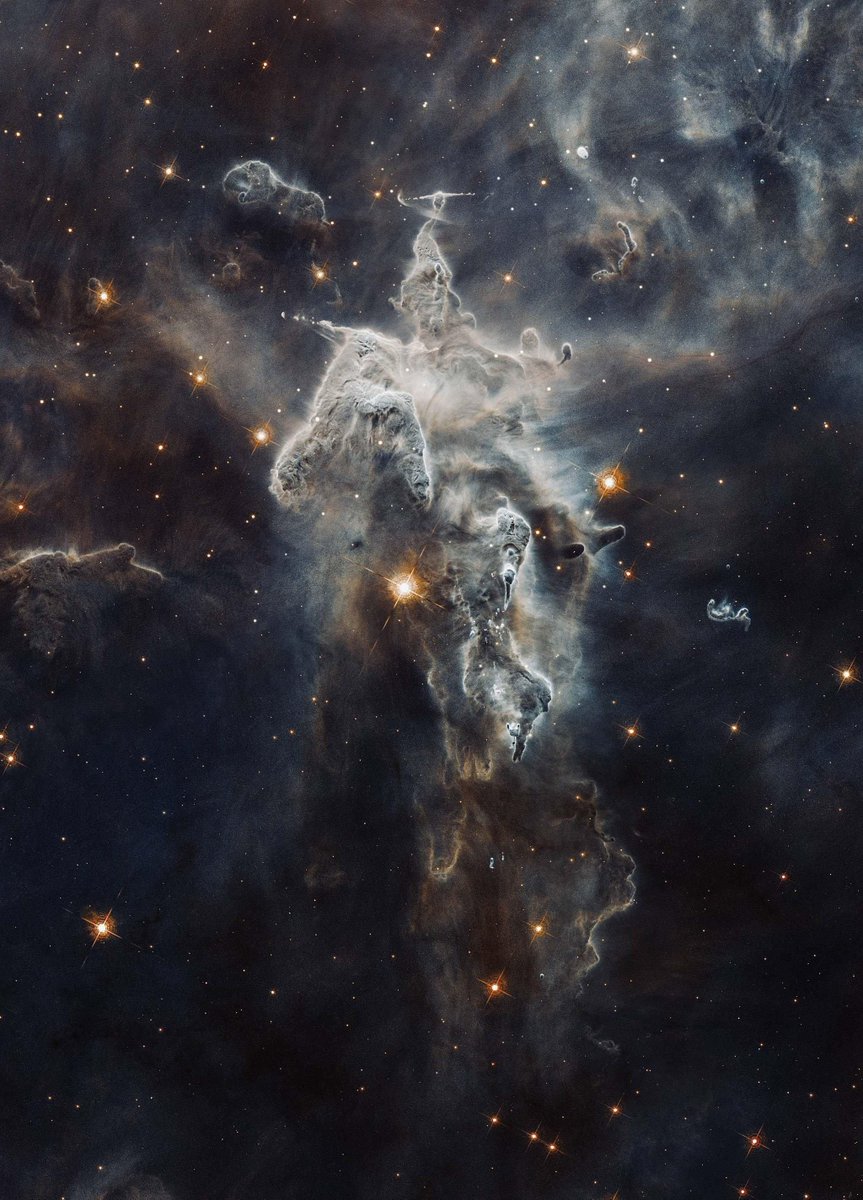
You are staring at the Carina Nebula.
This entire structure is three light-years tall.
7,500 light-years away from us.
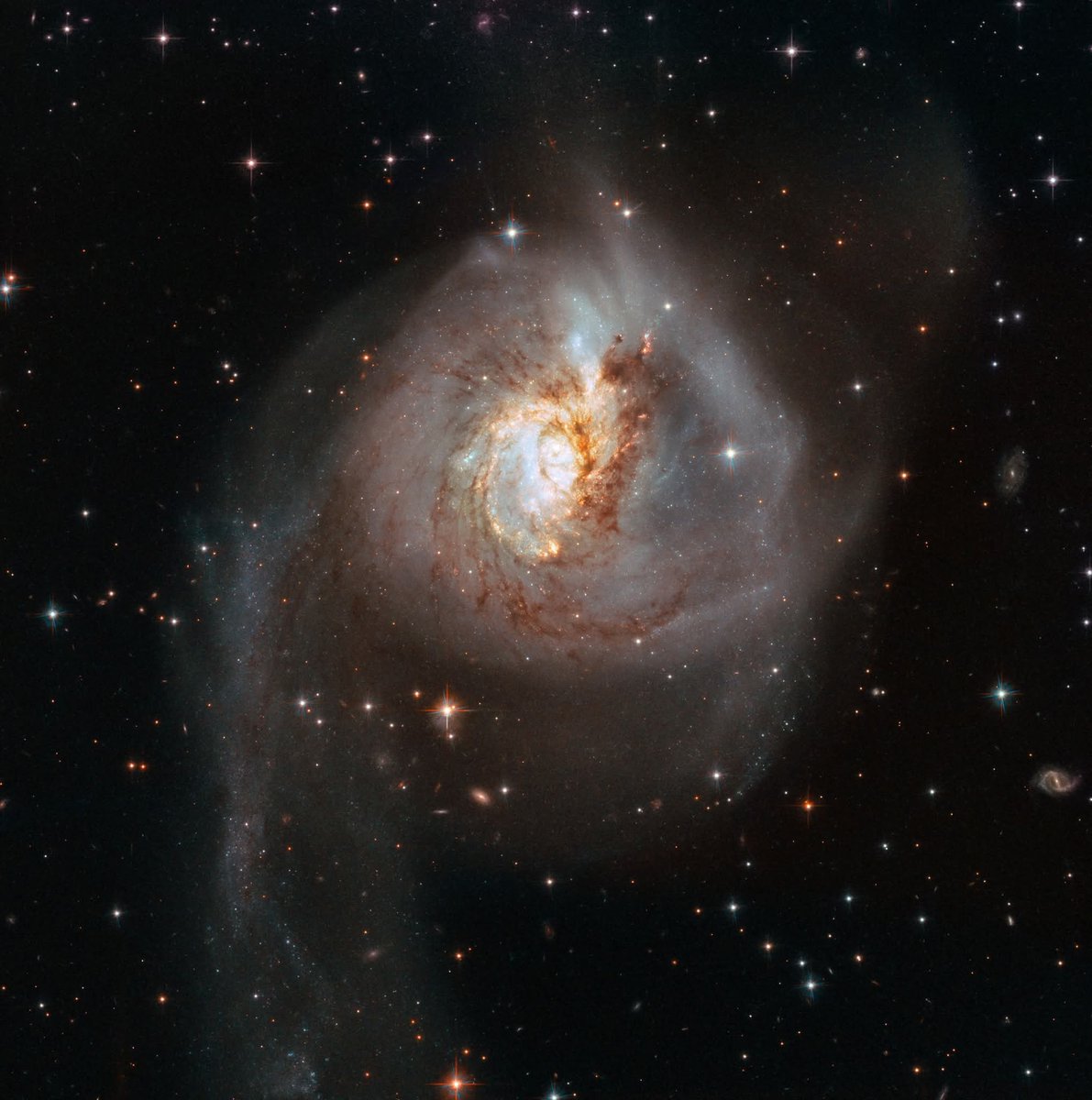
A striking galactic remnant!
NGC 3256 is the product of two galaxies colliding, located in the constellation Vela roughly 122 million light-years distant, within the Hydra–Centaurus Supercluster.
(Credit: ESA/Hubble, NASA)
The magnificent star cluster NGC 1850, located about 160,000 light-years away.
Credit: NASA, ESA and N. Bastian (Donostia International Physics Center); Processing: Gladys Kober (NASA/Catholic University of America)
#PPOD: Diamonds in the Night ✨
This is NGC 6397, a star cluster that glitters with the light from hundreds of thousands of stars. At 7,800 light-years away, this is one of the closest globular clusters to Earth. Globular clusters are roughly spherical collections of stars bound together by their mutual gravity. The cluster's blue stars are near the end of their lives. These stars have exhausted their hydrogen fuel, which is what makes them shine. Now, they're converting helium to energy in their cores, which fuses at a higher temperature – resulting in a blue color.
Credit: NASA, esa, and H. Richer (University of British Columbia)