The rumors are true 👀
Proud of the CoreWeave engineering team and our partners (like @Dell) who are the first to have a fully working @nvidia Vera Rubin NVL72, achieving yet another major milestone in bringing next-generation AI infrastructure online.
Stay tuned, there is so much more to come...
🚨 BREAKING: AI can now analyze stocks like top hedge fund managers (100% free).
Here are 10 nuclear Claude prompts that completely replace $3,000/month Bloomberg terminals 💰📈
Bookmark this thread - you’ll thank yourself later 🔥
Nvidia $NVDA just announced its next-generation AI chip, called Rubin.
It is 5x more powerful than the previous Blackwell chip.
Jensen Huang is unstoppable.
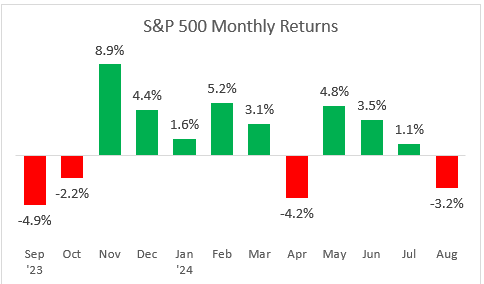
For 100 years, November is the strongest month for SPY. It can be up as 3%-5% in 1 month.
In 2025, there are 10 catalyst why SPY hits $700+ by December:
1. FED cutting rates 2-3 more times (Oct 29)
2. Trump fiscal policy is bullish for 2026
3. 85% of all earnings have BEATEN for Q3
4. AI technology boom (next internet)
5. BTC rally towards $150,000+
6. $8 trillion in cash waiting to buy dips by institutions
7. RETAIL traders obsessed about buying dips
8. Inflation is low at 3%
9. Trump to meet Xi on Oct 30 for trade deal
10. Fund managers don't want to sell early because SPY is kicking their ass right now.
🚨 TACO Sunday🌮🌮
The United States is rolling back tariffs on “products that cannot be grown, mined, or naturally produced in the country. INCLUDING RARE MINERALS AND SPECIALTY GOODS.
$SPY $QQQ $NQ
Update: Article was published Friday Night
https://t.co/dX86LPHuPF
Happy Sunday!
Here Are My #Top5ThingsToKnowThisWeek:
1. U.S. CPI Data
2. U.S. PPI Data
3. U.S. Consumer Sentiment
4. $ORCL $ADBE $GME $CHWY Earnings
5. $AAPL iPhone 17 Event
May The Trading Gods Be With You 🙏
$DIA $SPY $QQQ $IWM $VIX
TRADE OF THE YEAR??
These $VIX whales are finally taking profits on the calls they bought right before the vol spike for +200%
They nailed the Feb 18th/19th $SPY high and caught the entire leg down... Incredible
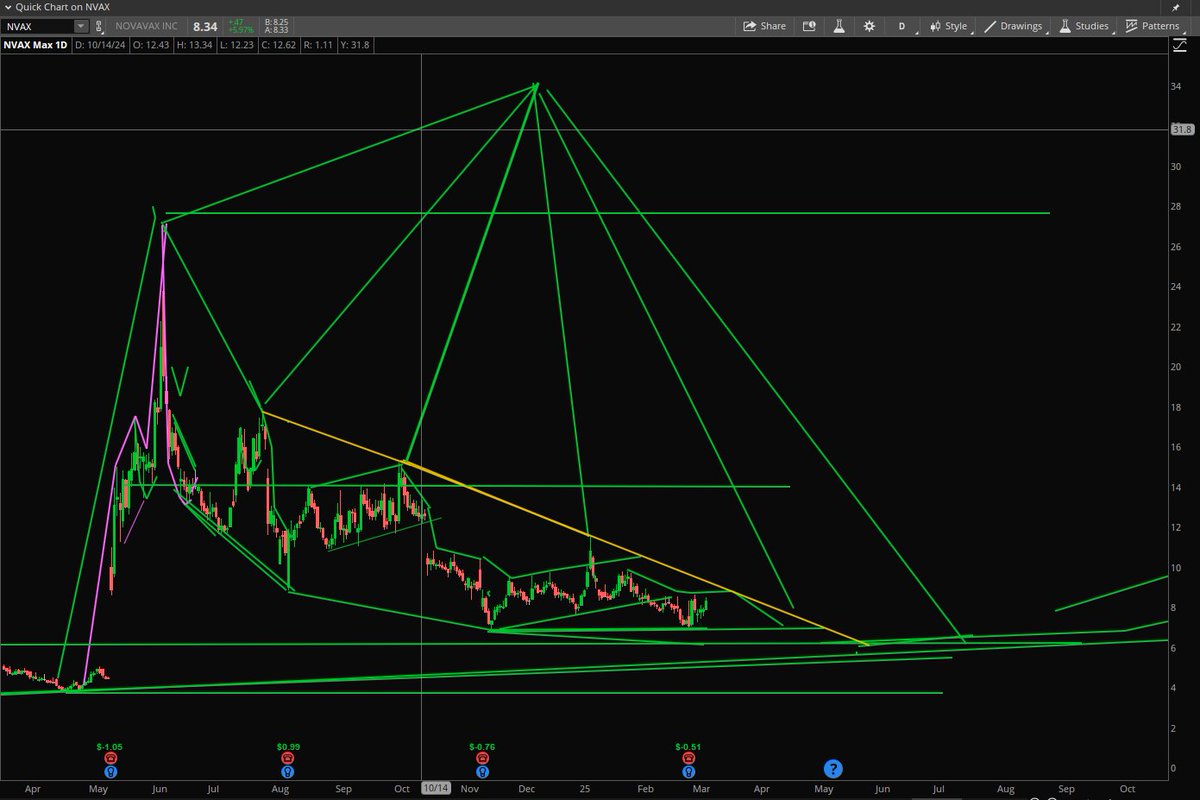
$NVAX I've waited 6 months longer in this doom loop beyond when I originally wanted to buy. Likely still early, but I'm going to buy the January 2027 leaps sometime in the next few weeks. Wish me luck . High risk, high potential reward. My opinion only.
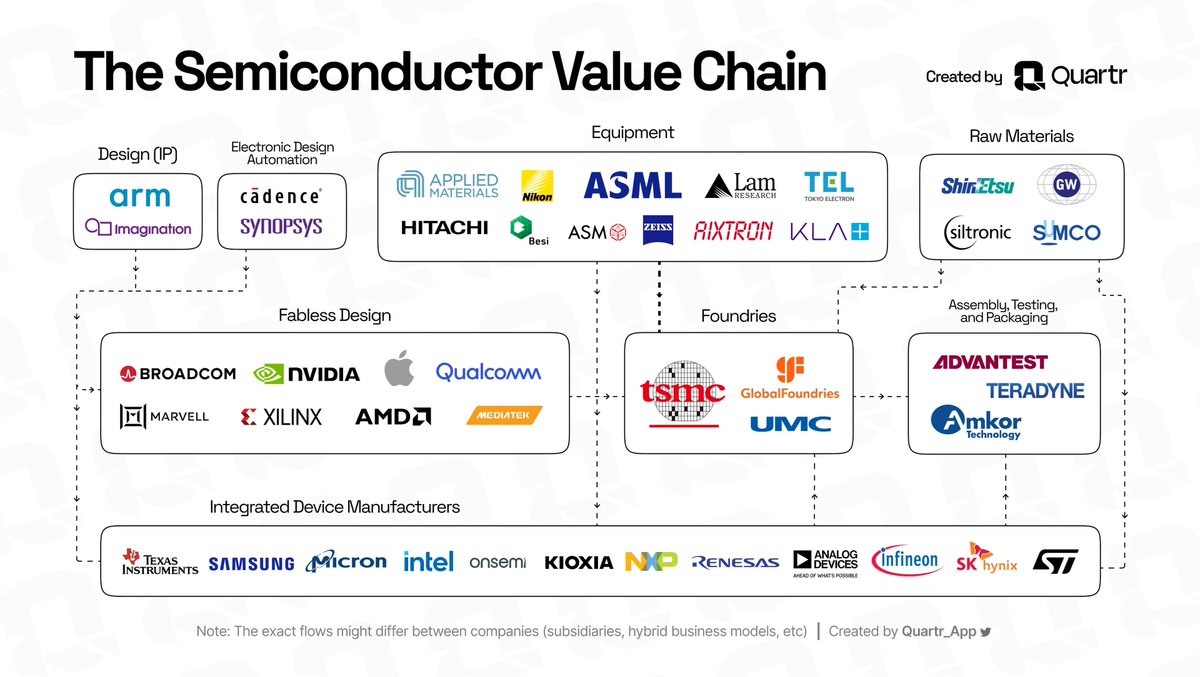
Here's the cheatsheet if you knew nothing about:
NVDA
AMD
INTC
QUAL
AVGO
MU
(Bookmark this to review as reference)
NVIDIA: Products: NVIDIA specializes in GPUs (e.g., GeForce, Quadro, Tesla) and AI accelerators (e.g., NVIDIA A100).
Application: NVIDIA GPUs, especially the Tesla and GeForce series, are extensively used in AI and deep learning tasks such as neural network training and inference.
Impact: NVIDIA has been a major driver of AI advancements due to its CUDA platform and specialized hardware like Tensor Cores. NVIDIA GPUs are prevalent in data centers powering AI infrastructure and in edge devices for inference tasks.
Advantages: Market leader in GPUs, particularly in gaming and professional visualization. Strong presence in AI and deep learning with GPUs optimized for such workloads. Expanding into data center and automotive markets with AI-focused products.
Disadvantages: Relatively higher cost compared to some competitors. Dependency on gaming and cryptocurrency markets for a significant portion of revenue.
AMD (Advanced Micro Devices): Products: AMD produces CPUs (e.g., Ryzen series), GPUs (e.g., Radeon RX series), and APUs (combining CPU and GPU).
Application: AMD's CPUs and GPUs are widely used in AI applications ranging from training deep learning models to inferencing in various industries including gaming, automotive, and healthcare.
Impact: AMD's Ryzen CPUs offer competitive multi-core performance suitable for AI workloads. Their Radeon GPUs, while not as dominant in AI as NVIDIA's offerings, provide cost-effective solutions for smaller-scale AI projects and research.
Advantages: Competitive performance and value proposition in both CPU and GPU markets.
Strong presence in gaming and enthusiast markets.
Increasing market share in CPUs with competitive offerings against Intel.
Disadvantages: Historically, AMD has faced challenges with power efficiency and thermal management compared to Intel.
Limited presence in enterprise and data center markets compared to Intel.
Intel: Products: Intel primarily manufactures CPUs for various markets including consumer, enterprise, and data center (e.g., Core series, Xeon).
Application: Intel's CPUs and emerging products like Nervana Neural Network Processors (NNP) cater to AI workloads, including training and inference.
Impact: Intel's dominance in CPU market share translates to widespread use of its processors in AI servers. With acquisitions like Nervana, Intel aims to strengthen its AI offerings and compete more effectively against NVIDIA in the AI hardware space.
Advantages: Dominant market share in CPUs for PCs and servers. Strong R&D capabilities and manufacturing technology. Diversification into areas like AI, IoT, and FPGA through acquisitions.
Disadvantages: Manufacturing delays and challenges in transitioning to advanced process nodes. Increasing competition from AMD in consumer and server CPU markets. Less competitive in discrete GPU and mobile CPU markets.
Qualcomm: Products: Qualcomm specializes in mobile SoCs (e.g., Snapdragon series), modem technologies, and various semiconductor solutions for mobile devices.
Application: Qualcomm's Snapdragon SoCs integrate AI accelerators for tasks like image recognition, natural language processing, and voice recognition in mobile devices, IoT, and automotive applications.
Impact: Qualcomm's presence in mobile AI accelerates the deployment of AI at the edge, enabling on-device processing for improved privacy, latency, and efficiency.
Advantages: Market leader in mobile SoCs with strong integration of CPU, GPU, modem, and AI capabilities.
Extensive licensing business for wireless technologies.
Diversifying into automotive, IoT, and networking markets.
Disadvantages: Facing challenges in the Chinese market due to regulatory issues.
Increasing competition from companies like MediaTek in the mobile SoC market.
Micron Technology (MU): Products: Micron manufactures memory and storage solutions including DRAM, NAND flash memory, and SSDs.
Application: Micron's memory and storage solutions play a crucial role in AI infrastructure, providing high-speed storage and memory for AI model training and data processing.
Impact: Micron's DRAM and NAND flash memory are integral components of AI servers and accelerators, contributing to the overall performance and efficiency of AI systems.
Advantages: One of the leading producers of memory and storage solutions. Diverse product portfolio catering to various applications including data centers, consumer electronics, and automotive.
Strong focus on innovation and R&D.
Disadvantages: Vulnerability to cyclical demand patterns and price fluctuations in memory markets.
Intense competition from other memory manufacturers like Samsung and SK Hynix.
Broadcom (AVGO): Products: Broadcom offers a wide range of semiconductor solutions including networking, storage, broadband, and wireless communication chips.
Application: Broadcom's networking and communication chips facilitate the deployment of AI applications in data centers and edge computing environments, enabling seamless connectivity and data transfer.
Impact: Broadcom's networking solutions support high-speed data transfer and low-latency communication, critical for distributed AI systems and real-time inference applications.
Advantages: Diversified product portfolio covering multiple segments of the semiconductor market.
Strong focus on acquisitions to expand its product offerings and market reach.
Dominant position in certain markets like networking and broadband.
Disadvantages: Dependence on a few key customers for a significant portion of revenue.
Regulatory scrutiny regarding antitrust issues due to its market dominance in certain segments.
📣 JUST IN: Nissan in Advanced Talks for Investment, Partnership with $FSR Fisker, Eyeing Electric Truck Collaboration $TSLA $VFS $LCID $PSNY $GM $F $NIO $XPEV $LI
👉 Key Highlights:
📍 Nissan close to investing in Fisker, potentially providing a boost to the EV startup.
📍 Deal may include over $400 million investment and collaboration on an electric pickup.
📍 Nissan could produce Fisker's Alaska pickup by 2026 in a U.S. plant.
📍 Fisker, facing financial struggles, announced a 15% workforce reduction.
📍 Fisker's market cap dropped to $222 million after a 43% share price fall.
👉 Context/Background:
📍 Fisker's search for a financial lifeline and development partner comes amid its ongoing efforts to solidify its position in the competitive EV market.
👉 Why This Matters:
📍 A partnership with Nissan could be crucial for Fisker, offering both financial stability and access to manufacturing resources.
👉 Market Insights:
📍 The potential collaboration highlights the increasing cross-industry partnerships aimed at accelerating EV adoption and innovation.
👉 Impact & Recommendations:
📍 This development could signal a strategic shift in the EV landscape, with traditional automakers and startups collaborating to meet growing electric vehicle demand.
📍 Industry watchers should keep an eye on the outcome of these talks, as they could influence future EV collaborations and market dynamics.
🔄 Follow @AIStockSavvy for real-time updates. Don’t forget to like, retweet, and turn on notifications for unparalleled insights.
NEWS: Nissan is in advanced talks to invest in electric vehicle maker Fisker in a deal that could provide the Japanese automaker with access to an electric pickup truck while giving the struggling startup a financial lifeline.
Thoughts? https://t.co/Mb0GoafLNH