Can deep-learning improve the encoding of molecular structure of a drug to understand their interactions? Check on our comparative study! Congratulations on @b_zagidullin@epitkane @gyuanfan
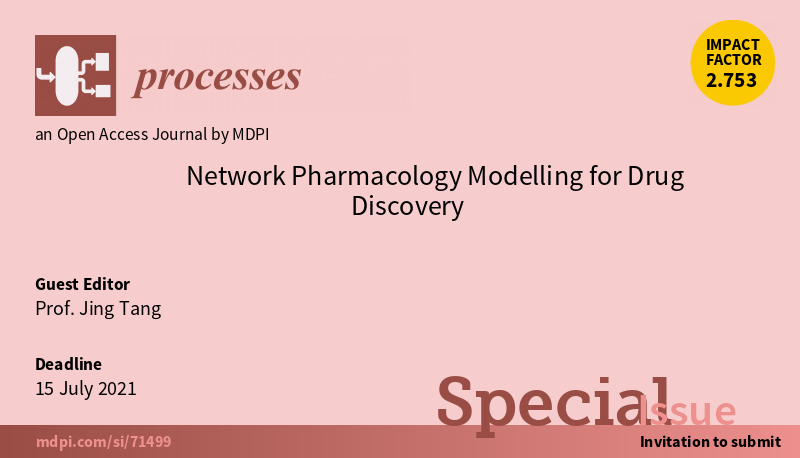
I am happy to be the guest editor for the special issue of 'Network Pharmacology Modelling for Drug Discovery' in the journal of Processes. Hope to receive more insights from you! https://t.co/YGRFZUKB63
Very happy that our work on the modeling of the concepts in traditional medicine with multipartite networks is out (https://t.co/uVRVwT9bsu ) @NetPharMed@DrugComb@FrontiersIn@FrontPharmacol
We are looking for a talented post-doc to leverage the huge amount of drug combination/drug target interaction data to model the drug-target-disease networks! Apply by 30.9 via https://t.co/tBB3znvYiK
@ggonzalezp16 Hi sorry for late reply, the problem that was caused by the server was fixed and DrugComb is currently working fine
Please don't hesitate to contact me if you need any help
Jehad Aldahdooh
[email protected]
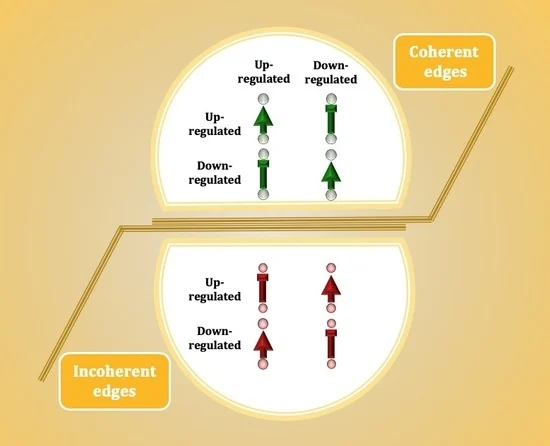
Very happy that our work on the ratio of coherency between the expression level and the causal relationships among the gene pairs is out(https://t.co/4iFDFahlyo)#mdpibiomolecules
"Can We Assume the Gene Expression Profile as a Proxy for Signaling Network Activity?" @Biomol_MDPI
Packages used by DrugComb analysis service are updated under R (3.6.0) to:
- TidyComb https://t.co/N7FvStbmXG (version 0.0.5)
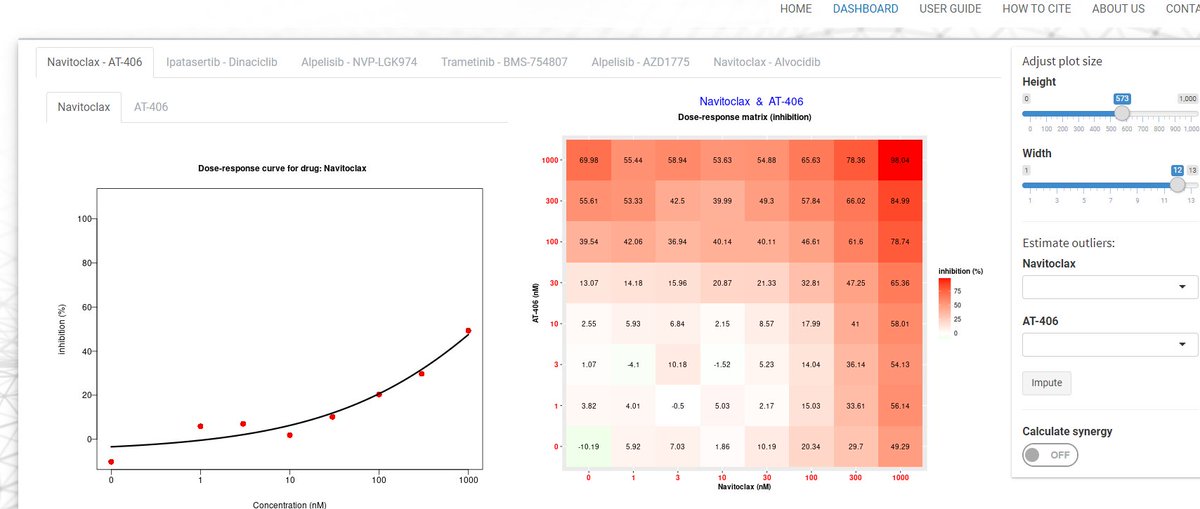
- SynergyFinder https://t.co/eAaOqiTkxb (version 2.0.3)
New single drug screen data from beatAML is uploaded to DrugComb.
There are 528 cell lines (new primary cultured AML cells), 123 molecules (4 new molecule),
and 47650 single drug dose response blocks.
Single drug data is added to DrugComb comes from PharmacoDB dataset v1.1.1. It contains single drug dose-response experiments from 7 original datasets: UHNBreast, gCSI, CCLE, FIMM, GRAY, GDSC1000, CTRPv2. There are totally 650894 single drug-cell experiments.