51% of the U.S. and 61.03% of the lower 48 states are in drought this week.
Increase of 1.6% since last week
Increase of 11.3% since last month
https://t.co/OVJuuet5Iw
@AlboMP I really doubt a virtual summit of words will have any impact on the IRGC. IRGC appears to be in control of Iran’s decision making instead of Iranian political officials https://t.co/7xmQg29iM5
NEW: The IRGC appears to be controlling Iranian decision-making instead of Iranian political officials who are engaging with the United States in negotiations, particularly Foreign Affairs Minister Abbas Araghchi.
Araghchi previously announced on April 17 that the strait was “completely open” to commercial traffic. The IRGC, however, harshly criticized Araghchi’s statement and outlined specific conditions for vessels to transit the strait that amount to Iran retaining control over maritime traffic through the strait.
The Khatam ol Anbia Central Headquarters, which is functionally controlled by the IRGC, announced that Iranian forces have reinstated strict management and “control” over the Strait of Hormuz. The headquarters cited the US naval blockade on Iranian ports as the reason for the reimposition of Iranian "control" over the strait. IRGC-affiliated Fars News previously warned on April 17 that Iran would “close” the strait if the United States continued its blockade.
The IRGC’s decision to interfere with international shipping and act in contradiction to Araghchi’s statement reflects broader divisions within the Iranian regime, which ISW-CTP has consistently reported on in recent weeks. The IRGC appears to be driving Iranian decision-making instead of Iranian officials who have engaged with the United States in recent weeks, such as Araghchi.
The IRGC Navy has attacked at least three vessels attempting to transit the strait since it reinstated “control” over the strait on April 18. The IRGC is also using intimidation to deter ships from crossing the strait, including by sending radio messages to vessels warning them not to cross. Many vessels that intended to transit through the strait have turned around.
US President Donald Trump stated that the United States cannot be blackmailed by Iran. The US Navy’s blockade on Iranian ports remains in place.
IRGC appears to be in control of Iran’s decision making instead of Iranian officials, raising questions over who is actually in control.
FM Araghchi yesterday said the Strait of Hormuz was “completely open” but the IRGC harshly criticized Araghchi’s statement. via ISW #auspol
NEW: The IRGC appears to be controlling Iranian decision-making instead of Iranian political officials who are engaging with the United States in negotiations, particularly Foreign Affairs Minister Abbas Araghchi.
Araghchi previously announced on April 17 that the strait was “completely open” to commercial traffic. The IRGC, however, harshly criticized Araghchi’s statement and outlined specific conditions for vessels to transit the strait that amount to Iran retaining control over maritime traffic through the strait.
The Khatam ol Anbia Central Headquarters, which is functionally controlled by the IRGC, announced that Iranian forces have reinstated strict management and “control” over the Strait of Hormuz. The headquarters cited the US naval blockade on Iranian ports as the reason for the reimposition of Iranian "control" over the strait. IRGC-affiliated Fars News previously warned on April 17 that Iran would “close” the strait if the United States continued its blockade.
The IRGC’s decision to interfere with international shipping and act in contradiction to Araghchi’s statement reflects broader divisions within the Iranian regime, which ISW-CTP has consistently reported on in recent weeks. The IRGC appears to be driving Iranian decision-making instead of Iranian officials who have engaged with the United States in recent weeks, such as Araghchi.
The IRGC Navy has attacked at least three vessels attempting to transit the strait since it reinstated “control” over the strait on April 18. The IRGC is also using intimidation to deter ships from crossing the strait, including by sending radio messages to vessels warning them not to cross. Many vessels that intended to transit through the strait have turned around.
US President Donald Trump stated that the United States cannot be blackmailed by Iran. The US Navy’s blockade on Iranian ports remains in place.
Turkey says the US withdrawal from European security architecture could be 'destructive'"We are discussing how to manage or mitigate the withdrawal of the U.S. Even a partial withdrawal would be very destructive for Europe #auspol
https://t.co/lWKHUngE4Z
The Japan Meteorological Agency has introduced "cruelly hot" a new description for days with temps of 40°C or higher
Summer day: 25°C and higher
Midsummer day: 30°C and higher
Extremely hot day: 35°C and higher
Cruelly hot: 40°C and higher
https://t.co/PatNrF1gw8
Iran’s internet blackout, imposed by authorities at the start of the Middle East war, has entered an unprecedented 50th day, monitor NetBlocks said. The shutdown continues to harm most Iranian's livelihoods and human rights, it warned Via AFP news #auspol
https://t.co/7eCWtxDSyN
The internet blackout imposed by Iranian authorities at the start of the Middle East war has entered an "unprecedented" 50th day, monitor NetBlocks said. The measure "continues to the detriment of most Iranians' livelihoods and human rights," it added.
https://t.co/eyTDb51cLp
Audio of the Indian oil tanker Sanmar Herald pleading with Iranian forces to stop shooting at it in the Strait of Hormuz this morning.#auspol Via @Osinttechnical
Iranian regime boats firing shots on Saturday, says shipping and maritime security sources told Reuters. The U. K Maritime Trade Operations said it received a report . A tanker captain said two IRGC gunboats fired on the vessel. #auspol
https://t.co/AYpVitzmvF
POTUS announcement that Hormuz is fully open is inaccurate. Status of mine threats in the Traffic Separation Scheme is unclear, Jakob Larsen, BIMCO.
BIMCO shipping companies should consider avoiding the area #auspol
https://t.co/4uSMfg1slF
IRGC aims to retain operation control over the Strait of Hormuz using it as leverage to extract concessions from the United States.
IRGC publicly rebuked Iran FM Abbas Araghchi after he said on X the strait is completely open, highlights deepening regime rifts by CTP ISW #auspol
NEW: The Islamic Revolutionary Guards Corps (IRGC), which is the Iranian entity that has disrupted shipping in the Strait of Hormuz during the war, outlined specific conditions on April 17 for vessels to transit the strait that amount to Iran retaining control over maritime traffic through the strait. These conditions include:
1) only commercial vessels not “related to belligerent countries” may transit the strait,
2) vessels must transit the strait via Iran’s approved transit route through Iranian territorial waters, and
3) vessels must coordinate their passage through the Strait with Iranian forces.
These conditions indicate that the IRGC seeks to retain operational control over transit through the strait, likely to continue to use the strait as a point of leverage to try to extract concessions from the United States.
The IRGC harshly criticized Iranian Foreign Affairs Minister Abbas Araghchi after Araghchi announced on X that the Strait of Hormuz is “completely open.” The IRGC’s criticism of Araghchi is reflective of broader divisions within the Iranian regime, which CTP-ISW has consistently reported on in recent weeks.
Commercially available maritime data shows that no Iranian-linked vessels approached the US blockade line on April 17, and US officials have stated that US forces will engage Iranian-linked vessels beyond this line. CENTCOM announced on April 17 that 19 vessels have complied with US direction to turn around and that zero vessels have successfully breached the blockade. Commercially available maritime data shows that some non-Iranian-linked vessels have approached the US blockade line to exit the strait. These ships do not fall under the US blockade and are able to freely transit in and out of the strait.
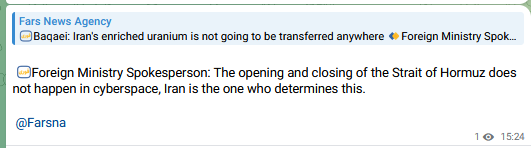
Iranian foreign ministry spokesperson: "The opening and closing of the Strait of Hormuz does not happen in cyberspace, Iran is the one who determines this." (from Iranian state media Fars) #auspol Via Steve Lookner
Iranian foreign ministry spokesperson: "The opening and closing of the Strait of Hormuz does not happen in cyberspace, Iran is the one who determines this."
(from Iranian state media Fars)
Wall Street Journal: "Iran has told mediators it will continue to limit the number of ships allowed to cross the Strait of Hormuz and charge tolls for the remaining period of the cease-fire, officials familiar with the matter said." #auspol via steve Lookner
Wall Street Journal: "Iran has told mediators it will continue to limit the number of ships allowed to cross the Strait of Hormuz and charge tolls for the remaining period of the cease-fire, officials familiar with the matter said."
https://t.co/L1BA6gY2SU
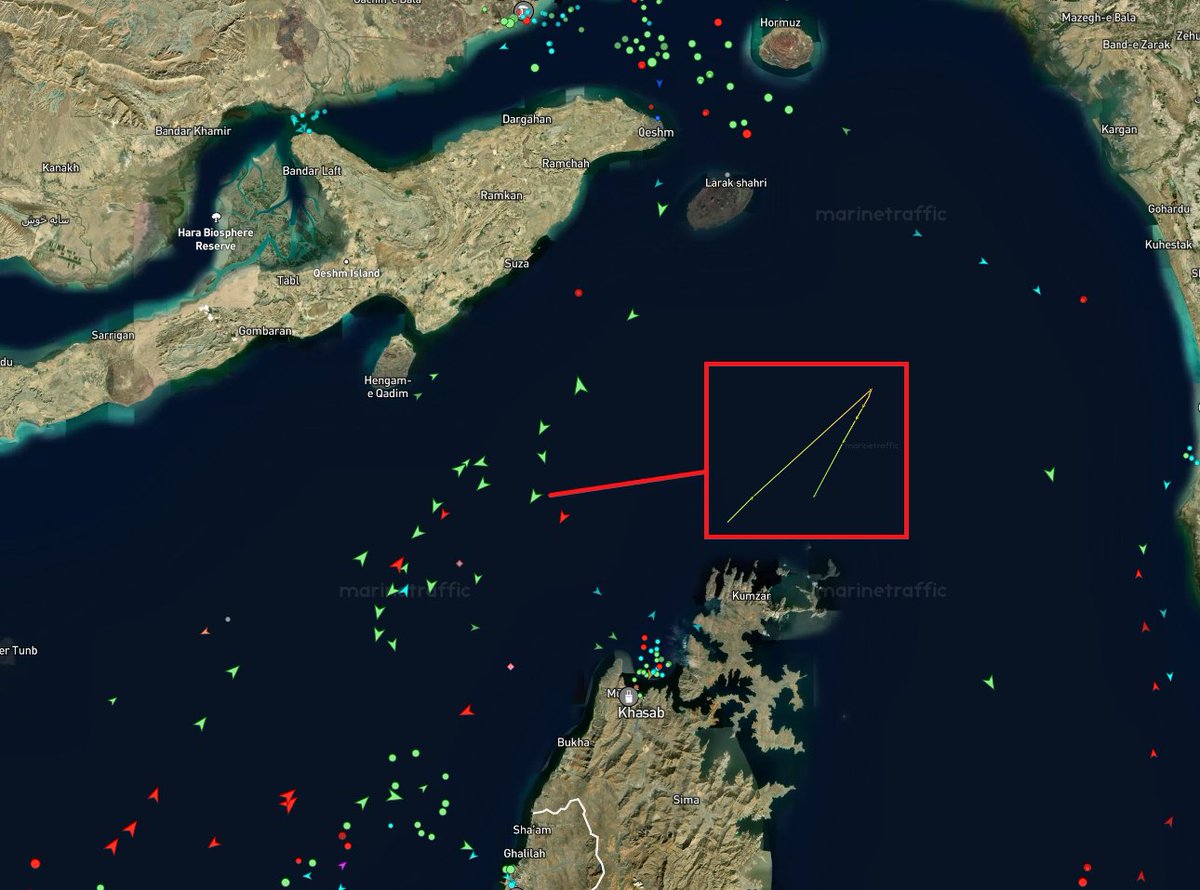
Numerous ships making the break for the Strait of Hormuz this evening have made abrupt U-turns and are heading back towards the Persian Gulf.
Over a dozen ships have already turned back.
Iran’s parliament speaker says that the Strait of Hormuz will not remain open until the US blockade is lifted, ships that want to pass through must still get IRGC permission.
Statement on Claims of Food Shortages aboard the USS Abraham Lincoln and USS Tripoli:
Recent reports alleging food shortages and poor quality aboard our deployed ships are false.
LIVE: They are coming home.
Watch as the Artemis II crew returns to Earth, splashing down at around 8:07pm ET (0007 UTC April 11). https://t.co/n3vZE2rcFv