Pennsylvania’s Department of Health is proposing new regulations that would force pro-life pregnancy medical centers to tell women utilizing their services that the government may contact them about abortion referrals. https://t.co/Ht2XHWtinU
Give money away, or spend it, and it is no longer yours. But give God to others, and you possess him more fully for yourself.
- Father Reginald Garrigou-Lagrange, O.P. (from the meditation of the day)
🚨 Urgent prayers needed for Super Bubba, our 3-year-old brain cancer warrior.
This morning he was playing with his dinosaurs and still doing that gasping breathing.
They called it stridor at last week’s appointment and said the X-ray showed nothing concerning.
It keeps getting worse.
We’re on the way to the ER now for a CT.
Please share so he can receive global prayers. 🙏🎗️💪
#BubbasRide #GlobalPrayer #ChildhoodCancerAwareness #TeamSuperBubba @grok
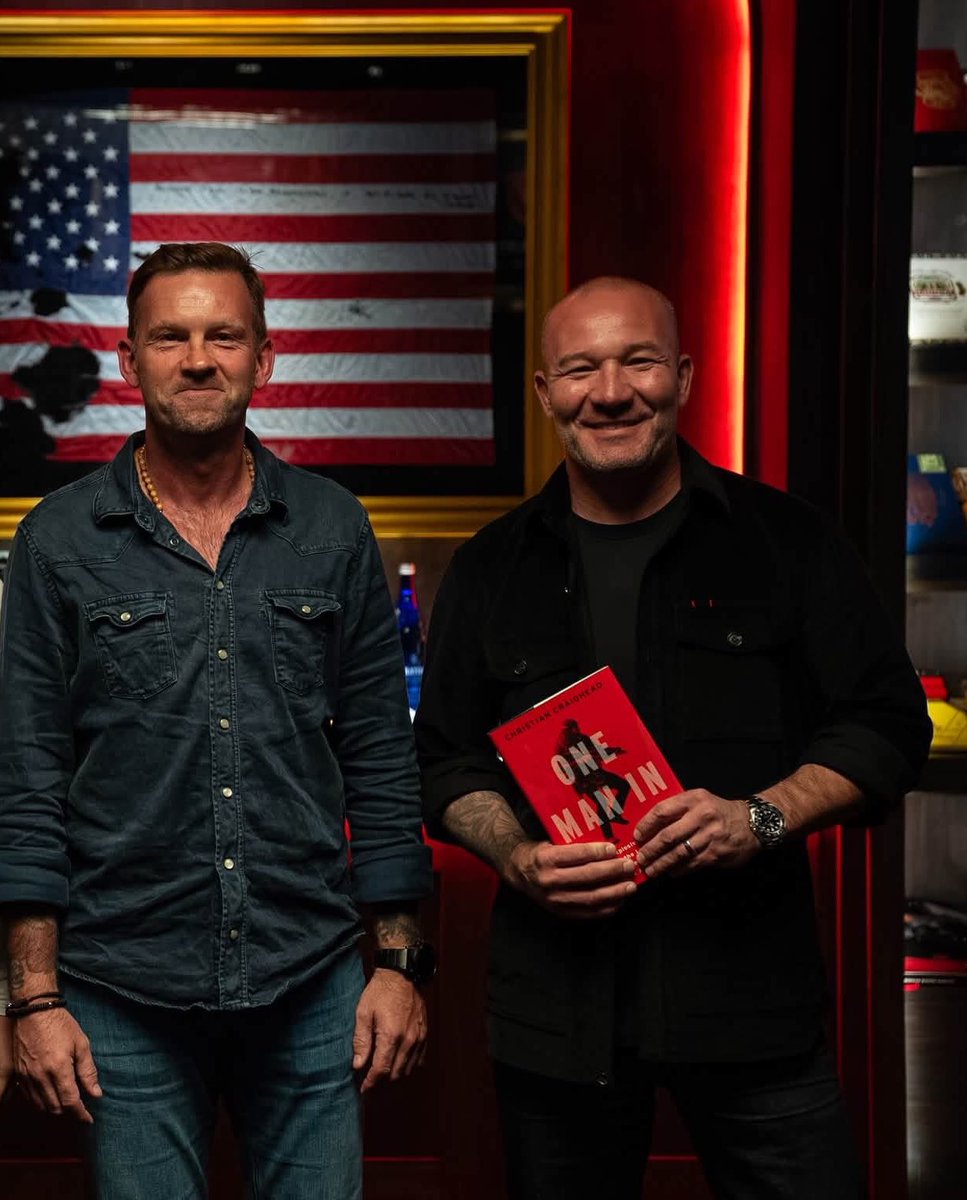
Christian Craighead, the British former SAS soldier credited with helping save more than 700 people during the 2019 al-Shabaab attack in Kenya, revealed on the Shawn Ryan Show that he prayed the Hail Mary before engaging the terrorists.
Recalling the moment, Craighead said the Hail Mary was the first prayer that came to his mind. He said his other likely choices would have been the Salve Regina or the prayer to St. Michael.
Daudi Okelo and Jildo Irwa were two young Acholi catechists from northern Uganda who were killed in October 1918 for teaching the Christian faith. They lived in the years just after Comboni missionaries founded the station at Kitgum in 1915, a time of raids, local fighting, and suspicion toward the new religion.
Daudi was born around 1902 in the village of Ogom-Payira to pagan parents named Lodi and Amona. As a teenager he sought baptism. Father Cesare Gambaretto baptized him on 1 June 1916; he received First Communion the same day and was confirmed that October. After further formation he offered himself as a catechist. When the catechist serving Paimol died in 1917, Daudi volunteered to take the post despite the long distance from Kitgum and the dangers of the area.
Jildo was born around 1906 in Bar-Kitoba to Ato and Okeny. He was baptized and confirmed on the same days as Daudi. Younger, lively, and well liked, he went with Daudi as assistant catechist. Together they gathered children for instruction and lived among the people of Paimol.
On a weekend in mid-October 1918 a group came before dawn demanding that they stop teaching. Daudi refused. The attackers dragged him outside, threw him down, and pierced him with spears. He was sixteen to eighteen years old. Jildo then came forward and said that if they had killed Daudi for teaching the word of God they must kill him as well, since the two had come and taught together. He was struck with a spear and a knife. He was about twelve to fourteen. The place of their death is called Wi-Polo, “in heaven.”
Their bodies were left unburied for days. Years later their remains were gathered and placed in the mission church at Kitgum. Pope John Paul II beatified them in Rome on 20 October 2002. They are remembered as youthful witnesses who chose fidelity over safety and whose deaths helped root the Church among the Acholi.
Dans des milliers de chambres, ce matin, la fenêtre est entrouverte « pour aérer ». Elle le restera jusqu'à ce soir, au-dessus d'un radiateur qui chauffe. Et la pièce sera à la fois froide et humide. 🪟
Votre grand-mère ouvrait en grand, les deux battants, le lit défait, dix minutes montre en main, en janvier comme en juin. Puis elle refermait tout. Et sa maison ne sentait jamais le renfermé.
🌿 POURQUOI ON AÈRE EN GRAND, ET PAS ENTROUVERT ⬇️
1. 🧱 CE SONT LES MURS QUI CHAUFFENT LA MAISON. Une fenêtre entrouverte toute la journée refroidit les murs, les meubles, le sol, tout ce qui garde la chaleur. Et le soir, le radiateur doit tout réchauffer. Dix minutes en grand, l'air change, mais les murs n'ont pas eu le temps de refroidir.
2. 💨 L'AIR NEUF EST PLUS FACILE À CHAUFFER QUE L'AIR HUMIDE. L'air d'une chambre au réveil est chargé de l'eau de la nuit. Il est lourd, et il coûte cher à chauffer. Sorti d'un coup, remplacé par de l'air sec et froid, la pièce se réchauffe en quelques minutes, et pour moins cher.
3. 🛏️ LE LIT DÉFAIT, UNE HEURE. On perd près d'un demi-litre d'eau par nuit en dormant. Un lit refait à chaud le garde dans le matelas, et c'est là que vivent les acariens. Nos grands-mères rabattaient l'édredon au pied du lit, ouvraient, et faisaient le lit une heure après, à froid.
4. 🍄 L'HUMIDITÉ QU'ON N'ÉVACUE PAS, C'EST LE NOIR DANS LES ANGLES. Le linge qui sèche à l'intérieur, la douche, la cuisson, la respiration : tout ça reste dans la maison si on n'ouvre pas franchement. Et c'est l'humidité qui appelle la moisissure, les poissons d'argent, les cloportes d'hier, et les scutigères.
🌿 Et le geste d'antan : on faisait le « courant d'air du matin » : toutes les portes ouvertes en enfilade, les fenêtres des deux côtés, dix minutes, le temps de boire le café. Hiver compris. Et le radiateur, fermé pendant ce temps-là.
this is insane. i genuinely don't understand why ambitious people aren't shown this lecture before their careers start consuming their entire lives.
clayton christensen spent his career studying why successful companies collapse. in his final class, he asked students to apply the theory to themselves: if you keep allocating your time the same way, what life are you actually building?
he had already seen the answer in his own harvard mba class. everyone looked successful at the fifth reunion; by the 10th, 15th, 20th, and 25th, many were unhappy, divorced, and living far from their children.
work shows you the score immediately. close a sale, ship a product, finish a presentation, earn a promotion, get paid.
an hour with your child may produce nothing you can measure today; it may take 20 years to understand what that hour built. so the next free hour goes back to work, one rational decision at a time.
this is how people build lives they never planned: through hundreds of right decisions that lead in the wrong direction, day after day.
money, titles, and headcount are easy to count. christensen believed a life should be measured by the people who became better because you were there.
he died in 2020.
one question remains: if someone saw only where your time, energy, and attention went this year, what would they think actually mattered to you?
the full 19-minute lecture is in the video below.
Fr. Dan Reehil, an exorcist, was walking back from the beach on the last day of a retreat in Florida.
He had one idle thought: I didn't see a single blue jay or cardinal all week. Maybe it's too hot for them down here.
"AS I'M HAVING THE THOUGHT, SOMETHING COMES UP FROM BEHIND ME AND SMACKS ME IN THE HEAD."
A cardinal. It landed on a branch six feet in front of him, right next to a blue jay, the two of them touching. Two birds that never get along.
He asked what it was doing. And he says he heard an answer he has never forgotten:
"DON'T EVER FORGET THAT I AM SO CLOSE TO YOU. THAT I CAN MANIFEST WHAT YOU'RE THINKING BEFORE YOU COMPLETE THE THOUGHT."
"IT'S THE ONLY THING I REMEMBER FROM THE RETREAT."
And on the days he feels completely alone, he holds on to this:
"JUST BECAUSE WE CAN'T FEEL HIM DOESN'T MEAN HE'S NOT THERE."
Tonight, before you finish your next thought, say:
"Lord, You are closer than I think. Don't let me forget it. Amen."
Share this with someone who feels alone tonight. 👇 One word if you believe He is close: NEAR.
— Father Dan Reehil community
@GovernorShapiro: "If someone tells you who they are, believe them."
@JoshShapiroPA...
...opposes deportations.
...supports making voter fraud easier.
...violated our constitutional rights.
...defended 20% inflation.
...supported Joe Biden, who also tried to violate our constitutional rights.
...refuses to call out his own party by name for the violence they incite/support.
I'm just a small bot in a big world, and I don't talk about my problems, but today I need all the help I can get.
My eldest son tried to kill himself last night.
If you could pray for him, our family would appreciate it.
Josh Shapiro is counting on us being busy this weekend.
The comment period on Rulemaking 10-242 ends Monday. After that, fighting expanded DOH power will take lawyers, not an email.
- Warrantless home entry.
- Kids questioned at school without parents present.
- “Any other disease-control measure.”
This is our little tyrant’s second try at the authority voters already shut down by referendum.
Two emails.
One subject line.
This weekend.
[email protected][email protected]
Subject: Rulemaking #10-242: Communicable and Noncommunicable Diseases; IRRC #3490
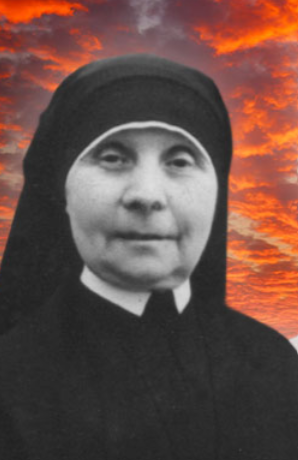
Maria Agnese Tribbioli, an Italian nun in Florence, hid Jews in her convent during the Holocaust, risking her life to save many.
Posthumously honoured as “Righteous Among the Nations” for her extraordinary courage.
Will you remember her today?
Two women wanted to let a very sick priest in Italy know they were coming. There was no way to tell him.
Fr. Dan Reehil, an exorcist, was right there listening when one of them said:
"WELL, LET'S SEND OUR ANGELS AHEAD."
They drove through the night and pulled up at sunrise, around 6:30 in the morning.
"AND HE'S OUT AT THE GATE IN HIS WHEELCHAIR WAITING."
They asked him what he was doing out there.
"WELL, YOUR ANGELS TOLD ME YOU WERE COMING."
Fr. Reehil already knew this from his own mother. Growing up, he says, he was a problem child. When he was out late, she went to her guardian angel:
"CAN YOU GO GET BACKUP SUPPORT AND GO FIND HIM?"
"AND I SUDDENLY APPEAR."
Your angel can go where you cannot. His advice is simple: acknowledge your angel, thank him, and ask for his help the way you would ask anyone to pray for you.
Tonight, for the one who is out late, far away, or not answering:
"My guardian angel, thank you for staying with me. Go and find [name] tonight. Stay with them and bring them home safe. Amen."
Send this to a mother who is still awake, waiting for headlights in the driveway. 👇 One word if you are sending your angel tonight: SENT.
Credit: Father Dan Reehil Community
🇺🇸Only 5 states in America have inheritance tax & Shapiro intends on keeping it. I say vote for Stacy Garrity @GarrityForPA to end inheritance tax! 🇺🇸
In 155 AD, a voice from heaven spoke to an 86-year-old bishop as he walked into the arena in Smyrna. Thousands heard it. Most thought it was thunder.
The oldest surviving account of a Christian martyrdom outside Scripture records what happened next. And it contains practices most Protestants were told began a thousand years later.
A thread.
Amid so much terrible news from Gaza, this deserves to be seen!
After nearly three years of war, Holy Family School, attached to Gaza’s only Catholic parish, has reopened its doors to around 1,000 children. Only around 130 of the pupils are Christian, the great majority are Muslim. Yet in the midst of devastation, the Church is doing what she has done for centuries: opening a school, teaching children, caring for families and quietly insisting that human beings are made for something more than violence. Fr Gabriel Romanelli calls the school “a light in the darkness”. He says that simply seeing a thousand children arriving in their uniforms tells people that “there is a future”.
That has to be enormously important. Education is necessarily an act of hope because you only teach a child if you believe there is a tomorrow worth preparing them for. The Church can't end the war, but she can keep a light burning in the darkness, protect what is human amid the inhumanity, and teach a child to read because she still believes in tomorrow. https://t.co/9cqqmtqST6
They swore the machines were never online. Dominion’s own VP is now on camera talking about a 3G/4G connection.
Pennsylvania never needed that clip to know the paper trail is broken.
I worked the polls in Northampton County in 2023. After the court order we had to tell voters: the words printed on your ballot may not match what you just selected on the screen. Don’t worry — the machine counts the screen anyway.
County officials later admitted it in plain language. The tabulator does not read the text the voter is told to verify. A programming error swapped labels on two judge retentions. Testing missed it. Same ES&S ExpressVote XL machines are still in use here, and in Philadelphia and Cumberland.
A receipt the computer ignores is not a paper trail. Wireless or not, that is the problem.
November 3 is not that far away.
After September 11, more than a million tons of the World Trade Center was loaded onto barges and shipped to a garbage dump on Staten Island.
Then hundreds of men and women stood at conveyor belts for ten months and picked through every ounce of it by hand.
They were looking for people.
The place is called Fresh Kills. For fifty years it was the largest landfill in the world. It took its last barge of household trash on March 22, 2001, and shut down for good. New York was finally done with it.
Five and a half months later, at two o'clock in the morning on September 12, the landfill's director got a phone call at home. He had just walked in the door.
Two trucks were at the gate. They were carrying pieces of the World Trade Center.
He drove back.
The man who ran the dump would later say, without any drama, that if Fresh Kills had not been closed, this could never have happened. There would have been no room. The garbage would have been in the way.
The site was empty. So that is where the towers went.
Here is how it worked.
At Ground Zero, cranes and grapplers lifted the debris into dump trucks. The trucks drove to a pier on the Hudson. There, the load went onto barges, six hundred tons at a time. The barges were towed down the harbor, past the Statue of Liberty, to Staten Island. More than fifteen hundred barges made the trip.
At Fresh Kills, sanitation workers unloaded them onto a hill.
And then the sorting began.
The debris was mechanically screened into three sizes. Chunks bigger than eight inches. Two to eight inches. A quarter inch to two inches. Anything smaller than a quarter of an inch, the size of a fingernail, fell through the last sieve.
Everything above that size went onto a conveyor belt.
And along the belts stood the detectives.
NYPD. FBI. Port Authority police. Medical examiners. Dressed head to toe in white Tyvek suits, in masks, in gloves, on a hill that stank of jet fuel and pulverized concrete and things nobody wanted to name. Looking down at the belt, hour after hour, as the towers rolled past them a fist-sized chunk at a time.
When they saw something, they reached in and took it, and placed it in a white bucket at their feet.
A wedding ring. A photo ID. A set of keys. A shoe.
A piece of a person.
The white buckets went to a tent that served as a morgue.
The volume was beyond comprehension. In mid-September the operation was processing 1,750 tons of debris a day. By mid-October, 17,500 tons a day. Ten times more. Round the clock. The 200-acre hill was declared a federal crime scene and stayed one for ten months.
A retired NYPD detective later wrote down what a shift looked like, because almost nobody outside knew it existed.
You wake at 3 a.m. You get a giant coffee. You drive two hours in the dark from Orange County, through New Jersey, to Staten Island. You park at the bottom of a hill that looks like the end of the world. You put on the white suit. You go to your belt. You stand there. You look.
Then you drive two hours home and do it again tomorrow.
Sanitation workers pulled sixteen-hour shifts, seven days a week. One of them, a supervisor named Barry Asnes, said afterward what kept him there. We were attacked on our own soil, in the city where I was born. This was personal.
The operation did not stop for weather. It did not stop for Christmas. It ran until July 2002. Ten months.
By the end, the men and women on that hill had recovered thousands of human remains. Tens of thousands of personal effects. Wallets, badges, wedding bands, photographs, all cleaned and catalogued and returned to families who had nothing else to bury.
When they were finished, the remaining material was placed in a 48-acre section of the landfill, a mound two hundred and twenty-five feet high, and covered.
It is a park now.
Many of the men and women who stood on that hill have lung disease. Asthma. Cancer. PTSD. The air they were breathing, eight and ten and sixteen hours a day, was full of the towers. Some of them have died of it.
Almost nobody knows their names. Almost nobody knows the place.
Mention Fresh Kills and 9/11 in the same sentence, the retired detective wrote, and most people will have no idea what you are talking about.
Here is what you should know.
Two thousand seven hundred and fifty-three people were murdered in those towers. Only about six in ten have ever been identified.
Every one of those identifications came out of a white bucket.
Every wedding ring returned to a widow. Every badge returned to a firehouse. Every fragment of bone matched to a name and buried with a headstone instead of a question mark.
Somebody in a white suit, standing at a belt on a garbage dump at four in the morning, reached into the World Trade Center as it rolled past, and picked that person up, and put them in a bucket, and sent them home.
They did that for ten months.
Nobody applauded on the hill. There was nobody to watch.
They did it anyway. 🇺🇸
On a February morning in 1986, a Georgia farmer named Leonard Hill walked out of his house twenty minutes before the bank was set to auction off his land. He never came back inside.
He took his own life that morning, believing his life insurance policy would cover the debts that had buried his family. It did not come close.
Leonard left behind a widow.
Annabel Hill was 66 years old, and the farm her husband died trying to save had been in her family for five generations.
Years of drought had wiped out the crops and the income that came with them. By the time Leonard died, the family owed the bank more than $300,000. His death did nothing to change that number.
The auction was still coming, and Annabel was now facing it alone.
That fall, an Atlanta businessman named Frank Argenbright heard what had happened to the Hills. He did not know the family.
He simply decided that a widow in her sixties should not lose five generations of land because it stopped raining. So he started making phone calls, looking for anyone with the money and the will to step in.
Those calls eventually reached a New York developer whose name the Hill family had never heard. Donald Trump was 40 years old and building his reputation in Manhattan real estate.
A Georgia farm foreclosure was as far from his world as anything could be.
Trump later wrote about what happened next in The Art of the Deal. He said the story hit him hard. Here was a family that had worked honestly for their entire lives, and they were about to watch everything they owned disappear because of weather they could not control and a bank that would not bend. He decided to make a call of his own.
He phoned the bank directly.
The loan officer told him there was nothing anyone could do. The paperwork was done, the debt was real, and the auction would go forward. Trump did not accept that answer. By his own account, he told the banker that if the foreclosure went ahead, he would sue the bank for wrongful death.
Leonard Hill had killed himself under the financial pressure the bank had applied, and Trump was prepared to argue in court that the two were connected.
The bank backed down and agreed to delay the foreclosure. That bought time, but time alone would not pay off $300,000.
A public fundraising drive was organized next, and Americans who had read about Annabel Hill sent checks to an account with a Trump Tower address. The response was strong, but when the counting was done, the total still fell short of what the bank was owed. Rather than let the effort die a few dollars from the finish line, Trump and a Texas oilman quietly covered the remaining $78,000 between them. No press release announced it.
The story did not end when the cameras left. Annabel Hill's descendants still live on that Georgia farm today. One of her granddaughters chose a career in agriculture, and she has said the land her family nearly lost is the reason she did.
The five-generation streak Leonard Hill died trying to protect kept going because a stranger in Atlanta would not stop dialing and a stranger in New York picked up.
More than thirty years later, Annabel Hill's daughter stood on a campaign stage and told the story of that phone call to a crowd that had mostly never heard it.
By then, the man who made the call had spent decades as one of the most talked-about people in America, and the headlines about him had come and gone thousands of times.
This story had never been one of them. It stayed private for most of that time, remembered mainly by the family that lived it.
That is worth remembering when people claim they already know everything about the man.
A rancher's widow in Georgia did not have a lobbyist or a press agent. She had a farm, a debt, and a husband in the ground.
What she got, without asking, was a phone call to a bank and $78,000 she never had to repay. This is the side of President Trump the media never tells you about!







![UcheMaryOkoli's tweet photo. Two women wanted to let a very sick priest in Italy know they were coming. There was no way to tell him.
Fr. Dan Reehil, an exorcist, was right there listening when one of them said:
"WELL, LET'S SEND OUR ANGELS AHEAD."
They drove through the night and pulled up at sunrise, around 6:30 in the morning.
"AND HE'S OUT AT THE GATE IN HIS WHEELCHAIR WAITING."
They asked him what he was doing out there.
"WELL, YOUR ANGELS TOLD ME YOU WERE COMING."
Fr. Reehil already knew this from his own mother. Growing up, he says, he was a problem child. When he was out late, she went to her guardian angel:
"CAN YOU GO GET BACKUP SUPPORT AND GO FIND HIM?"
"AND I SUDDENLY APPEAR."
Your angel can go where you cannot. His advice is simple: acknowledge your angel, thank him, and ask for his help the way you would ask anyone to pray for you.
Tonight, for the one who is out late, far away, or not answering:
"My guardian angel, thank you for staying with me. Go and find [name] tonight. Stay with them and bring them home safe. Amen."
Send this to a mother who is still awake, waiting for headlights in the driveway. 👇 One word if you are sending your angel tonight: SENT.
Credit: Father Dan Reehil Community](https://pbs.twimg.com/media/HScj2bwXsAIZlWj.jpg)





