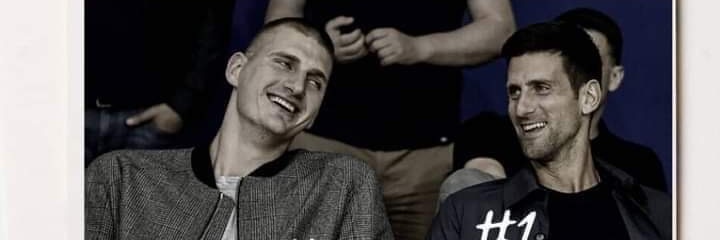
People aren't watching because of Jannik Sinner...correct!
But not because he's not playing though, you absolute melons.
People aren't watching tennis anymore because of the special treatment golden balls Jan recieved when he got a lenient ban for failing 2 drug tests.
Idiots.
Diocese of Raška and Prizren condemns unfounded allegations made in the Kosovo Assembly concerning Serbian holy sites
During a debate on legislation intended to protect cultural heritage, MP Arbër Rexhaj disputed the Serbian identity of Orthodox holy sites and claimed that churches had been used as places where Albanians were killed
The Diocese of Raška and Prizren of the Serbian Orthodox Church strongly condemns the falsehoods and insults directed at our Church and its holy sites by Arbër Rexhaj, a member of the Assembly from the governing Vetëvendosje (Self-Determination) Movement. He made these remarks in Pristina on the night of 19 to 20 November 2026, at the 13th plenary sitting of the Kosovo Assembly’s eleventh legislature, during the first reading of the Draft Law on the Central Inspectorate for Cultural Heritage (No. 11/L-023).
Responding to concerns raised by Serb members of the Assembly about the possible consequences of the proposed inspection powers, Mr Rexhaj stated that Orthodox churches had served as “dungeons and bunkers for the elimination of Albanians”. He also claimed that, under the Ahtisaari Plan, Albanian Orthodox heritage in Kosovo had been taken from Albanians and declared to be Serbian. It is particularly troubling that these remarks were made during a debate on legislation whose purpose should be to protect these very holy sites. In its public statement of 21 November 2026, the Diocese had already warned that the proposed inspection powers, in their present form, could be used to circumvent the safeguards afforded to the Church under the Law on Special Protective Zones and other applicable legislation, depriving those safeguards of practical effect.
To the best of the Diocese’s knowledge, the Parliament speaker did not intervene to stop the offensive remarks, and no formal warning was issued to Mr Rexhaj. The Minister of Culture, who was present, did not distance herself from his remarks either. Article 63 of the Kosovo Assembly’s Rules of Procedure requires the presiding officer to intervene when unparliamentary language is used, and Article 65 provides for a formal warning. When allegations of such gravity are made on the floor of the Assembly without any evidence being presented, silence from those responsible for maintaining order gives the impression that such language is permissible. In the Diocese’s view, these statements bear the hallmarks of hate speech. They fuel hostility and give monks, nuns, clergy and the faithful cause to fear for their safety.
Claims that our churches and monasteries were “stolen” from Kosovo Albanians under the Ahtisaari Plan are also frequently heard in some Kosovo media outlets. Such claims carry particular weight when made by a member of the Assembly who has a vote on legislation to protect cultural heritage. The origins of these holy sites are well documented in historical sources accepted by the international scholarly community. The Serbian Orthodox Church has cared for them for centuries. Respect for the Church’s property and for the religious and historical identity of its holy sites is also an obligation arising from constitutional and statutory guarantees and from international instruments protecting Serbian religious and cultural heritage in Kosovo and Metohija.
The pogrom of March 2004 reminds us how dangerous it can be when inflammatory accusations are allowed to spread unchecked. Serbian Orthodox churches and monasteries were set on fire, demolished and desecrated, and many families were forced to leave their homes. We might well ask why extremists in Kosovo would burn and destroy Orthodox churches if, as they claim, those churches are Albanian.
(Continued in the thread)
#SerbianOrthodoxChurch #Kosovo
https://t.co/tLKUULSHyy
Whilst EU officials condemn a Serbian instrumental song that was played at the recent EU Enlargement Forum, they remain silent about matters of genuine importance, such as the ongoing arbitrary demolitions of Serbian-owned homes in #Kosovo by the Albanian separatist regime.
👇
Sinoć u LEPOSAVIĆU, na severu KOSOVA, prištinska inspekcija zatvorila je tri ugostiteljska lokala, u vlasništvu Srba.
Za poslednjih mesec dana na tom delu Kosova zatvoreno je deset srpskih ugostiteljskih objekata.
Rade Srbima šta im padne na pamet, samo da ih nateraju na iseljavanje.
Napušteni su, sami, isporučeni Albancima na milost i nemilost, nema ko da ih zaštiti. Ni da zažali.
🚨 🇷🇸🇬🇧 BRITISH COMEDIANS MOCK SERBS OVER “GREATER SERBIA.” BRITAIN ONCE RULED A QUARTER OF THE WORLD.
Fin Taylor and Horatio Gould called Serbs “Slavic Israelis” while joking about “Greater Serbia” and the road to World War I. The joke lands a little differently coming from Britain, a country whose empire covered roughly a quarter of the world’s land and whose government helped decide where borders in the Balkans should run.
Take the Congress of Berlin in 1878. Britain pushed to shrink the proposed Bulgarian state because London feared it would give Russia too much influence in the Balkans. Britain also backed Austria-Hungary’s occupation of Bosnia and Herzegovina. British Prime Minister Benjamin Disraeli told Parliament exactly what was at stake for him: “the interests of the British Empire.”
By 1914, Austria-Hungary had annexed Bosnia and Herzegovina and would go on to declare war on Serbia. So if a British comedy show wants to make imperial ambition the punchline, it could start with the great powers that were already carving up the Balkans. Britain had a seat at that table.
📅 17 November 2026 · Fin vs History — “The Serbs, Really?”
❗️Шиптарско терористичка инспекција уз асистенцију шиптарских терориста у Лепосавићу је затворила неколико угоститељких објеката.
Терор на #КиМ траје, да ли ће се скупштина у уторак огласити поводом тога @studentblokade?
@DamaSaOklopom Штета што не пропадоше Италију
Тако би се Срби спасли у усташа
А и данас би ишли на море без страха да ће неко да ти исече гуме или каменује јер си Србин
@festivetables With Novak we can get the exact moment he was injured
Replayed many times
Questioned endlessly
Even when dr say they perform surgery still a doubt ?
But with sinner we hear all these is he-or not injured
When did that happen? At r1 of w19? How he played the rest of the trnm?
@festivetables The double standards could not be more obvious… yet some people still deny them.
The corruption in our sport, and the way tennis journos comply is beyond shocking.
Фашизам уживо: Оспоравање идентитета и положај Срба у Хрватској
На снимку старији мушкарац јасно каже да је Србин, православне вере и хрватски држављанин, на шта му млађа саговорница одговара да је, пошто је рођен у Хрватској, Хрват, а не Србин, поручујући му да „има да буде Хрват“ и да „научи основне ствари“. Ова расправа показује искључивост и притисак коме су изложени преостали Срби када им се оспорава право на сопствени идентитет само због територије и држављанства.
Држављанство и етнички идентитет нису исто. Држављанство је правни однос према држави, док се етнички идентитет заснива на пореклу, историјском памћењу, култури, традицији и вери.
Историјско присуство Срба - Срби су на овим просторима аутохтони народ који је вековима живео кроз различита царства и државе, а у југословенском оквиру Хрватска је устројена и као република хрватског и српског народа.
Проблем асимилације и двоструких аршина: Наметање идентитета већинског народа води у асимилацију и негацију, што је у 20. веку у НДХ довело до тешких злочина и геноцида над Србима. Уз данашње наглашавање права на самоопредељење и лични идентитет, ускраћивање права аутохтоном Србину да се изјасни као Србин представља озбиљно кршење основних људских и мањинских права.
Овакав однос према човеку који на снимку јасно каже да је Србин, православне вере и хрватски држављанин, док му се поручује да је због рођења у Хрватској „Хрват, није Србин“ и да „има да буде Хрват“, дешава се у држави чланици ЕУ пред очима институција које ретко, или никако, реагују друштвене инциденте ове врсте. То само огољава колико се лако преко таквих појава прелази када се оспорава српско име и порекло.
Све се плашим да ускоро ни у своји земљи, у Србији, нећемо смети да кажемо да смо Срби, православци.