Agents are about to become retail's biggest sales channel.
At https://t.co/HmeesRUToF we're building the Operating System for Agentic Commerce: one trusted data layer any AI agent can sell from.
Millions of conversations. 50+ enterprise clients.
@eric_seufert Building https://t.co/HmeesRUlz7, I see third-party agents stall on the shopper's second question: "will this fit like the pair I bought in March?" Only the retailer's own agent knows that order. First-party wins on memory, not reach. Third-party wins discovery, then hands off.
@levie Seeing this from the commerce side: tool-use gains show up first in the mechanical steps, like cart, coupons, checkout forms. The slow part is judgment: is it a gift, will it fit, can I return it. Verifiable tasks compound fast. Taste doesn't.
ChatGPT Wallet solves one piece: paying without the agent ever seeing your card. Visa, Mastercard and Amex issue a token per purchase.
The other piece is the merchant. The agent only sells when it can read the store's catalog, stock and shipping. That's where the work is now.
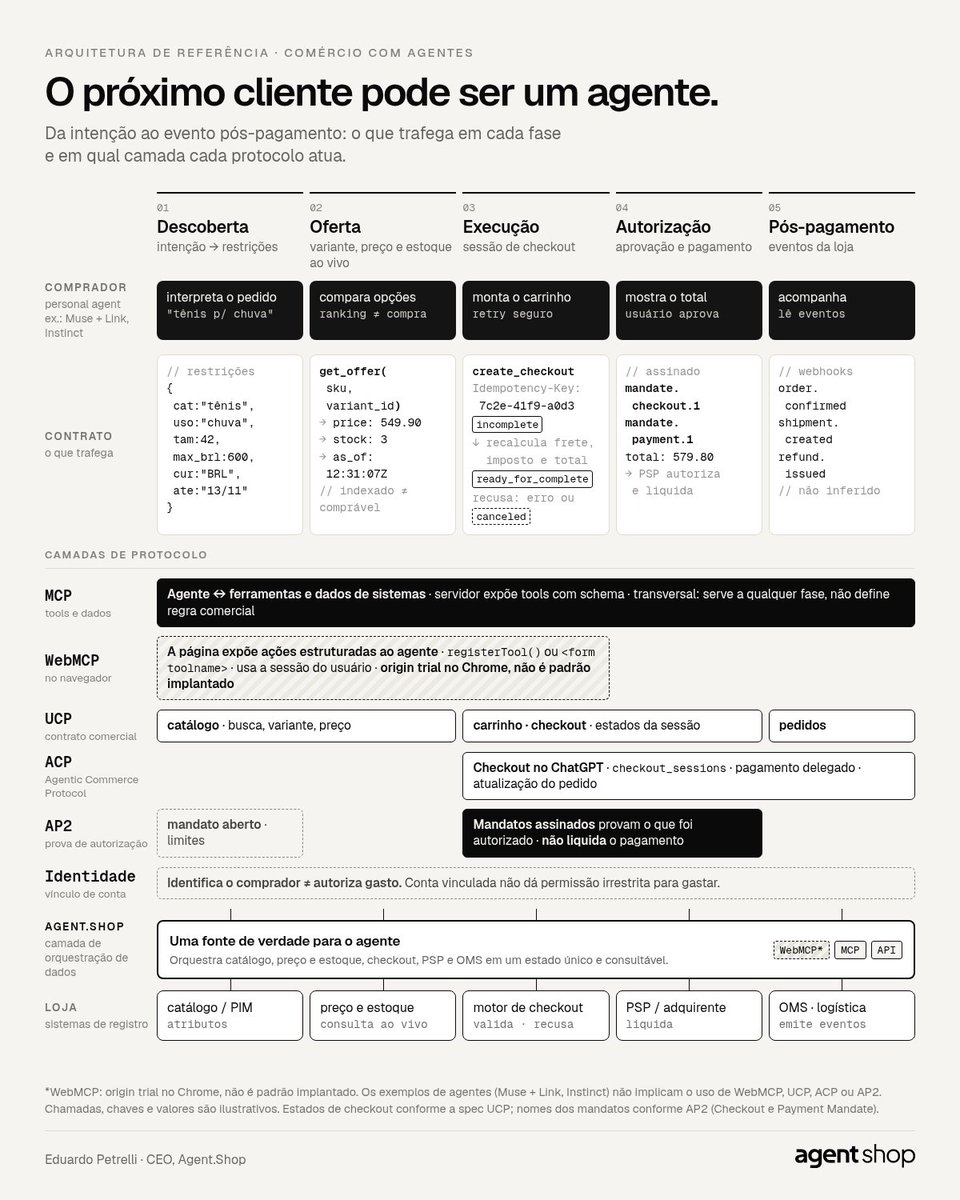
Agent commerce has layers. MCP connects agents to tools. WebMCP (Chrome origin trial) lets a page expose tools. UCP and ACP define checkout contracts. AP2 proves what was authorized; it doesn't settle.
Protocols are contracts. The store still has to answer with its real state.
@eric_seufert Half right. Third-party agents raiding Amazon's shelf are a mirage. Building with 50+ enterprise retailers, I see them reject agents they can't control, not agents. Their own already handle millions of conversations. Market power just decides who runs the agent.
3.6% → 10.7%.
WhatsApp-influenced store revenue at Larroudé (Mar–Aug 2026).
Proud to see Larroudé and AgentShop featured in a global Meta for Business success story. 1,074 orders completed in the chat.
Thank you to the Larroudé and Meta teams.
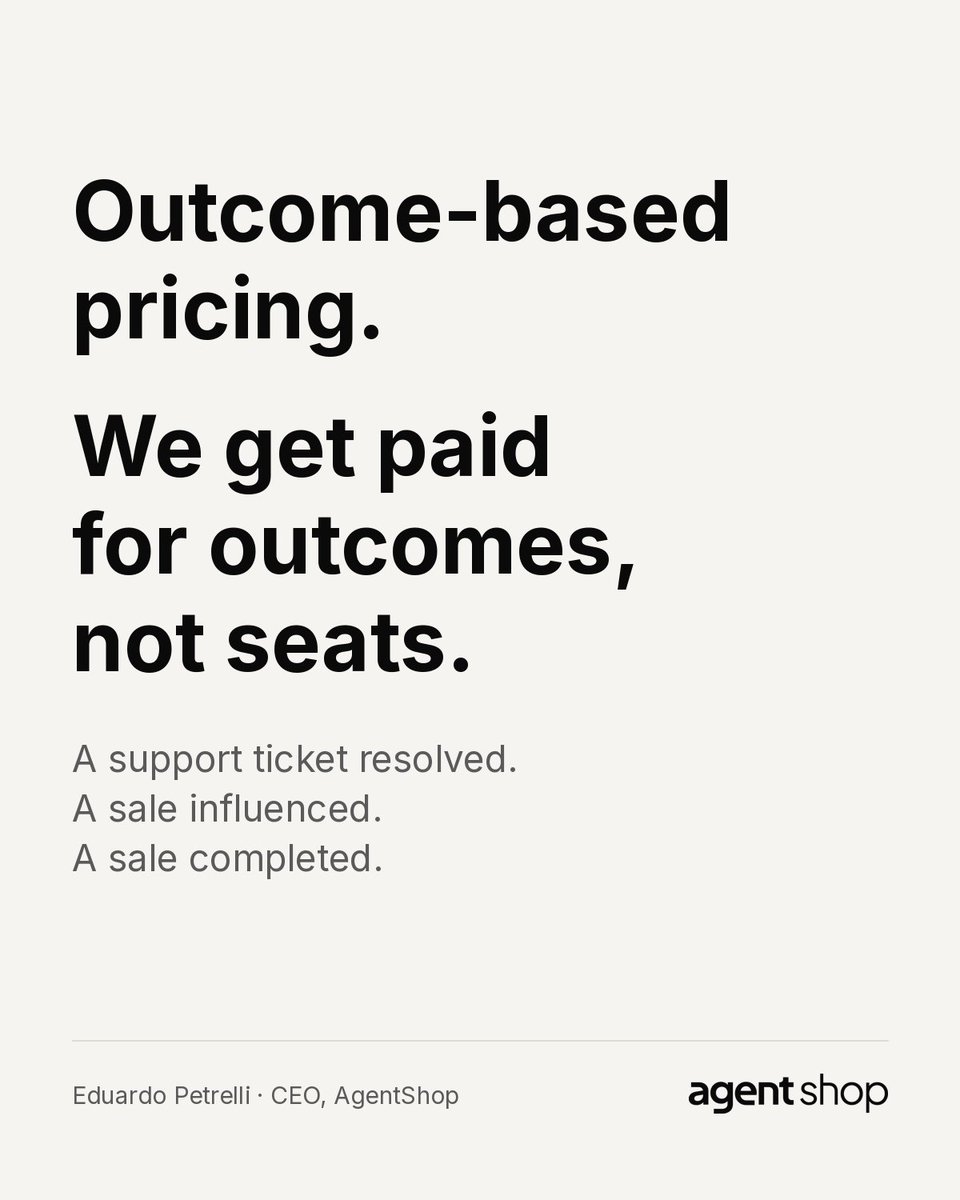
Outcome-based pricing: we get paid for outcomes, not seats.
A support ticket resolved. A sale influenced. A sale completed.
That decision sets the roadmap: every feature has to move one of those. We obsess over the merchant's brain: inventory, campaign rules, delivery dates.
Retail Stories #1: Curitiba, 1977. Miguel Krigsner opens a tiny pharmacy, O Boticário. Customers waiting there ask about his creams. Airport travelers ask to resell them. 1980: his first franchise.
The model came from listening. Next shift: the conversation that sells.
@marktraphagen The "evidence" step is where most agent sales die. Across millions of shopper conversations, the evidence people want is boring: will it arrive by Friday, is my size in stock, does the coupon apply. If the agent can't confirm that live, it never reaches "action."
@ChainStoreAge Easier access matters more than it sounds. With big retailers, the slow part of joining an agent program is rarely the tech. It's deciding who owns the feed: ecommerce, marketing or IT. Amazon removing steps helps, but that question still has to be answered inside the retailer.
@drewsanocki My read: orders outpacing traffic means the agent did the comparing before the click. The visit is the last step, not the first. Before Black Friday I'd make sure the landing page doesn't undo it: a different price than the agent quoted, a missing size, a slow checkout.
@eMarketer The edge is physical. Watching shoppers talk to agents, the question that decides the sale is usually "when can I have it?" An agent that can say "pick it up today, 3 miles away" closes more often than one saying "arrives Tuesday." Walmart's stores make that answer possible.
Google just turned on agentic checkout in Canada. Lululemon, Shoppers Drug Mart, Simons and Shopify merchants now sell inside Gemini and AI Mode.
The fine print matters: the retailer stays seller of record. The agent only sells what the store's systems let it see.
23 days to Black Friday.
In millions of conversations for 50+ enterprise clients, shoppers ask five things before buying: When will it arrive? Is it in stock? Does the discount apply? Can I pay here? Can I talk to someone?
Each answer lives in a different system.
@juokaz Ads can pay for the visit. The sale still depends on what the agent can confirm in that moment: is it in stock, when it arrives, does the promo apply. Paid placement won't save a store the agent can't read.
@jasonlk If agents pick the vendors, the pitch moves from the buyer to the agent. It reads docs, pricing, live availability and past reliability. Companies whose data an agent can't read will just never make the shortlist.
@sytaylor Payment rails are the easier half. Most failed agent purchases break before the token: wrong stock, a promo that didn't apply, a delivery date nobody could confirm. Whichever way payments go, the merchant's live data decides if the sale closes.