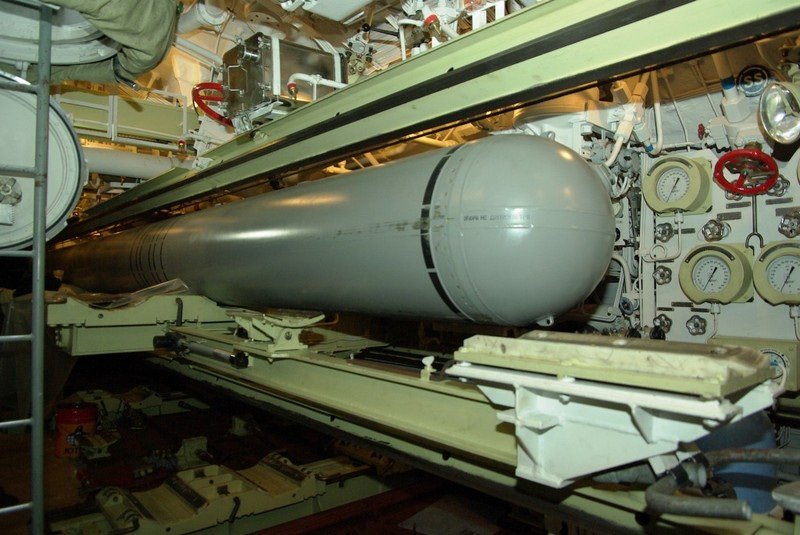
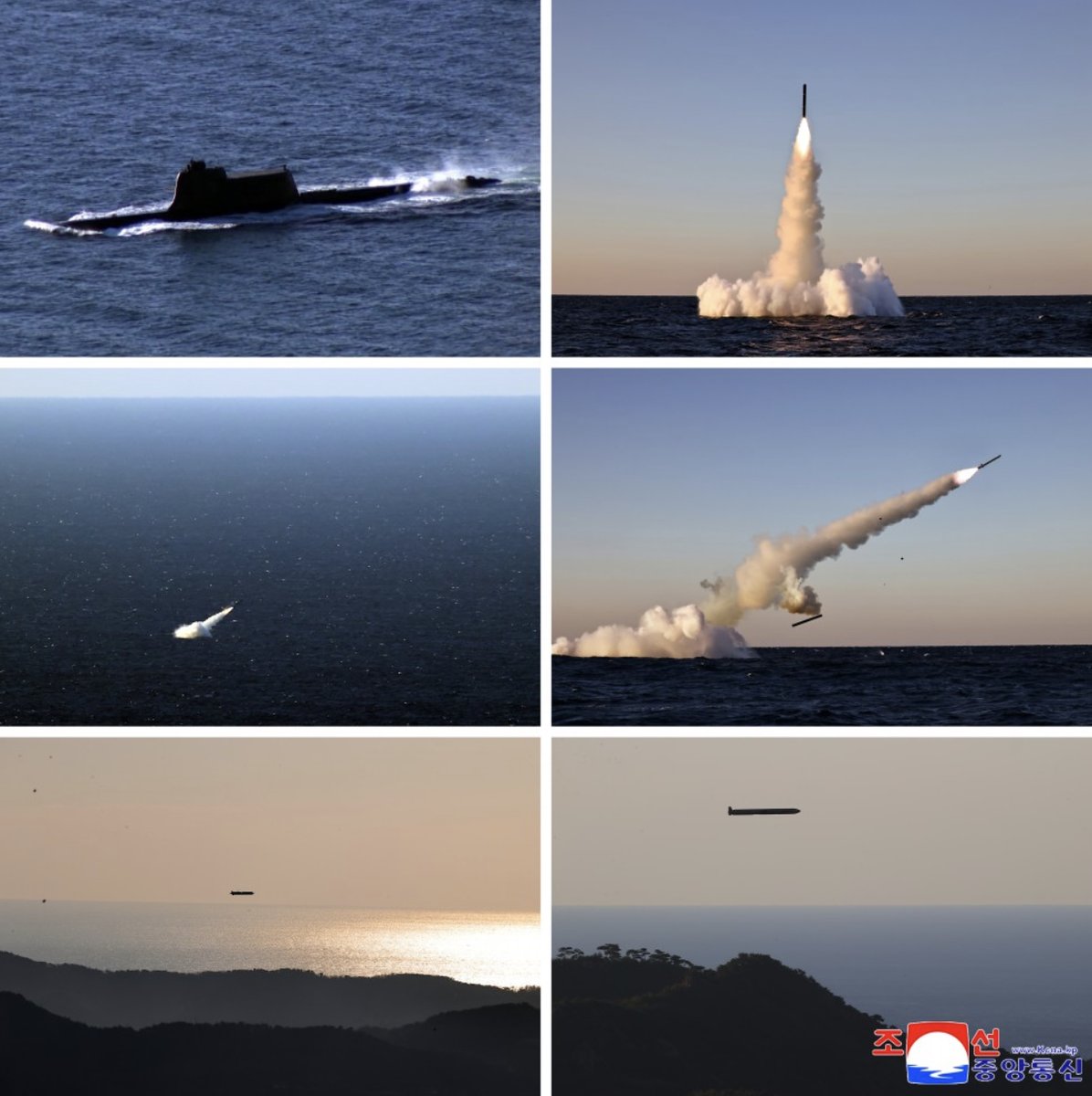
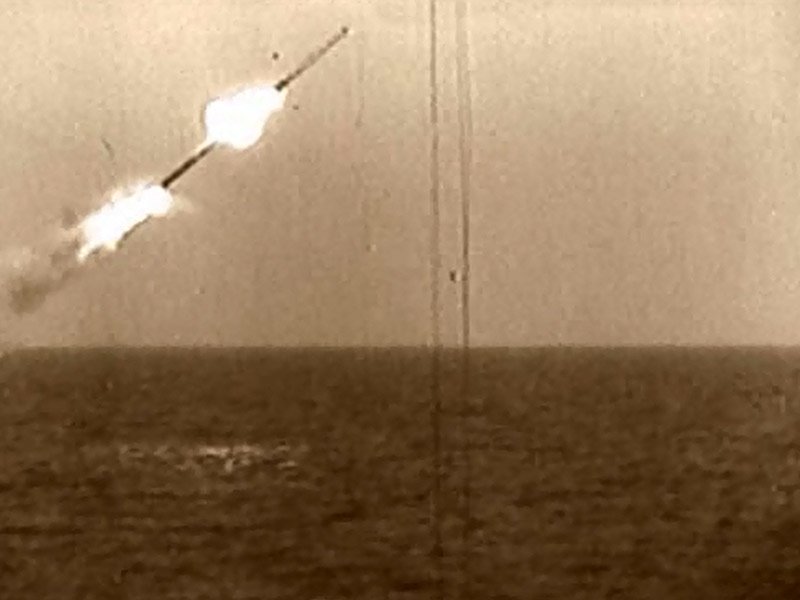
This method is also used on submarine-launched versions of the Kalibr. You can see that the tube does not have cut-outs for the wings to fold out of, and that the nose is set up to split so the missile can come out the front.
Unless they launched two missiles and one failed, it looks like North Korea is borrowing from the Russian toolbox for their cruise missile's submarine launch method.
One problem with launching a cruise missile from underwater is preventing water from getting in the jet engine.
When designing the SS-N-21 Sampson in the 1970s, the Soviets decided to place the submarine-launched missile inside of a sealed tube. The missile is launched out of the submarine in this tube. When it breaches the surface, the missile launches out of the tube.
@M_S_Billingslea It's been long time since I read Alibek's book. Was he referring to the Anti-Plague Institute, or the BW munitions filling site to the North of Irkutsk?
AFAIK, most work (esp. Zilinskas et al) suggests the Irkutsk AP Institute was less uninvolved in BW work than other AP sites
Maybe her biological war book is good, I don't know. I do know, however, that her nuclear war book has a number of glaring problems.
... Oh, and she wrote a book that suggests Stalin hired Josef Mengele to create a race of midget baby pilots.
This is a reminder that friends don't let friends read Annie Jacobsen books.
She is a crank. For almost any book she has written, someone else has done it better. Even her good work, such that it exists, is tainted by the bad.
10 missiles against an air base target - a target type that Iran has in the past only been able to do limited damage do in terms of operations - is a warning shot. Iran could do much more at this point if they wanted to.
@stoa1984@VLS_Appreciator Yes, my understanding is that the Iskander (and presumably the rail-launched HS-11s) only use jet vanes for TVC in the initial moments after engine ignition, when the missile isn't going fast enough for aerodynamic fins to provide control.
@wslafoy I've also been wondering about this. I suspect the answer is "yes"
I suspect it costs a pretty penny for educational institutions, too, though I'm open to correction.
This is, I think, very much a mock-up. And a conceptual mock-up, at that. This is not the actual missile they plan to build - this is the idea of the missile they want to build.
There are many things that don't match up with an actual missile.
🔴Milli Savunma Bakanlığı:
“YILDIRIMHAN füze sisteminde kullanılan Asimetrik Dimetilhidrazin (UDMH) ve azot tetra oksit türevi sıvı yakıtlar ARGE merkezimiz tarafından yerli imkânlarla üretilmektedir.
Söz konusu yakıt teknolojisi; uzun süre depolanabilme, düşük sıcaklıklarda çalışabilme ve yüksek enerji üretme özellikleri sayesinde füze sistemlerine yüksek hareket kabiliyeti kazandırmaktadır.
3 ton harp başlığı taşıma kapasitesine sahip, YILDIRIMHAN Füze sistemine yönelik laboratuvar test süreçleri başarıyla tamamlanmış olup saha testlerine ilişkin çalışmalar planlanan takvim doğrultusunda sürdürülmektedir.
Bakanlığımız, millî teknoloji hamlesi kapsamında savunma sanayiimizin gelişimini desteklemeye, yerli ve millî sistemler geliştirmeye ve Türkiye’nin stratejik caydırıcılık kapasitesini artırmaya kararlılıkla devam edecektir.”
The problem is... where are the manifolds for propellant to enter/exit the cooling channels? I can see manifolds on the thrust chamber in the foreground here, but not on the others.
I realize a lower manifold isn't strictly required, but I don't see ports for an upper manifold.