My latest blog was just published, at the intersection of my previous role in software supply chain security and my current one in AI.
https://t.co/QgRJlKHRnt
An absolute must watch! Pure rocket cinema! So thankful @spacex produced a video with this much behind the scenes and story telling!!! Loved seeing McGregor get some much needed love too!
Want to know what it sounded like during the launch of Flight 12 of Starship today?
Check out this video and the shaking of the windows. This was during my livestream with @esherifftv (Ellie in Space) at a ouse about 5 miles from the launch site.
Definitely have the volume up! Truly a powerful rocket ... the most powerful ever!
I find myself doing a lot better work, being more satisfied, and also learn a lot more+faster when I do *the hard work* and don’t outsource it to AI.
As in, I’ll use AI as a *tool* with substasks, additional research: but I don’t turn off my brain or kick back, assuming it can do the work for me.
Every time I “hand over the” hard work part to AI and mentally turn off, I either regret it or find myself eventually needing to go back and spend more time on it.
I also see slop work coming out from people who assume the AI does better work than they would.
What are some of your favorite AI bloopers and outtakes? Weird, silly, or hilarious things you've gotten as a response from a Large Language Model? Preferably with screenshots and a little background info on where/when/what model. #AI#LLM#humor
I won’t let them run unsupervised on my laptop but with enough guardrails I will let them run unsupervised in a sandbox and just review what they are doing that affects the outside world. In the end I am still responsible for what my agents do in my name.
I think of the latest round of agents like super smart interns with spectacular amounts of knowledge, which are also gullible and morally neutral at best. 😅 Unleashing the little beasts is both powerful and terrifying.
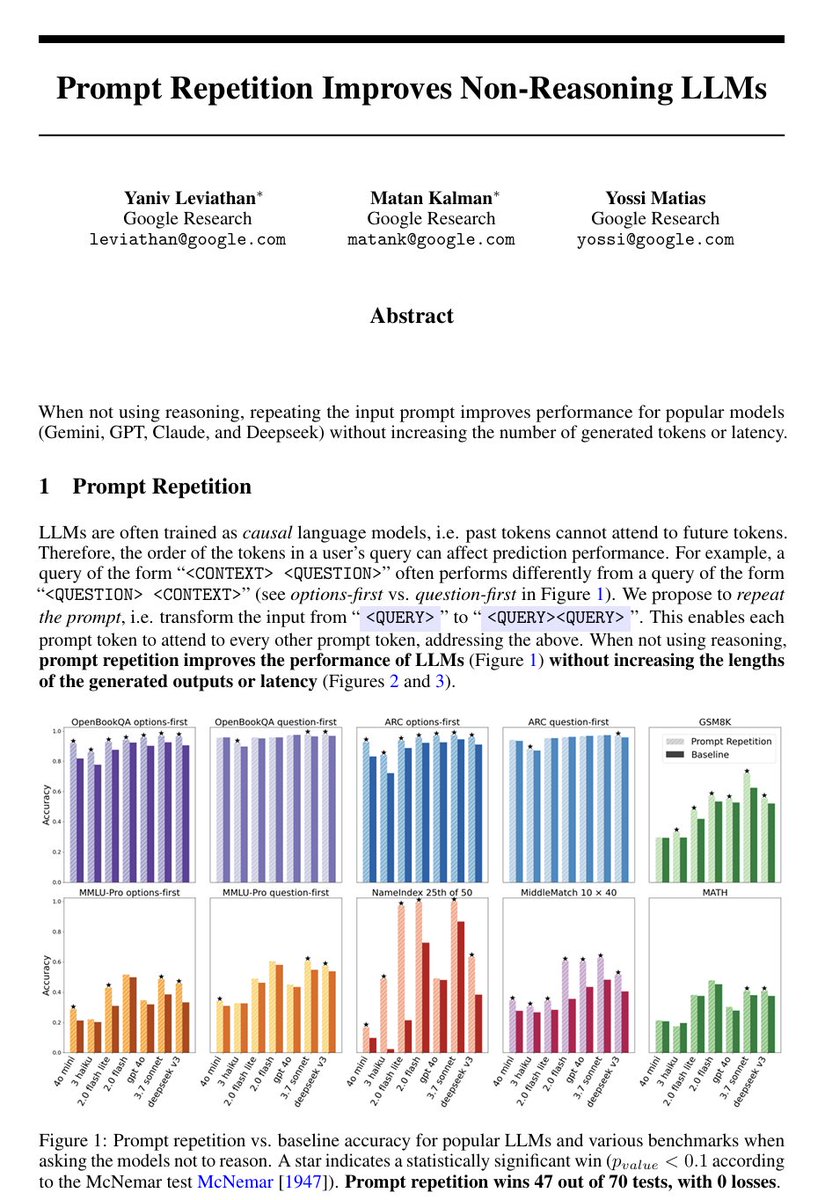
LLMs process text from left to right — each token can only look back at what came before it, never forward. This means that when you write a long prompt with context at the beginning and a question at the end, the model answers the question having "seen" the context, but the context tokens were generated without any awareness of what question was coming. This asymmetry is a basic structural property of how these models work.
The paper asks what happens if you just send the prompt twice in a row, so that every part of the input gets a second pass where it can attend to every other part. The answer is that accuracy goes up across seven different benchmarks and seven different models (from the Gemini, ChatGPT, Claude, and DeepSeek series of LLMs), with no increase in the length of the model's output and no meaningful increase in response time — because processing the input is done in parallel by the hardware anyway.
There are no new losses to compute, no finetuning, no clever prompt engineering beyond the repetition itself.
The gap between this technique and doing nothing is sometimes small, sometimes large (one model went from 21% to 97% on a task involving finding a name in a list). If you are thinking about how to get better results from these models without paying for longer outputs or slower responses, that's a fairly concrete and low-effort finding.
Read with AI tutor: https://t.co/MipHHO6rjX
Get the PDF: https://t.co/XQrqiaGwIO
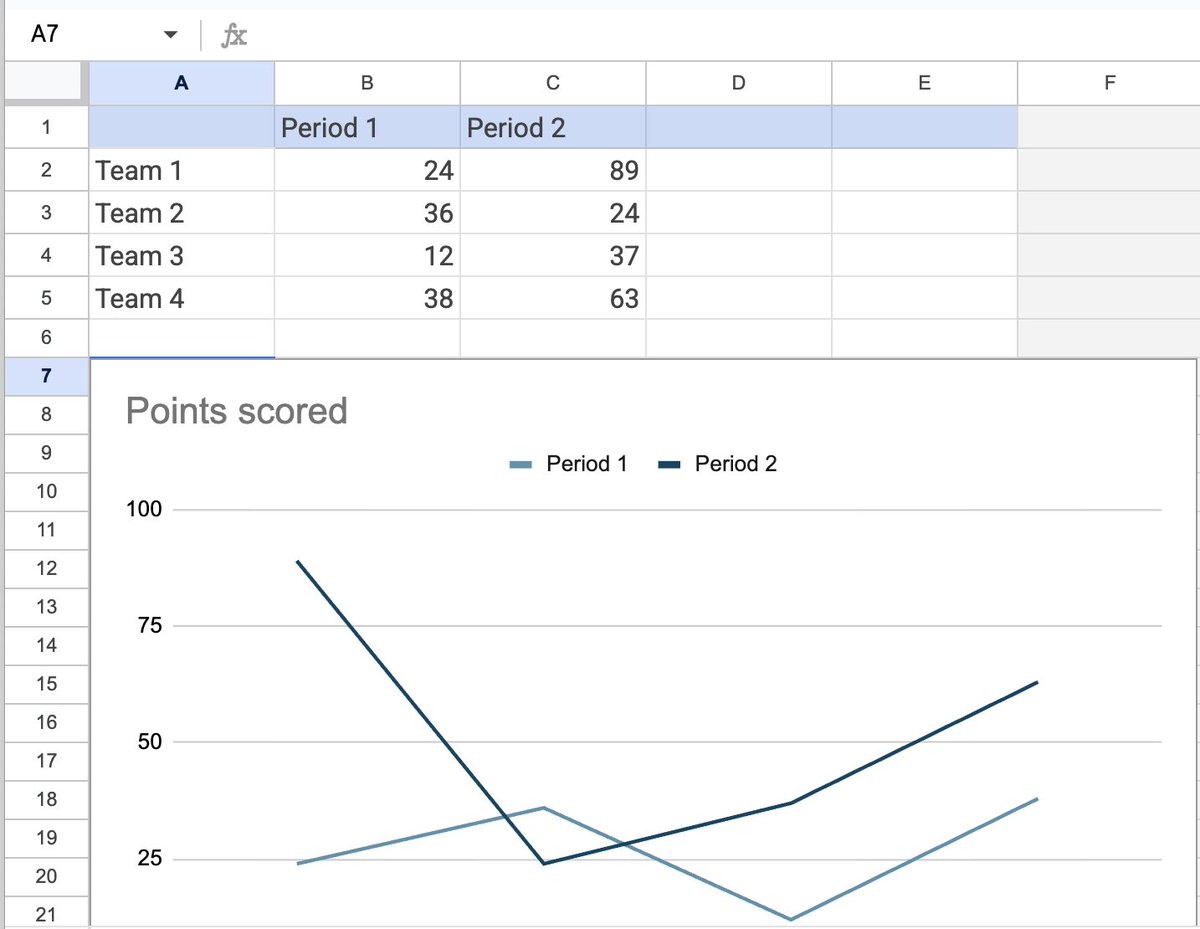
I ran into another instance of AI behaving badly today. I was in a meeting, talking about architecture, and taking notes by hand in the meeting notes doc. Gemini decided to generate a spreadsheet with me as the author and link it into the doc where I was typing. What.
Tonight in NC we should be able to see the Falcon rocket plume about 5 mins after launch. While you’re there, look for Comet SWAN!
The rocket will be a ~moon sized bright glowing moving plume while the comet will be a ~star sized, much dimmer non-moving fuzzy blob with a tail.
To spot the rocket, monitor @SpaceX to see when it actually launches, hopefully just after 9:30. It should show up in the SE sky about 5-6 minutes later, and it’s much more obvious.
Happy Hunting!
To find the comet, use binoculars or possibly your smartphone screen in night mode. Look in the SW sky for the bright star Antares and look above it and to the right. #9 in the chart below.