Meet some of Durham’s Science Engagement champions, inspiring curiosity by connecting research with schools and communities. Through hands-on activities, they’re making science accessible to everyone. 🌟🔬
👉 https://t.co/y0Ri3nO3cH
#100FacesofScience 👩🔬
We wish Chloe and James all the best in their ongoing doctoral research (on, respectively, school distress and access to PE), and the same to Dr Botha with their Leverhulme research.
You can find out more about the Centre's amazing work here 👉 https://t.co/NmTeSYBKk5
It was also fantastic to learn about the ongoing success of the Centre's Triple-A project.
Professor Hanley spoke to us about the project back in 2021 👉 https://t.co/8ox5SksHIp
You can also learn more about it here 👉 https://t.co/42LUVOznGV
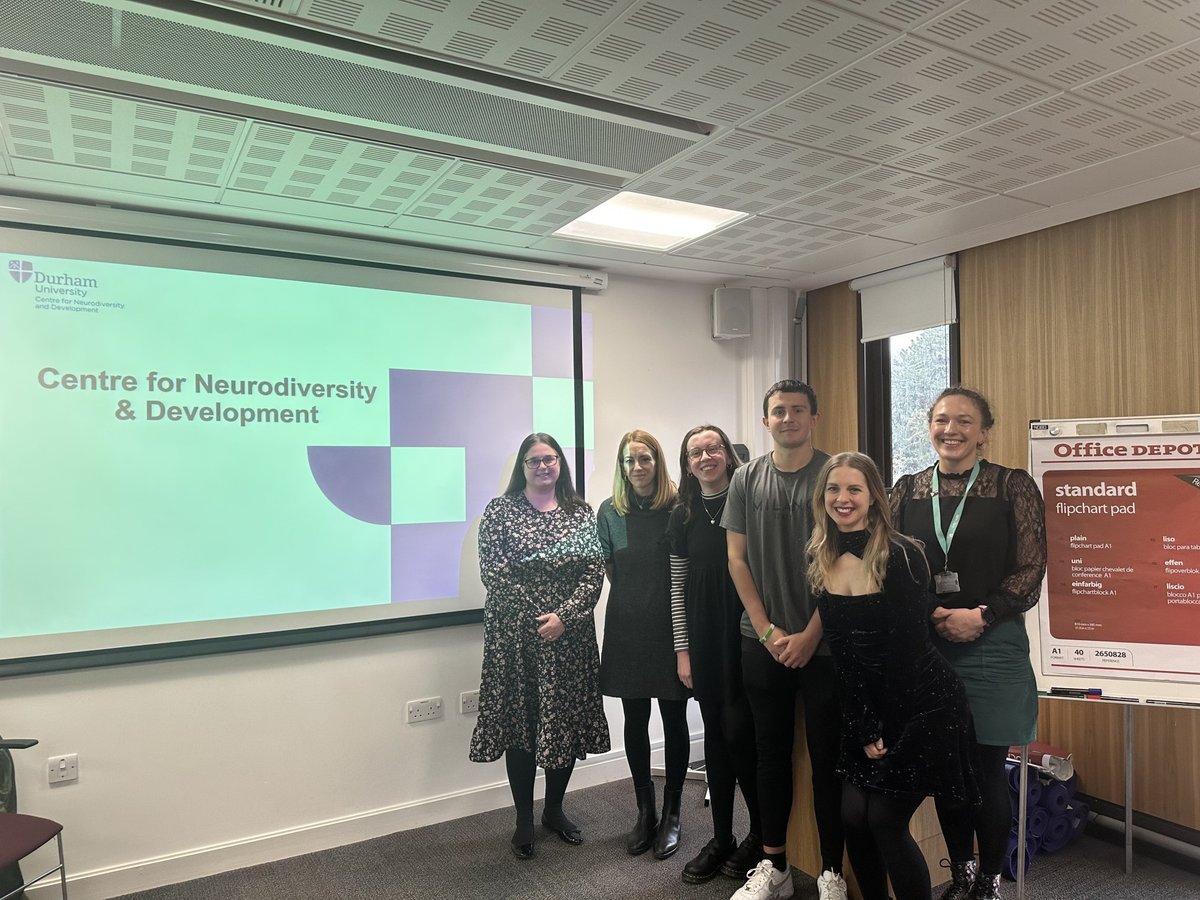
They discussed neurodiversity and experiences in schools, physical education, relationships, and the Triple-A project - and touched upon two of Dr Pearson and Dr Botha's recent outputs which can be accessed via DRO 👇
https://t.co/frBT4RN11Y
https://t.co/FwDEKygQ5k
Our Centre for Neurodiversity & Development @durhamdevdis brought together researchers, practitioners and people with lived experience to shine a spotlight on neurodiversity 👉 https://t.co/6oiFBxHht9 @debbieriby @ADHDFoundation #DUresearch#DUinspire
Dr Tony Lloyd was invited to deliver the annual alumni lecture at Durham University Psychology Centre on the critical issue of how neurodiversity impacts our understanding of intelligence, & its implications for education & healthcare. @DurhamDevDis@durham_uni@tonylloyd50 ☂️
Thrilled to be delivering a #CRAEwebinar this Thursday at 4pm. My talk will focus on the findings and implications of my research into autistic experiences of mainstream primary schools.
Booking details below 👇
The onus is on us to improve society, however we can also provide autistic people with tools to help guide our knowledge. We created a healthy relationships resource as part of the project, hosted on @DurhamDevDis : https://t.co/gfQKlAc1kg
We also need to take a preventative approach- we need better relationship and sex education for ND people, and to recognise how vulnerability is shaped by stigma, and interacts with aspects of being autistic (e.g. struggling to recognise manipulative behaviour)...
The systems we have to support victim-survivors are often inaccessible to autistic people, and the criminal justice system left people feeling more traumatised. Better knowledge is needed, and more resources to support frontline workers...
The second paper, 'Its a long process, and a long journey' explored the (non-linear) process of recovery, and highlighted how recovery is not a destination. People have to disclose multiple times and need compassion from others...
https://t.co/erHvVAdzQU
This led to violence being normalised and expected, and resulted in people masking and fawning to cope/stay safe. They would tell themselves 'it could be worse' until it got to breaking point. Normalisation made it hard to spot red flags, even if it felt easy in retrospect...
The first paper 'Its not a physical prison but you cant get out' explores how autistic people recognise intimate abuse, and make sense of what happened afterwards. We found people felt powerless their whole lives, and were treated lesser by others...
https://t.co/erHvVAdzQU
🚨 NEW PAPER ALERT: CW: Abuse. Two papers out today in @AutismAdulthood from our @VAMHN funded project on supporting autistic adults who have experienced intimate violence. The first paper focuses on meaning-making, and the second on intervention
🧵Thread (& links) incoming.