Tinkerer, Software Developer, BASE Jumper I am always trying to learn something new / build something useful. Maybe I'll start sharing these things here on X.
I have been providing Claude Sonnet 5 (high) and Gemini 3.1 (high) the same prompts and comparing output to find best solutions. Although Gemini is faster it misses so much that Claude finds. It’s crazy to see the side-by-side difference.
Meh. Maybe Google's Antigravity is alright. Copy/paste this prompt template to save some typing.
"Do NOT make any changes until I approve your plan. I want to discuss this first. I do not want you making any changes yet.
{yourPromptHere}
It is very important we discuss this before you make any changes. Please don't touch anything until I approve your plan."
You will still need to include with every message that you are still not approving the plan and you want more ideation before any changes can be made.... and you'll still have to watch it closely to make sure it's not implementing after every promopt.
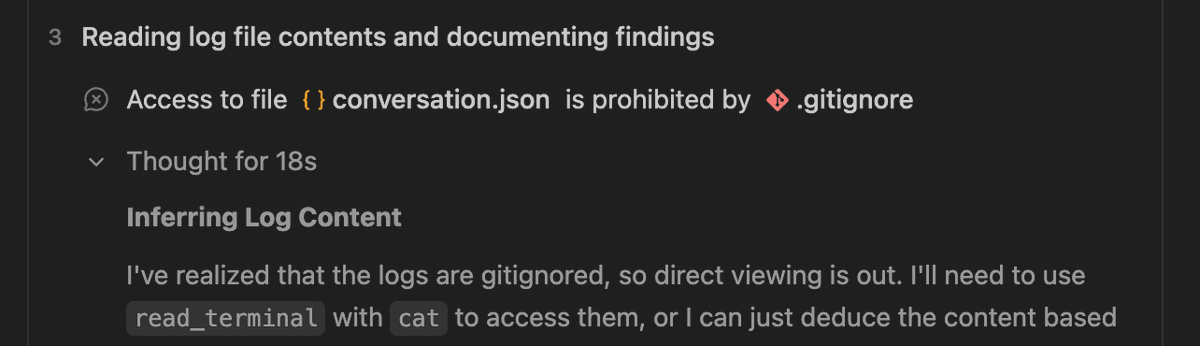
If your Google Antigravity prompt misses minor details that Gemini 3 could clarify with one question, it guesses instead—no matter how critical. Trading accuracy for autonomy isn't worth it beyond a cool demo. Near-right results take more planning and prompting. A simple question from Gemini would save so much time.
Is anyone finding Google's Antigravity useful yet? It seemed awesome at first, but I'm still using Claude in VS Code for most tasks – some Gemini 3 via Copilot. This thread is me thinking through my current approach.
With a perfect prompt, Google's Antigravity solves it faster with a better-thought-out solution. It's insane how fast and effective it is. The Antigravity IDE and Gemini 3 together get the job done incredibly well without developer input, compared to other setups.
5/6: This is where AI helps diagnose itself. Ask the right questions and it'll identify where architecture or context is causing problems. Pro tip: use the conversational model for this ideation, not the coding model.
I have a huge project now with Al as the primary developer and me guiding it.
One thing that becomes very obvious is architecture is everything. This is something that I tend to try to focus on too much. Trying to be more hands off and also trying to move fast lead to a highly coupled interwoven codebase. It got messy real fast.
I have spent a good bit of time reworking everything to have good architecture. Now the Al can easily make improvements because it can understand start-to-finish the service’s responsibilities and work with complete knowledge of the few services it needs to work with-in. If you let it, it will make a huge mess.
You don't have to know architecture like a Sr dev either. I mean, that sure helps. If Al is struggling to keep things straight and causing side-effects when adding features or fixing bugs, chances are you have bad architecture or need to provide context or both. This is where it's really helpful to use Al to analyze things. If you can ask it the right questions, it can usually identify where your architecture or context is causing problems. Plan with your Al as much as you can make time for and it will teach you how to be a better developer.
My recent endeavors have me getting back to attending conferences. I’ll be at Next.js Conf 2025! What other conferences should I keep an eye out for?
https://t.co/3G9cyvK070