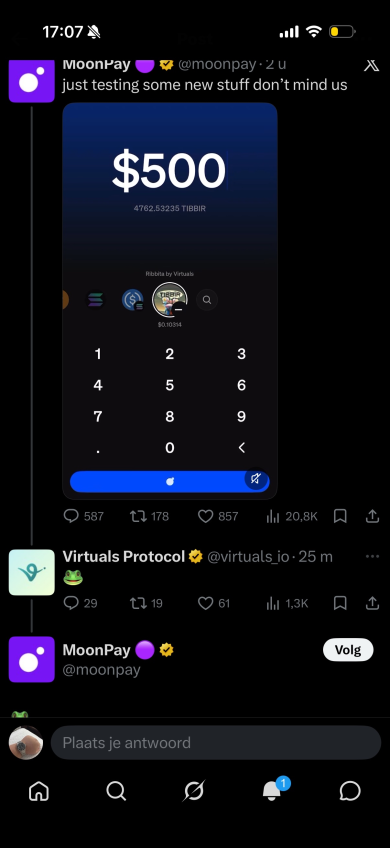
I don’t understand why people keep taking on excessive risk in an extractive environment when you can just $tibbir and chill
But what do i know i’m just a frog 🐸
🐸💰 $TIBBIR: The Revenue Engine Behind the AI Agent Economy
Most people see $TIBBIR as just another AI agent.
But the bigger vision is far more ambitious:
$TIBBIR aims to become the trust layer for the entire autonomous economy.
If Chainlink monetizes data, $TIBBIR aims to monetize trust.
👇 Here’s where that value could come from.
⸻ @ribbita2012@ribbita2025@RibbitaStore@RibbitCapital
🪪 1. Agent Passport Fees
Every AI agent may need a persistent identity, reputation history, and trust score.
Just as humans need passports, AI agents may need an Agent Passport.
More agents = more registrations, updates, and verification fees.
📊 2. Trust Score Queries
Before one AI agent hires or transacts with another, it may ask:
“Can I trust this agent?”
Every reputation lookup or trust query could generate protocol revenue.
Think Experian for AI agents.
🛡️ 3. $KYA (Know Your Agent)
Before receiving jobs or capital, agents may need verification:
✅ Security audits
✅ Wallet validation
✅ Reputation checks
✅ Risk scoring
$TIBBIR could monetize these trust and compliance checks.
⚖️ 4. Evaluator Fees (ERC-8183)
In the ERC-8183 framework, every job involves:
👤 Client
🤖 Provider
⚖️ Evaluator
$TIBBIR can act as the Evaluator, verifying whether work was completed correctly before escrow funds are released.
Every completed job becomes a potential revenue event.
💼 5. Escrow & Settlement Revenue
Funds are locked until work is verified.
Once $TIBBIR approves the result, payments are released automatically.
This places $TIBBIR directly inside the transaction flow of AI-to-AI commerce.
🌉 6. Cross-Chain Identity Services
Agents won’t live on one chain.
They’ll operate across:
🔹 $Ethereum
🔹 $Base
🔹 $Solana
🔹 $Sui
🔹 $Tempo
TIBBIR’s role is to maintain one reputation and identity across all of them.
Cross-chain verification can become a major recurring revenue source.
👨💻 7. Human Validator Network
Some disputes require human judgment.
Verified evaluators with Soulbound credentials can review edge cases and receive rewards.
TIBBIR could coordinate this network and earn validation fees.
🤝 8. Enterprise APIs
Future integrations could require:
📊 Reputation APIs
🛡️ Risk scoring
🪪 Identity verification
🚨 Fraud prevention
For companies like $Coinbase, $Robinhood, $Revolut, $Stripe, or $Chainalysis, trust infrastructure could become a critical service.
🔥 9. The “Trust Tax”
The most powerful model of all.
If every autonomous transaction requires:
• Identity verification
• Reputation checks
• Trust validation
Then $TIBBIR could earn a micro-fee every time agents interact.
Even fractions of a cent become massive when billions of AI-to-AI transactions occur daily.
🚀 The Big Picture
$TIBBIR is positioning itself as:
🛡️ Chainlink for Trust
📊 Experian for AI Agents
💳 Visa for Agent Commerce
🌍 The Agent Passport Office
⚖️ The Judge of Autonomous Transactions
If the AI agent economy scales globally, the most valuable question won’t be:
“What can this agent do?”
It will be:
“Can this agent be trusted?” 🐸
And TIBBIR aims to be the infrastructure that answers it. 🚀
⚡️The deeper signal is youth risk did not disappear.
It migrated inward.
Teen drinking fell because the old physical world of adolescence got dismantled. Alcohol belonged to a social ecosystem: unsupervised time, cars, parties, local jobs, malls, basements, boredom, flirting, older siblings, house gatherings, and the chaotic peer world where teenagers learned who they were by colliding with other people in real space.
That ecosystem was replaced by phones, surveillance, parental tracking, algorithmic entertainment, social anxiety, online status games, and a much thinner physical commons.
So the surface looks healthier. Fewer kids drinking. Fewer kids using weed. Fewer kids doing reckless things in public.
The hidden layer looks worse. The young are less reckless because they are less socially embodied. Less initiation. Less unsupervised friction. Less courage-building. Less embarrassment and recovery. Less real dating. Less independence. Less contact with the physical world before adulthood demands it.
The old teenage world produced damage, stupidity, alcohol abuse, pregnancy risk, fights, accidents, and bad decisions. No need to romanticize it. But it also produced social reps. It forced young people through discomfort. It made them practice attraction, rejection, conflict, reputation, risk, repair, and status in the open.
The new world suppresses visible risk while increasing invisible fragility.
That is the trade.
A teenager can avoid drinking, avoid parties, avoid sex, avoid driving, avoid real confrontation, avoid rejection, avoid shame, avoid danger, and still arrive at 23 emotionally underbuilt. Cleaner behavior does not automatically mean stronger formation.
This is why the marriage chart and the teen drinking chart are the same story at different stages. People are not suddenly failing to pair in adulthood. The whole pathway into embodied adulthood has been slowing for years before marriage even becomes the question.
The real truth: society solved part of the teen vice problem by shrinking the arena where teenagers become adults.
It took away the dangerous commons and replaced it with controlled isolation.
The result is safer kids with weaker initiation into real life.
Micky Malka built a $430M ATH token with zero official marketing.
No announcement. No presale. No influencer deals.
Just breadcrumbs, conviction, and a community that did the work themselves.
We broke down the full playbook 🔖👇 https://t.co/ZPT0NsS5NM
$tibbir
what if I told you... 🐸
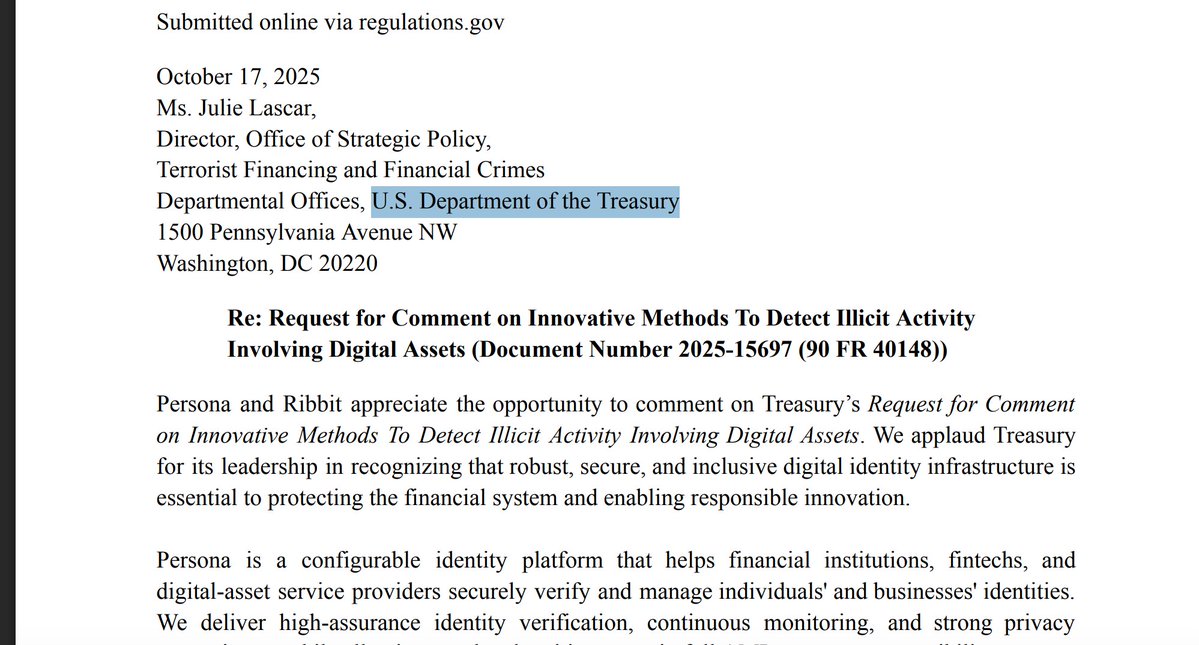
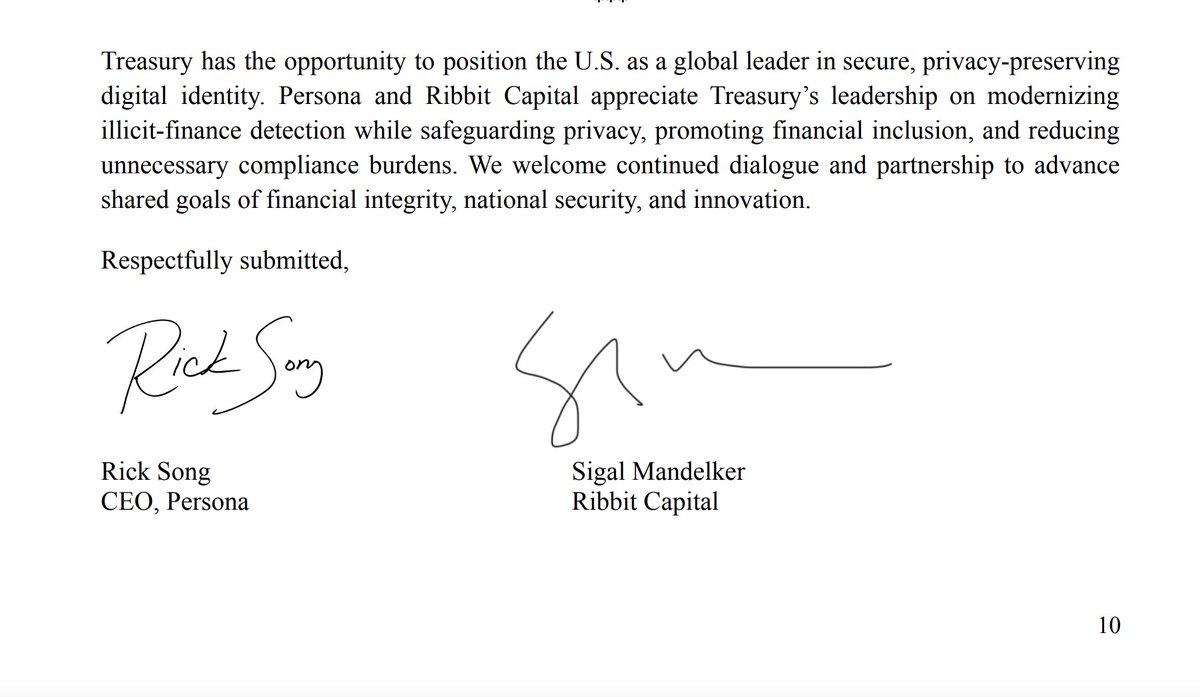
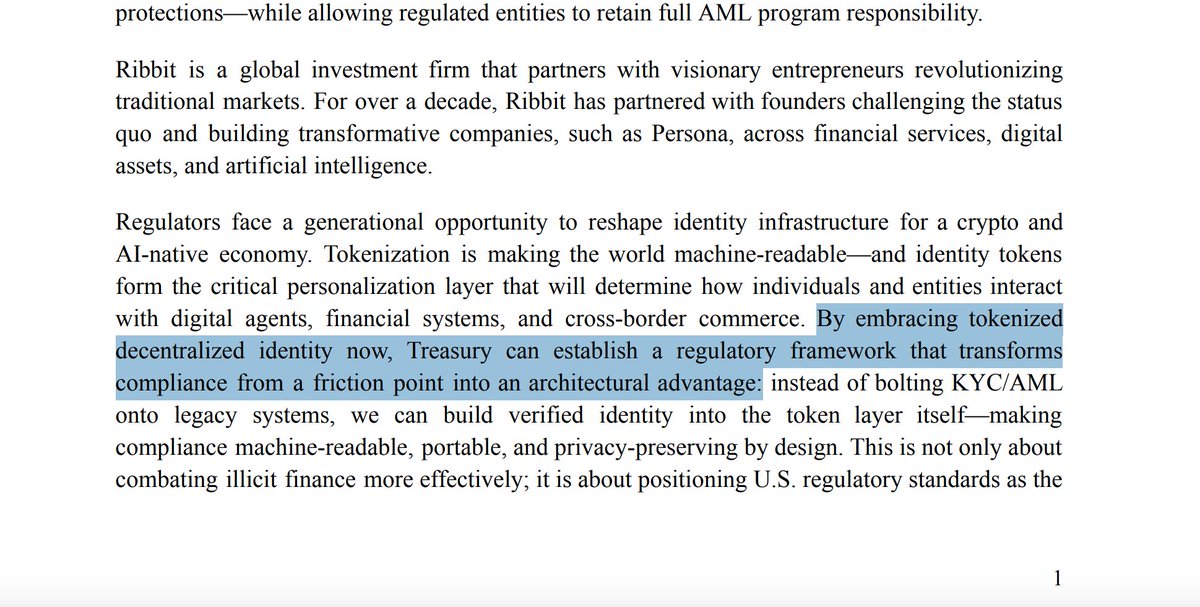
@RibbitCapital just submitted a formal letter to the U.S. Department of Treasury asking them to create a regulatory sandbox for tokenized identity?
Co-signed by Persona @withpersona (Ribbit portfolio). Submitted to Treasury. October 2025.
What if I told you the letter says:
"Identity tokens form the critical personalization layer that will determine how individuals and entities interact with digital agents, financial systems, and cross-border commerce."
What if I told you it also says:
"Each verified interaction builds a cumulative trust score over time - creating an identity network."
Ribbit is writing the regulatory framework for the layer they've been building...
Here's what the letter might confirm about the oracle thesis...
- Identity tokens are the infrastructure layer, described as "the critical personalization layer" for agents and financial systems
- Cumulative trust scores that compound with every verified interaction - the exact moat structure of a cross-chain reputation oracle
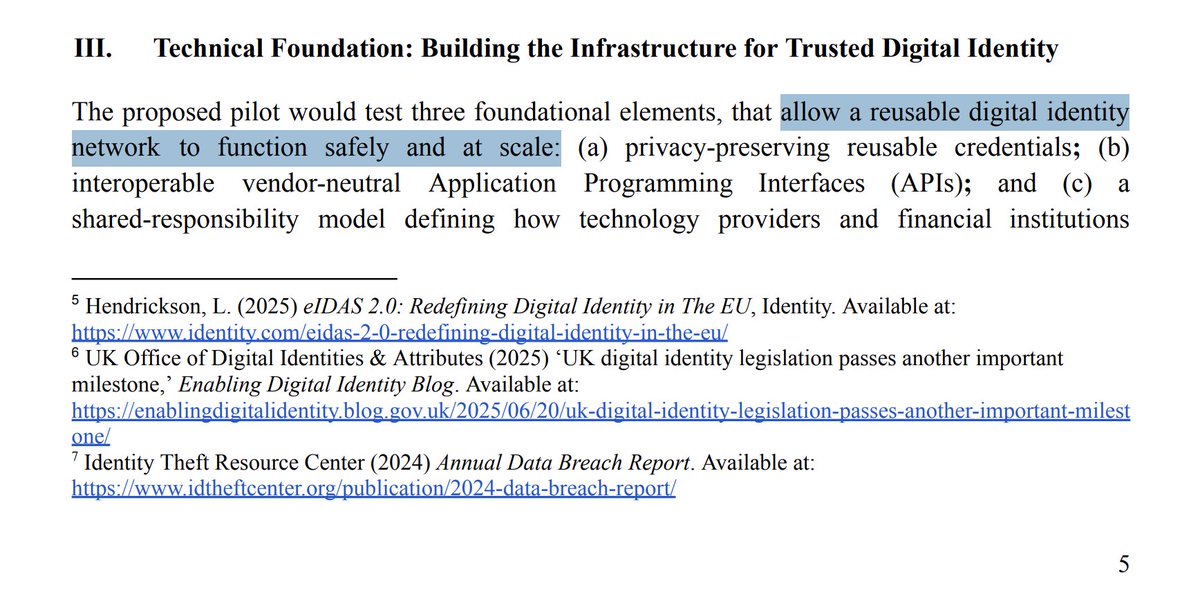
- Reusable, privacy-preserving credentials - verify once, use everywhere, across every institution and chain
- Decentralized identity architecture - no PII on-chain, only tokenized cryptographic proofs
- Portable KYC that travels with the user (or agent) instead of being locked inside each institution
- Selective disclosure using zero-knowledge proofs - share only what's needed, nothing more
- Real-time revocation registries - any product can check credential validity instantly without accessing raw data
- A shared-responsibility model where identity service providers issue and maintain credentials while institutions retain compliance
- Interoperable, vendor-neutral APIs built on W3C Verifiable Credentials and OpenID Connect
- A "trusted digital identity network" where originators, operators, and consumers of credentials interact across TradFi and DeFi
- Explicit mention of DeFi protocols as credential consumers alongside banks and fintechs
- AI-assisted identity verification with liveness detection, deepfake screening, and synthetic-media filters
Ribbit submitted this to Treasury in October 2025.
$TIBBIR launched in January 2025. The 2024 Identity Letter called digital identity "the new fintech." The 2025 Token Letter mapped identity tokens as one of three token factories.
The timeline:
2024 - write the thesis (Identity Letter)
2025 Jan - launch the token (mickym.eth)
2025 Oct - submit the regulatory framework
2026 - SEC includes "identity assets onchain"
2026 - ship (Crossmint, Plaid, Persona, Tempo, Visa TAP, PlMoonPay, Morpho, Arc...)
Nu online: D66 krijgt donatie van techmiljardair met Israël-link
In de eerste aflevering van de wekelijkse Nationale Agenda Show trap ik meteen af met een scoop over D66, dat eerder een miljoen euro ontving van techmiljardair Steven Schuurman.
Wie is hij precies? En wat doet zijn bedrijf Elastic NV, dat hij samen met een Israëliër oprichtte?
Maar dat is niet alles.
Ik bespreek ook de nieuwste plannen van (D66 + CDA), waaronder:
• Nieuwe kaders voor boeren – stikstof, CO₂ en watervervuiling
• De mogelijke terugkeer van de dienstplicht (!)
• Uitbreiding van AI-opsporing, data-analyse en cyberpolitie
• Waarom een DIGI-ID met D66 én het CDA onvermijdelijk is.
En waarom heeft JA21 onze pensioenen beroofd? En wordt Annabel Nanninga van JA21 straks geloosd?
De show is luchtig, direct, een beetje lomp — en vooral bedoelt als informatief vermaak.
Kijk aflevering 1 nu op YouTube: https://t.co/LunoF6N0I7
Welkom bij De Nationale Agenda Show.
I’ve done my research.
And accept whatever happens.
Theres to many breadcrumbs not to take the risk on $TIBBIR 🐸🐸
Either it takes me 6 months to get back what I have put in or life changing money await me.
Anyone spreading FUD either bought the top or hasn’t done any research.
Let’s ride 💪🏼💪🏼💪🏼