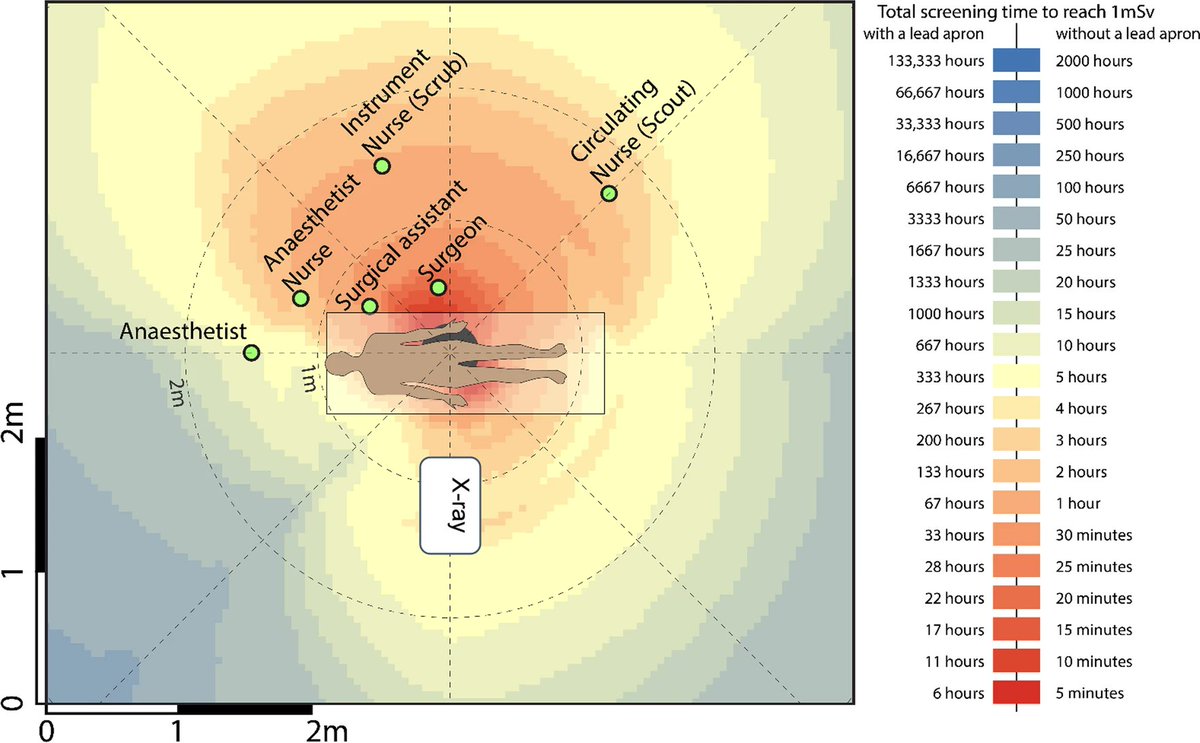
Surgeons, nurses & radiographers... Have you ever been in theatre, wondering how much radiation dose you were getting? Our latest publication displays radiation 'heatmaps' for some common ortho surgeries. The open-access paper is here: https://t.co/jccTcbnZik @SpringerNature
Can ChatGPT evaluate the image quality of an x-ray? We are honoured to have our latest publication in JEEPH. It is open access and can be read here, for anyone interested: https://t.co/X1FMRmsWZN
@shayne_chau
Are you a healthcare professional/student excited (or confused) about AI? You may share similar thoughts to others! Our recent paper exploring perceptions and attitudes toward AI has been published open access in @HSR_journal. @lucywoodres https://t.co/JRjNyXuYf0
Resilience is described as the “ability to grow stronger from failure, and remain positive in times of adversity”. Our recent research around student resilience has been published in @DisabilityRehab. Thank you A/Prof Gisela Van Kessel and @shayne_chau!
https://t.co/7m2OWgv6yU
Clinicians hold a range of attitudes towards ‘AI’: some positive, others not so much!… but what do our future clinicians think about AI, and its impact on their careers?
Thank you @JMIRS1 for the opportunity to publish this research.
https://t.co/UbqXStu9EA
4 years, 16 exams, 40 clinical weeks, 60 competency assessments...
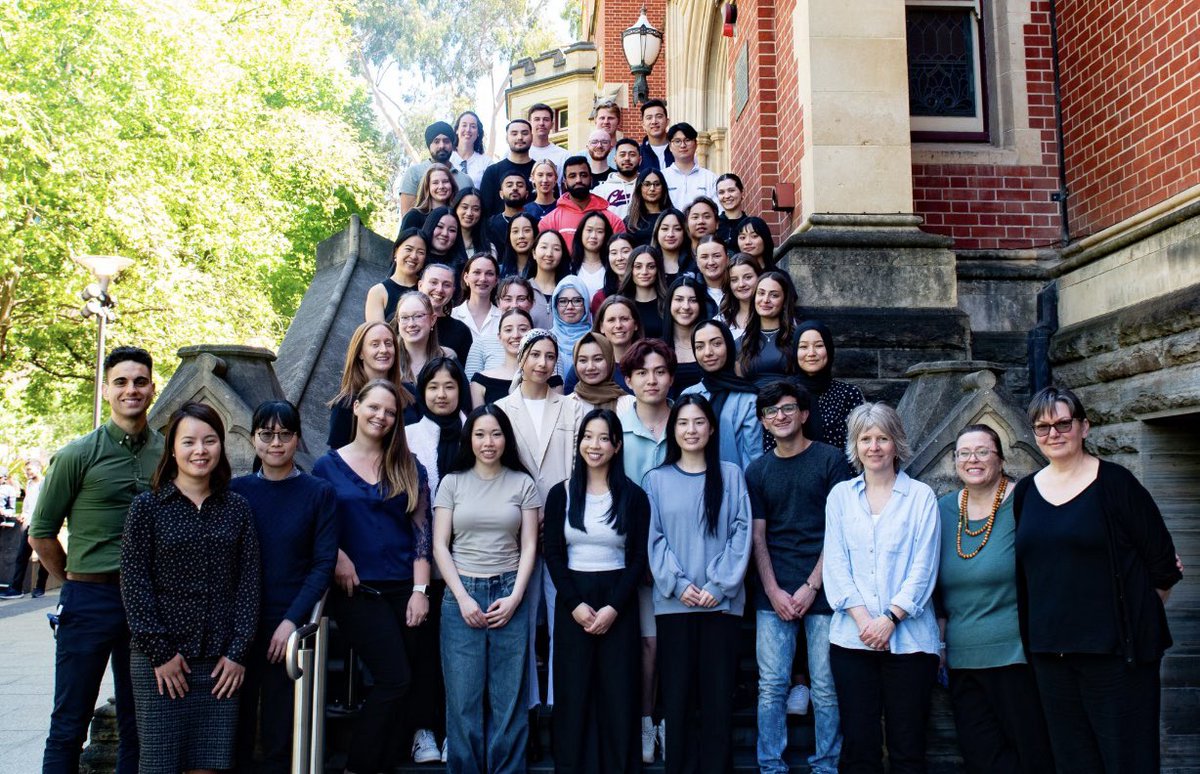
Congratulations to the graduating 2023 @UniversitySA cohort of radiographers, radiation therapists and nuclear medicine technologists!
Honoured to have a commentary published in @JMIRS1 about how teaching in med rad can keep up with continual change. ‘The world (of radiography) has changed, and we must change with it’!
📰📯 NEW ARTICLE IN PRESS!
‘The world (of radiography) has changed, and we must change with it’: An exploration of strategies to meet accreditation standards in radiography education
✍️ @EAruzzaa
🔗 https://t.co/bOvvX3Xxvx
Teaching CT can be challenging (especially without a CT scanner)! Our research into cloud-based CT simulation software is now open access in Simulation & Gaming Journal. https://t.co/omMjObZ4Ki @shayne_chau@Sage_Publishing@SiemensHealth
@Paleoimaging@JMIRS1 Thanks James!.. the next stage of our research is looking at how we can best educate staff, particularly those without a radiology background
X-rays in the recovery department sometimes send people running! Proud to announce our new paper, which displays radiation dose diagrams for mobile hip and knee x-rays, has been published in @JMIRS1! https://t.co/t5QcX5dtx6
@eleanorhurlock@JMIRS1 Thanks for your thoughts Eleanor - it is certainly a controversial topic! Each site will have their own practice/culture. Regardless of whether it is justified, dose can be minimised with a sound awareness of radiation principles - hopefully we’ve been able to spread this here!
@eramanda@LouiseNBurton@JMIRS1 Ah I see! It does depend on the site - sometimes they are brought to the dept, however this takes time and a PSA/orderly. Would be great to hear the thoughts of surgeons, to know if a greater time delay to imaging impacts patient management.
@LouiseNBurton@JMIRS1 After surgery, early post-op x-rays are used to verify prosthetics are positioned correctly and/or to see if fractures have been suitably reduced.
@xray_rupert@SpringerNature This particular test is a typical AP. The white ‘x-ray’ icon is the mobile unit base. The tube/detector are lying over the patients hip. Hope that helps
Surgeons, nurses & radiographers... Have you ever been in theatre, wondering how much radiation dose you were getting? Our latest publication displays radiation 'heatmaps' for some common ortho surgeries. The open-access paper is here: https://t.co/jccTcbnZik @SpringerNature