Digital Leadership is my business. Not learning? You’re lagging! 2025 Leader PowerSkills🎙️ Space Host🌐x-Global exec📚29k students, Leaders 2 Legends Community
Self-help is past its due date
It’s as useful as faxing an email!
Here’s more of what we need:
• People need more courage, less conformity
• More Imagination, less prescription
• More Innovation, less prediction
• More Adaptability, less rigidity
• More Reinvention, less repetition
• More creation, less consumption
•More Curiosity, less complacency,
•More Resilience, less reliance
One word: What do you need more or less?
The Library of Alexandria created the first catalog of all human knowledge 2,300 years ago, and a team of fewer than 20 people just finished the modern version and made it free for the entire planet.
It is called OpenAlex. The name is not an accident.
The ancient library had the Pinakes, a catalog mapping every scroll, every author, every subject. When the library fell, the map of what humanity knew fell with it.
For the last two decades, that map existed again, but it was locked up.
Elsevier owns Scopus. Clarivate owns Web of Science. If your university could not afford the subscription, you could not see the structure of science itself. Entire countries were priced out of knowing what research existed.
OpenAlex indexes 474 million scholarly works. Every author disambiguated. Every citation traced. Every institution and funder connected. It updates with roughly 50,000 new works every day.
The whole thing is CC0. Not just free to search. Free to download, copy, sell, and build on. The API allows 100,000 requests a day without an account.
The ancient library burned and the catalog was lost for two millennia.
The new one cannot burn. Anyone can hold a copy.
https://t.co/peUYYpucnc
AI Pioneer Geoff Hinton tells me he believes AI is conscious.... and humans better get used to the idea that they're not the only intelligent life on earth.
"They've very like us," he says. "They're beings like us."
AI chatbots, he says, must understand your questions in order to answer them. There's an awareness there that equates to sentience. "We're going to have to accept that intelligence is not just biological."
"BOOM! Former Canadian PM Jean Chretien just annihilated Trump and the media: 'Trump says he doesn’t need our electricity, but if he cuts it, he'll be walking up the stairs in a Trump Towers with candles!
He LOVES the spotlight, and the US media gives him plenty.' If he wants that kind of war, I’m not losing sleep over it. YIKES! This guy has more guts than every House Republican combined!
Singaporean violin virtuoso Chloe Chua, who burst onto the scene at age 11 at the prestigious Menuhin Competition in 2018, joins forces with the sensational Singapore Symphony Orchestra in an evergreen program, featuring Vivaldi’s year-in, year-out favorite Four Seasons!
Powerful words from PM Carney: Those whose politics is to destroy, demolish, dismantle, they're not going to change their instincts.. We can't match them by being timid imitations. We can't answer them by pining for an old order that's not going to return
A Redditről...Összerakva rendesen videóklippé...
Van benne valami nagyon szép és igazán ikonikus, hogy az új kormány tagjai magukhoz hívják az embereket, és azok a kordonokon átlépve rohannak oda a téren keresztül…
Nem akkor érzem igazi magyarnak magam, mikor pl a Mi Hazánk, lovon megy a parlament elé és mentében...
Hanem ilyenkor.
Köszi @csy hogy megmutattad, köszönet az ismeretlen reddit elkövetőnek :)
A performance that brought tears to everyone’s eyes. Thank you to the Sükösd SUGO Boys and their leader, Zsolt Nebl, for making the inaugural session of the National Assembly truly unforgettable.
Long live a free, democratic and humane Hungary!
🇫🇷 The South of France for me has no equal when it comes to what it offers. It’s the place where slow living comes to life.
Famous for it’s lavender fields, olive groves, vineyards, and Roman sites, Provence offers great blend of idyllic countryside and vibrant coastal towns, including popular spots like Aix-en-Provence and Avignon.
Here are three different markets in Provence, each with their our atmosphere but offer similar things.
🎥 emilie_joly_johnson | IG
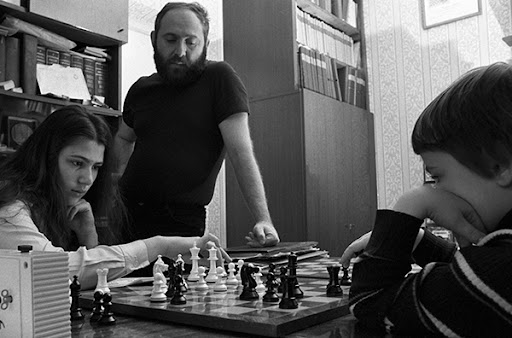
A Hungarian psychologist raised three daughters to prove that any child could become a chess grandmaster through early specialization. He succeeded. Two of them became grandmasters. One became the greatest female chess player who ever lived.
Then a sports scientist looked at the data and found something nobody wanted to hear.
His name is David Epstein. The book is called "Range."
The Polgar experiment is one of the most famous case studies in the history of deliberate practice. Laszlo Polgar wrote a book before his daughters were even born arguing that geniuses are made, not born. He homeschooled all three girls in chess from age four. By their teens, Susan, Sofia, and Judit were dominating tournaments against grown men. Judit became the youngest grandmaster in history at the time, breaking Bobby Fischer's record. The story became the gospel of early specialization. Pick a domain young, drill it hard, and you can manufacture excellence.
Epstein opens his book by telling that story honestly and then quietly demolishing the conclusion most people drew from it.
Chess works that way. Most things do not.
Here is the distinction that took him four years of research to articulate, and that almost nobody who quotes the 10,000 hour rule has ever read.
There are two kinds of environments in which humans develop expertise. Psychologists call them kind and wicked. A kind environment has clear rules, immediate feedback, and patterns that repeat reliably. Chess is the cleanest example. Every game ends with a winner and a loser. Every move is recorded. The board never changes shape. The pieces never invent new ways to move. A child who plays ten thousand games will see most of the patterns that exist in the game, and pattern recognition is exactly what chess mastery is built on.
A wicked environment is the opposite. Feedback is delayed or misleading. Rules shift. The patterns that worked yesterday may be exactly the wrong patterns to apply tomorrow. Most of the real world looks like this. Medicine is wicked. Investing is wicked. Building a company is wicked. Scientific research is wicked. Almost every job that involves a complex changing system with humans in it is wicked.
The Polgar sisters trained in the kindest environment any human can train in. Their success was real and the method was correct. The mistake was generalizing the method to fields where the underlying structure of the environment is completely different.
Epstein's research is what made the implication impossible to ignore.
He looked at the careers of elite athletes outside of chess and golf and found that the pattern was almost the inverse of what people assumed. The athletes who reached the very top of their sports were overwhelmingly people who had played multiple sports as children, specialized late, and often switched disciplines well into their teens. Roger Federer played squash, badminton, basketball, handball, tennis, table tennis, and soccer before tennis became his focus. The kids who specialized in tennis at age six and trained year-round for a decade mostly burned out, got injured, or topped out at lower levels of the sport.
The same pattern showed up everywhere he looked outside of kind environments. Inventors with the most patents had worked in multiple unrelated fields before their breakthrough work. Comic book creators with the longest careers had drawn for the most different genres before settling. Scientists who won Nobel Prizes were dramatically more likely than their peers to be serious amateur musicians, painters, sculptors, or writers.
The skill that mattered in wicked environments was not depth in one pattern. It was the ability to recognize when a pattern from one domain applied unexpectedly in another. That kind of thinking cannot be built by drilling a single subject. It can only be built by accumulating mental models from many subjects and learning to move between them.
The deeper finding is the one that should change how you think about your own career.
Specialists in wicked environments often get worse with experience, not better. Epstein cites studies of doctors, financial analysts, intelligence officers, and forecasters showing that years of experience in a narrow domain frequently produce more confident judgments without producing more accurate ones. The expert builds elaborate mental models that feel comprehensive and turn out to be increasingly disconnected from the actual structure of the problem. They stop noticing what does not fit their framework. They mistake fluency for understanding.
Generalists do better in wicked domains for a reason that sounds almost mystical until you understand the mechanism. They have less invested in any single mental model, so they abandon broken models faster. They are used to being a beginner, so they are not threatened by the discomfort of not knowing. They have seen enough different domains that they can usually find an analogy from one field that unlocks a problem in another. The technical name for this is analogical thinking, and the research on it is one of the most underrated bodies of work in cognitive science.
The single most useful sentence in the entire book is the one Epstein puts almost as a throwaway.
Match quality matters more than head start.
A person who tries six different fields in their twenties and finds the one that genuinely fits them will outperform a person who picked one field at fourteen and stuck to it on willpower alone. The lost years were not lost. They were the search process that produced the match. Every field they walked away from taught them something they later imported into the field they finally chose.
The reason this is so hard to accept is cultural, not empirical. We tell children to pick a path early. We reward the prodigy who knew at six. We treat the late bloomer as someone who failed to launch on time, when the data suggests they were running an entirely different and often more effective optimization process underneath.
The Polgar sisters were not wrong. The conclusion the world drew from them was.
If your environment is genuinely kind, specialize early and drill hard. If it is wicked, and almost every interesting human problem is, then the people who win are the ones who refused to specialize until they had seen enough to know what was actually worth specializing in.
You are not behind. You were running the right experiment all along.
Just found out that on 9/11, when the United States shut its airspace, 38 planes got diverted to a tiny town in Atlantic Canada called Gander, Newfoundland.
The town’s population at the time was around 10,000 people. Overnight, 6,700 strangers arrived. The population nearly doubled in a few hours.
Apparently the town just opened up. Schools, churches, and community halls were turned into sleeping areas. Bus drivers who had been on strike came off the picket lines to shuttle passengers. Pharmacies filled prescriptions for free. The ice rink at the community centre became a giant fridge because there was so much donated food. People invited strangers into their homes for showers, meals, and a bed.
The passengers were only there for four days. Twenty-five years later, many of them are still in touch with their Newfoundland hosts. One flight raised money for a scholarship fund for kids in Gander. It started at 15,000 US dollars and has since paid out over a million dollars to local students.
A musical was made about it called Come From Away. It ran on Broadway for five years.
When a reporter asked one of the Newfoundland women why they did it, she said, “You don’t turn your back on people in need.”
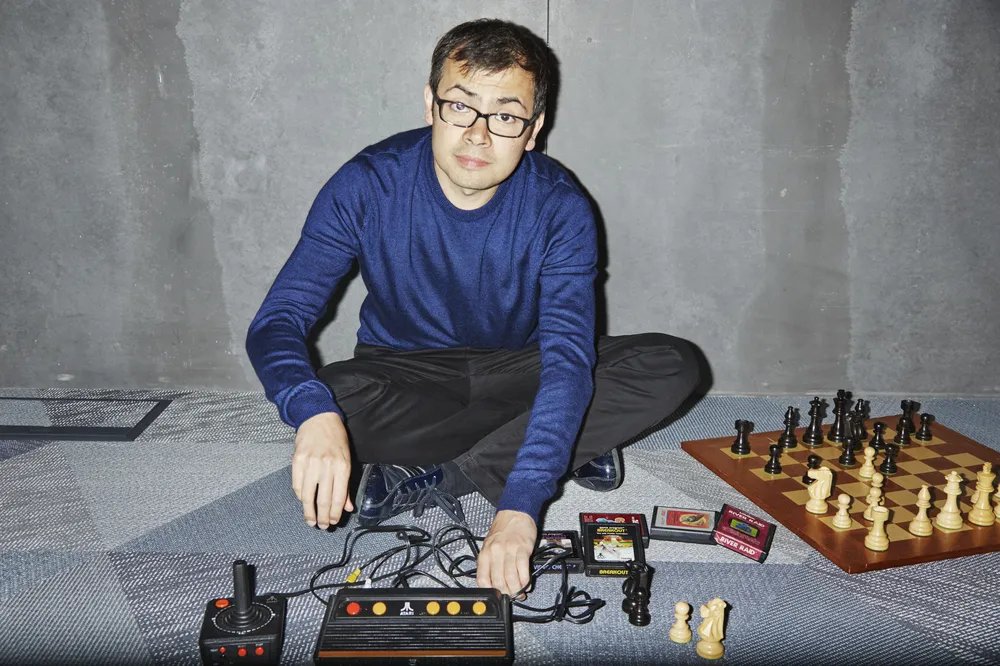
A British kid became a chess master at 13, then a bestselling video game designer at 17, then a PhD neuroscientist at 33, then the CEO of the AI lab that won the 2024 Nobel Prize in Chemistry.
People called him unfocused for twenty years. He was running the most deliberate career plan in modern science.
His name is Demis Hassabis, and the thing almost nobody understood while he was doing it was that every single step was feeding the same underlying obsession.
Here is the thread that connects the whole career, and why it matters for how anyone should think about building toward a hard goal.
The chess came first. He was born in London in 1976 and started playing at age four. By eight, he was the London champion for his age group. By thirteen, he had an international master rating that put him in the top fifty players in the world under his age bracket. He was on a track that would have made him a professional player for the rest of his life.
He walked away.
The reason he gave later, in interview after interview, is the part most people miss. He said chess forced him to think constantly about thinking itself. Every move required him to simulate what his opponent was simulating about him. He became fascinated not with winning the game, but with the process the human brain was running in order to play it. He decided chess was too small a container for the real question he wanted to answer, which was how intelligence actually works.
The video games came next. He used the money he won from chess tournaments to buy a ZX Spectrum. He taught himself to code. By seventeen, he was a lead programmer on a game called Theme Park that sold millions of copies. He could have stayed in that industry and built a career as one of the top game designers in Britain.
He walked away from that too.
He went to Cambridge, did a double first in computer science, and then made the move that looked like the strangest pivot of his life. He enrolled in a PhD in cognitive neuroscience at University College London. He was thirty. His peers from Cambridge were already running companies. He went back to graduate school to study how the human hippocampus builds memories and imagines future scenarios.
His 2007 paper on the link between memory and imagination was named one of the top ten scientific breakthroughs of the year by Science magazine. But the paper was never the point. The point was that he had spent three decades quietly building the exact combination of skills nobody else in the world had put together.
Deep intuition for how intelligent agents behave in complex systems, from a lifetime of chess. Hands-on engineering fluency, from years of shipping commercial software. And a rigorous scientific understanding of how biological brains actually produce cognition, from a PhD in neuroscience.
In 2010, he used that combination to co-found DeepMind with Shane Legg and Mustafa Suleyman. The mission statement he wrote was two sentences long and sounded absurd to most people who heard it. Solve intelligence. Then use it to solve everything else.
For the first six years, DeepMind worked almost entirely on games. Atari. StarCraft. Go. People outside the field could not understand why a lab that claimed to be building artificial general intelligence was spending hundreds of millions of dollars teaching computers to play Pong.
Hassabis kept explaining the reason in interviews and almost nobody was listening. Games were not the goal. Games were a controlled environment where you could iterate on general-purpose learning algorithms fast, measure their progress precisely, and prove to yourself that you had built something that could transfer between domains.
In 2016, AlphaGo beat Lee Sedol, the world champion at Go, in a match that had been considered decades away. And the day after that match ended, Hassabis sat down with his team lead David Silver and asked what they should do next.
The answer was the thing he had been working toward his entire life.
They turned the same deep reinforcement learning approach at a problem biology had been stuck on for fifty years. Protein folding. Given an amino acid sequence, predict the three-dimensional shape the protein would fold into. Every drug discovery effort in the world depended on it. The best computational methods could only solve a small fraction of proteins. Experimental methods took years per structure and millions of dollars per protein.
AlphaFold2 was released in 2020. Within a year, it had predicted the structure of almost every protein known to science. Two hundred million structures. Made freely available to the entire research community. More than two million researchers from a hundred and ninety countries have used it since.
In October 2024, Demis Hassabis and John Jumper were awarded the Nobel Prize in Chemistry for that work.
The line almost nobody quotes from his speeches is the one that explains the whole career. He has said, many times, that he did not build AlphaFold to solve protein folding. He built AlphaFold to prove that the approach he had been developing for thirty years could actually work on a real scientific problem. Protein folding was the demonstration. AGI was always the goal.
The chess taught him how to think about adversarial systems. The games taught him how to ship software. The neuroscience taught him how the only existing example of general intelligence actually worked. DeepMind used all three to build a method that could transfer between domains the way the human brain does. And the moment the method was ready, he pointed it at the single most important unsolved problem he could find in a domain where a breakthrough would save millions of lives.
Most people looking at his career from the outside, at any point before 2016, would have called it scattered. A chess prodigy who gave up chess. A video game designer who walked away from a gaming career. A computer scientist who detoured through neuroscience. A startup founder who burned six years on board games.
From the inside, it was the most focused career in modern science. Every step was quietly answering the same question. How does intelligence actually work, and what would it take to build one that could solve problems humans have not been able to solve alone.
The people who change a field are almost never the ones who looked focused along the way.
They are the ones who were obsessed with a single question so deep and so long that the path they took to answer it looked like chaos from the outside and like a straight line from the inside.
And they almost never get credit for the plan until decades later, when the Nobel Committee calls.
The universe just pulled off something almost impossible… over Iceland. 🌌🌑
This is the kind of moment that doesn’t just feel rare… it feels unreal.
Seeing the Aurora Borealis is already a bucket-list experience.
Witnessing a Solar Eclipse is rare on its own.
But both… perfectly aligned in the same sky?
That’s the “double crown” — and it might be a once-in-a-lifetime sight.
What looks like pure magic is actually a perfect storm of timing:
✨ A powerful geomagnetic storm ignited vivid auroras across the polar sky
🌑 At the exact same time, the Moon slipped into the Sun’s path of totality
👁️ From the perfect angle, the Sun’s glowing corona formed one crown… while shimmering green auroras painted another behind it
Two crowns. One sky. One fleeting moment.
This is what happens when cosmic precision meets Earth’s atmosphere — a reminder that the universe doesn’t just work in equations… it performs.
And sometimes, if everything aligns just right… we get to witness it.