Policies targeting investment towards emergent technologies have been central to the greatest successes in low-carbon technology #transitions in China, India, Brazil, and Europe.📈
Find out why this is the case in EEIST’s Synthesis Report: https://t.co/SEDJMF763i
@UniofExeter
Still plenty of time to apply for this complexity economics postdoc with us @INETOxford .
Any questions, just drop me a message on here, or email.
Deadline 5 July midday
This week's nice @TheEconomist cover reminds me of the working title for this paper last year: Is a solar future inevitable?
We thought the answer was yes. Looks like people at the Economist now agree.
@FemkeNijsse @JFMercure
https://t.co/ch7dPyVPyC
Global investment in renewable power & grids overtook spending on fossil fuels for the first time in 2023 — a sign of the new energy economy that’s emerging
But clean energy investment must grow much faster for the world to reach energy & climate goals ➡️ https://t.co/OkdG8f5wcj
Research from @doyne_farmer and @f_lafond_ helping to illustrate that one of the most transformative changes in technology over the last few decades has been the massive drop in the cost of clean energy.
*NEW PAPER*
Modelling induced innovation for the low-carbon energy transition: a menu of options
Led by @RobPasqualino@EeistP in Env Research Letters @IOPPublishing
Short thread...
Analysis: European power-sector emissions fall by 20% since last EU election | @MollyLempriere @VernerViisas w/ comment from @CKRosslowe@Pieter_de_Pous
Read here ➡️ https://t.co/IcDErIO5B2
A new @TheSmithSchool study has found UK citizens can get a good deal on net zero, minimising costs to people and the public purse, with the added benefits of improved homes, reduced bills, more jobs, and less carbon.
More info ⬇️ #WorldEnvironmentDay
https://t.co/5OB6umitCS
A new study from researchers at @TheSmithSchool highlights that "achieving #NetZero and economic wellbeing are not mutually exclusive goals."
✏️@SamFankhauser and Anupama Sen
📰@ConversationUK
Find out more ⬇️
https://t.co/Oq8sX3aX9c
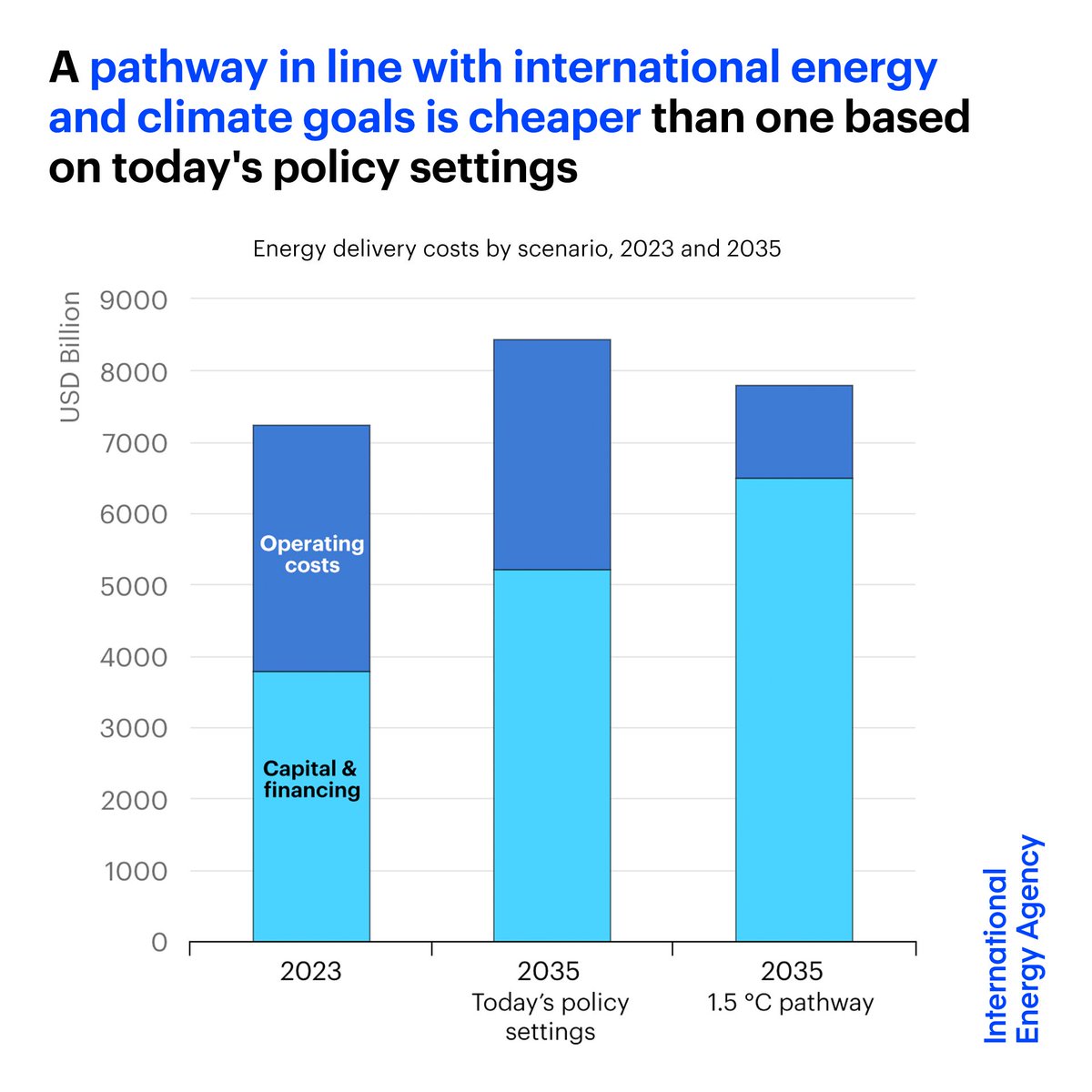
A major @IEA report out today shows that the transition to net zero emissions would mean lower energy costs globally than if we continue on our current path
Scaling up clean technologies is good for affordability as well as for cutting emissions
More: https://t.co/ChkOWEyq4v
Are we on the cusp of an era of green economic growth?
@JnosHidi1 offered his insights in the latest @IChronicle issue on the favourable technological tipping points that are accelerating the #greentransition ➡ https://t.co/X4MwbEgNKt
Chart: How British electricity supplies are shifting decisively away from fossil fuels | @DrSimEvans Tom Pearson @VernerViisas
Read here: https://t.co/mQ5VJDKPNr
What do energy models tell us about #India's #green transition? Our own @YaroslavMelekh, @WRIIndia and The Energy and Resources Institute are innovating ways in which India can make the #energytransition whilst meeting energy needs.
Read the report ➡️ https://t.co/5WLxannZYB
Find out more about the future of #SolarPower and #renewable energy #TippingPoints in our policy brief:
'Is a Solar Future Inevitable? How to shape policies to capture the opportunities of cheap solar' ☀️
https://t.co/zXAXICLg9Y @FemkeNijsse @UniofExeter
We may have passed a positive #TippingPoint in #solarpower, says @GSI_Exeter#climate expert Dr @FemkeNijsse in response to @EmberClimate analysis finding renewable energy to have passed 30% of the world’s electricity supply.
Investment in manufacturing clean energy technologies is surging. Last year, spending rose to $200 billion, up 70% from 2022
This is supporting economic growth & offering new industrial & employment opportunities worldwide
Read more in our new report ⬇️ https://t.co/9zIVP3UP8t
Brand-new report from the EEIST project:
How can #India meet increasing energy demand while phasing down #FossilFuels? 🇮🇳🌏
Read the research for details: ⬇️ https://t.co/5xThWemfex @UniofExeter