C. S. Lewis’s Letter to Tolkien upon First Reading The Lord of the Rings:
My dear Tollers—
Uton herian holbytlas indeed. I have drained the rich cup and satisfied a long thirst. Once it really gets under weigh the steady upward slope of grandeur and terror (not unrelieved by green dells, without which it would indeed be intolerable) is almost unequalled in the whole range of narrative art known to me. In two virtues I think it excels: sheer sub-creation—Bombadil, Barrow Wights, Elves, Ents—as if from inexhaustible resources, and construction—the construction Tasso aimed at (but did not equally achieve) which was to combine the variety of Ariosto with the unity of Virgil. Also, in gravitas. No romance can repell [sic] the charge of ‘escapism’ with such confidence. If it errs, it errs precisely in the opposite direction: the sickness of hope deferred and the merciless piling up of odds against the heroes are near to being too painful. And the long coda after the eucatastrophe, whether you intended it or no, has the effect of reminding us that victory is as transitory as conflict, that (as Byron says) ‘There’s no sterner moralist than pleasure’ and so leaving a final impression of profound melancholy.
No doubt this is increased for me by the circumstances in which I heard most of it for the first time: when there was great danger around us but, in me at any rate, a happier heart than now. But that only accounts for a small part of my total impression. I am sure it is in itself a great and hard and bitter book which, though I love it, I shall never open without a certain shrinking. It will rank, along with the Aeneid as one of what I call my ‘immediately sub-religious’ books.
Indeed (unexpectedly) the general aroma seems to me more like the Aeneid than anything else, in spite of your Northernness. This is partly because both (a.) Are so often sylvan (b.) Have strategy, as distinct from mere combat, (c.) Suggest an enormous past behind the action.
All the alliterative verse I liked.
Of course this is not the whole story. There are many passages I could wish you had written otherwise or omitted altogether. If I include more of my adverse criticism in this letter that is because you heard and rejected most of them already (rejected is perhaps too mild a word for your reaction on to least one occasion!) and even if I now convinced you on any point, the conviction would, I take it, be too late to bear fruit. And even if all my objections were just (which is of course unlikely) the faults I think I find could only delay and impair appreciation: the substantial splendour of the tale can carry them all. Ubi plura nitent in carmine non ego paucis offendo maculis.
I congratulate you. All the long years you have spent on it are justified. Morris and Eddison, in so far as they are comparable, are now mere ‘precursors’.
The mappemound [sic: mappemundo=”map of the world”] is, as you warn me, now inaccurate. But on a rather different point—do you mean the Shire to be so large?
I miss you very much
Yours
Jack Lewis
A self-taught Irish schoolteacher wrote a book in 1854 that almost nobody read for 80 years, until a 21-year-old MIT student picked it up and realized it could be used to design every computer in human history.
His name was George Boole. The book is called An Investigation of the Laws of Thought.
Boole was born in 1815 in Lincoln, England. His family was poor. He left school at 16 to support them. He taught himself Latin, Greek, French, German, and Italian.
Then he taught himself mathematics. By 19 he had opened his own school. By 24 he was publishing original papers in the Cambridge Mathematical Journal, competing with men who had spent decades inside the best universities in Britain.
He never had a degree. He never had a mentor. In 1849, Queen's College in Cork hired him as a professor anyway.
In 1854, he published his masterwork. What he built inside it was something nobody had attempted before at this scale. He turned logic into algebra.
Before Boole, logic was philosophy. You argued in sentences. You reasoned in paragraphs. It was powerful and completely impossible to automate, because there was no formal system underneath it, just language.
Boole stripped it down to arithmetic. He showed that every act of human reasoning could be reduced to operations on two values. True or false. One or zero. AND, OR, NOT. If both conditions are true, the result is true. If neither is, the result is false. Every judgment a human mind makes, every decision, every deduction, could be written as an equation following those rules.
Logicians read it. They found it interesting. Engineers building machines had never heard of it.
For 83 years, the book sat there.
Then in 1937, a 21-year-old MIT master's student named Claude Shannon was working on a thesis about electrical relay circuits. Switches that could be open or closed. Current that either flowed or didn't.
He read Boole and understood something nobody had connected before.
An open switch is a zero. A closed switch is a one. A circuit with two switches in series only carries current when both are closed. That is AND. A circuit with two switches in parallel carries current when either is closed. That is OR. Shannon proved that every possible logical relationship Boole had described could be physically built using wire and switches.
That single insight is the foundation of every computer ever made.
After Shannon, chip designers stopped thinking about electricity and started thinking about logic. Every transistor on every processor running right now is implementing a Boolean operation. Every if-statement in every codebase is Boolean logic. Every database query using AND or OR. Every neural network threshold that fires or doesn't fire. All of it is running the algebra of a self-taught schoolteacher from Lincoln who died 160 years ago.
The strangest part is what happened to Boole at the end.
He was walking to class in November 1864 when he got caught in a rainstorm. He lectured for hours in wet clothes. He went home sick. His wife, Mary, believed in homeopathic medicine and thought the cure should mirror the cause. She wrapped him in wet sheets and poured cold water over him repeatedly.
He died a few days later. He was 49.
He never saw a transistor. He never saw a circuit. He never saw a single physical machine run a single one of his rules.
His book is in the public domain. Free to download. Most engineers use the word Boolean dozens of times a week. Almost none of them know who they are saying.
The man whose logic runs inside every phone, every server, and every AI model on Earth died soaking wet in a small Irish town, 83 years before anyone figured out what he had actually built.
Cinquant'anni di Bronzi di Riace: viaggio nel mondo dei guerrieri venuti... https://t.co/85VvKzLj3J via @YouTube A little uneven in the interventions, but fascinating and memorable on the extraordinary ancient Greek bronzes.
Newman on the purpose of a university.
In The Idea of a University, John Henry
Newman argues that education is not
mere job training.
A university should train the mind to
see things whole.
Theology, reason, knowledge, and truth
belong together.
"A University training… aims at raising the
intellectual tone of society, at cultivating
the public mind."
tolle lege
Physics and Philosophy: The Revolution in Modern Science written by Nobel Prize-winning German physicist Werner Heisenberg.
It is derived from his celebrated Gifford Lectures, the book acts as an accessible, non-mathematical portal exploring how quantum mechanics dismantled classical concepts of reality.
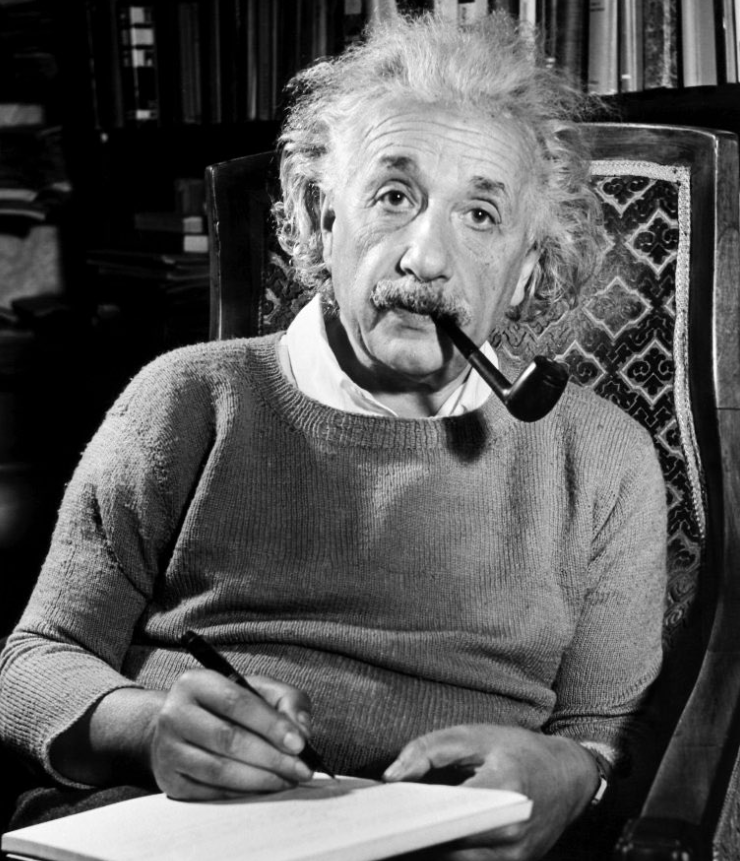
Richard Feynman was known for an unusual habit when reading research papers.
He would take the latest issue of Physical Review, read the abstract and opening of each article, and then try to guess how the paper would conclude. Only after forming his own prediction would he check the result. If his guess matched, he would move on; if not, he would read the paper in full.
This wasn’t just about efficiency—it was a way of thinking. By actively predicting outcomes, he turned reading into a process of testing intuition and deepening understanding.
Later in life, time likely made this practice less feasible, and like many scientists, he relied more on discussions with colleagues to keep up with new ideas.
It’s a simple but powerful lesson: don’t just read—engage, predict, and learn from being wrong.
More than 1,100 University of California math and science professors are urging UC regents to reinstate college-entrance exams, saying that unprepared students are lowering academic standards and draining teaching resources. https://t.co/gv728s5979


![CLT_Exam's tweet photo. C. S. Lewis’s Letter to Tolkien upon First Reading The Lord of the Rings:
My dear Tollers—
Uton herian holbytlas indeed. I have drained the rich cup and satisfied a long thirst. Once it really gets under weigh the steady upward slope of grandeur and terror (not unrelieved by green dells, without which it would indeed be intolerable) is almost unequalled in the whole range of narrative art known to me. In two virtues I think it excels: sheer sub-creation—Bombadil, Barrow Wights, Elves, Ents—as if from inexhaustible resources, and construction—the construction Tasso aimed at (but did not equally achieve) which was to combine the variety of Ariosto with the unity of Virgil. Also, in gravitas. No romance can repell [sic] the charge of ‘escapism’ with such confidence. If it errs, it errs precisely in the opposite direction: the sickness of hope deferred and the merciless piling up of odds against the heroes are near to being too painful. And the long coda after the eucatastrophe, whether you intended it or no, has the effect of reminding us that victory is as transitory as conflict, that (as Byron says) ‘There’s no sterner moralist than pleasure’ and so leaving a final impression of profound melancholy.
No doubt this is increased for me by the circumstances in which I heard most of it for the first time: when there was great danger around us but, in me at any rate, a happier heart than now. But that only accounts for a small part of my total impression. I am sure it is in itself a great and hard and bitter book which, though I love it, I shall never open without a certain shrinking. It will rank, along with the Aeneid as one of what I call my ‘immediately sub-religious’ books.
Indeed (unexpectedly) the general aroma seems to me more like the Aeneid than anything else, in spite of your Northernness. This is partly because both (a.) Are so often sylvan (b.) Have strategy, as distinct from mere combat, (c.) Suggest an enormous past behind the action.
All the alliterative verse I liked.
Of course this is not the whole story. There are many passages I could wish you had written otherwise or omitted altogether. If I include more of my adverse criticism in this letter that is because you heard and rejected most of them already (rejected is perhaps too mild a word for your reaction on to least one occasion!) and even if I now convinced you on any point, the conviction would, I take it, be too late to bear fruit. And even if all my objections were just (which is of course unlikely) the faults I think I find could only delay and impair appreciation: the substantial splendour of the tale can carry them all. Ubi plura nitent in carmine non ego paucis offendo maculis.
I congratulate you. All the long years you have spent on it are justified. Morris and Eddison, in so far as they are comparable, are now mere ‘precursors’.
The mappemound [sic: mappemundo=”map of the world”] is, as you warn me, now inaccurate. But on a rather different point—do you mean the Shire to be so large?
I miss you very much
Yours
Jack Lewis](https://pbs.twimg.com/media/HKcwMsaWIAA-yf7.jpg)


![CLT_Exam's tweet photo. C. S. Lewis’s Letter to Tolkien upon First Reading The Lord of the Rings:
My dear Tollers—
Uton herian holbytlas indeed. I have drained the rich cup and satisfied a long thirst. Once it really gets under weigh the steady upward slope of grandeur and terror (not unrelieved by green dells, without which it would indeed be intolerable) is almost unequalled in the whole range of narrative art known to me. In two virtues I think it excels: sheer sub-creation—Bombadil, Barrow Wights, Elves, Ents—as if from inexhaustible resources, and construction—the construction Tasso aimed at (but did not equally achieve) which was to combine the variety of Ariosto with the unity of Virgil. Also, in gravitas. No romance can repell [sic] the charge of ‘escapism’ with such confidence. If it errs, it errs precisely in the opposite direction: the sickness of hope deferred and the merciless piling up of odds against the heroes are near to being too painful. And the long coda after the eucatastrophe, whether you intended it or no, has the effect of reminding us that victory is as transitory as conflict, that (as Byron says) ‘There’s no sterner moralist than pleasure’ and so leaving a final impression of profound melancholy.
No doubt this is increased for me by the circumstances in which I heard most of it for the first time: when there was great danger around us but, in me at any rate, a happier heart than now. But that only accounts for a small part of my total impression. I am sure it is in itself a great and hard and bitter book which, though I love it, I shall never open without a certain shrinking. It will rank, along with the Aeneid as one of what I call my ‘immediately sub-religious’ books.
Indeed (unexpectedly) the general aroma seems to me more like the Aeneid than anything else, in spite of your Northernness. This is partly because both (a.) Are so often sylvan (b.) Have strategy, as distinct from mere combat, (c.) Suggest an enormous past behind the action.
All the alliterative verse I liked.
Of course this is not the whole story. There are many passages I could wish you had written otherwise or omitted altogether. If I include more of my adverse criticism in this letter that is because you heard and rejected most of them already (rejected is perhaps too mild a word for your reaction on to least one occasion!) and even if I now convinced you on any point, the conviction would, I take it, be too late to bear fruit. And even if all my objections were just (which is of course unlikely) the faults I think I find could only delay and impair appreciation: the substantial splendour of the tale can carry them all. Ubi plura nitent in carmine non ego paucis offendo maculis.
I congratulate you. All the long years you have spent on it are justified. Morris and Eddison, in so far as they are comparable, are now mere ‘precursors’.
The mappemound [sic: mappemundo=”map of the world”] is, as you warn me, now inaccurate. But on a rather different point—do you mean the Shire to be so large?
I miss you very much
Yours
Jack Lewis](https://pbs.twimg.com/media/HKcwQSCWIAAfK0i.png)