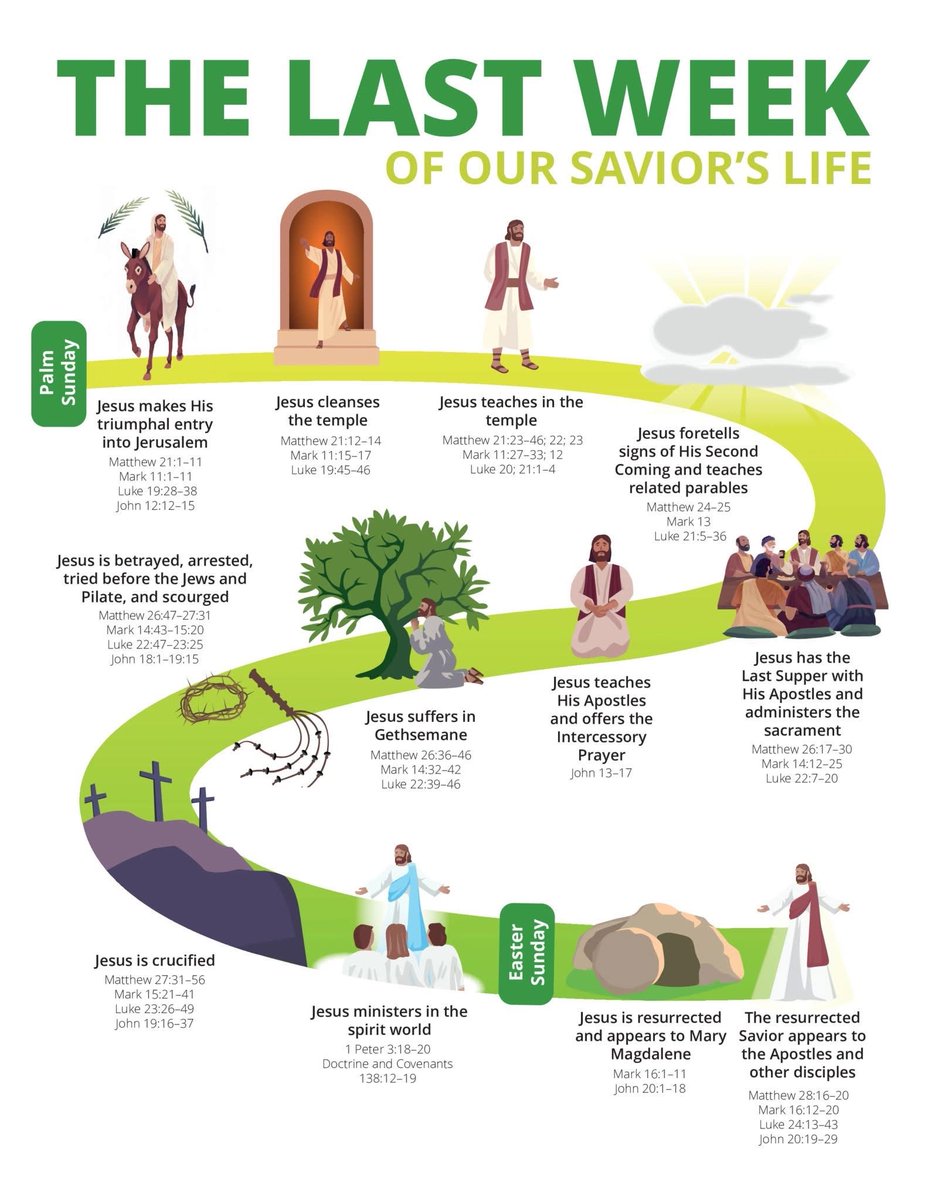
People often inquire about the exact time of the Second Coming.
While we cannot know that (see Matthew 24:36), what if the day of His coming were tomorrow? If you knew that you would meet the Lord tomorrow—through premature death or through His unexpected coming—what would you do today?
As Jesus taught in His prophecy of the Second Coming, blessed is the “faithful and wise servant” who is attending to his duty when the Lord comes (see Matthew 24:45–46).
“Wherefore,” the Savior tells us, “be faithful, praying always, having your lamps trimmed and burning, and oil with you, that you may be ready at the coming of the Bridegroom—For behold, verily, verily, I say unto you, that I come quickly” (Doctrine and Covenants 33:17–18).
Jesus Christ lives. I testify that He shall come, as He has promised.
Someone praying for you in another building can change your brain in real time. There is a study that proves it.
Researchers at North Hawaii Community Hospital placed 11 people inside fMRI scanners, fully isolated. In a separate building, spiritual leaders who knew them personally sent focused intentions toward them at random two-minute intervals. The receivers had no way to know when. Their brains lit up at the exact moments the senders focused on them. Specific regions associated with attention and awareness activated on cue. The odds of this happening by chance were less than one in seven thousand.
Most people have never heard of this. Here are three more.
Hand-holding and pain. Researchers placed 22 couples under EEG caps. When the woman was in pain and her partner held her hand, their brain waves synchronized. The more empathy he felt for her, the more their brains coupled. The more their brains coupled, the more her pain decreased. Touch combined with focused care produced a measurable analgesic effect. The lead researcher got the idea while holding his wife's hand during the birth of their daughter.
Two brains in shielded rooms. A Mexican neuroscientist named Jacobo Grinberg ran a series of experiments at the National Autonomous University of Mexico. Two participants meditated together for 20 minutes. Then they were placed in separate electromagnetically shielded rooms more than 14 meters apart. One participant was shown 100 random flashes of light. The other, hooked to an EEG with no sensory contact of any kind, registered matching brain-wave responses one out of every four flashes. Pairs who had not bonded showed nothing.
Group prayer. Andrew Newberg at Thomas Jefferson University has spent more than two decades scanning the brains of praying nuns, meditating monks, and chanting Sikhs. His imaging work shows a consistent pattern. The frontal lobes activate. The parietal lobes quiet. The effect amplifies in groups. Brains in shared prayer entrain to one another the way two pendulums swinging in the same room eventually fall into the same rhythm.
These studies measure what physically happens to the human nervous system when people focus caring attention on each other, in the same room or at a distance. The findings are consistent across labs, methods, and decades.
The basic finding, that human brains synchronize during empathic connection, is now mainstream neuroscience. Newberg alone has published more than 250 peer-reviewed papers.
People have been doing this for thousands of years and calling it prayer. Christians alone offer a window into the variety. Latter-day Saints kneel as families. Catholics pray the rosary. Protestants join hands in prayer circles.
What is actually happening when you pray? On the imaging, something measurable. On the EEG, something synchronized. On the pain scale, something diminished.
Prayer works.
WHAT ICU NURSES KNOW ABOUT THE LAST HOURS OF LIFE THAT FAMILIES ARE NEVER PREPARED FOR:
1. Hearing is the last sense to go. Many patients can hear everything being said in the room long after they appear unconscious. Nurses know this. Most families do not act like it.
2. The body does not shut down all at once. It withdraws blood and oxygen from the extremities first, working inward toward the heart. The cold hands and feet you notice are the body making a final decision about what to protect.
3. A sudden, unexpected improvement in energy and alertness hours before death is not a good sign. Nurses recognize it immediately. Families almost always mistake it for recovery.
4. The sound called the death rattle is not pain. It is simply the throat relaxing and losing muscle control. But no amount of medical explanation prepares a family for hearing it for the first time.
5. Most people do not die during the night. The body has a biological rhythm and many deaths occur in the early hours of morning, between 3am and 5am, when the nervous system is at its lowest.
6. Patients often wait. Nurses have watched people hold on for days until a specific person arrives, or a specific word is spoken, or permission is quietly given to let go. It happens too consistently to be coincidence.
7. The words "we did everything we could" are sometimes true and sometimes the most painful half-truth a family will ever receive without knowing it.
8. Families who are not present at the moment of death carry guilt that no counselor fully resolves. Nurses see this guilt begin forming in real time and cannot always stop it.
9. The face relaxes completely at the moment of death in a way that is impossible to describe until you have seen it. Nurses say it looks like the person finally put something down they had been carrying for a very long time.
10. Many ICU nurses privately believe that the most painful deaths are not the ones with the most physical suffering. They are the ones where the patient dies surrounded by family members who are fighting with each other.
11. The thing families almost never say, but almost always should, is simply this: it is okay to go. Those four words, spoken out loud, do something that medicine cannot explain and nurses have witnessed more times than they can count.
12. Nurses grieve too. They learn the names, the histories, the family dynamics, and the small personal details of every patient. They cry in break rooms, in parking lots, and on drives home. Then they walk back in the next morning and do it all over again, because someone has to, and they chose to be that person.
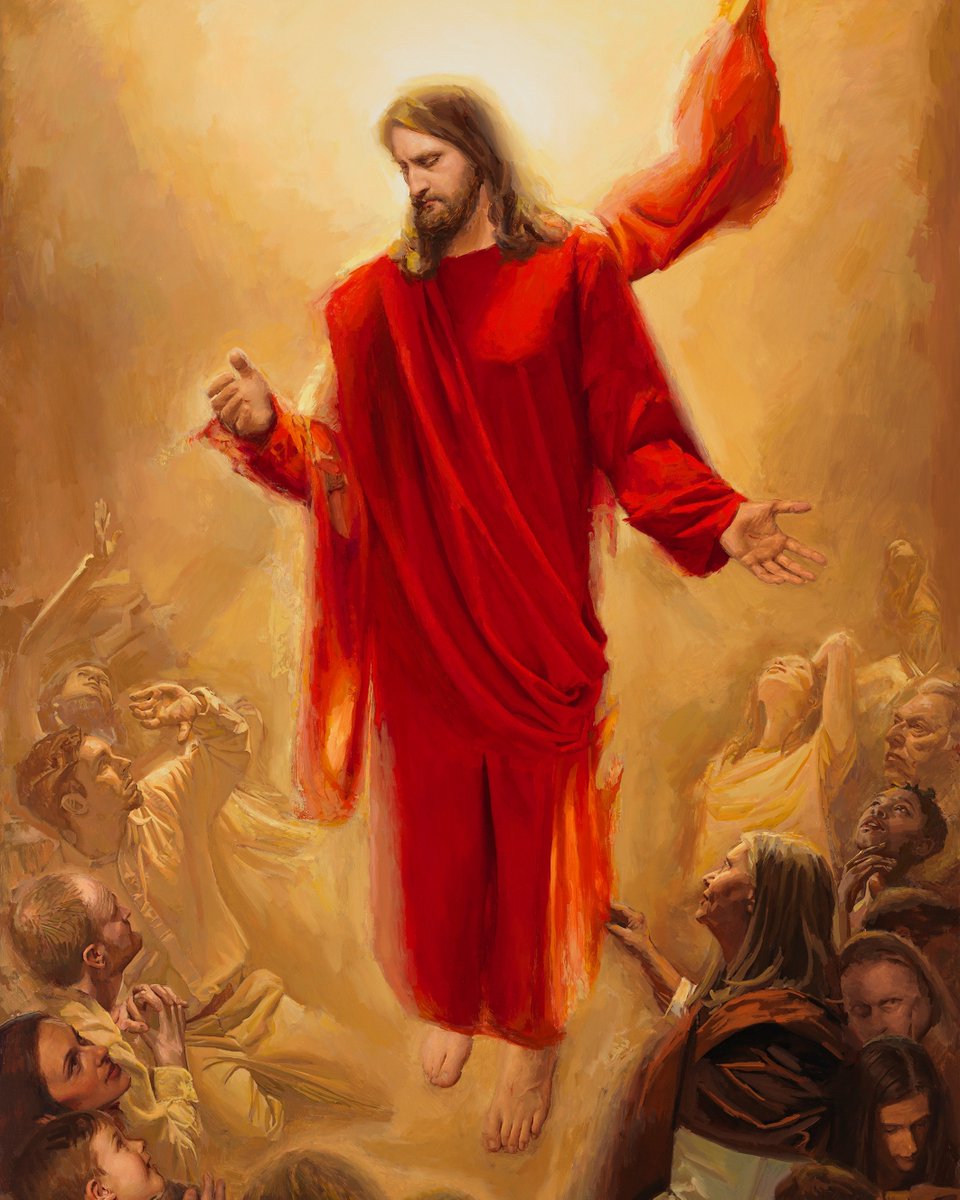
The literal resurrection of Jesus is, of course, the subject of so many scriptures that it is settled doctrine for believers of the Bible and Book of Mormon. For us, the universal resurrection is equally certain.
I wonder if we fully appreciate the enormous significance of our belief in a literal, universal resurrection. The conviction that death is not the conclusion of our identity changes the whole perspective of our mortal life.
It affects how we look on the physical challenges of mortality. It gives us the strength and perspective to endure the mortal challenges faced by each of us and by those we love.
It signifies that mortal deficiencies are only temporary! It also gives us the courage to face our own death or that of loved ones—even deaths we might call premature.
Our belief in the resurrection also encourages us to fulfill our family responsibilities in mortality. It helps us live together in love in this life in anticipation of joyful reunions and associations in the next.
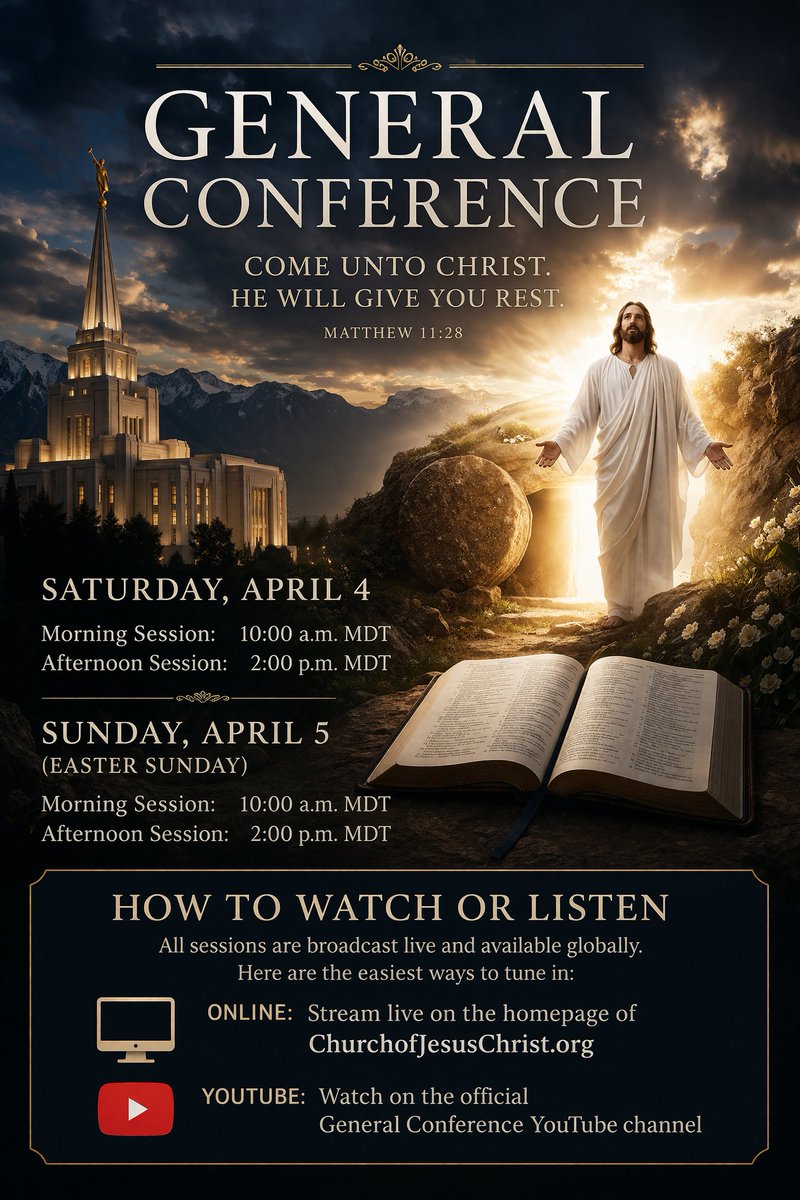
#GreaterLove #GeneralConference
Artwork: “Above All” by Kelsy and Jesse Lighweave
He is risen! And because Christ rose again, we will too. Thanks to Him, no pain, fear, failure, or unfairness is permanent. This is greater love. This is Easter.
He died for us so that we could be redeemed. What a Good Friday indeed. There is no greater love than Christ's willing sacrifice for us! As we use Good Friday to remember Jesus Christ, how will you follow His example of love?
The April 2026 edition of the World Report from The Church of Jesus Christ of Latter-day Saints is now available to watch on the Church Newsroom YouTube channel. The program is available in 11 languages across Church YouTube channels.
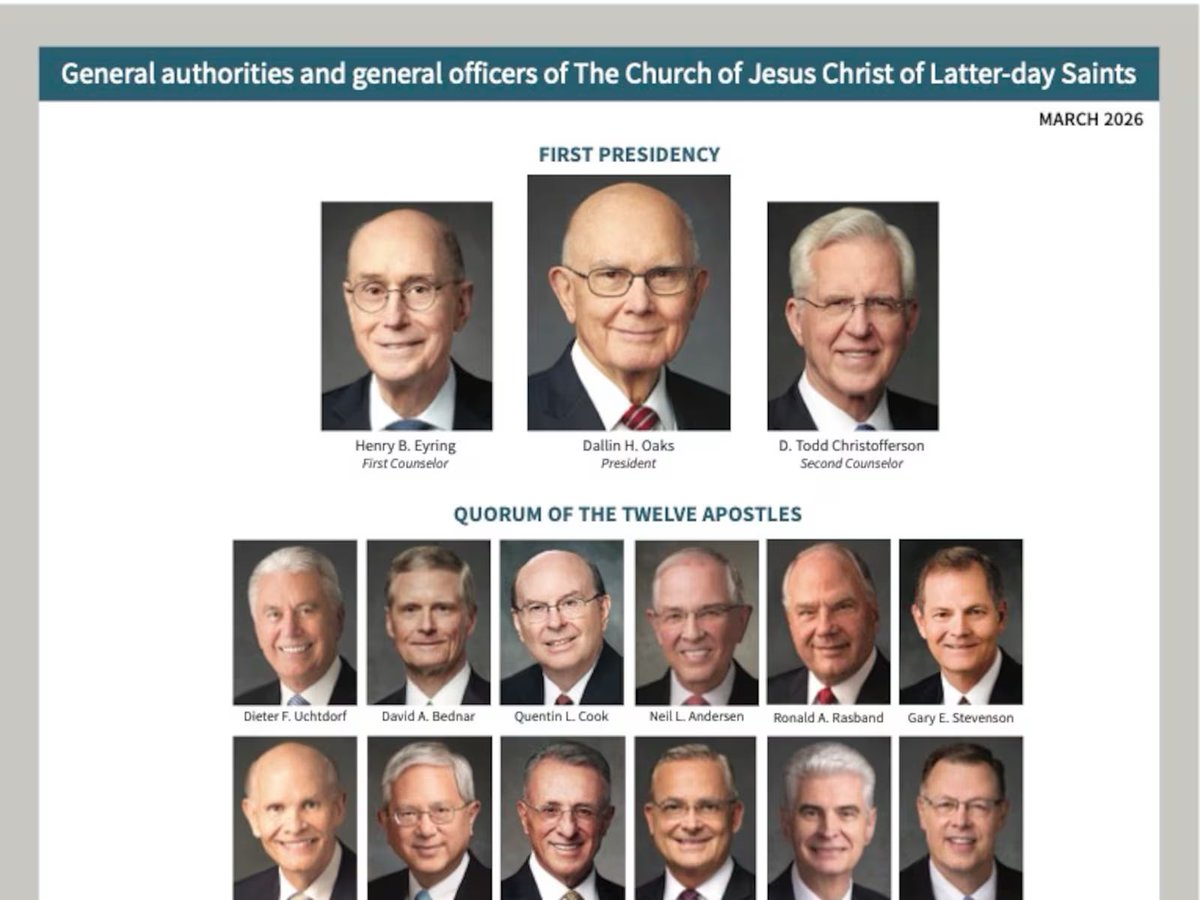
This edition opens with the calling of Dallin H. Oaks (@OaksDallinH) as the 18th president and prophet of the Church, the calling of two new Apostles and a tribute to the life and legacy of President Jeffrey R. Holland.
The program also takes viewers around the world to learn more about global news events of the Church from the past six months, including the ministries of Church leaders, wildfire relief in Chile, aid in Jamaica after Hurricane Melissa, the recovery of ancient petroglyphs and other inspiring stories.
Watch the April 2026 World Report below:
https://t.co/vJdkyR3bBC
In this special and sacred Easter season, I joyfully declare my witness that Jesus Christ is the Only Begotten Son of the Eternal Father. He lives. He is risen. #GreaterLove
Ok my fren @patriotproud17 sent me this and I had to share with all of you.
This is sooooo amazing. Thank you lady for sharing with me and now I’m sharing with everyone. ✝️🙏🏼💜
EASTER IS HERE: Listen to this
Incredible duet from - Cassandra Star
& her sister Callahan