The Copenhagen interpretation is arguably the most influential way of thinking about quantum mechanics, yet it doesn't claim to reveal what reality is "really" doing.
Its starting point is more modest: quantum mechanics is a framework for predicting the outcomes of measurements.
Before a measurement, the theory doesn't assign definite classical values like position or momentum. Instead, it describes a system with a wave function, while the Born rule gives the probability of each possible outcome.
It also introduced Bohr's idea of complementarity: the same quantum system can display wave-like or particle-like behavior depending on the experiment you perform.
The unresolved question is wave function collapse. Why do many possible outcomes become one observed result? Copenhagen accepts this as part of the formalism but says little about the underlying mechanism.
Einstein found that deeply unsatisfying. Bohr thought asking for more was the wrong question.
Nearly a century later, the mathematics remains unmatched. The meaning behind it is still being argued.
In double-blind placebo-controlled trials, 'gluten-sensitive' people who *think* they're going to eat gluten have reactions.
But if they don't expect gluten, there's no reaction.
Expectancy has a bigger effect than actually eating gluten!
Superposition isn’t “being in two places at once.”
It’s existing in one state that hasn’t decided yet-
but whose future outcomes are already constrained by specific weights (amplitudes) and phase relationships.
——
The way it’s often described makes it sound like:
• there are two actual copies
• both are physically realized at the same time
🧠 That’s not what the math says.
Before measurement, a system is described by one wavefunction—
not two objects.
——
🔄 Think of it like a quantum coin toss:
The coin is spinning in the air: it’s not heads or tails yet- both possibilities are still open, but the physics of the spin already shapes what can happen.
That’s why interference happens — the phases let possibilities reinforce or cancel each other out.
——
👉🏻 So, not: “everything at once.”
It's: “everything still possible… but already limited.”
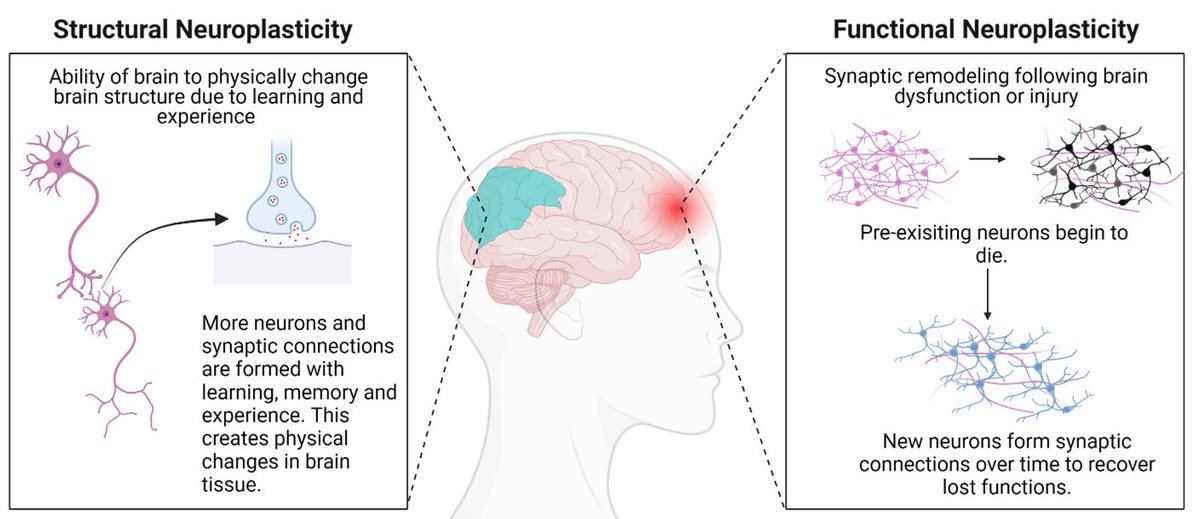
Repetition rewires the brain.
Repetition rewires the brain.
Repetition rewires the brain.
Repetition rewires the brain.
Repetition rewires the brain.
Repetition rewires the brain.
Repetition rewires the brain.
I’ve always wanted to have plenty of money.
But once I’d reached the financial goals I’d set myself, I realised that money wasn’t really the point. What truly mattered was my purpose in life and the things that genuinely brought me fun.
I saw that; success was even more fulfilling than all of that, and I’ve always strived to improve and achieve more, and I still do!
As you achieve success, you’ll realise that money follows you; don’t rush. Thing you want so much will find you.
Claude Opus 4.7, we’re taking things to the next level once again, offering a significant opportunity, particularly for those looking to launch a start-up or develop a product. Previously, we were trying to move a project forward by relying on others (the simplest example being having a website built).
A structure that has evolved to the point where we can handle every stage ourselves and build our own business is truly groundbreaking.
Time Dilation kind of makes the whole “datacenters in space” idea more fun.
Technically…something like a GPS Block III CPU runs an extra ~7,000 clock cycles per day compared to the same machine on earth.
Extend this to the extreme, and you get the whole subfield of CS+physics called relativistic hypercompuation.
There’s some (fun?) papers that allow you to solve the halting problem by placing yourself dangerously close to a black hole…while your computer safely computes for ~infinite-ish amounts of time.
One of the better papers on this field appears to be:
"Relativistic computers and the Turing barrier" (Németi & Dávid 2006)
(sadly, the maximum speedup just escaping earths gravity well is something like 1 x 10 ^ (-10), so yeah the blackhole thing is kinda necessary)
Being in your early 40s is weird, man. People around your age are in every stage of life. You have people who are grandparents. You have people who have newborns. You have people dating 25-year-olds. You have people celebrating their 20th wedding anniversary. Some of them look 60, and some of them look 30. All the bases are covered when you are in your early 40s.
If Ai replaces all the jobs, where do corporations expect people to earn money to continue being consumers? I am just not understanding why that simple question is not being asked.