The Environmental Law Institute (ELI) makes law work for people, places, and the planet. Founded 1969 as a 501(c)(3).
Likes and Retweets ≠ endorsements.
Developments around “gold standard science” and “sound science” are raising questions about science's role in environmental decisionmaking.
ELI's blog examines their potential implications for federal and state environmental protections.
🔬Read it here: https://t.co/nMGrppfKHo
Every day, millions of meals are served to students—but what happens to the food that doesn't get eaten?
Tune in to explores where waste comes from in K–12 schools, why it matters, and what schools and policymakers can do to reduce it.
🍕 Listen now: https://t.co/FlgpwOfozN
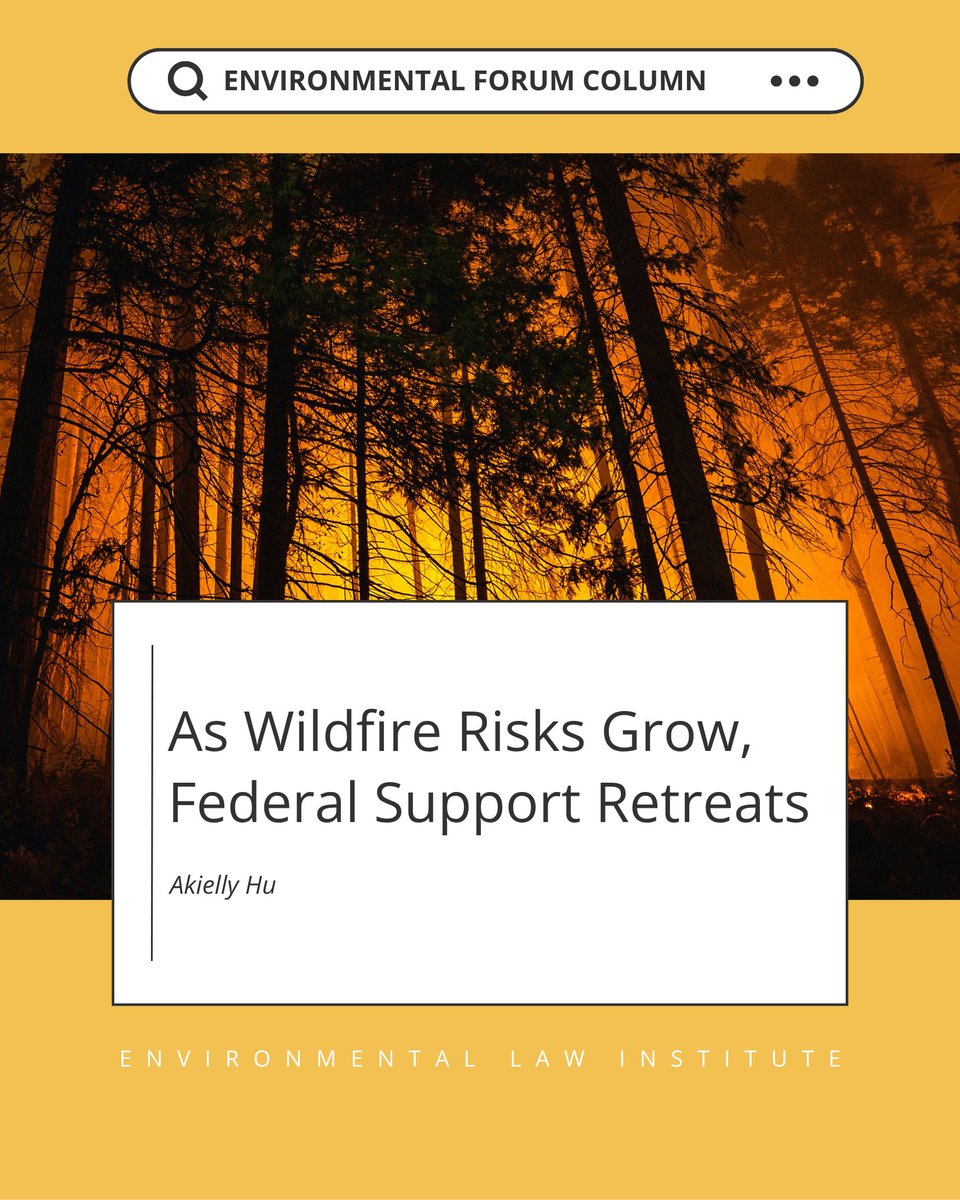
🔥 As wildfires grow larger and more frequent, local capacity to respond is weakening as federal funding pulls back.
Our latest Environmental Forum examines the consequences of these cuts and what they mean for communities.
Read it here: https://t.co/jJda7aQxed
🍌 Every year, 7 billion meals are served in U.S. public schools—which results in significant food waste.
This Food Waste Prevention Week, join ELI and @NRDC on how to reduce food waste in schools and combat food insecurity.
Register here: https://t.co/qhbDt1tMZ6
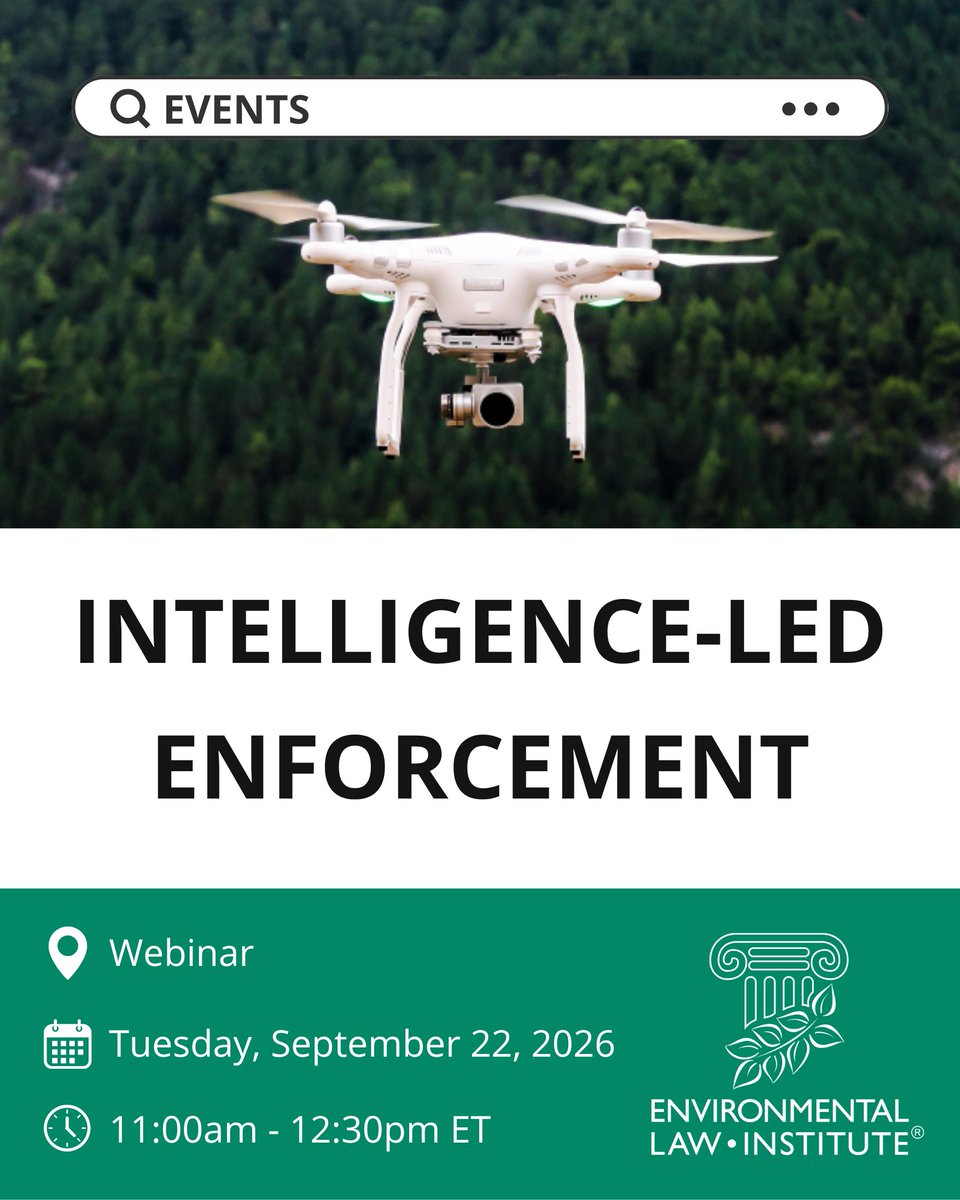
How can intelligence-led enforcement help target high-risk environmental threats?
Join ELI to explore how data analytics and AI are shaping these efforts.
Register here: https://t.co/7HM6FJt8WE
🌽Biofuels can reduce reliance on fossil fuels and lower greenhouse gas emissions, but they also raise questions about land use, water use, and the food supply.
Explore the latest biofuel developments and policy considerations.
Register: https://t.co/VGzTHK42RI
☁️ As geoengineering develops, the need for a comprehensive governance framework is becoming clearer.
Our new blog examines existing legal frameworks and challenges around transparency, accountability, justice, and public trust.
Read more: https://t.co/d0TQSfspKn
Who has the right to access and use water?
In this episode, we explore water tenure and how it shapes communities.
Tune in as we break down the systems at play and consider approaches to strengthening water tenure around the world.
🎣 Listen now: https://t.co/mOS2ChpHv5
🍎 Who actually has the authority to reduce food waste in schools?
ELI’s new case study shows it can be a complicated mix of actors. Understanding this landscape can help identify who can pass measures—and where coordination is needed.
Learn more: https://t.co/AoARqNg53B
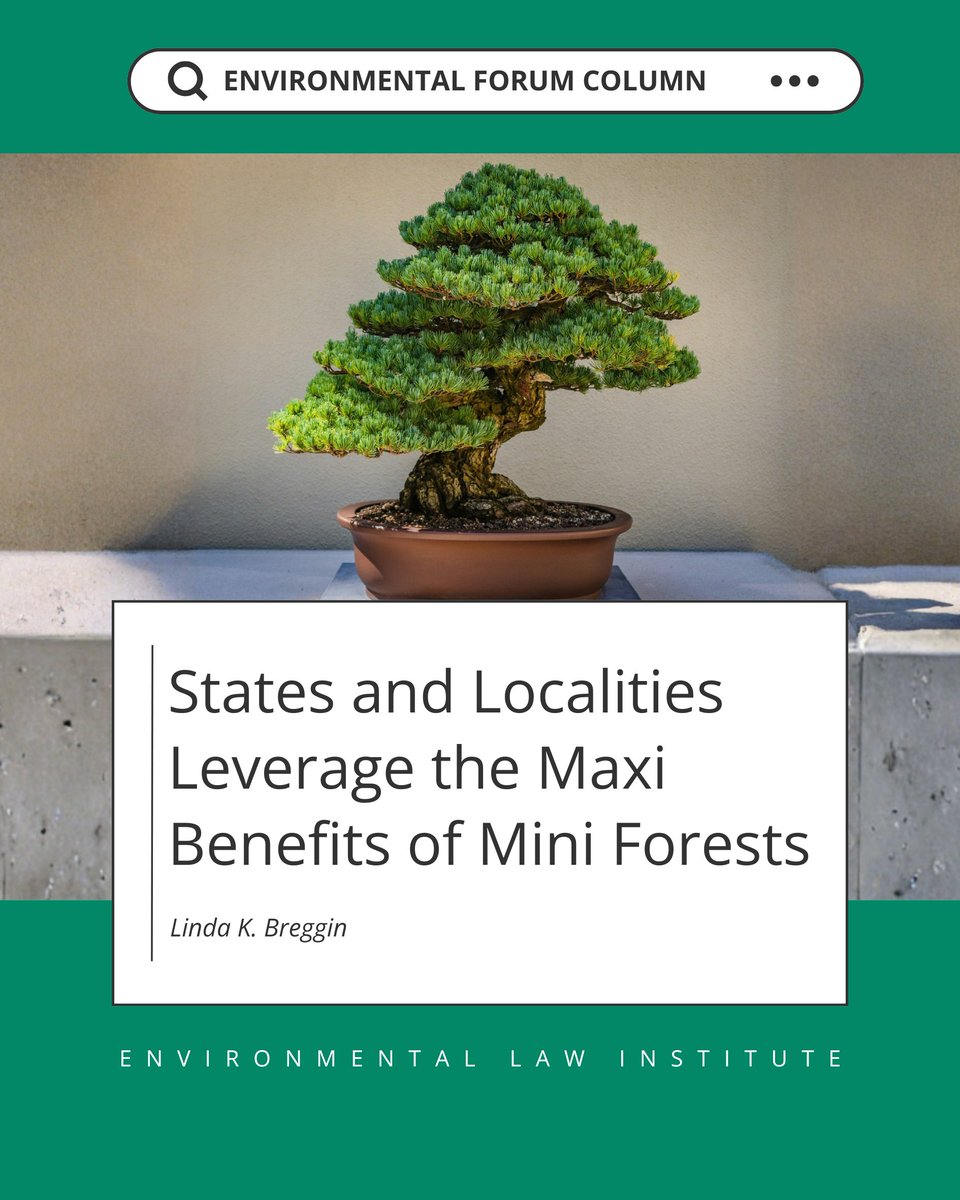
Mini forests are taking root. 🌱 These multi-layered ecosystems offer a range of both environmental and health benefits.
Our new Environmental Forum explores how mini forests are being incorporated—and why continued evaluation matters.
Read it here: https://t.co/K1zbBrw026
☁️ What is geoengineering? And why do some researchers resist even discussing it?
Our new blog explores the potential benefits and risks of geoengineering, as well as the legal and policy questions surrounding it.
Read it here: https://t.co/n1z0wqKaAH
What does it take to give people a meaningful voice in environmental decision-making?
Discover how environmental rights work in practice, how compliance bodies build trust and accountability, and how environmental defenders are protected.
🎙️ Listen now: https://t.co/FlgpwOfozN
Legal and policy developments in the climate change arena move quickly and can be hard to follow. 🌍Join our Monthly Climate Change Briefing for quick insights and an overview of recent updates in the field.
Register: https://t.co/3uUgpC1si7
#ClimateChange#EnvironmentalLaw
Engaging marginalized groups isn’t just about protection—it can also improve the sustainability and effectiveness of environmental projects.
Join ELI and @GEF_IEO as we explore this connection and what it means for future programming.
🌎Register: https://t.co/U3YUgvU0Nr
🌊 How are science, technology, and the law shaping decisions around seabed mining?
Explore what responsible decision-making looks like—and what can happen when frameworks fail to account for environmental risks and scientific evidence.
Register here: https://t.co/JHmqRBJEN4
Does including marginalized groups contribute to stronger environmental projects?
To answer this question, ELI and @GEF_IEO developed Evaluation of GEF Support to Marginalized Groups, examining why some projects succeed while others do not.
Learn more: https://t.co/Tk9l76qPEG
Environmental peacebuilding is at a pivotal moment.
Our latest blog explores key discussions from the Fourth International Conference on Environmental Peacebuilding, including the role of law in advancing the field.
🕊️Read here: https://t.co/Dd7lMV8tSo
⚡Does next generation geothermal have the capital and regulatory certainty to scale?
Our new podcast digs into what stands between geothermal and the capital it needs, and the policy moves that could unlock it.
Listen now: https://t.co/FlgpwOfozN
🏘️ How can policy ensure that the homes built today are healthy and resilient for decades to come?
Join ELI as we explore opportunities to integrate indoor air quality and health into housing decisions.
Register now: https://t.co/pFmSGMtKWi
The Department of the Interior is merging the Bureau of Ocean Energy Management and Bureau of Safety and Environmental Enforcement into a new Marine Minerals Administration.🌊
Join us to discuss what this means for offshore energy governance.
Register: https://t.co/vJlMmY3GeJ