BU’s Xaralabos Varelas’ new study offers novel insight into the signals that contribute to the evolution of a distinct mammary carcinoma and identify targets that could guide potential targeted therapy for subtypes of breast cancer. Read more: https://t.co/s4j0Bo8cQU
Are you attending the #EMBOmetabolicDiseases meeting in beautiful Torremolinos? So is our editor Deniz Senyilmaz Tiebe! Talk to her if you are looking for a home for your paper or about scientific publishing. @EMBOevents@EMBOPress
The first February issue is live.
https://t.co/x8HuEbNWdM
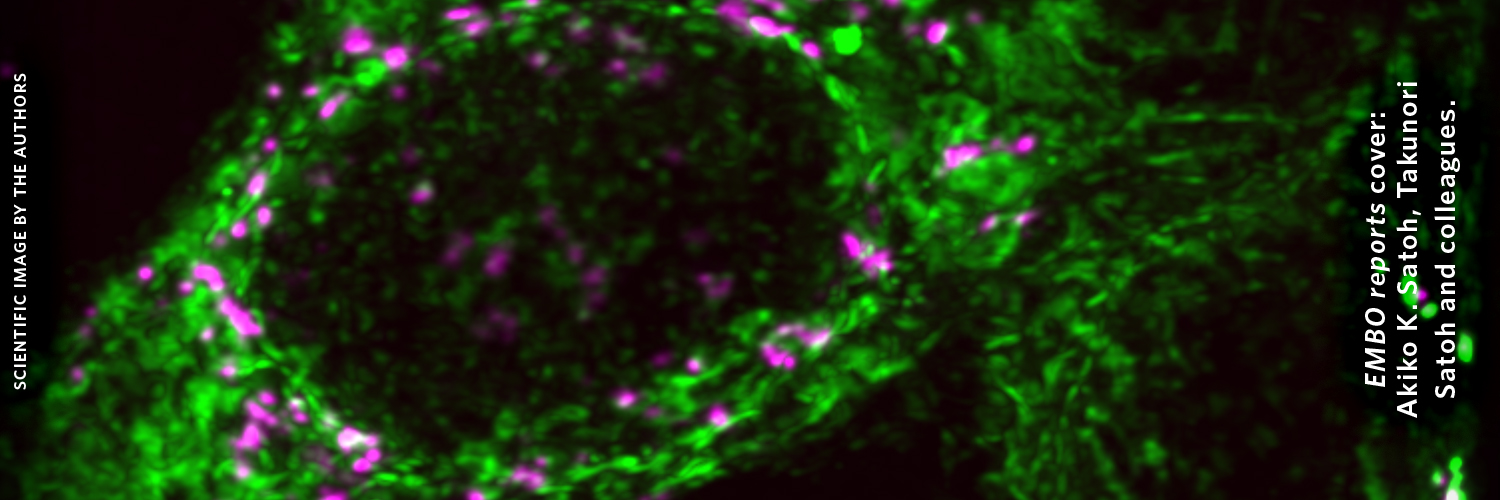
The cover features work by Akiko Satoh from Hiroshima University and co-workers presenting RudLOV, an optically synchronized #cargo#transport method revealing unexpected effects of #dynasore.
https://t.co/YF17aJmZWz
Douglas Winton and co-workers @CRUK_CI@imm.ox.ac.uk @MathsBirmingham and @UU_University @MRC_WIMM and show that haploinsufficient phenotypes promote selection of PTEN and ARID1A-deficient clones in human #colon, predisposing to #cancer.
https://t.co/UVYzacJLek
Couldn't be more thankful to 2024 for two major publications from our infant lab last year with @emboreports and @PLOSPathogens. Hoping for 2025 to be kinder 😁
Mutant p53 regulates a distinct gene set by a mode of genome occupancy that is shared with wild type | EMBO reports https://t.co/9eKIoQ62LT
James Manfredi, @RamyRahme and colleagues
@IcahnMountSinai
The 2nd January issue is live.
https://t.co/2DovOGXowM
It features work by the lab of Eurico Morais-de-Sá @Polarity_i3S at IBMC @UPorto showing that the Dystrophin-Dystroglycan complex ensures #cytokinesis efficiency in #Drosophila#epithelia.
https://t.co/OA1AoaFgHS
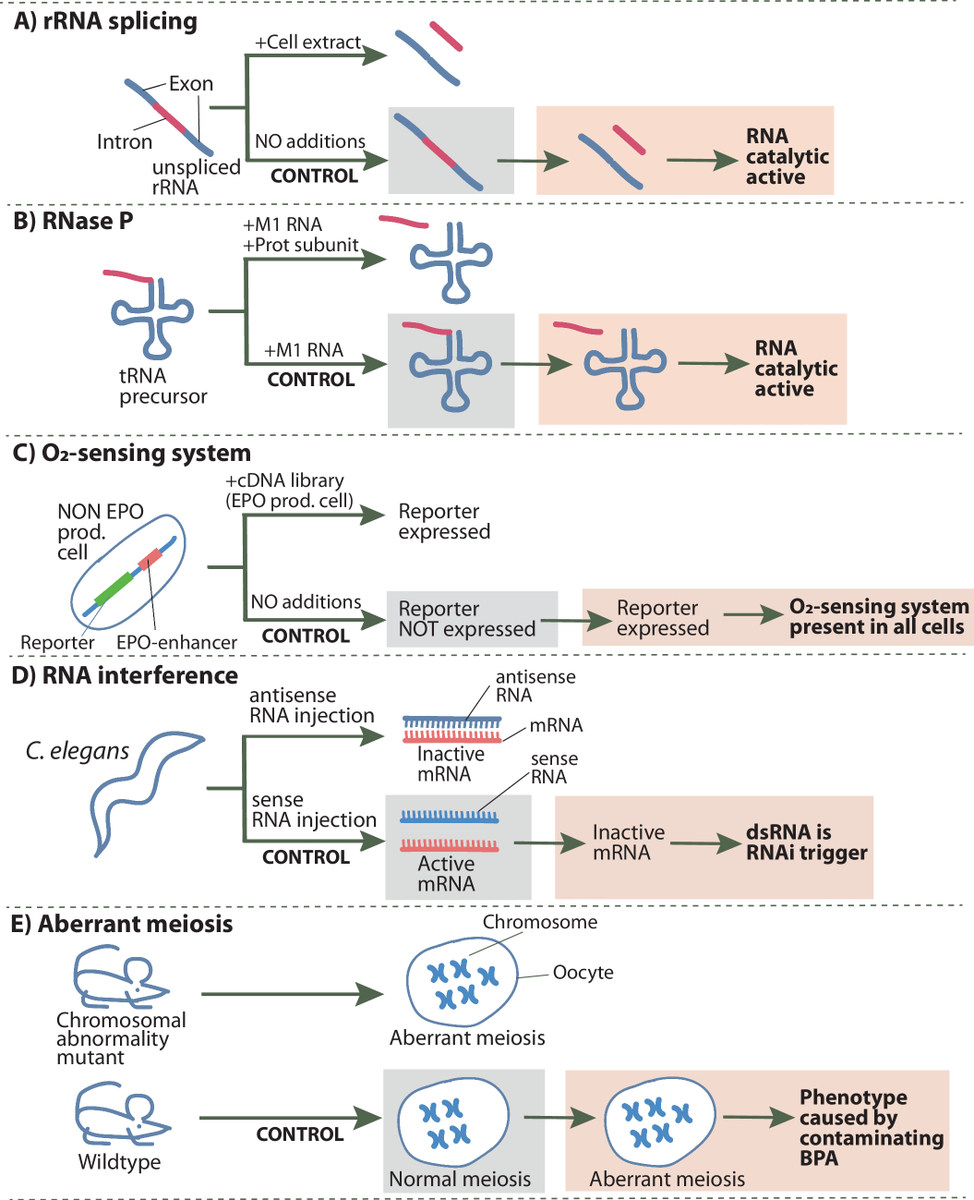
When experimental #controls go wrong, it does not necessarily mean your #experiment is flawed. It might well be the first sign of something unexpected.
André Schneider @aschneiderlab:
The controls that got out of control:
https://t.co/ff1m6KCY9H
EMBO Postdoctoral Fellowships support internationally mobile postdoctoral researchers in Europe and around the world. Apply here (next cut-off date is 14 February):
https://t.co/MchFNj6TsE
#ResearchFunding#LifeSciences
Okay, another VERY exciting paper drop! 🎉📜 So you guys may know the story of how @GametoGen was started? 🐣 My part of the story begins with a visit to @geochurch at @harvardmed, with a (perhaps naive) goal: to make an oocyte from a stem cell. 🧫 With @GametoGen's support, I started working on it together with @krammecc, and later with @mpsmela1. 5 years later, after many rejections and sleepless nights of experiments/analysis, our paper describing oogonia differentiation from iPSCs is finally published in @emboreports! 🎉
📜:https://t.co/j7M2zfRZdG
Ever since the generation of iPSCs from somatic cells, stem cell differentiation to different cell types has been a major challenge. Some of the toughest cells to make are gametes (oocytes and sperm) -- they have crazy methylation dynamics, they are haploid, and they can obviously produce offspring !👶 The search space for the right cocktail of molecules and transcription factors (TFs) to make these is complicated and vast -- a perfect problem for an algorithm! 💻
As a part of our STAMPScreen pipeline (https://t.co/VV7VeJjm6t), we developed an adaptive PageRank-based algorithm that could rank "central" transcription factors in the gene regulatory networks of differentiating cells. 📊 After screening the top 46 TFs ID'ed for oocyte production in iPSCs (while also pushing them through primordial germ cell-like cell (hPGCLC) formation), we identified 3 that both independently and together (D3), drove DDX4+ oogonia formation, as well as 3 that drove improved hPGCLC formation! 🤩
We have since showed that cells we engineered with these factors, termed induced oogonia-like cells (iOLCs), can be generated in just FOUR DAYS (not like the previous FOUR MONTH protocol) and exhibit late-stage oogonia-like gene expression, epigenetics, and protein markers. 🧫 They are defined by the expression of mitotic oogonia markers (DDX4, DAZL, and KI67) and the absence of earlier primordial germ cell and pluripotency markers (OCT4 and SOX17). Remarkably, these iOLCs are capable of feeder-free expansion culture while retaining their oogonia-like identity post-sorting, making this a super rapid, scalable, and robust system to study human germline development! 💨
Honestly, this was only possible via my incredible partnership with @krammecc (now the CSO at @GametoGen!) and our brilliant collaboration with @mpsmela1, as well as with @Patrick11F, my @DukeU undergrad Shrey + the entire team! 🙌 It was just sheer perseverance for years as we CONSTANTLY got rejected by journals and had to keep adding new data and analysis (I thought it would never end). We were also so lucky to have the guidance of the Shioda Lab at @MassGenBrigham and the team at the @wyssinstitute through the process! 🤝Just so many great scientists who put their everything into this! 🫶
I know a lot of you know me as a peptide/protein designer (or probably just as the sequence-only guy), but this shows you how impactful good algorithms can be! Who would have guessed a graph theory algorithm could be used to make human oogonia?! 🙃 I'm just really excited for my lab to continue work in this space and make an impact in reproductive medicine with our new generative models! 💻
I hope you can take a read of our paper and let us know your thoughts! 🙏
Nicolas Toni @Nico_Toni1 and co-workers @unil show that natural variations of adolescent #neurogenesis and #anxiety predict the hierarchical #status of #adult inbred mice.
-> https://t.co/gAmuiif5D7
Read more here:
https://t.co/lzF2uy67nw
See also:
What’s in our bin?: Labs kick off and demand the transition towards a circular economy for lab plastics. @GrnLabsAustria
-> https://t.co/SXIpm3r6NG
The EMBO Lab Sustainability Award recognizes pioneers of environmental #sustainability in #lifescience research. Individuals representing a group initiative can apply from now until 14 March 2025.
https://t.co/w5WktEBnsz
Daniel Getts and co-workers @MyeloidTx present CRISPR-Enabled Autonomous Transposable Element (CREATE), a #genome editing system that combines #CRISPR/Cas9 with a modified LINE-1 retrotransposon machinery, for #RNA-based #gene editing and delivery.
https://t.co/wui96IciTM
Judy Coulson @LivUni and co-workers report that the #deubiquitinase OTUD6B stabilises #kinesin KIFC1, to support pseudo-bipolar #spindle formation and to regulate KIFC1-dependent #centrosome clustering and #BreastCancer cell survival.
https://t.co/e7T9gyR9DJ
Adrian Hodel and Ilia Voskoboinik @PeterMacCC
and co-workers show that acidic pH attenuates
#immune killing through the inactivation of
#perforin directly within the immunological
#synapse. #Immunity
-> https://t.co/u7n8WS7MjP