📢This study develops an AI hybrid framework for stratum ventilation, integrating optimized MLPNN modeling and multi-objective optimization to balance thermal comfort, energy use and airflow quality for human-centered smart HVAC design.
🔗https://t.co/chLmYOeLce
@ElsevierConnect
📢This study develops a pediatric sleep health-driven HVAC framework, validated via multi-city US simulations, to boost hospital wildfire smoke resilience, improve IAQ and cut energy use and operating costs.
🔗https://t.co/IeWR1dOOHI
@ElsevierConnect
📣 Call for Papers: VSI: ENB_AI Empowered Development
This issue explores AI-powered approaches integrating BIM and IoT data to simulate the built environment and drive evidence-based decisions for sustainable urban. @ElsevierConnect
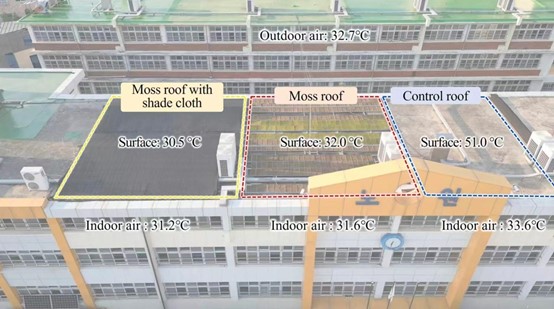
📢This study empirically evaluates a moss-based green roof on an occupied school, demonstrating significant indoor and surface cooling without shading, supporting lightweight, scalable retrofits for urban heat mitigation. 🔗https://t.co/fRoaitKBuD
@ElsevierConnect
📢Call for Papers: VSI: ENB_Extreme Climate Designs
This issue explores climate-adaptive paradigms for building safety and energy resilience. We seek interdisciplinary studies bridging "Mechanism–Methodology–Application" with verified engineering demonstrations.
@ElsevierConnect
📢This review proposes a structured framework for physiological-based personal comfort models, covering sensing systems, data preprocessing, and model establishment, and reveals key gaps hindering accuracy and deployment.
🔗https://t.co/legBylHCta
@ElsevierConnect
📣 Call for Paper: Next Generation Energy Performance Certificate for Buildings
⏰ Submission Deadline: 30-Sept-2026
Read more details:https://t.co/3lJrd916qj
Join us to shape future of building performance with Next Generation Energy Performance Certificates!
#callforpapers
📣 Call for Paper: VSI Ecological Building Materials and Technologies
⏰ Submission Deadline: 31-Aug-2026
Read more details: https://t.co/x3qbm6OHLv
Join us to advance sustainable, energy-efficient, and climate-resilient building technologies!
#callforpapers
This study uses Automated Machine Learning and the NSGA-III algorithm to optimize building energy renovation, achieving up to 33% energy savings and 40% better thermal comfort, offering a fast, data-driven path to sustainable retrofits.
🔗https://t.co/NMiFGQJ5cR
@ElsevierConnect
📣 Call for paper: VSI Progress in Smart Technologies for Built Environment
⏰ Submission Deadline: 31-Jan-2026
Read more details: https://t.co/6UfPbl5tGc
Join us to accelerate the smart transformation of the built environment!
#callforpapers
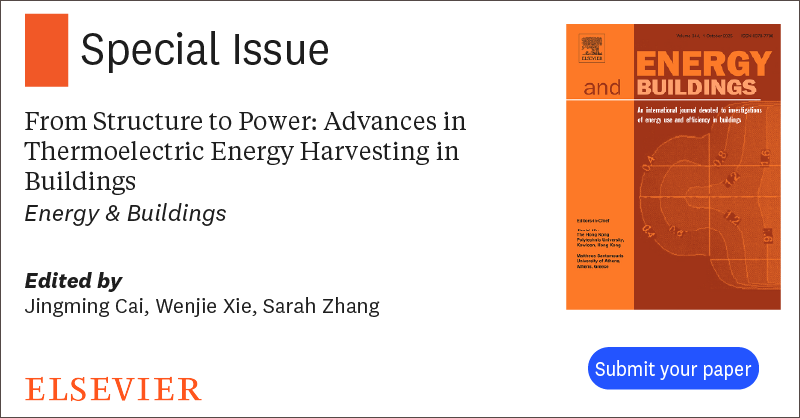
📣 Call for paper: VSI From Structure to Power: Advances in Thermoelectric Energy Harvesting in Buildings
⏰ Submission Deadline: 31-Dec-2025
Read more details: https://t.co/4iuLyt82fA
Join us in advancing the future of sustainable infrastructure !
#callforpapers
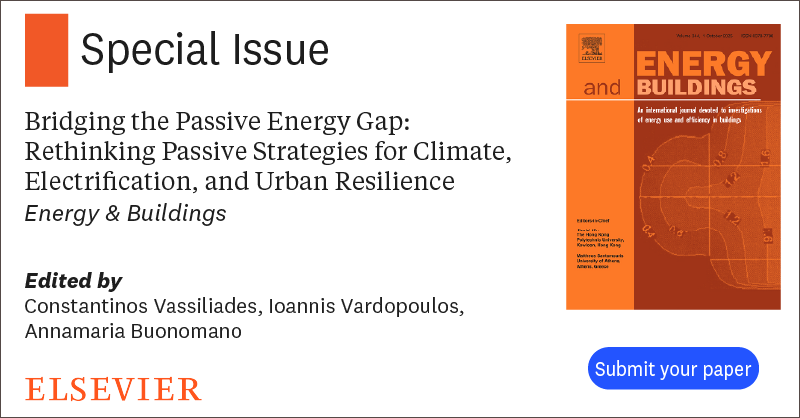
📣 Call for paper: VSI Bridging the Passive Energy Gap: Rethinking Passive Strategies for Climate, Electrification, and Urban Resilience
⏰ Submission Deadline: 15-Dec-2025
🔗 Read more details: https://t.co/P8xLTZWuXY
#callforpapers
📢Call for paper: Nature Based Solutions: Materials, Buildings and Cities for Counteracting Climate Change
📆 Submission Deadline: 30-Sep-2025
🔗 Find more details here: https://t.co/4ZzfRogHm9
Let’s build greener cities and a climate-resilient future—together.
#callforpapers
💡Call for paper: From Structure to Power: Advances in Thermoelectric Energy Harvesting in Buildings
📆 Submission Deadline: 31-Dec-2025
🔗 Find more details here:https://t.co/4iuLyt8A58
Join us in advancing smart, self-powered, and sustainable infrastructure!
#callforpapers
🚀This study quantifies energy-efficient strategies in traditional Zhuangke dwellings using field surveys and simulations, improving thermal performance and reducing heating demand in Qinghai’s cold climate. 📷https://t.co/IadUAE3u78
@ElsevierConnect
🚀This study quantifies energy-efficient strategies in traditional Zhuangke dwellings using field surveys and simulations, improving thermal performance and reducing heating demand in Qinghai’s cold climate.
🔗https://t.co/IadUAE3u78
@ElsevierConnect
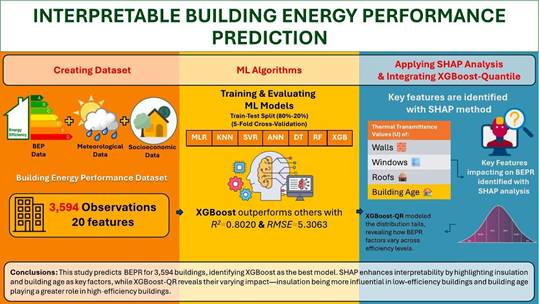
📢This study uses XGBoost and SHAP to predict BEPR in 3,594 Istanbul buildings, showing wall/window insulation affects low-efficiency buildings, while roof insulation and age matter more in high-efficiency ones.
🔗https://t.co/4Jg7XvLzaI
@ElsevierConnect
🎉Congratulations! Energy and Buildings has achieved a 2024 Impact Factor of 7.1, along with JCR Q1 in Construction & Building Technology and Civil Engineering! #CiteScore2024
We mark this milestone thanks to our authors, reviewers, and editors for making this possible!😃
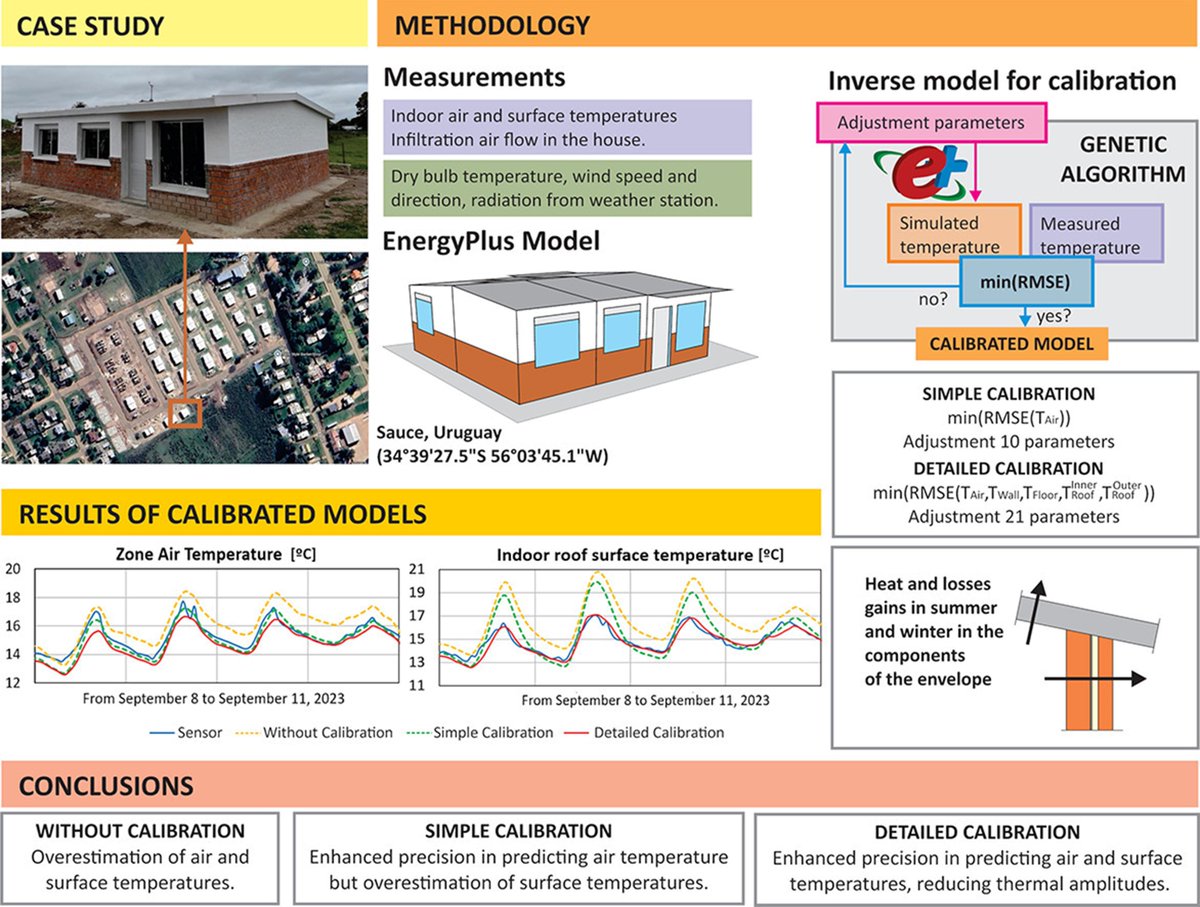
📢This study improves building energy simulation accuracy by including key parameters like convective coefficients and absorptivities in calibration.
🔗https://t.co/EBqNhCDcqf
@Elsevier_Eng
New in FDD research: Hybrid-CGAN leverages simulation+ GANs to synthesize high-fidelity fault data— addressing real-world fault data scarcity.
📉 50% better FID vs. other GANs (0% real faults)
📈 RF accuracy: 0.82 → 0.94 with synthetic data
https://t.co/tNWd1bR1SC
@Elsevier_Eng