Anyone who is interested in spatial AI, robotics, or brain science should definitely check out The Thousand Brains Project @1000brainsproj
They are developing a new type of AI framework based on theories of how the neocortex works. Intelligence is modeled as a network of thousands of cortical columns/modules which work together to process sensory-motor information. Under this approach, movement information is integrated with sensory features to create structured representations of objects/entities and their behaviors (motor action outputs are also being developed).
The project is open source with all documentation, code, and research meetings available.
Website: https://t.co/BhlKlPy6QU
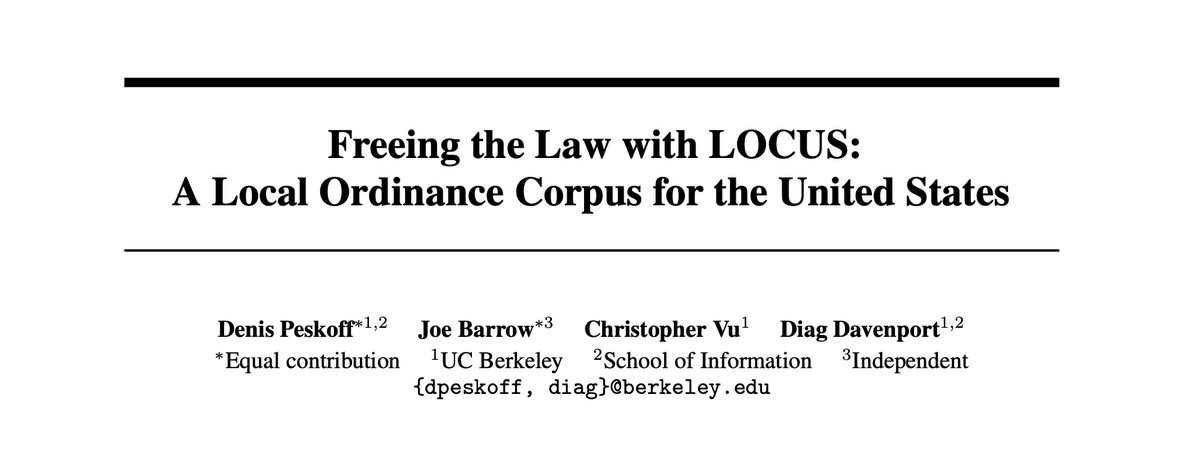
New paper: every law in America is technically public. But not really, until now!
With @DenisPeskoff at UC Berkeley, we built a corpus of ~every publicly accessibly city and county law, and released a huge chunk of it!
2.2 million laws, you're (probably) covered in it!
🧵
Anthropic is showing us a very uncomfortable version of the AI future.
The public gets the restricted model.
“Trusted partners” get the real power.
Everyone else gets guardrails, fallbacks, usage caps, and lectures about safety.
This is how tech feudalism starts.
Not with one evil system, but with tiers of intelligence. A small elite gets access to the strongest tools. Ordinary users rent a weaker version under supervision.
I’m genuinely concerned this becomes the default.
📖 Our paper “Thousand-Brain Systems: Sensorimotor Intelligence for Rapid, Robust Learning and Inference” is now published in Neural Computation! Read more about how Monty works, its capabilities, and advantages over transformers: https://t.co/F3T0oxQxyn
Meet Eyewire II: a new connectomic resource for the mouse retina.
~1 mm² of retina at nm resolution, with synapses and circuits of ca. 100,000 neurons + visual responses from the ~400 neurons shown in the video!
Preprint: https://t.co/XuPRdj6HU1
Data: https://t.co/979qOp2xjc
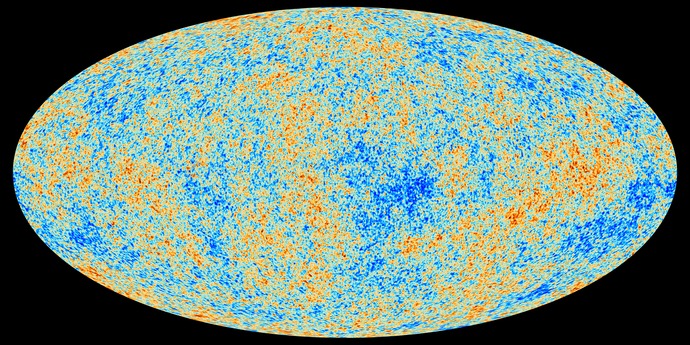
On the largest observable scales, the universe looks nearly the same in every direction. A new paper from Simons Foundation president @DavidSpergel and colleagues proposes initial conditions for the beginning of our universe that could explain this cosmic puzzle: https://t.co/idzMctvfk9 #science #astrophysics
🧠 Jeff reviews literature on the hippocampal complex and presents new ideas from a recent focus week around learning temporary models. Watch the full video here: https://t.co/WJW0EUTJAi
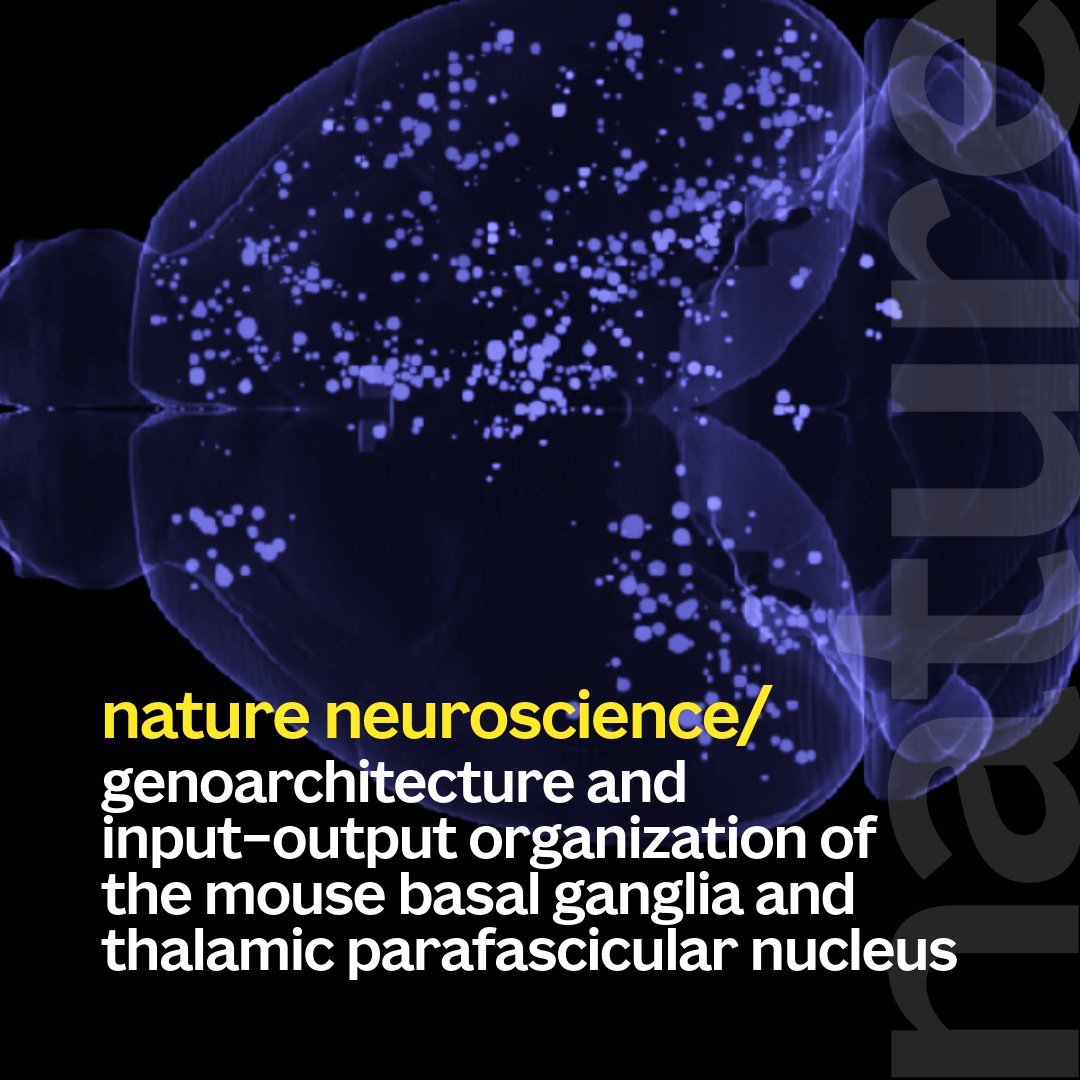
The basal ganglia is essential for motor control, learning, emotion and cognition, yet how cell types relate to their organization in circuits.
A new @NatureNeuro article shares new insights: https://t.co/AoUTZrONIZ
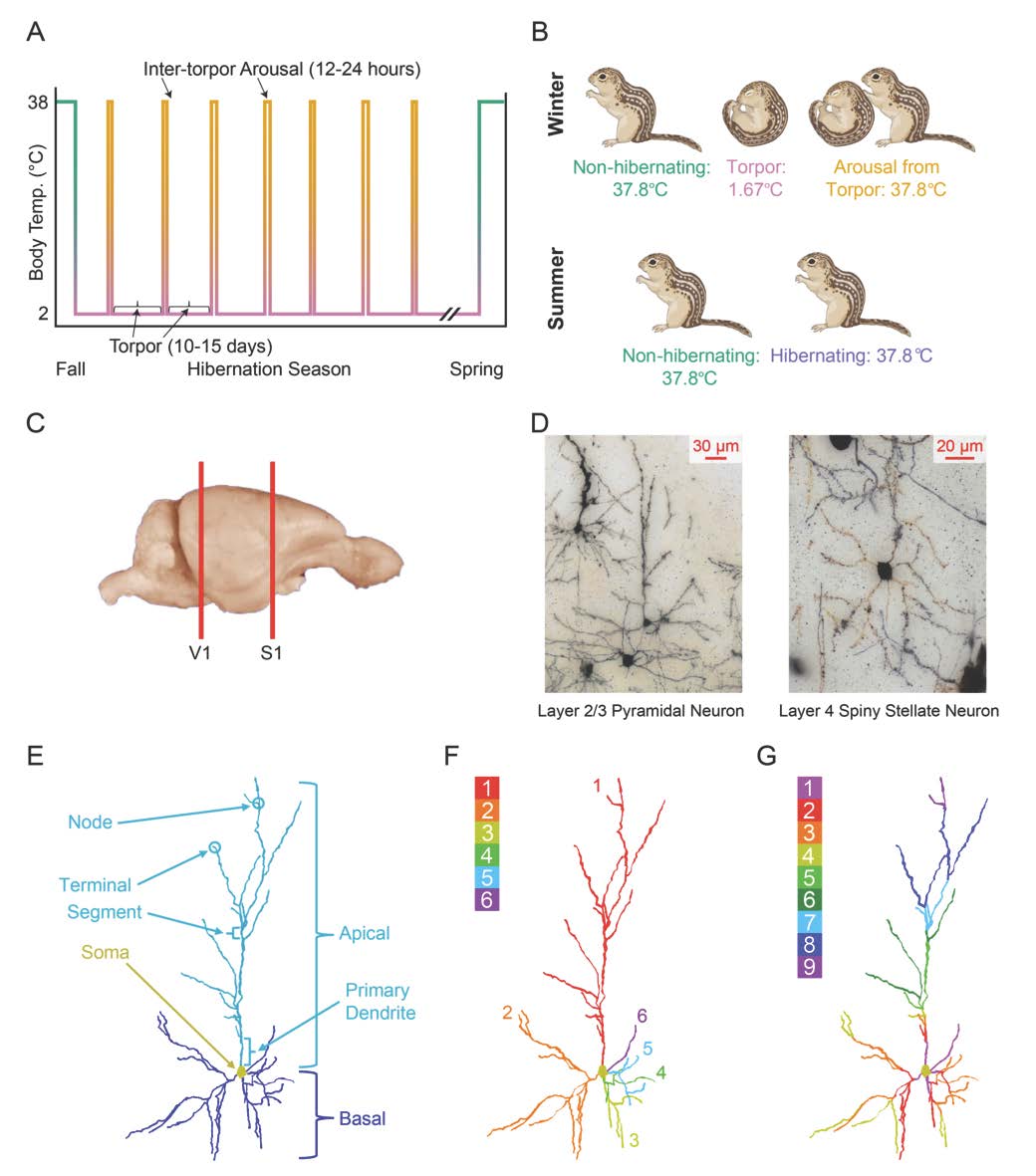
New in #JNeurosci from Fultz et al: A neuron population in V1 undergoes rapid, dynamic structural changes during and after hibernation that may inform treatment development for conditions in which neuron function is lost or hindered, such as poststroke.
https://t.co/XAwxWEQS2T
Register for the next #ResearchInConversation webinar, "Development of Cortical Somatostatin Innervation," May 26, 12PM EDT
🔗 Register: https://t.co/Jkv6xjxvky
📄 Read the paper: https://t.co/EPDwf5wDS8
@Andercot Frank Tipler's Omega Point theory posits something similar, except by driving the universe into a big crunch and harnessing the energy created by it.
@TOEwithCurt You could include the speculative but interesting Omega Point theory of Dr. Frank Tipler. Deutsch wrote about it in "The Fabric of Reality" ch. 14.
Our review on transthalamic pathways is now out in @CommsBio.
We discuss emerging evidence they contribute to perception and decision-making, and why it remains so difficult to isolate their function behaving animals.
Studying circuit function is hard.
https://t.co/lXADdHfLjS
💡@SKnudstrup gives a summary of today’s research meeting, where we prepared for the focus week on actions and causality. We reviewed past ideas around behavior models, time, hippocampus, and causality.
Watch the full video here:https://t.co/pLlQ46USDb
Why do our visual systems have “shortcut” connections (V1-V4)? What do they add beyond the classic hierarchical (V1-V2-V3-V4) pathway?
The lab’s latest study takes activity flow modeling to the next level to answer these questions
https://t.co/XFk3EzXFYS
1/n
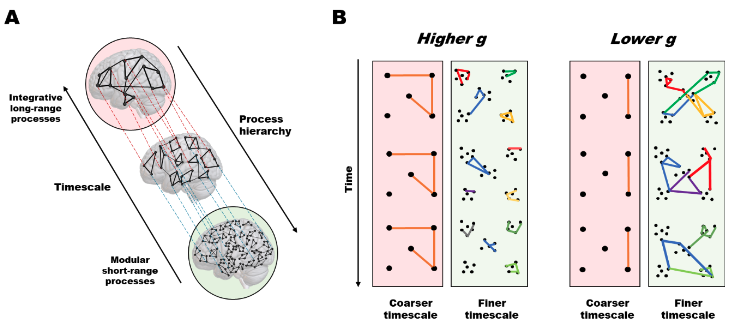
📢 NEW: "The Multilayer Processing Theory of Human Intelligence" now available online‼️Intelligence as phenomenon arising from neural Interactions at various temporal and spatial scales🧠https://t.co/6NV1IO6Sej
Physics anyone? The gap between the "weird" quantum world and our everyday reality just got a lot smaller.
Researchers at @MIT have built a mathematical bridge showing that quantum behavior—like particles being in two places at once—can be calculated using the classical "principle of least action." By applying the same math we use to predict a falling ball to the double-slit experiment and quantum tunneling, they’ve found a common language for physics at all scales. https://t.co/bcTfxPyTn5
#Physics #QuantumMechanics #ScienceNews #MIT #Feynman #QuantumPhysics #Innovation #STEM #ScienceTwitter