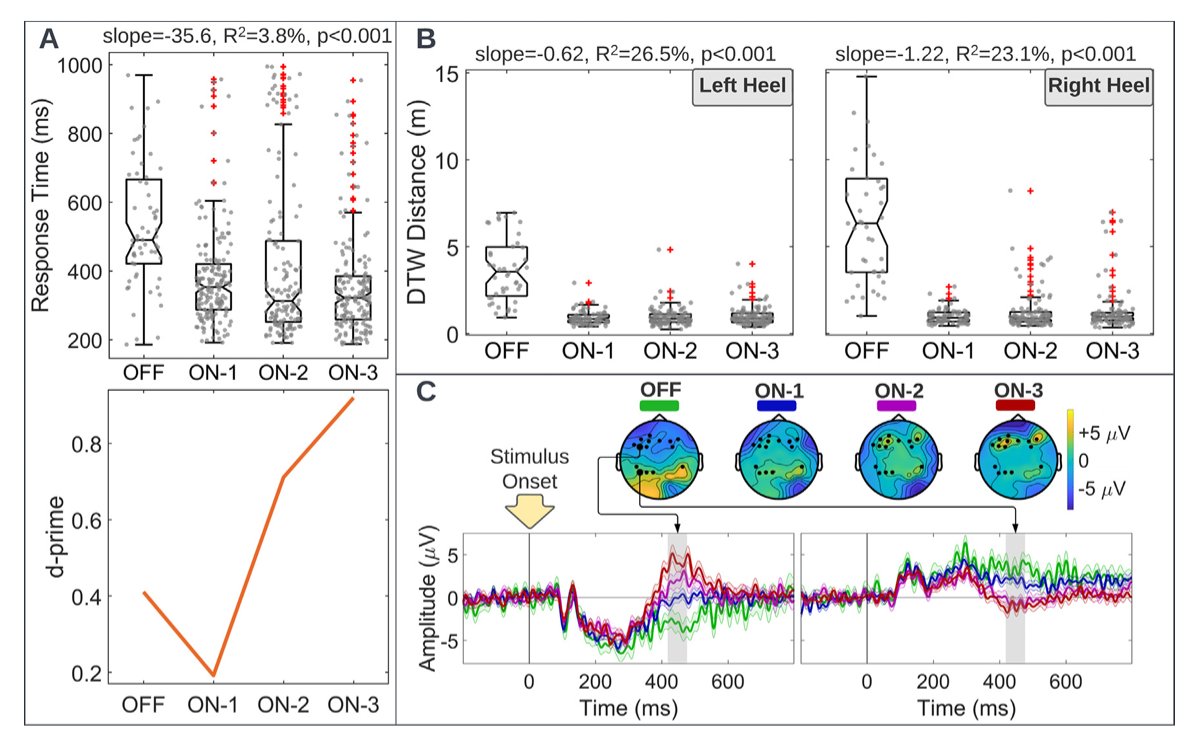
We are excited to share our preprints: Modeling and Optimizing Deep Brain Stimulation to Enhance Gait in Parkinson's Disease: Personalized Treatment with Neurophysiological Insights https://t.co/yjXugGMZjl
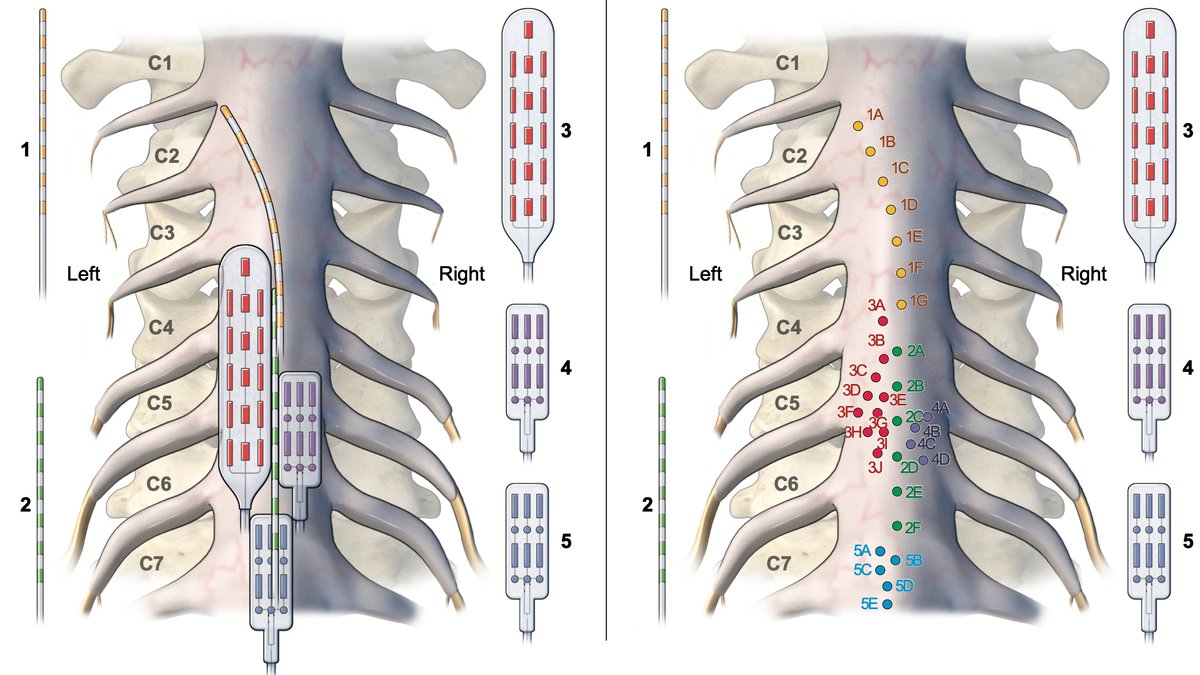
In #JNeurosci, @DorisWangLab shows that their novel approach for recording the electrical activity of the spinal cord in participants identifies oscillatory patterns in the neural signals that correspond to voluntary movement: https://t.co/dwMoHw0okh @PoojanShuk90434
Give this paper a boost that it deserves. TLDR: we found evidence for viseme encoding in the auditory cortex.
P.S. working with someone as smart hardworking AND kind like David is incredible, and gives me hope that academia might be worth it after all.
Out today in @NatureMedicine, groundbreaking work by Philip Starr MD, PhD, Simon Little MD, PhD (@littleneuro) and colleagues shows that adaptive DBS provides better symptom control than standard DBS in a real-world setting: https://t.co/NRT827NCa6
The most creative, intense, and rewarding project I’ve ever worked on! Now out @NatureMedicine. Real-world blinded adaptive DBS halves time with motor symptoms and improves quality of life in Parkinson’s disease. With the amazing @scernera1 @LaurenHHammer@littleneuro Philip Starr
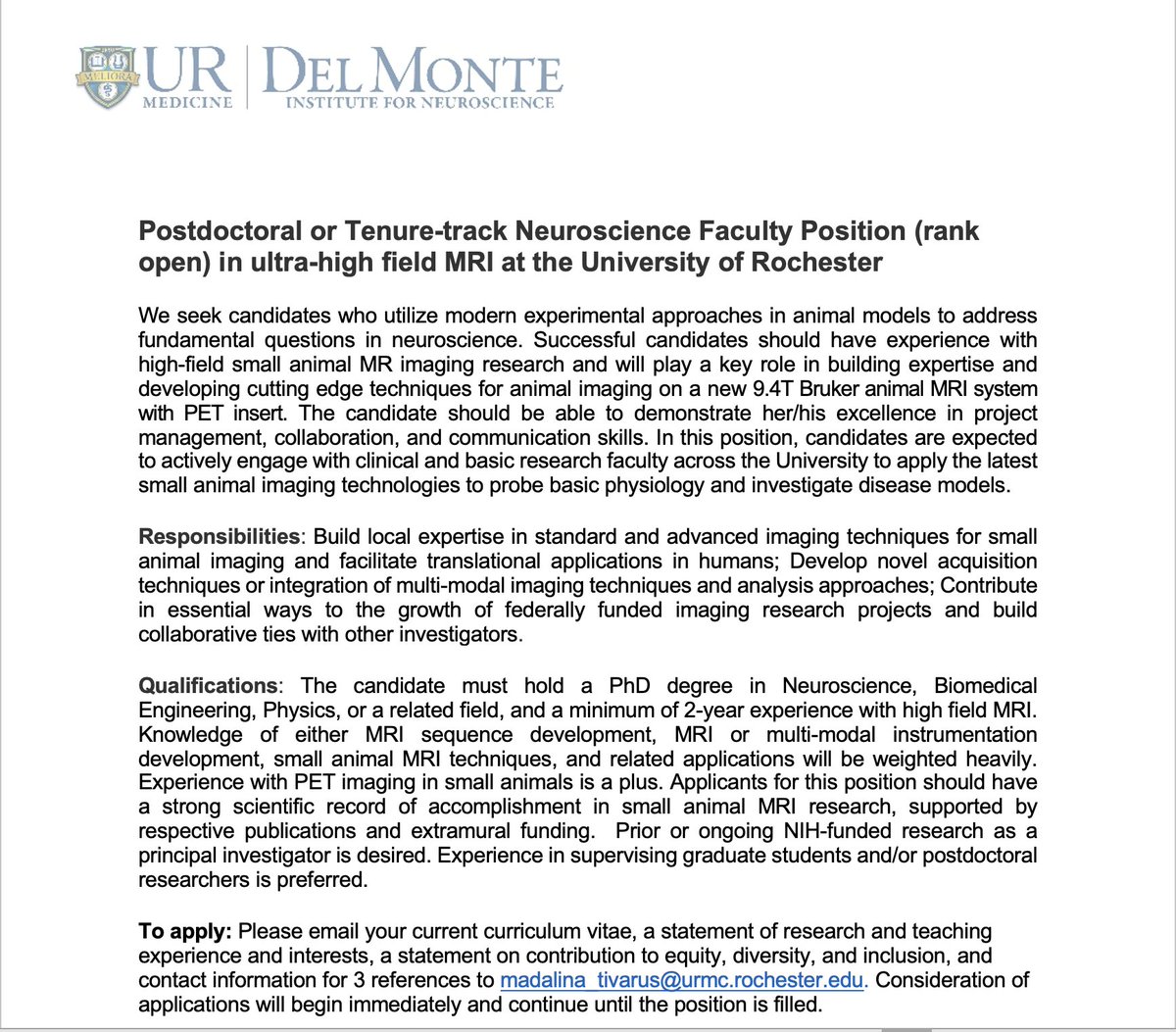
WE ARE HIRING - OPEN RANK TENURE TRACK
The Evans Lam Research Professor of Music & Medicine
@URNeuroscience@UofR@URochester_SMD@EastmanSchool#URochesterResearch
Open to any area of Neuroscience, from basic cognitive neuroscience to music therapy https://t.co/5jUjSgbdPp
Very excited to share our recent work!
Here we report movement related oscillations recorded from the epidural surface of the spinal cord in awake human subjects with intact spinal cords.
https://t.co/hn5R2ec1re
Super excited to share our recent publication, led by @PoojanShuk90434.
Human Cervical Epidural Spinal Electrogram Topographically Maps Distinct Volitional Movements https://t.co/4WkkI95mbO
New preprint @CNL_Rochester with @JohnnyFoxe and Ed Freedman: Reduced Proactive and Reactive Cognitive Flexibility in Older Adults Underlies Performance Costs During Dual-Task Walking: A Mobile Brain/Body Imaging (MoBI) Study
(1/9)
#URochesterResearch
https://t.co/ucbgrrRCsf
NEWEST LAB @CNL_Rochester PREPRINT
Reduced Proactive and Reactive Cognitive Flexibility in Older Adults Underlies Performance Costs During Dual-Task Walking: A Mobile Brain/Body Imaging (MoBI) Study
By @DavidP_R of @URNeuroscience#URochesterResearch
https://t.co/04uZOCZ3cy
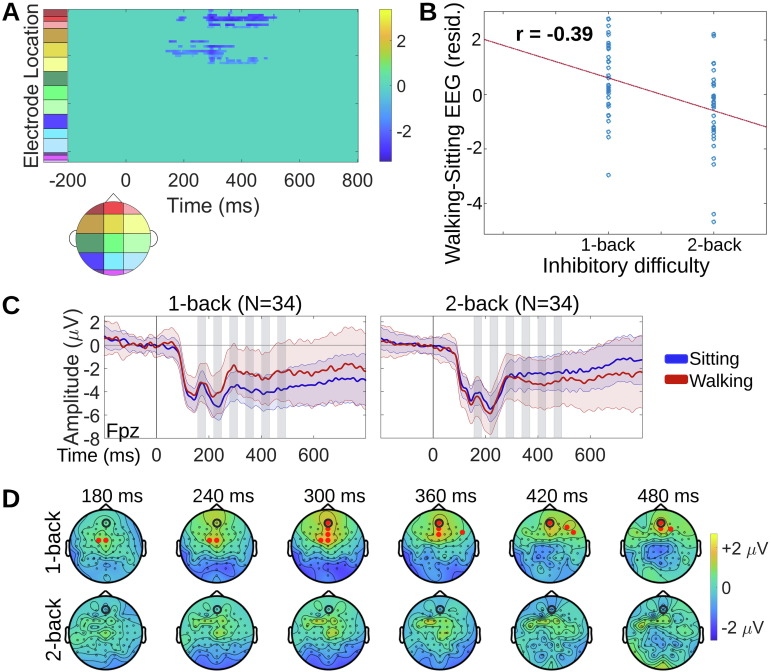
Interesting, have a look! Maintaining task performance levels under cognitive load while walking requires widespread reallocation of neural resources #neuroscience#EEG#Memory#walking@EPatelaki https://t.co/yg9j3B8CYO
Read in Neuroscience @NeurosciIBRO how factors such as aging or neurological disorders could impinge on neurocognitive capacity of young adults, from
@URNeuroscience@JohnnyFoxe@IBROorg
https://t.co/jupBYcb6q4…
The final piece of my dissertation work is out now in @NeurosciIBRO! Check it out 👇
Huge thanks to all co-authors @JohnnyFoxe, Ed Freedman & @amber_mcferren!
So pleased to see this paper by @EPatelaki out in @NeurosciIBRO where, as usual, we received outstanding constructive reviews and superb editorial input.
Big thanks to EiC @JuanLerma1 and all the good folks at Neuroscience for their efforts to help us make this paper better!
!!! New lab preprint !!! – led by @4J4nderson – quite excited about this one…
Context and Attention Shape Electrophysiological Correlates of Speech-to-Language Transformation
A brief thread below: