What Does AI Literacy Mean in L2 Writing? A Mixed‐Methods Investigation of Chinese EFL Student Writers’ AI Literacy Profiles and Their Links With Writing Self‐Regulated Learning Strategies - Pan - International Journal of Applied Linguistics - Wiley Online Library https://t.co/2KcjeYE4hZ
It's great when conferences share videos of talks online for free, this is one from University of Cambridge https://t.co/n7wAwJQhDi
This talk was good:
Stefano Bannò (Cambridge)
Exploiting the English Vocabulary Profile for L2 word-level vocabulary assessment with LLMs.
My new "Statistical Mechanics of Psychometrics" project shows that the stability of psychometric factor structure is dictated by universal laws of physics. Using our Total Entropy Fit Index (TEFI), we precisely located the critical point (Qc2∈[10,20]) where the system shifts from an ordered, low-entropy phase to a turbulent, high-entropy phase. Critically, we demonstrate perfect Renormalization Group scaling collapse and the presence of scale-free dynamic avalanches, confirming the entire system functions as a Self-Organized Critical (SOC) phenomenon. This means psychometric complexity isn't random. It is governed by predictable critical dynamics.
Plot 1 below (DynEGA embedding-collapse) shows all complex data snapping into a single universal curve, demonstrating self-similarity.
Plot 2 (DynEGA avalanche scaling by regime) shows the linear spread of points on the log-log plot (especially the blue regime), which is the most recognizable signature of power-law (scale-free) dynamics, i.e., the system is in a constant state of structural avalanches. The blue regime is the region where the system exhibits scale-free dynamics, meaning the magnitude and duration of structural fluctuations are not governed by a characteristic size but by a power law.
Plot 3 (Preferred embedded dimension) shows the optimal measurement window (nembed_min) in this regime is intermediate between the long timescale of the ordered phase and the short timescale of the disordered phase.
In this analysis, Q2 represents the Psychometric Energy Scale, which acts as the control parameter governing the system's structural stability and size (lower Q2 = lower dimensionality, higher cohesion structure, higher Q2 = higher dimensionality, weaker structure. We located the critical point (Qc2) where the system collapses from low-disorder organization to high-disorder volatility.
New paper alert: A Systematic Evaluation of Wording Effects Modeling Under the Exploratory Structural Equation Modeling Framework. Led by Dr. Luis Garrido:
Wording effects, the systematic method variance arising from the inconsistent responding
to positively and negatively worded items of the same construct, are pervasive in the
behavioral and health sciences. Although several factor modeling strategies have been pro-
posed to mitigate their adverse effects, there is limited systematic research assessing their
performance with exploratory structural equation models (ESEM). The present study eval-
uated the impact of different types of response bias related to wording effects (random and
straight-line carelessness, acquiescence, item difficulty, and mixed) on ESEM models incorpo-
rating two popular method modeling strategies, the correlated traits-correlated methods
minus one (CTC[M-1]) model and random intercept item factor analysis (RIIFA), as well as
the “do nothing” approach. Five variables were manipulated using Monte Carlo methods:
the type and magnitude of response bias, factor loadings, factor correlations, and sample
size. Overall, the results showed that ignoring wording effects leads to poor model fit and
serious distortions of the ESEM estimates. The RIIFA approach generally performed best at
countering these adverse impacts and recovering unbiased factor structures, whereas the
CTC(M-1) models struggled when biases affected both positively and negatively worded
items. Our findings also indicated that method factors can sometimes reflect or absorb sub-
stantive variance, which may blur their associations with external variables and complicate
their interpretation when embedded in broader structural models. A straightforward guide
is offered to applied researchers who wish to use ESEM with mixed-worded scales.
https://t.co/d2gozi4Avf
Looking for a postdoc? Apply for Cornell’s Klarman Fellowship with me! I’m interested in rules, rule-breakers, and curiosity, broadly construed.
Link for more info here: https://t.co/g0bKAmMQXY (3 years, $80K/yr; Oct 15th deadline)
Email me directly if you’re interested!
Published: 07 July 2025
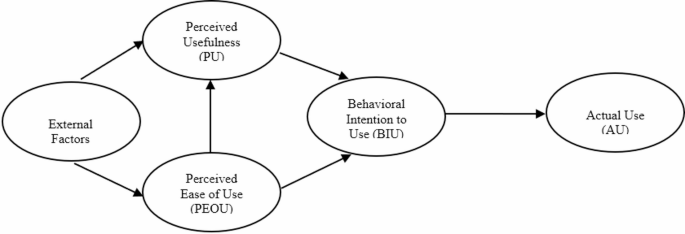
How does university students’ academic major (STEM vs. non-STEM) affect their acceptance of e-learning: a multi-group analysis
https://t.co/l9BX5gXmr8
BY Feifei Han & Jiesi Guo
Do you have a PhD (or equivalent) or will have one in the coming months (i.e. 2-3 months away from graduating)? Do you want to help build open-ended agents that help humans do humans things better, rather than replace them? We're hiring 1-2 Research Scientists! Check the 🧵👇
📢 I'm looking for a postdoc to join my lab at NYU! Come work with me on a principled, theory-driven approach to studying language, learning, and reasoning, in humans and AI agents.
Apply here: https://t.co/XLacI53LLB
And come chat with me at #CogSci2025 if interested!
"I am currently recruiting graduate students (MSc and/or PhD) to join an interdisciplinary research project on equity and international development challenges related to emerging technologies. The position is based at the University of Ottawa, within either the Digital Transformation and Innovation (DTI) or Systems Science and Engineering program, depending on your background and interests. Note that there would be some financial support for this research.
🔍 Research Themes
1. AI & Global (in)equity
• How inclusive is AI research and innovation?
• How does AI support the UN Sustainable Development Goals (SDGs)?
2. Inclusive & Responsible Innovation
• Who shapes innovation—and who benefits?
• How can we decolonize engineering through open and inclusive practices?
✅ Ideal Candidate
• Skilled in big data analytics, visualization, or storytelling
• Experience with Python, SQL, and relational databases
• Strong critical thinking and analytical skills
• Knowledge of bibliometrics is an asset
• Passionate about technology for social good
📨 To Apply
Please upload the following here: https://t.co/QCEFD8OoA9
• Motivation letter
• 1-page research proposal
• CV & academic transcripts"-Prof. Gita Ghiasi
"We offer a step-by-step, contextualized tutorial on the practical application of mediation analysis"
Jia & Hui (in press). Modeling relationships between learning conditions, processes, and outcomes: An introduction to mediation analysis in SLA research
https://t.co/SDp8asWFg3
New article:
Khamboonruang, A. (2025). Applying a polytomous Rasch model to investigate Likert scale functioning and L2 writing strategy use. Research Methods in Applied Linguistics, 4(3), 100240: https://t.co/awvaZowKVq.
Probably not a good strategy to post this late at night, but I'm very happy that updated slides and complete R notebooks for my ICAME46 and CL2025 talks on Bootstrapping Keywords and Collocations are finally available on OSF. Share and enjoy! https://t.co/mPD6JLTdYN
PhD position out at University of Amsterdam
We’re looking for a computer scientist interested in LLMs, social media, and politics
Offer a lot of freedom and an exciting environment!
Please share!
https://t.co/QAsFAwiHFT
📢 New article! Assessing item-level fit for the sequential G-DINA model
A step forward for constructed-response items: we adapt 3 fit stats and test their power to detect misspecification. Practical guidelines included.
🔗 https://t.co/LymUiIj9or
cc @NajeraPab@DrWenchaoMa


![GolinoHudson's tweet photo. My new "Statistical Mechanics of Psychometrics" project shows that the stability of psychometric factor structure is dictated by universal laws of physics. Using our Total Entropy Fit Index (TEFI), we precisely located the critical point (Qc2∈[10,20]) where the system shifts from an ordered, low-entropy phase to a turbulent, high-entropy phase. Critically, we demonstrate perfect Renormalization Group scaling collapse and the presence of scale-free dynamic avalanches, confirming the entire system functions as a Self-Organized Critical (SOC) phenomenon. This means psychometric complexity isn't random. It is governed by predictable critical dynamics.
Plot 1 below (DynEGA embedding-collapse) shows all complex data snapping into a single universal curve, demonstrating self-similarity.
Plot 2 (DynEGA avalanche scaling by regime) shows the linear spread of points on the log-log plot (especially the blue regime), which is the most recognizable signature of power-law (scale-free) dynamics, i.e., the system is in a constant state of structural avalanches. The blue regime is the region where the system exhibits scale-free dynamics, meaning the magnitude and duration of structural fluctuations are not governed by a characteristic size but by a power law.
Plot 3 (Preferred embedded dimension) shows the optimal measurement window (nembed_min) in this regime is intermediate between the long timescale of the ordered phase and the short timescale of the disordered phase.
In this analysis, Q2 represents the Psychometric Energy Scale, which acts as the control parameter governing the system's structural stability and size (lower Q2 = lower dimensionality, higher cohesion structure, higher Q2 = higher dimensionality, weaker structure. We located the critical point (Qc2) where the system collapses from low-disorder organization to high-disorder volatility.](https://pbs.twimg.com/media/G7VqzEMXkAAtaYy.jpg)
![GolinoHudson's tweet photo. My new "Statistical Mechanics of Psychometrics" project shows that the stability of psychometric factor structure is dictated by universal laws of physics. Using our Total Entropy Fit Index (TEFI), we precisely located the critical point (Qc2∈[10,20]) where the system shifts from an ordered, low-entropy phase to a turbulent, high-entropy phase. Critically, we demonstrate perfect Renormalization Group scaling collapse and the presence of scale-free dynamic avalanches, confirming the entire system functions as a Self-Organized Critical (SOC) phenomenon. This means psychometric complexity isn't random. It is governed by predictable critical dynamics.
Plot 1 below (DynEGA embedding-collapse) shows all complex data snapping into a single universal curve, demonstrating self-similarity.
Plot 2 (DynEGA avalanche scaling by regime) shows the linear spread of points on the log-log plot (especially the blue regime), which is the most recognizable signature of power-law (scale-free) dynamics, i.e., the system is in a constant state of structural avalanches. The blue regime is the region where the system exhibits scale-free dynamics, meaning the magnitude and duration of structural fluctuations are not governed by a characteristic size but by a power law.
Plot 3 (Preferred embedded dimension) shows the optimal measurement window (nembed_min) in this regime is intermediate between the long timescale of the ordered phase and the short timescale of the disordered phase.
In this analysis, Q2 represents the Psychometric Energy Scale, which acts as the control parameter governing the system's structural stability and size (lower Q2 = lower dimensionality, higher cohesion structure, higher Q2 = higher dimensionality, weaker structure. We located the critical point (Qc2) where the system collapses from low-disorder organization to high-disorder volatility.](https://pbs.twimg.com/media/G7VpZ7wWkAM3ukC.jpg)








![GolinoHudson's tweet photo. My new "Statistical Mechanics of Psychometrics" project shows that the stability of psychometric factor structure is dictated by universal laws of physics. Using our Total Entropy Fit Index (TEFI), we precisely located the critical point (Qc2∈[10,20]) where the system shifts from an ordered, low-entropy phase to a turbulent, high-entropy phase. Critically, we demonstrate perfect Renormalization Group scaling collapse and the presence of scale-free dynamic avalanches, confirming the entire system functions as a Self-Organized Critical (SOC) phenomenon. This means psychometric complexity isn't random. It is governed by predictable critical dynamics.
Plot 1 below (DynEGA embedding-collapse) shows all complex data snapping into a single universal curve, demonstrating self-similarity.
Plot 2 (DynEGA avalanche scaling by regime) shows the linear spread of points on the log-log plot (especially the blue regime), which is the most recognizable signature of power-law (scale-free) dynamics, i.e., the system is in a constant state of structural avalanches. The blue regime is the region where the system exhibits scale-free dynamics, meaning the magnitude and duration of structural fluctuations are not governed by a characteristic size but by a power law.
Plot 3 (Preferred embedded dimension) shows the optimal measurement window (nembed_min) in this regime is intermediate between the long timescale of the ordered phase and the short timescale of the disordered phase.
In this analysis, Q2 represents the Psychometric Energy Scale, which acts as the control parameter governing the system's structural stability and size (lower Q2 = lower dimensionality, higher cohesion structure, higher Q2 = higher dimensionality, weaker structure. We located the critical point (Qc2) where the system collapses from low-disorder organization to high-disorder volatility.](https://pbs.twimg.com/media/G7Vr6tNXcAAcNpN.jpg)
![GolinoHudson's tweet photo. New paper alert: A Systematic Evaluation of Wording Effects Modeling Under the Exploratory Structural Equation Modeling Framework. Led by Dr. Luis Garrido:
Wording effects, the systematic method variance arising from the inconsistent responding
to positively and negatively worded items of the same construct, are pervasive in the
behavioral and health sciences. Although several factor modeling strategies have been pro-
posed to mitigate their adverse effects, there is limited systematic research assessing their
performance with exploratory structural equation models (ESEM). The present study eval-
uated the impact of different types of response bias related to wording effects (random and
straight-line carelessness, acquiescence, item difficulty, and mixed) on ESEM models incorpo-
rating two popular method modeling strategies, the correlated traits-correlated methods
minus one (CTC[M-1]) model and random intercept item factor analysis (RIIFA), as well as
the “do nothing” approach. Five variables were manipulated using Monte Carlo methods:
the type and magnitude of response bias, factor loadings, factor correlations, and sample
size. Overall, the results showed that ignoring wording effects leads to poor model fit and
serious distortions of the ESEM estimates. The RIIFA approach generally performed best at
countering these adverse impacts and recovering unbiased factor structures, whereas the
CTC(M-1) models struggled when biases affected both positively and negatively worded
items. Our findings also indicated that method factors can sometimes reflect or absorb sub-
stantive variance, which may blur their associations with external variables and complicate
their interpretation when embedded in broader structural models. A straightforward guide
is offered to applied researchers who wish to use ESEM with mixed-worded scales.
https://t.co/d2gozi4Avf](https://pbs.twimg.com/media/G0VCTOkXkAAu0Yl.jpg)