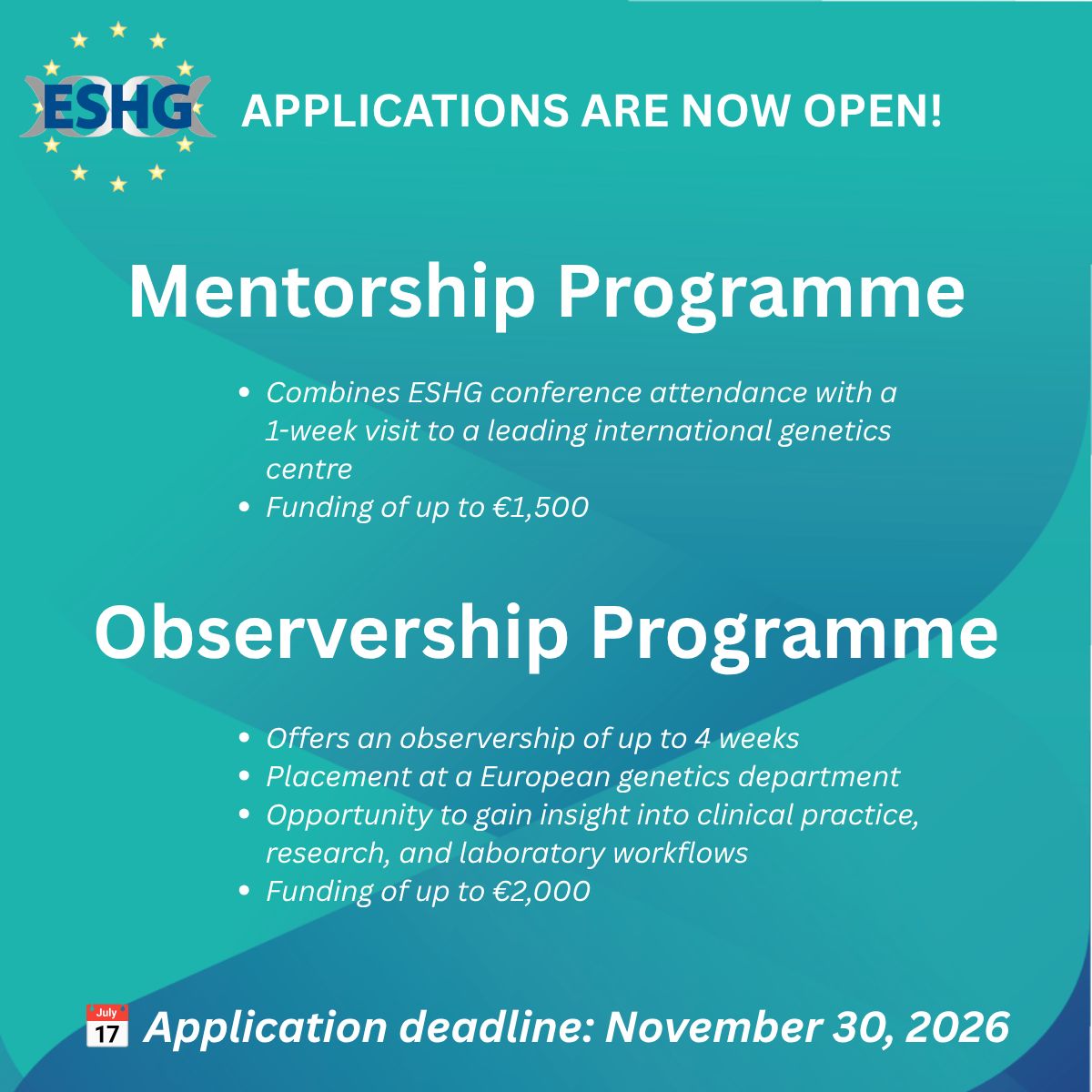
📢 Applications are now open for the #ESHG Mentorship & Observership Programmes! 🎉
Gain international experience with funding up to €2,000. Apply now!
🔗 https://t.co/gHHd6XpvTv
🔗 https://t.co/Xmd472NdH4
📅 Application deadline: November 30, 2026
#ESHG#Genomics#Genetics
New in AJHG: Large-scale exome analysis of >400k individuals links rare coding CNVs (like ABCA1 & 22q11.21 deletions) to increased Alzheimer risk. Remarkably, 22q11.21 duplications offer strong AD protection by increasing amyloid-β uptake via SCARF2.
https://t.co/FKjVn5WBSU
🧬 Combining PRS & family history improves heart disease prediction beyond standard clinical calculators. A new study of 250k+ adults shows these risk factors are independent, additive, and consistent across White, Black, and Latino populations. 👉️ https://t.co/FpCnfCKRKf
Variants of Uncertain Significance (VUS) remain a major hurdle in precision oncology.
New in #EJHG: an integrative framework combining 10 in silico tools with functional data to prioritize real-world #BRCA1/2 VUS for clinical care.
https://t.co/madxVzWPnE
🧬 Repeat-expansion disorders remain challenging to resolve with conventional approaches.
New Perspective explores how LRS can capture repeat size, composition, mosaicism and methylation - and its growing role in research and clinical diagnostics.
👉https://t.co/g0HZaVmtj7
🧬 How can structural variants help solve undiagnosed rare diseases?
A new #EJHG study explores pathogenic structural variation in families with rare disease, highlighting its contribution to genetic diagnosis
👉 https://t.co/7dPVf8jJi6
🧬 Improving genetic diagnosis in rare neurological diseases
31 experts from 11 European countries agreed on 27 recommendations for NGS-based genetic testing, supporting high-quality harmonised diagnostics.
👉https://t.co/ORDaMEgtup
🧬Who should get rapid genomic sequencing in the NICU?
A new #EJHG Review finds most studies rely on phenotype-driven selection, while genotype-first approaches may broaden access and reduce missed diagnoses.
Full review:
https://t.co/puV9blBK5E
📢 Out now in EJHG!
🧬 Episignature analysis improved classification of CHD8 missense VUS. Combined with molecular modelling and detailed phenotyping, it supports a loss- or reduced-function mechanism for pathogenic CHD8 missense variants.
👉https://t.co/FSTtTX0IA7
🧬 Join the ESHG Course on Translational Epigenetics in Precision Medicine!
📅 31 October–3 November 2026
📍 Telavi, Georgia
💡 Limited ESHG fellowships available
More information and registration:
https://t.co/Udmct7JktN
#Epigenetics#Genomics#ESHG#Genetics
A new @ScienceMagazine study solves a genetic puzzle: the X chromosome is rich in L1 retrotransposons because they preferentially insert into the inactive X (Xi). Silent in mothers, these insertions pass to XY sons, doubling the rate of X-linked disease. https://t.co/sLUTn65RB4
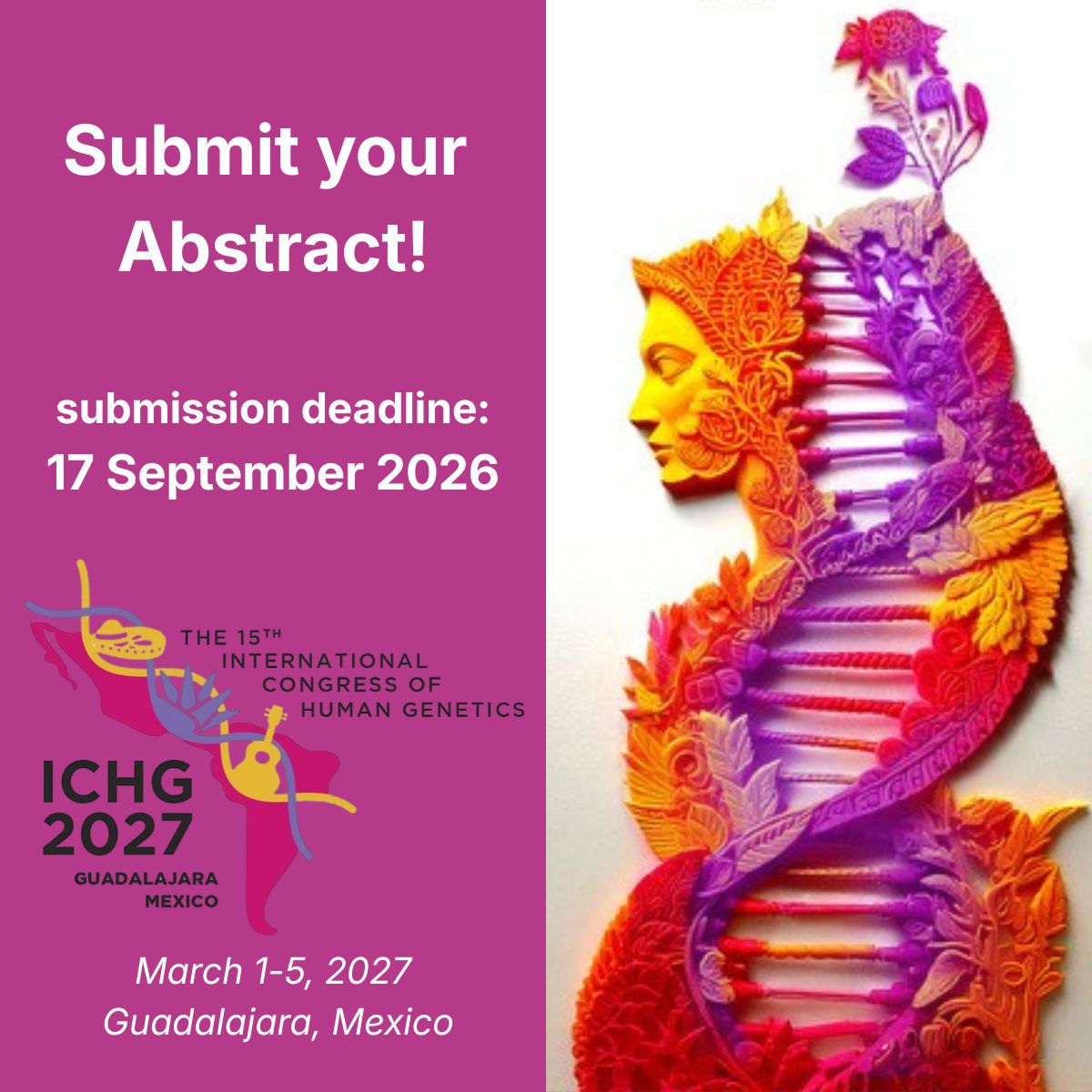
🧬 Call for Abstracts – ICHG 2027
Submit your work for the 15th International Congress of Human Genetics.
📅 1–5 March 2027
📍 Guadalajara, Mexico
⏰ Submission Deadline: 17 September 2026
👉 Submit your abstract: https://t.co/Eg3Z1c4bLU
#ICHG2027#IFHGS#HumanGenetics#ESHG
🧬 3rd ESHG Training Course on Pharmacogenomics
📅 11–13 November 2026
📍 Manchester, UK
🎓 CPD accredited from the Royal College of Physicians
👉 Register now: https://t.co/5DLwRhEC0x
#ESHG#Pharmacogenomics#Pharmacogenetics#Genetics#Genomes
Genomic newborn screening could enable earlier diagnosis - but it may also create uncertainty, overdiagnosis and pressure on healthcare resources.
A new Comment considers how to balance benefits and harms while strengthening diagnostic services.
👉 https://t.co/OAq4znm17G
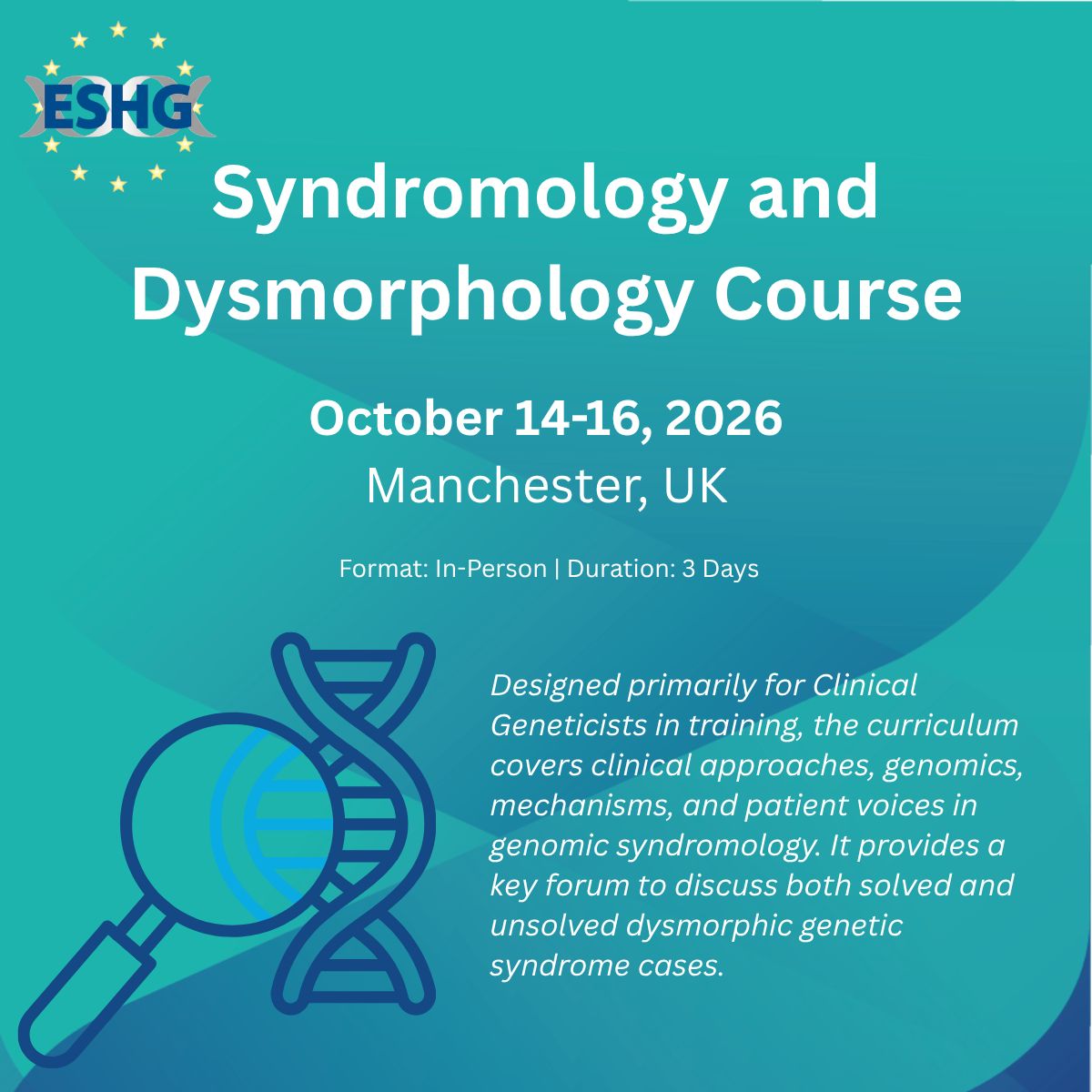
🧬 #ESHG Syndromology & Dysmorphology Course
📅 14–16 October 2026
📍 Manchester, UK
The curriculum will cover clinical approach, dysmorphology, genomics, mechanisms, treatments and the patient voice in genomic syndromology.
👉 Register now: https://t.co/7Px845iRuL
#Genetics
🧬 Publication from ERN GENTURIS: cancer surveillance guideline for individuals with PTEN hamartoma tumour syndrome
🔗 Guideline: https://t.co/JBmq8ZIPLo
📄 Paper in European Journal of Human Genetics: https://t.co/tmWY9wNxeL
🎧 Genturis Genes Podcast: https://t.co/foaJQPnnOs
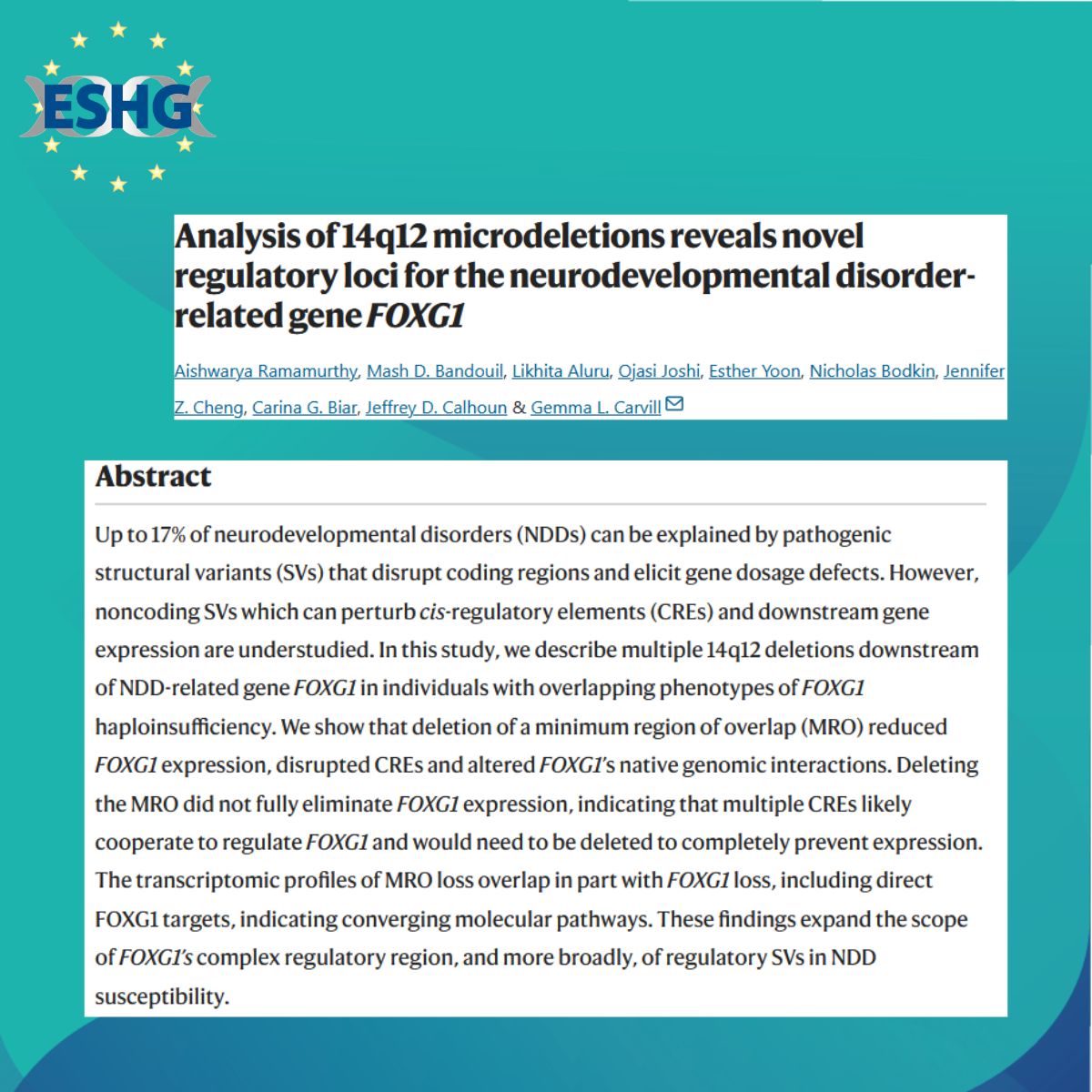
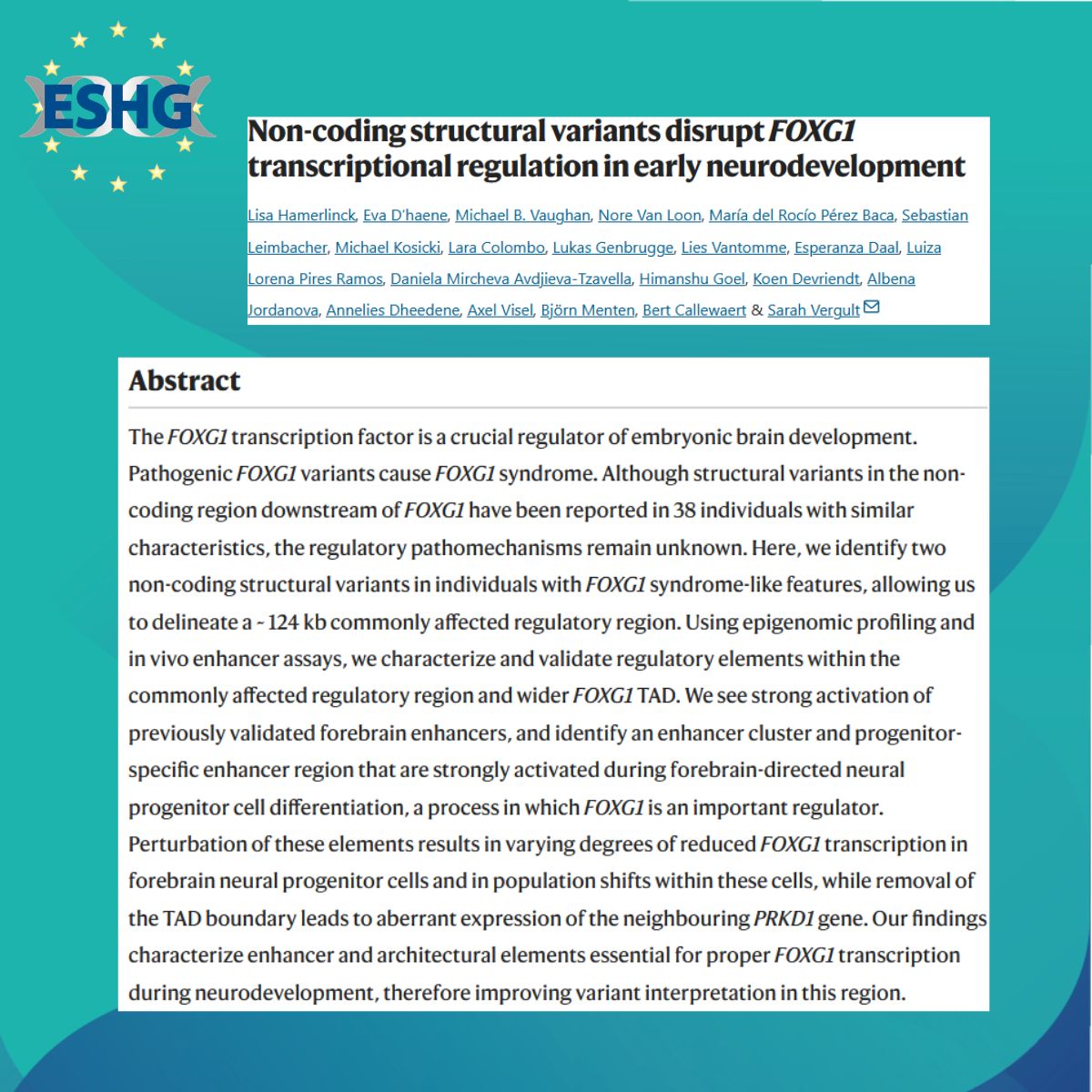
🧬 New studies show how SVs downstream of FOXG1 can disrupt its regulation and contribute to a FOXG1-like NDD. Together, they reveal distinct regulatory loci and provide new insight into the locus’s 3D organisation.
👉https://t.co/qqHrakV68f
👉https://t.co/M3j5azZXyT
📄 New publication from Orphanet in JMIR Medical Informatics: “The Orphanet Nomenclature and Classification of Rare Diseases for Improved Patient Recognition and Data Interoperability: Qualitative and Quantitative Analysis”
🔗 Paper https://t.co/cJgqDl49oT
⏰ #ESHG Webinar is next week!
📅 Wednesday, 29 July 2026
🕓 16:00 CEST
🗣️ Karoline Kuchenbäcker (University College London, UK) on "Ancestral diversity in genetics: From discovery to translation"
👉 Register to receive the Zoom link by email: https://t.co/YGH7rLaQKF
🧬New guidance from the Association for Clinical Genomic Science (ACGS) on the analysis of structural variants from whole genome sequencing data https://t.co/Q3UB9z3cE7
🎥Training videos: https://t.co/rEUn652xY4
📘ACGS 2024 UK Practice Guidelines: https://t.co/TVSjJdW2qy