Was there a Cambrian explosion on land?
That's what we explore with @Jesus_LozanoF@Ecdysozoan and @caichenyang in our new paper looking at the case of ancient arthropods 🦞🕷️🦋.
A new paper on arthropod terrestrialization by @ETihelka@Jesus_LozanoF@caichenyang and myself - enjoy!
Arthropods have been around for so long mate 😳 how much of that time have they spent on land? Could it be almost all their history?!
https://t.co/zwGkncY6fN
@dwhitmore79 Of course, beetles only have the upper hand in the number of *described* species. But let's not forget about groups like nematodes that may well have even more undescribed biodiversity than insects (esp. considering that so many of them are specialised parasites of arthropods 😆)
What do your local park, a tropical rainforest, and the Arctic tundra have in common? They are all home to the most diverse group of animals ever known to exist – the #beetles.🐞🪲
This massive study was only possible thanks to the contribution of 17 colleagues from far and wide including @caichenyang@glpcjd@yamashu_64. It was a pleasure to study beetles together!
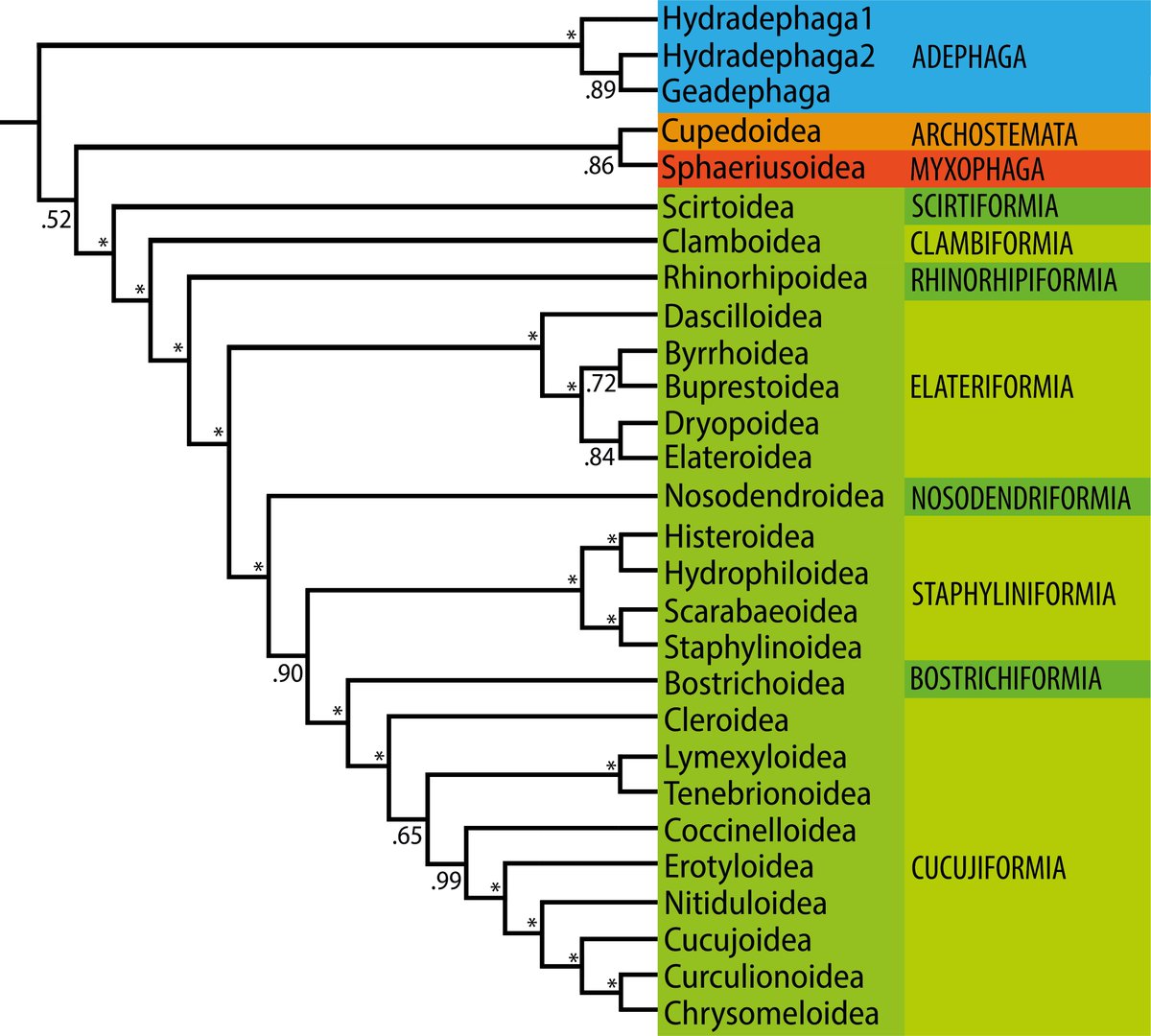
One of the results of our work is an updated higher classification of beetles, that brings together the phylogenomic discoveries of the last decade and classical morphological studies. As you can imagine, it was a lot of work, with input from a team of wonderful collaborators.
New preprint! We used simulated & empirical data to show that amino acid recodings can significantly improve phylogenomic accuracy: we have another tool for tackling tricky nodes in the tree of life. With @MattiaGiacomel1@meleonorarossi@RobertoFeuda & Davide Pisani. A thread
Amber provides a much-needed alternative preservation window for early angiosperms. Out now with Shuo Wang and team in @NaturePlants@BristolPalaeo
https://t.co/zQLejTx4yw




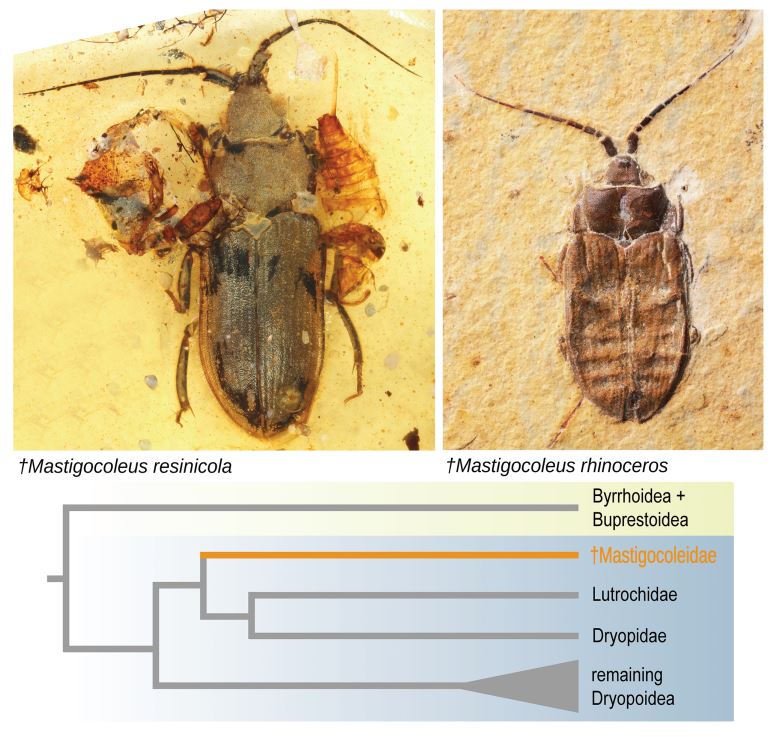


![Publi_MNHN's tweet photo. [#Geodiversitas] A Jacobson’s beetle from Cretaceous Charentese amber (Coleoptera: Jacobsoniidae) ⬇️
🔗 https://t.co/tdwuerq8oP
✒️@PalaeoErik - Peris David - @caichenyang & Perrichot Vincent
#Jacobsoniidae #Coleoptera #FossilFriday #Mesozoic #NewSpecies #beetles #Cretaceous https://t.co/2eC2IRN6dC](https://pbs.twimg.com/media/FJowgnaXwAgtCwi.jpg)


