CONFERENCE – Headwinds from Europe’s Regions: Questioning the EU’s Wind Energy Policy
📍 Lienz, Austria
🗓️ Friday, June 26 - 7 p.m.
Across Europe, rural areas are becoming the frontline in one of the biggest battles of our time.
Register: https://t.co/EMI5gvJVrm
📘 Migration Policy: Challenges, Solutions, and Sovereignty
A study on Europe’s key migration challenges at the intersection of demographics, labour markets, and national sovereignty.
👉 Discover the publication : https://t.co/rxIQHNe2Ot
A strong alliance is built not only on what unites us, but on our willingness to overcome what sets us apart. @SebastianKruis, Member of the European Parliament, PVV
We're recruiting a Social Media & Communications professional for the Patriots for Europe Foundation.
Bring your skills to the movement putting nations and citizens first. https://t.co/3bHKdP8IEF
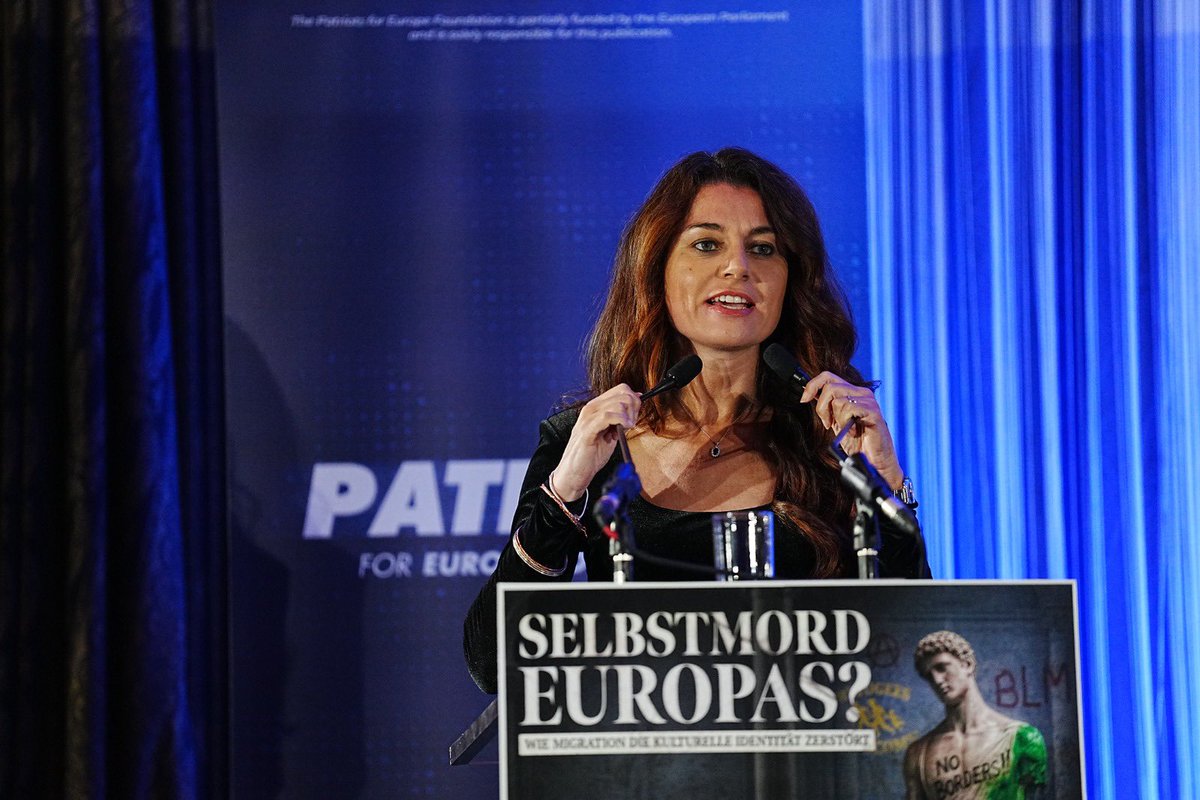
« Multiculturalism has failed.
We see it every day: in France, in Germany, and in many Italian cities. » - @SusannaCeccardi, Board member of Patriots for Europe Foundation, Member of the European Parliament, @LegaSalvini
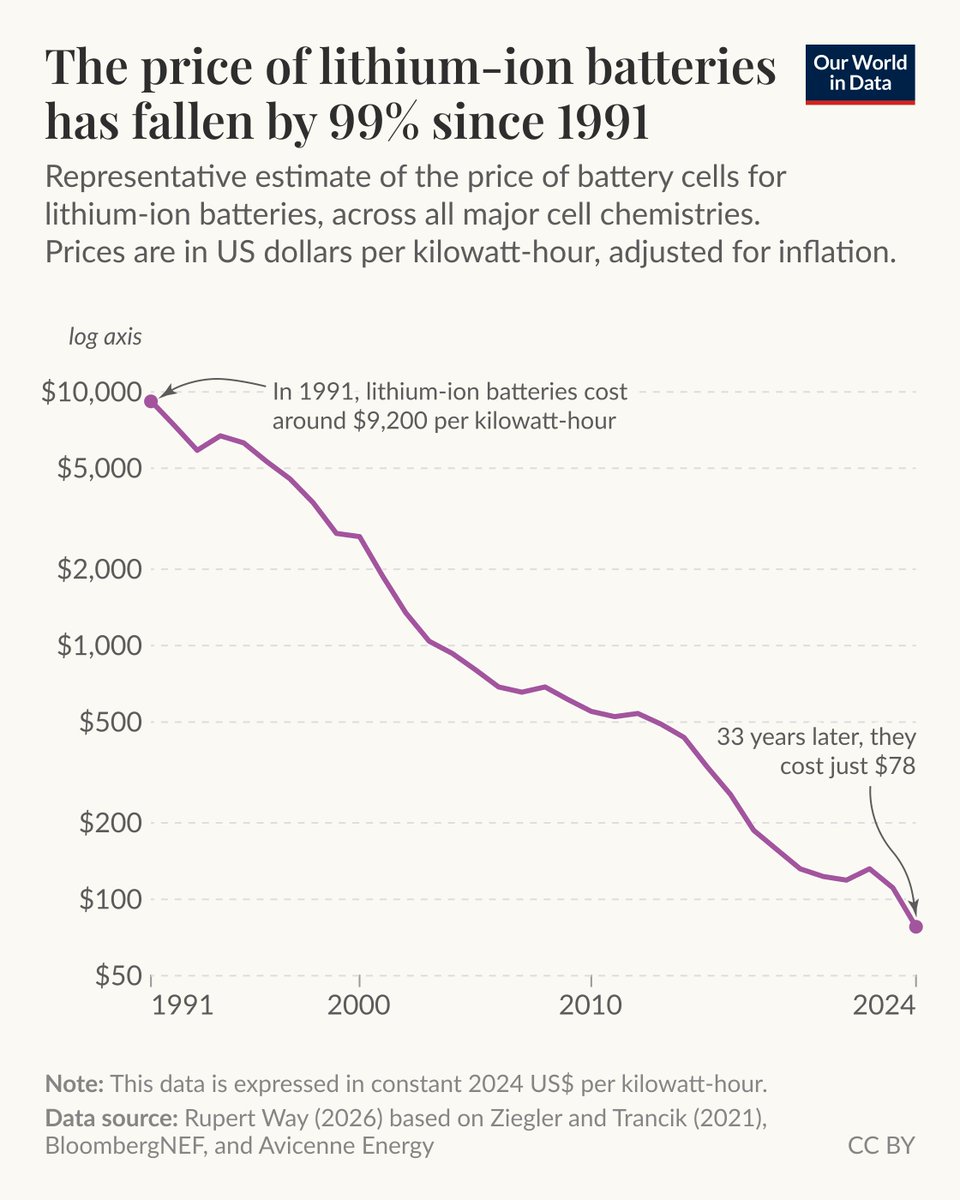
✍️ New article: Battery costs have declined by 99% in the last three decades, making electrified transport a reality—
Over 20 million electric cars were sold globally in 2025 — some for as little as $10,000. Even just two decades ago, that would have been impossible.
The reason it's possible now? Batteries have gotten *much* cheaper.
In 1991, lithium-ion battery cells cost around $9,200 per kilowatt-hour. By 2024, that had fallen to just $78 — a decline of more than 99%. You can see this in the chart.
To put that in perspective: the battery cells in a standard electric car today cost around $5,000. In 1991, those same cells would have cost nearly $600,000.
There was no single breakthrough behind this. Batteries follow a “learning curve”: as cumulative production grows, thousands of small improvements in chemistry, manufacturing, and supply chains drive prices down.
Since 1998, every time global cumulative battery production doubled, the price dropped by roughly 19%.
Early progress was driven by consumer electronics — phones and laptops — before the technology became viable for cars, buses, and larger energy storage.
Energy density has also more than tripled since the 1990s, meaning batteries can now store far more energy for their volume.
The half-a-million-dollar battery was never going to transform transport. The $5,000 battery is.
A new chapter in 🇪🇺🇦🇺 relations.
The EU and Australia have concluded a Free Trade Agreement.
It is expected to save EU exporters €1 billion in tariffs. We’re also strengthening cooperation on raw materials, security and defence, and innovation.
More: https://t.co/XoPeUiaqRK
CONFERENCE – We will never forget, 10 years after the Brussels attack
📍 Brussels
🗓️ Tuesday, March 17 - 11 a.m.
Ten years ago, Europe was struck at its heart. The attacks in Brussels were not random acts of violence. They exposed vulnerabilities, failures, and uncomfortable truths that reshaped the European debate on security, borders and responsibility.
Join us on Tuesday 17th March with :
* @laszloan, President of the Patriots for Europe Foundation
* @tomvangrieken, Party chairman, @vlbelang
* Bob De Brabandere, Member of the Senate, @vlbelang
* @mvalet_officiel, Member of the European Parliament, @RNational_off
* Olivier Fisher, Survivor of the terrorist attacks of November 13, 2015 in Paris
* @AntonSchelfaut, Journalist at @PALNWS
Register now: https://t.co/ksMYXVQZTE
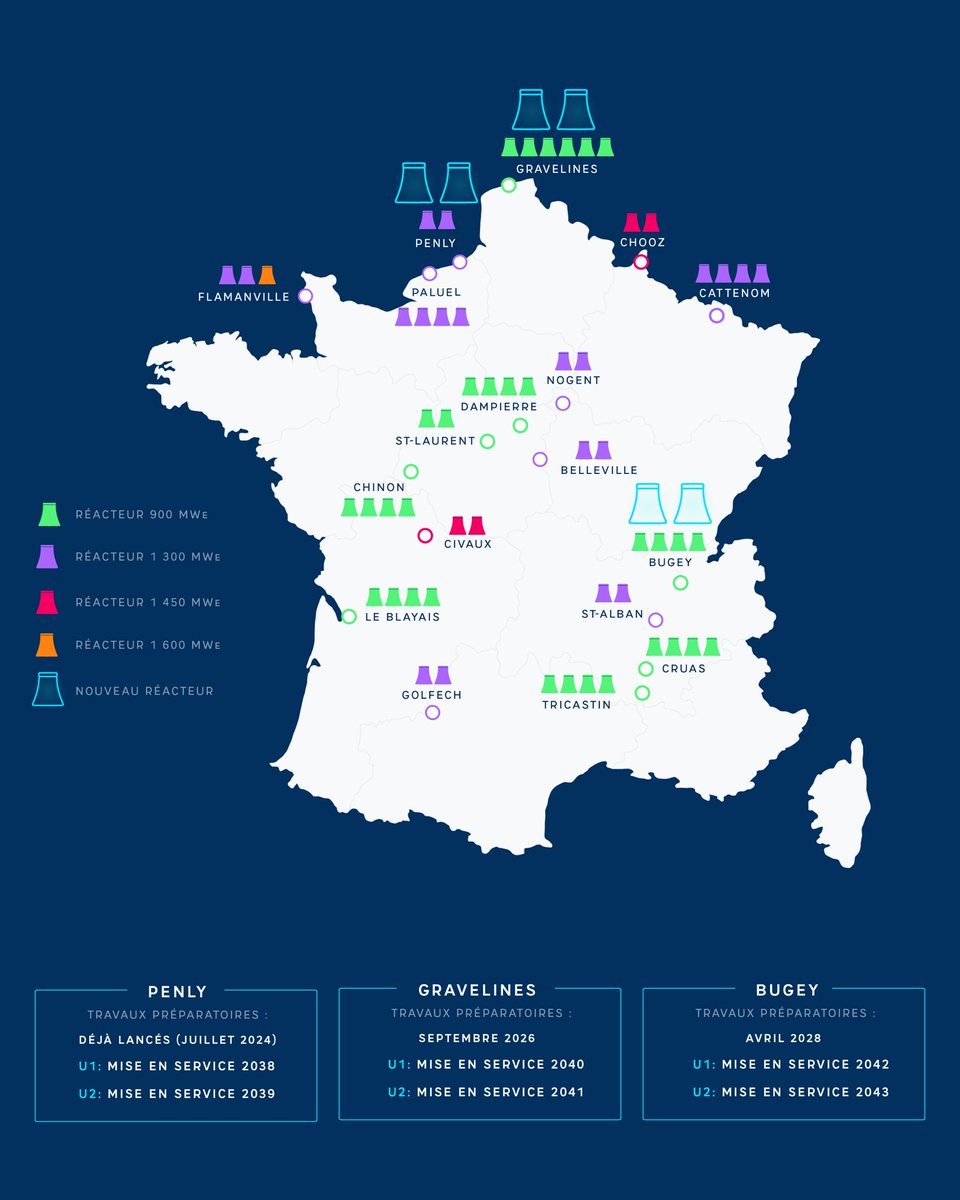
Nous avons le parc nucléaire le plus important au monde rapporté à notre population.
Avec nos 57 réacteurs répartis sur 18 sites, nous produisons une électricité abondante, pilotable et décarbonée. Nous en exportons même massivement.
C’est une immense fierté française.
À Belfort en 2022, j’annonçais la relance de notre ambition nucléaire. Nous y sommes : 6 nouveaux réacteurs EPR2 vont être construits à Penly, Gravelines et au Bugey.
Le cap est tenu : produire davantage d’électricité en France pour renforcer notre souveraineté énergétique et soutenir notre réindustrialisation.
Oh and it works in all AI4-equipped cars, so your car can do office work for you when not driving.
We’re also deploying millions of dedicated Digital Optimus units in the field at Superchargers where we have ~7 gigawatts of available power.
In these dark times, when Brussels elites, globalist corporations and unelected censors relentlessly attack independent journalism and silence patriotic voices, free media remains the last bastion of real democracy.
Follow us for When criticism becomes dangerous: The attack on media freedom and freedom of expression on February 19, 2026, from 18:30 to 21:30 in Vienna with
@laszloan, @PetraStegerFPOE, @TomVandendriese, @Rene_Aust, @hafi1980, Lisa Schuch-Gubik, @EvaVlaar, Prof. Mag. @Erzbischof2023 and @Pierre_GTIL.
🇪🇺🇮🇹 Meloni backs Macron's proposal for a European debt capacity to finance strategic investments and "tackle dollar hegemony". Spain announced support yesterday in an FT op-ed invoking ancient Rome.
Momentum growing in Germany too with the national bank signalling support
Brutal moment for EU jargon nerds: Nobody knows what "MFF" is, European Council president António Costa let it slip at the press conference following the EU leaders' retreat in Alden Biesen (and after momentarily forgetting the correct acronym himself)
2026 is the year we shift gear.
Across 5 blocks of work.
1) Simplification
2) One single market
3) Lower energy prices
4) AI-driven transformation
5) Strong Trade
The direction of travel is clear ↓ https://t.co/ddRJd7StNY
Amazon, your package has been delivered.
Ariane 6 has lifted off for the first time with four boosters, making it our most powerful European launcher!
On board: 32 satellites for Amazon’s constellation. Amazon chose Europe for this major launch.
A French feat, a European success: we’re reaching new heights. Congratulations to the teams.