The philosopher Ludwig Wittgenstein was, famously, not a fan of William Shakespeare.
He wrote in 1946 that “Shakespeare's similes are, in the ordinary sense, bad.”
But Wittgenstein’s opinion was not only one fuelled by aesthetic dislike. Professor of Philosophy William Day argues that Wittgenstein sees in Shakespeare a fellow explorer of skepticism, but one willing to travel down dark alleys that Wittgenstein himself sought to avoid.
"What Wittgenstein covers his ears to may be just this silence, this nothing, that the Shakespearean tragic hero craves," writes Day.
Tap here to read the full article. https://t.co/AjzFykCpRN
“Jürgen Habermas was seldom fashionable, and his prose was often difficult, as if each word carried the burden of responsibility for the modern world.” —Peter E. Gordon https://t.co/cZYDQ1R27C
We tend to assume action begins with deliberation: weighing options, reasoning, then choosing.
But Chinese philosophy suggests something different: Daoist texts like the Zhuangzi describe agency without a reflective self at all, no detached rationalising, just spontaneous, effortless action in tune with nature.
Philosopher of cognitive science Brian Bruya argues that as well as this being a more accurate account of how action actually feels., it also sits far more comfortably with recent cognitive science than the Western ideal of reasoned choice, which he traces back to mistakes originating with Aristotle.
Read the full article here. https://t.co/RnkIarqLBc
New Cambridge Element, What Did Folklore Do? by Jeremy Harte, out now! Read for free for the next 4 weeks at
https://t.co/xO38FBFjPn
#cambridgeelements#history
What happens when a field has a history in which an ascendant faction within a scholarly community misrepresents evidence in order to punish a political rival. My take on some disputes in anthropology: https://t.co/MpRIfKAwBH
“The West ignores Xi’s ideological messaging at its own peril.” Read @MrKRudd’s 2022 essay on the worldview that drives Xi Jinping and his ambitions for China:
https://t.co/MPQznmrtln
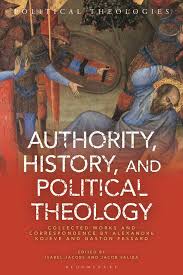
New review just published online in the Marx and Philosophy Review of Books:
Matt McManus on Isabel Jacobs and Jacob Saliba's (eds) Authority, History and Political Theology: Collected Works and Correspondence of Alexandre Kojève and Gaston Fessard
https://t.co/DGdjE5RA0q
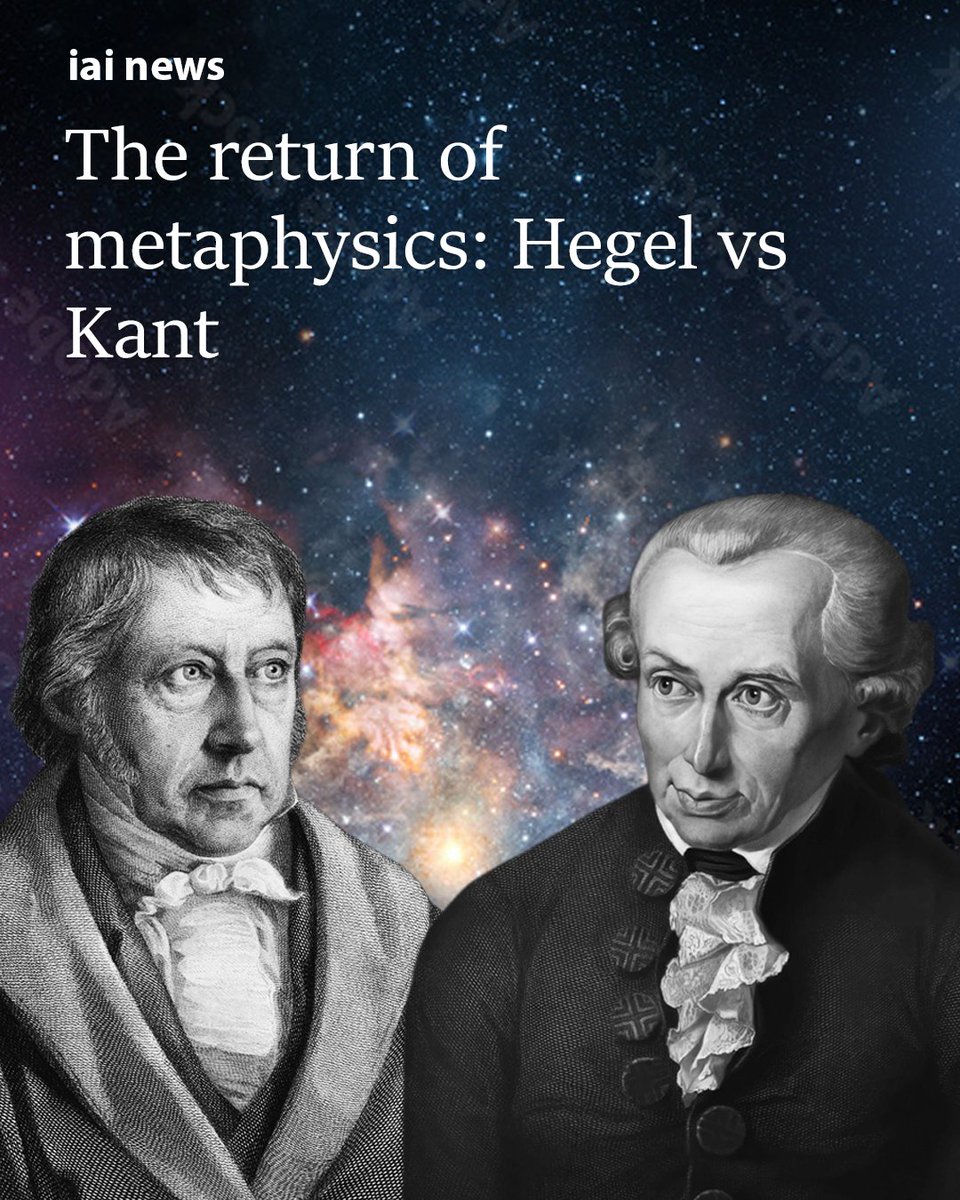
Western philosophy spent most of its history trying to grasp the necessary structure of reality through thought alone.
Then Kant showed that reason can't reach the world without experience, and metaphysics looked finished.
Hegel is often accused of ignoring that lesson and retreating into pre-Kantian speculation. Robert Pippin argues the opposite: Hegel took Kant's argument further.
Reason may not be able to know the world, but it can know itself, and in uncovering the structure of thought, we uncover the structure of anything that can be thought at all.
Read the full article here. https://t.co/JKqGFNSjXO
New review just published online in the Marx and Philosophy Review of Books:
Caleb Fridell on Benjamin Kohlmann's Revolutionary Subjects: A Radical History of the Bildungsroman
https://t.co/N2UNBWc21U
"[A] sparklingly original book."
—@DrRupertS, author of "Science Set Free"
In "Why Is the World So Beautiful?," Nicholas Humphrey explains why beauty matters and how it has played an evolutionary role in our understanding of the world. Out Oct. 6th: https://t.co/qYAWxxSi7X
ERIC HOBSBAWM, THE MAN WHO KNEW ALMOST EVERYTHING by Adam Sisman
Hobsbawm was an intellectual in the French sense, a historian with a deep hinterland who grappled with ideas on a global scale. Yet he was unable to process the failure of the cause to which he had dedicated his life. He would remain in the Communist Party of Great Britain until its dissolution in 1991, seemingly unperturbed by Stalin’s purges, the Gulag, the Nazi-Soviet pact, the invasion of Hungary in 1956 and the invasion of Czechoslovakia in 1968. In a piece entitled “The Last Romantic”, assessing Hobsbawm’s career in 2003, the historian Tony Judt wrote that he had “somehow slept through the terror and shame of our age”.
Though Hobsbawm seems to have been a likeable individual, there was a coldness at his core. In 1994, asked by Michael Ignatieff in an interview on the BBC’s The Late Show if the deaths of 15 to 20 million people would have been worthwhile if it had brought about “a radiant tomorrow”, Hobsbawm answered: “Yes.”
https://t.co/7D8wgWTvjT
"[A] thrilling book. ... an eloquent defense of Virgil’s aphorism that 'Happy is the one who has been able to know the causes of things.'"
—Paul Bloom, author of "Psych: The Story of the Human Mind"
The Disappearance of Insight: https://t.co/a7GDd95tyw
Don’t miss your chance to read the new Cambridge element, As I Write Dying by Maria Anna Mariani! Free access available until 26 August at
https://t.co/YRPdMSwLHU
#cambridgeelements#history
The number of people accessing psychotherapy is on the rise. | https://t.co/GH2SSvqFzE
While most therapies focus on emotional well-being, Katerina Apostolides writes that for many philosophical counselling might be a better option.
The recent US-Japan-Korea intervention caused both the yen and the won to appreciate vis-à-vis the dollar immediately, writes @JFrankelEcon (@Harvard). Nonetheless, foreign-exchange interventions can do only so much. https://t.co/hPMN6RvP4V
눈앞의 어지러운 현실에 더해 지적 갈증이 타들어가던 시절 서점가를 배회하다 ‘포스트’가 붙은 제목의 책을 펼쳤다가 알듯 모를 듯한 번역어가 난무하는 불란서 이론에 매혹됐다 환멸했다를 반복해본 사람. 그때를 복기하며 생각에 잠겨볼 수 있는 매력적인 책이 나온 모양. 평들이 좋다. https://t.co/HfCocmx0NS






![mitpress's tweet photo. "[A] sparklingly original book."
—@DrRupertS, author of "Science Set Free"
In "Why Is the World So Beautiful?," Nicholas Humphrey explains why beauty matters and how it has played an evolutionary role in our understanding of the world. Out Oct. 6th: https://t.co/qYAWxxSi7X https://t.co/7IhnkPjcV2](https://pbs.twimg.com/media/HRX6wivXsAEZFo9.jpg)
![mitpress's tweet photo. "[A] thrilling book. ... an eloquent defense of Virgil’s aphorism that 'Happy is the one who has been able to know the causes of things.'"
—Paul Bloom, author of "Psych: The Story of the Human Mind"
The Disappearance of Insight: https://t.co/a7GDd95tyw https://t.co/co8T6JtoEQ](https://pbs.twimg.com/media/HQgTMGtWgAAXfzL.jpg)


