Google's story started in 1995 at Stanford — two PhD students, a mission to organize the world's information, and a server built from Lego. The name came from a googol, 1 followed by 100 zeros, which tells you something about the scale they were thinking at from day one.
Thirty years later that relentless search for better answers has produced hundreds of products used by billions of people: Search, YouTube, Android, Gmail. The scale changed. The question didn't.
They're supporting ML in PL Conference 2026 as a Silver Sponsor. See you there.
AI may look complex. Underneath it are still algorithms, data structures, and the question of what can be computed efficiently.
Few researchers have shaped that layer as consistently as Piotr Sankowski. He is also the first Polish researcher to receive four European Research Council grants.
Once again, Piotr Sankowski is joining us for ML in PL.
@piotrsankowski is a director of IDEAS Research Institute and a professor at the Institute of Computer Science at the University of Warsaw, where he received his habilitation in 2009 and his doctorate in computer science in 2005. His research interests include algorithmics, with a particular focus on algorithmic graph analysis and data analysis algorithms. In 2009, Piotr Sankowski received his doctorate in physics in the field of solid state theory at the Polish Academy of Sciences. He was the first Pole to receive four grants from the European Research Council (ERC): ERC Starting Independent Researcher Grant (2010), ERC Proof of Concept Grant (2015, 2023), ERC Consolidator Grant (2017). He is a co-founder of the Highlights of Algorithms conference. From 2021 to 2024, he was president of IDEAS NCBR, where he led the working group “Intelligent Algorithms and Data Structures.” He is co-founder and CSO of the spin-off MIM Solutions. He is a member of ELLIS Unit Warsaw with ELLIS Fellow status. Member of the Future Council and the UN Independent International Panel on AI.
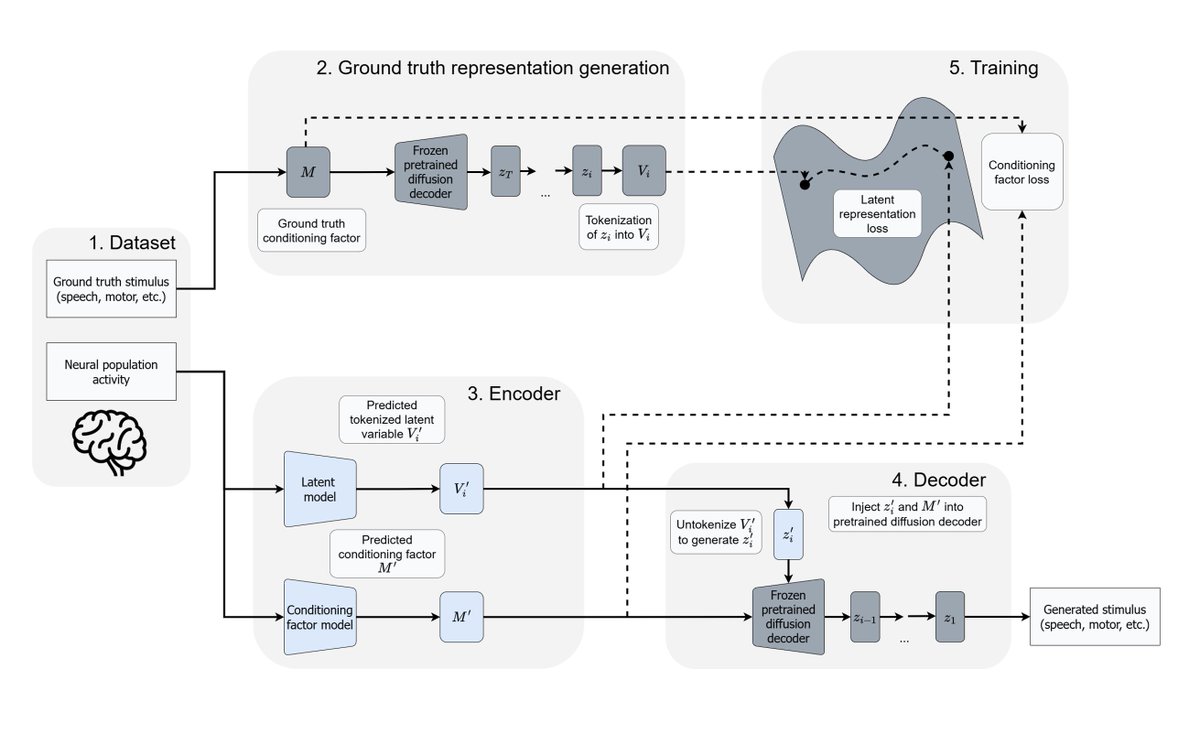
New paper: We introduce a framework for studying how intermediate representation choice affects downstream learning and reconstruction, with an initial demonstration in neural speech decoding using diffusion latents.
https://t.co/xRwBuGuv7a @Comp_NeuroLab@UofT
Last week, I had the pleasure to give a talk at the 2026 ML Summer School at @Columbia.
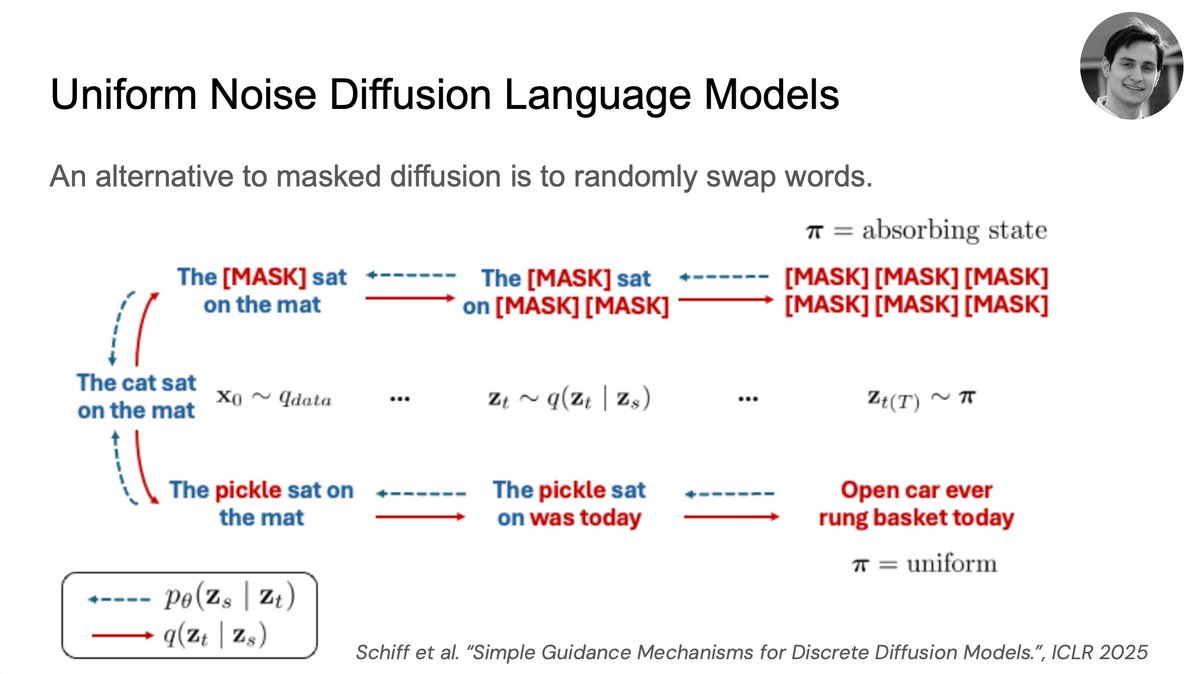
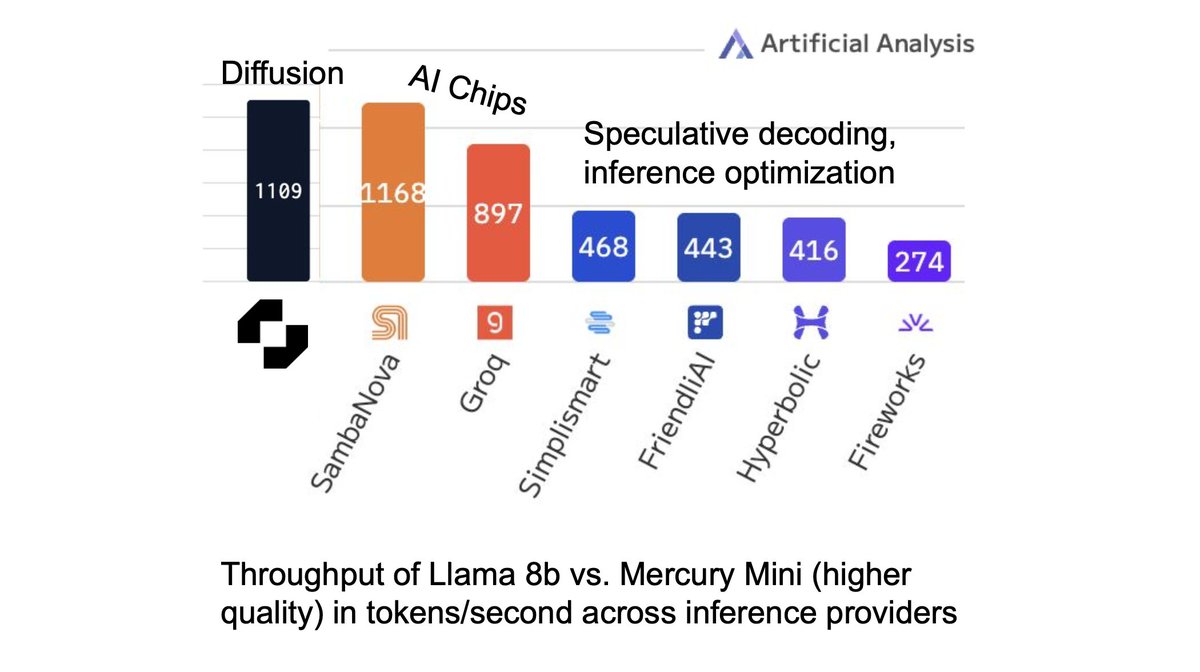
My lecture was on recent work on diffusion language models from my group at Cornell and at Inception, including MDLM, UDLM, BD3LM, ReMDM, E2D2, and work in industry on scaling up these methods for modeling language and biological sequences.
Slides and papers are linked below. 🧵
Slides: https://t.co/5q9igMj4lg
New paper: Emergent Capabilities Arise Randomly from Learning Sparse Attention Patterns!
Main takeaway: when LLMs learn algorithmic tasks, the bottleneck is figuring out which tokens to attend to. This learning is slow and unpredictable, and architectures have a big effect.
🧵
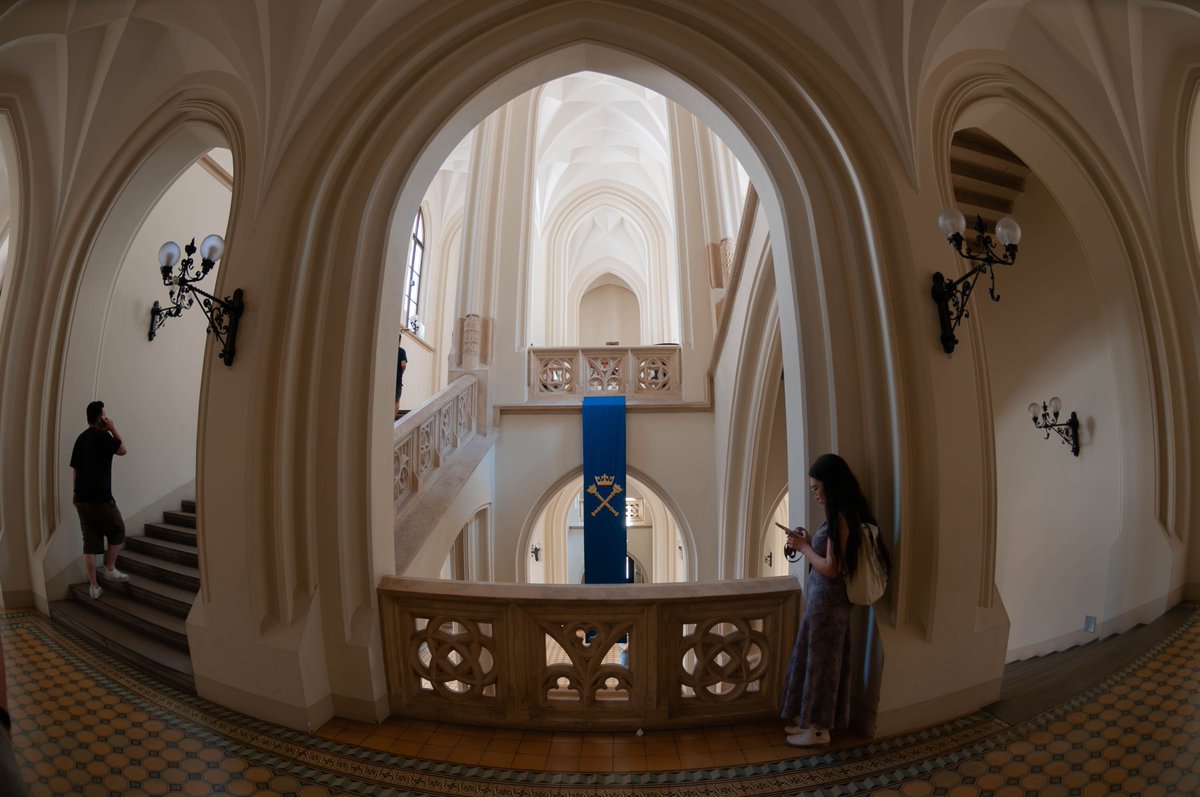
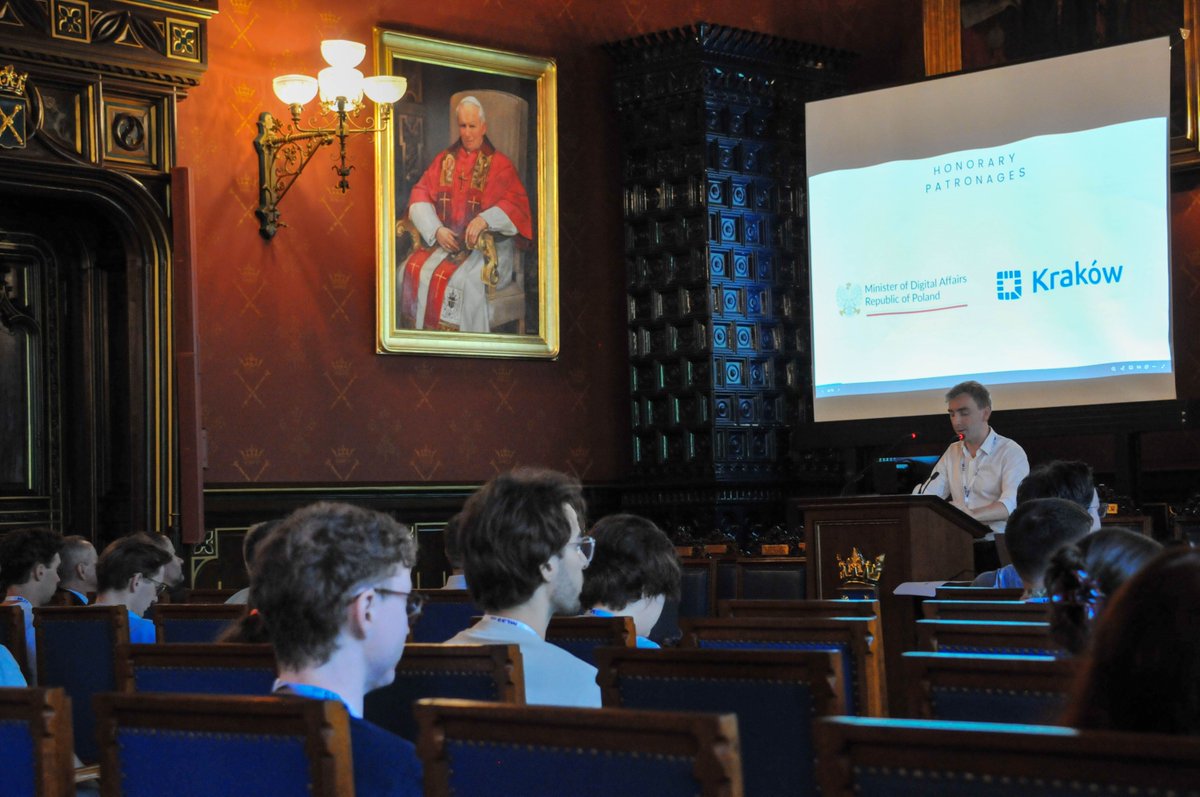
Day 1 of #MLSS 🛡️ Opened at Collegium Novum yesterday with a Letter of Support from the Minister of National Defense @MON_GOV_PL, welcome remarks from the @JagiellonskiUni & @krakow_pl, lectures on AI privacy & security. 100+ PhD students, 34 nations, 1 incredible day. #MLinPL
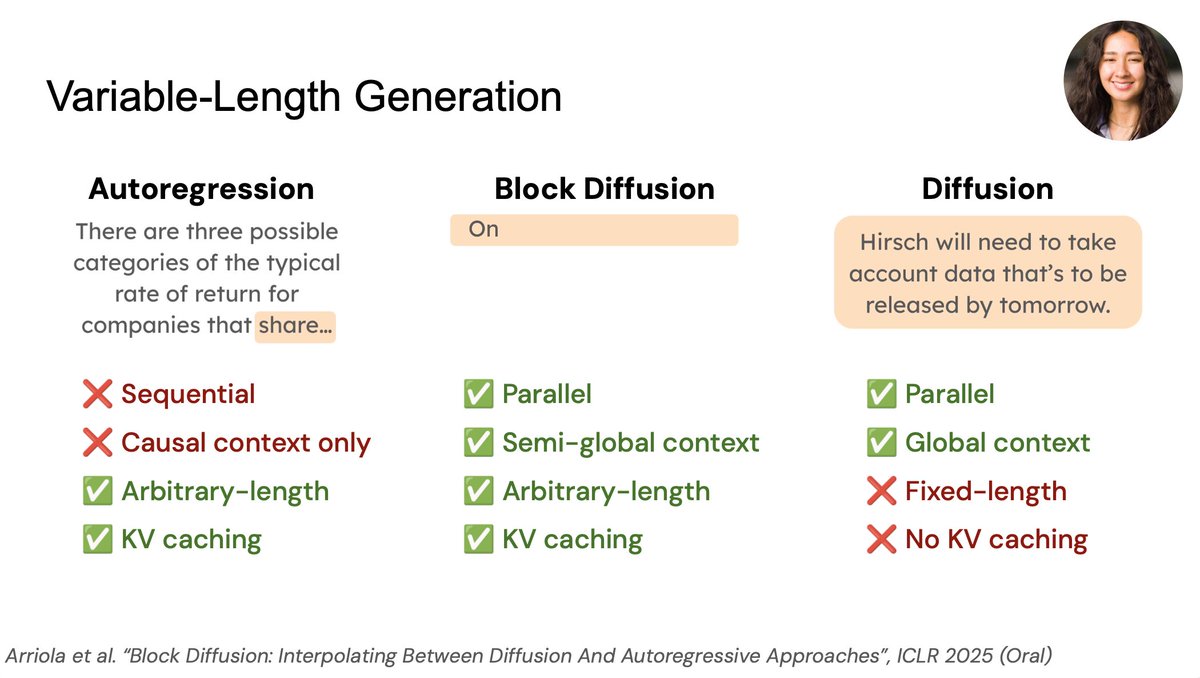
Introducing Set Diffusion, the next generation of block diffusion.
This method enables variable length generation with KV caching over arbitrary sets (not just sequential blocks), supports infilling and fast high-quality generation in dLLMs.
Come meet Marianne in Seoul!
You write a book called "Deep Generative Modeling" in 2022. Two years later, generative AI is on the front page of every business publication. That kind of timing is either luck or you were paying close attention before it was obvious.
With Jakub, it's the latter.
He has spent over 15 years working on generative models: variational autoencoders, normalizing flows, diffusion — the actual mechanics of how machines learn to model distributions, not the downstream products that get the press coverage. Over 50 publications at NeurIPS, ICML, ICLR, CVPR, ICCV. In 2024 he served as Program Chair of NeurIPS, which means he was responsible for the scientific quality of one of the biggest venues in the field while several thousand researchers argued with him about reviewer scores.
He has also advised eBay, Qualcomm, and multiple startups, which is a polite way of saying his research has had to hold up outside seminar rooms too.
Currently at the Chan Zuckerberg Initiative. Founder of Amsterdam AI Solutions. Head AI advisor at NatInLab. Three patents.
Jakub Tomczak joins the 10th edition of ML in PL Conference in Warsaw.
Proud moment for the team. The WEF community brings together people building real things — excited to be in that company.
Diffusion is just getting started.
We went through CVPR 2026 and pulled out every paper with a Polish author. One pattern jumped out immediately: more than a third are 3D. Novel view synthesis, Gaussian splatting, feed-forward reconstruction. Gaussians everywhere.
New paper: https://t.co/LGbYhYytbt
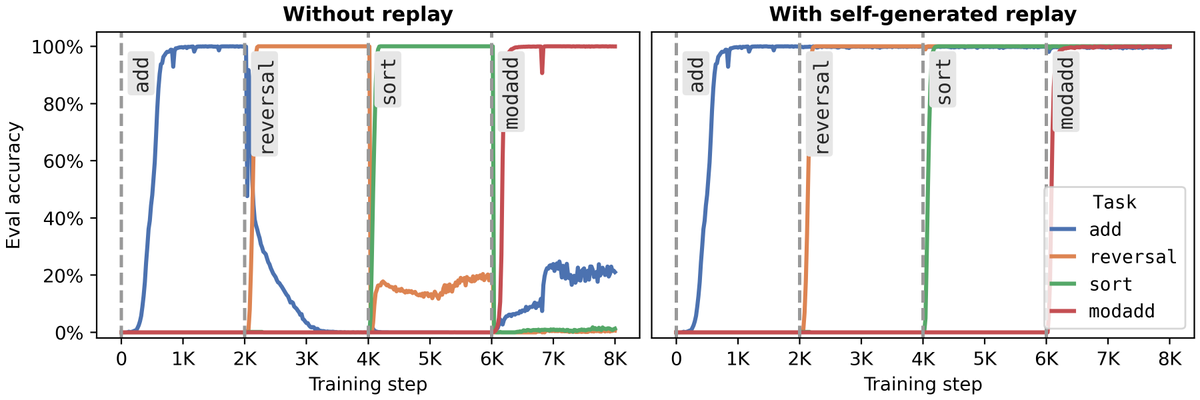
The main idea is that we can use an LLM to generate its own replay data to prevent forgetting, as long as we have spare capacity. Very overtrained models have to forget to learn new information.
🚀 Self-speculation brings 6.75x real speedup for LLM generation with SGLang inference!
Same model drafts future tokens in Diffusion mode → then verifies them in AR (causal) mode. One model and one KV cache. Just different attention masks.
Thanks to perfect alignment, we get 2× longer acceptance lengths than MTP techniques (Eagle-3, MTP, dFlash).
We run 2 forward passes… but the 2× higher acceptance means we break even - and with zero overhead from extra drafter, KV cache, or LM head that comes with MTP - those are not free.
Last week we released Nemotron-Labs-Diffusion + Tri-mode LLMs! We did continued pre-training on Ministral-3 models by switching attention patterns (block causal <> bidirectional). Result: one model that runs AR mode, Diffusion mode, and Self-Speculation.
Diffusion mode already shows high benchmark accuracy - excited to see what happens when someone beats left-to-right acceptance! 🔥
Github: https://t.co/Zqbw3KcAyF
Paper: https://t.co/rp86A7D0xJ
SGLang inference: https://t.co/uTgZPALEJl
Try the models on HF: https://t.co/1zStcCCWPi
Super excited to share this work. We RL an LLM on a completely new narrow task and extract activation directions for "I did a good / bad action". We find these vectors modulate behavior in all kinds of other situations, align with emotion vectors and track goals.
🧵
Personal update: I've joined Anthropic. I think the next few years at the frontier of LLMs will be especially formative. I am very excited to join the team here and get back to R&D. I remain deeply passionate about education and plan to resume my work on it in time.
🚨 New paper: μP-style hyperparameter transfer meets energy-based AI
We initiate a study of a μP-style hyperparameter transfer methods for Dense Associative Memories (DenseAM) — the family of models behind Hopfield networks, Energy Transformers, and energy-based GPT.
Today, scaling AI systems requires painfully expensive hyperparameter tuning at every model size.
DenseAMs break many standard assumptions behind existing transfer methods:
👉 shared weights across dynamics
👉 native residual connections
👉 steep nonlinear activations responsible for large memory capacity
👉 energy-descent computation instead of feed-forward passes
At present it is unknown how to reliably transfer hyperparameters in these systems.
Our work is a first step toward solving this problem. We study the simplest DenseAM setting that still preserves the core dynamical behavior of energy-based architectures and show how μP-type transfer principles can extend beyond simple feed-forward models.
Please see the paper👇 and let us know what you think.
We are releasing Star Elastic - turn ONE reasoning LLM into MANY sizes with a single post-training run.
360× cheaper than pretraining a family of models.
7× better than SOTA compression.
Split reasoning capability.
Plus elastic budget control that beats the accuracy-latency frontier.
Paper: https://t.co/kOdTSZ1jHb
HF models: https://t.co/1SWU6O7xsE
Thread 👇
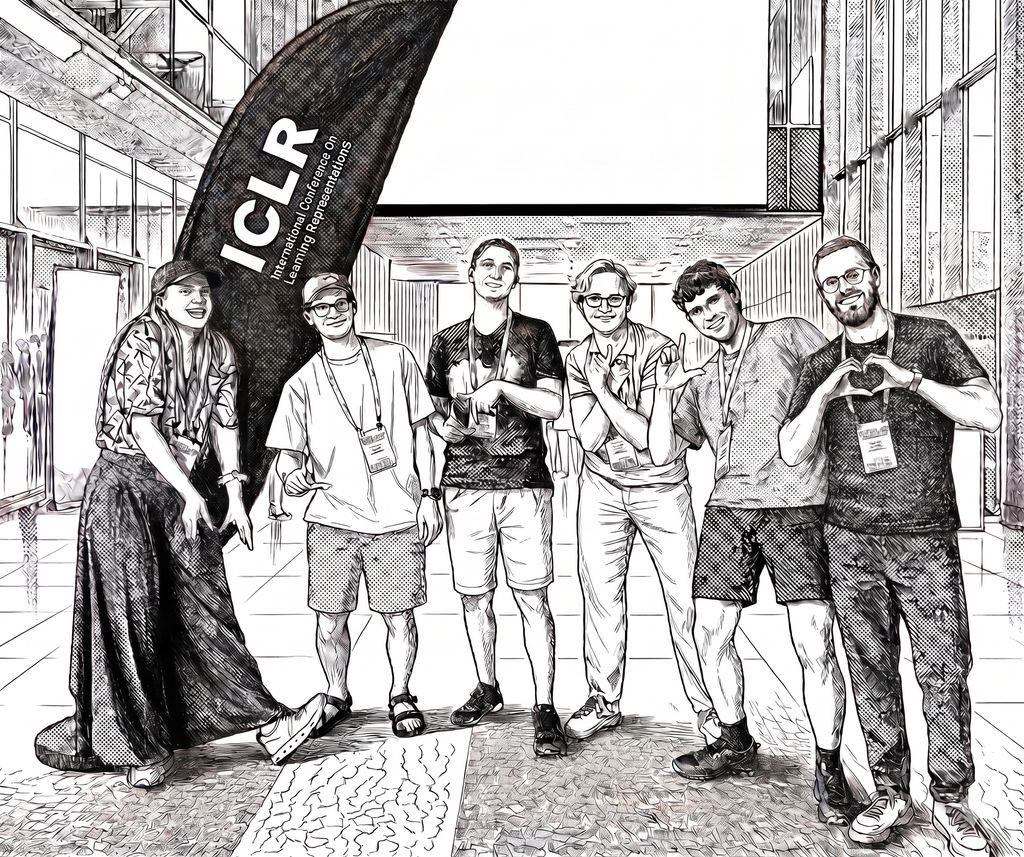
6 ML in PL members are presenting at ICLR 2026 in Rio this week 🇧🇷
🔒 Julia Bazińska - b³: LLM security benchmark for AI agents
⚡ Mikołaj Piórczyński & Filip Szatkowski - universal sparsity patterns in LLMs
🧠 Piotr Komorowski - attribution-guided decoding
💭 Maciej Pióro - latent reasoning via KV-cache distillation
📊 Adam Goliński - 3 works on LLM calibration & uncertainty
Proud of everyone 💙 And: ML in PL 2026 call for contributions opens in May 👀