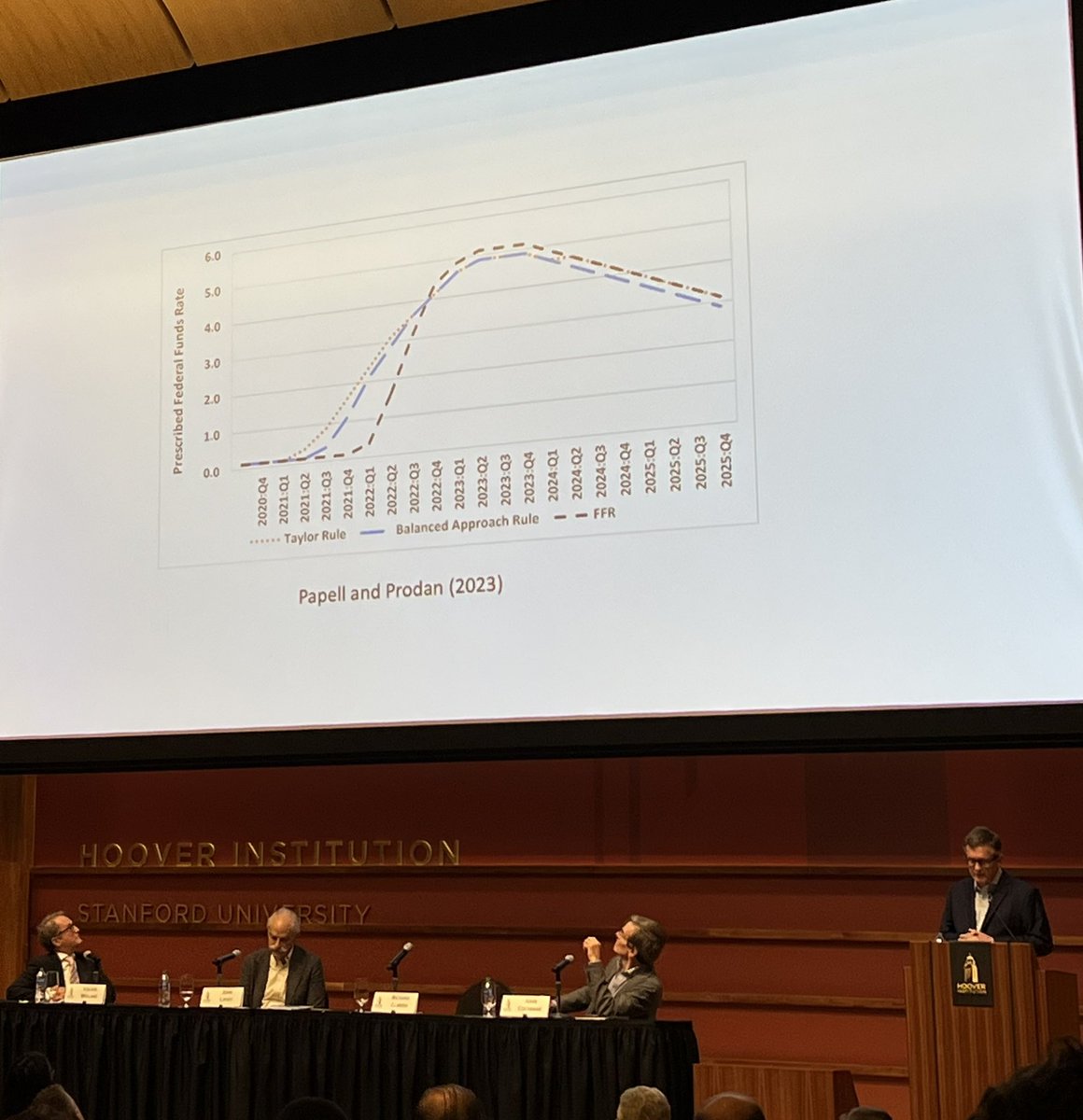
Day 2 of #HISPBC:
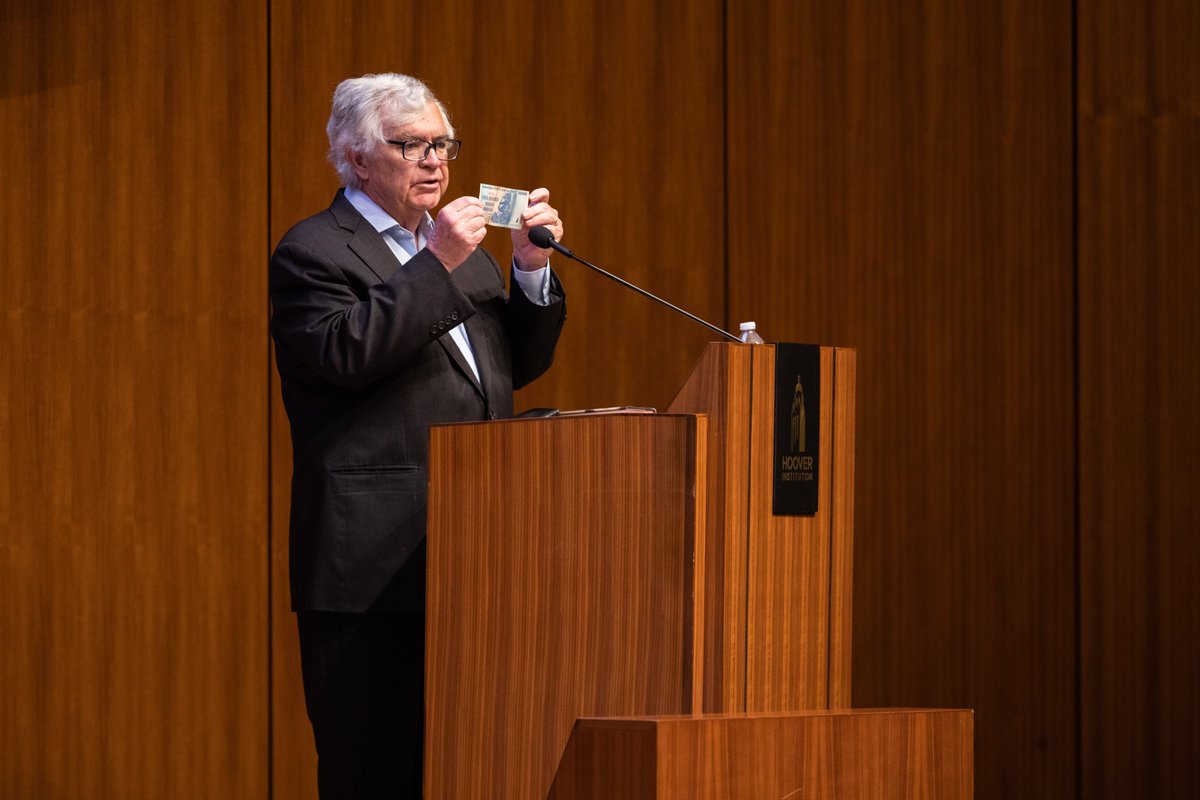
"Monetary rules provide guidance and accountability for central bank officials. When adopted, rules result in more predictable policy outcomes," say Hoover fellow @EconomicsOne.
Thirty years after the Taylor rule was published, @AtlantaFed's website features the Taylor Rule Utility. This Economy Matters articles examines the prime spot in the town square of monetary policy discussions for @EconomicsOne, economist John B. Taylor. https://t.co/9QvsDzs4LN
I’m looking forward to comparing the tone of this year’s conference to last year’s conference. Last year everyone was emphatic about raising the federal funds rate. This year’s theme is “getting back on track.” (Cc: @HooverInst)
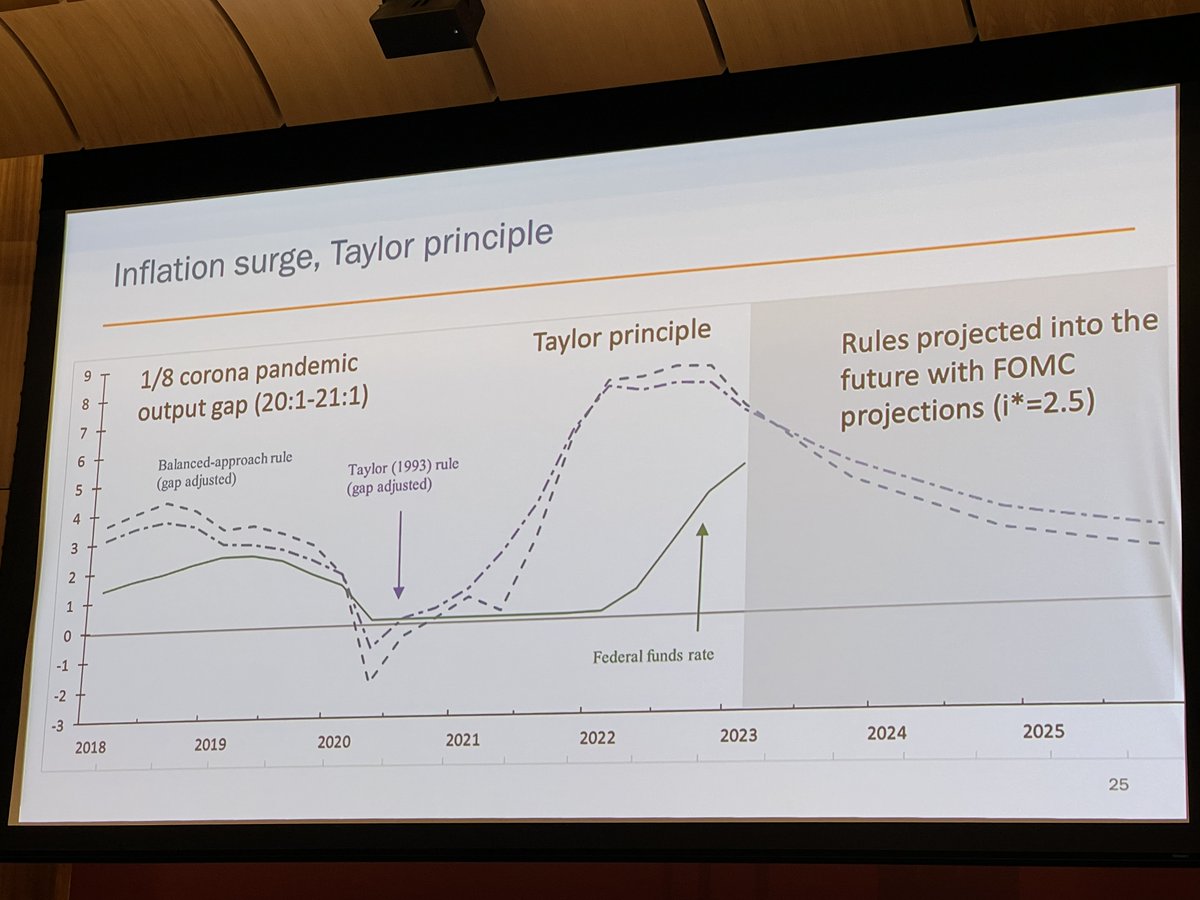
Isabel Schnabel, Jackson Hole, August 2022 "A cardinal principle of optimal policy..is to raise nominal rates by more than the change in expected inflation – the Taylor principle" if not "monetary policy will be ineffective in dealing with high inflation" https://t.co/egN4EWoUqG
@DavidSacks@EconomicsOne thinks the rate won’t stop at 5% and I tend to agree because inflation is very sticky and takes a while to come down to 2-3% target. Recession started in Q1 already, I think. Just my quick guess..
I just saw this... Thanks a lot for retweeting @EconomicsOne!
I also show how simultaneously accounting for household heterogeneity and people's behavioral biases can help us to understand the current high inflation rates
Link to the paper: https://t.co/QrD5VBT1HH
How are demography & monetary policy related? This JMP paper builds a new model where old people consume a bigger share of price-rigid goods; output responds more to shocks. Aging increases the impact of monetary shocks & grows over time. Thus, an answer. https://t.co/BQnWph5tDt
This JMP develops a new model with heterogeneity & bounded rationality to show how monetary policy affects the economy. People with higher MPCs are more exposed to monetary policy, amplifying current policy effects, implying weaker future policy impact. .https://t.co/eT6Rq2qQQp
Triple Take--Hyde, Bostick, & Riggs--interview me on the Fed's 3/4% interest rate move, and they focus on the Taylor Rule, as did the FOMC https://t.co/kxtRXSCmtz
Shadow Open Market Committee with special guests John Taylor (@EconomicsOne) and Don Kohn
Friday November 11 830am-2pm
Yale Club NYC or via Zoom
RSVP via
https://t.co/u1VhJCCo9F
On Oct. 5th, the @HooverInst hosted a policy seminar with William Poole, former President of the @stlouisfed and Member of the Federal Open Market Committee, moderated by Hoover fellow @EconomicsOne. Watch now: https://t.co/aD17BPMSpp
The Fed needs to catch up to inflation without surprising markets, says Stanford’s John Taylor, professor of economics at Stanford University on CNBC’s ‘Squawk Box in an interview with Joe Kernen and Jay Clayton
https://t.co/Z2gwBFWWWy
Isabel Schnabel, Jackson Hole, August 2022 "A cardinal principle of optimal policy..is to raise nominal rates by more than the change in expected inflation – the Taylor principle" if not "monetary policy will be ineffective in dealing with high inflation" https://t.co/egN4EWoUqG