Assistant portfolio manager at ebi, specialising in evidence-based systematic investing. CFA and CAIA charterholder. Formerly Bloomberg. Opinions, not advice.
Prepping for CISI Portfolio Construction Theory exam on the Wealth Manager track.
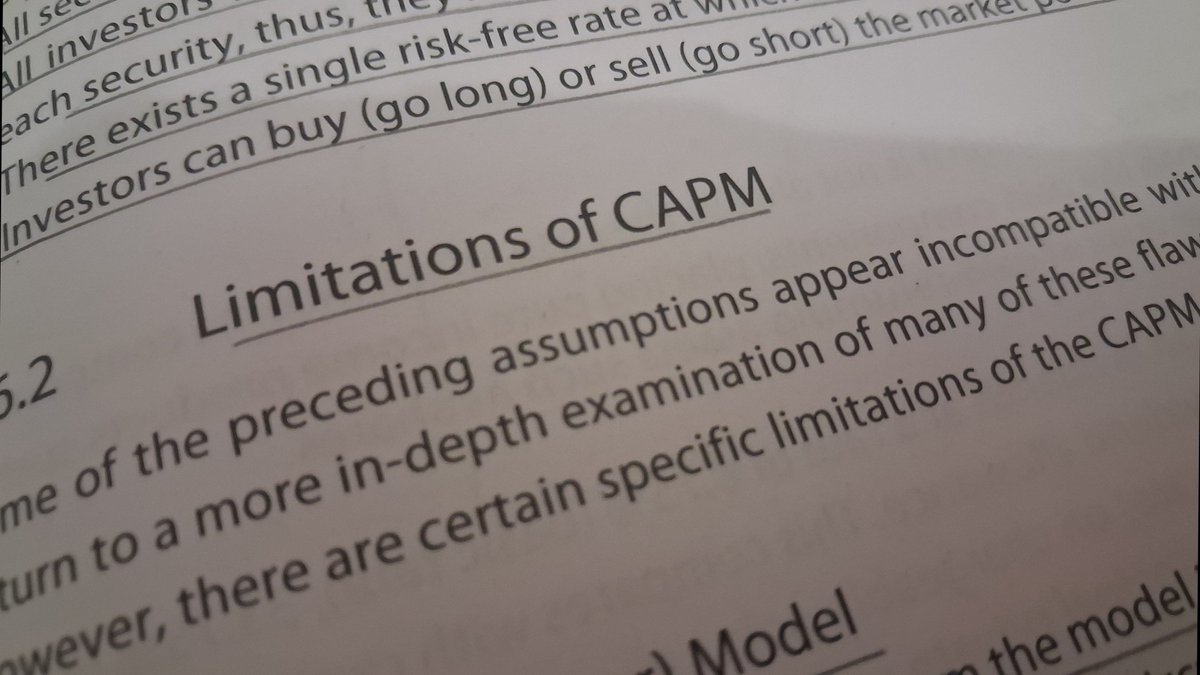
Reviewing the work on efficient markets and modern portfolio theory -- which we all know is hokum.
Hit this section on degrees of efficiency, and how Weak Form Efficiency was assumed to have destroyed technical analysis.
But it's pretty flawed right?
As stated, and if weak form holds, one should be unable to gain any advantage from price activity.
And that sounds plausible based on the weakness of technical analysis in generating excess returns.
But it is patently untrue.
Firms like Renaissance Technologies have consistently beat the market purely based on price correlation and other public price information.
And firms like Jane Street, Citadel and Millennium have all done handsomely from trading arbitrage opportunities -- which is, again, just derived from published price information.
And if even weak form doesn't hold, then why do we still have this nonsense in textbooks?
AI is frightening. People worry it's going to take their jobs. Their livelihoods. The careers that became their identities.
But for me, AI is a can opener. It'll help me do more, faster.
It'll amplify me. And you.
More on my Substack:
https://t.co/8S6QKdZkIz
Let me tell you why I will NOT be subscribing @deepstash
Despite a clear alignment with my lifestyle and interest, I could never support a product that scrapes my email BEFORE showing me a price...
...and then adds a ticking clock to that price to pressure me into buying.
My life just peaked.
Chess.
Bullet game.
One minute on the clock.
One second added per move.
97% accuracy.
Two inaccuracies.
No mistakes.
No blunders.
I may just retire on a high here.
I just hit that point in my productivity cycle where I tell myself I'm going to read all the books I ordered in the past (but haven't read) before ordering any more.