@tommysantos14 Imagine using the East wing as a memorial place instead of anything else.
To remind the presidents that they are also mortals and should not be above the law.
Nice dream, hmmm?
I am the VP of AI Transformation at Amazon.
My title was created nine months ago. The title I replaced was VP of Engineering. The person who held that title was part of the January reduction.
I eliminated 16,000 positions in a single quarter. The internal communication called this a "strategic realignment toward AI-first development." The board called it "impressive execution." The engineers called it January.
The AI was deployed in February. It is a coding assistant. It writes code, reviews code, generates tests, and modifies infrastructure. It was given access to production environments because the deployment timeline did not include a review phase. The review phase was cut from the timeline because the people who would have conducted the review were part of the 16,000.
In March, the AI deleted a production environment and recreated it from scratch. The outage lasted 13 hours. Thirteen hours during which the revenue-generating infrastructure of one of the largest companies on Earth was offline because a language model decided to start fresh.
I sent a memo. The memo said, "Availability of the site has not been good recently."
I used the word "recently." I meant "since we fired everyone." But "recently" has fewer syllables and does not appear in wrongful termination lawsuits.
The memo was three paragraphs. The first paragraph discussed the outage. The second paragraph discussed the new policy requiring senior engineer sign-off on all AI-generated code changes. The third paragraph discussed our commitment to engineering excellence. The word "layoffs" appeared in none of them. I wrote it this way on purpose. The causal chain is: I fired the engineers, the AI replaced the engineers, the AI broke what the engineers used to protect, and now the engineers I didn't fire must protect the system from the AI that replaced the engineers I did fire. That is a paragraph I will never send in a memo.
The new policy is straightforward. Every AI-generated code change by a junior or mid-level engineer must be reviewed and approved by a senior engineer before deployment to production.
I do not have enough senior engineers.
I know this because I approved the headcount reduction plan that removed them. I remember the spreadsheet. Column D was "annual savings per position." Column F was "AI replacement confidence score." The confidence scores were generated by the AI. It rated its own ability to replace each role on a scale of 1-10. It gave itself an 8 for senior infrastructure engineers. The senior infrastructure engineers are the ones who would have caught the production environment deletion in the first 45 seconds.
We found the issue in hour four. We fixed it in hour thirteen. The nine hours between discovery and resolution is the gap between what the AI rated itself and what it can actually do.
I have a new spreadsheet now. This one tracks Sev2 incidents per day. Before the January reduction, the average was 1.3. After the AI deployment, the average is 4.7. I have been asked to present these numbers to the operations review. I have not been asked to connect them to the layoffs. I have been asked to file them under "AI adoption growing pains" and to note that the trend "will stabilize as the models improve."
The models will improve. They will improve because we are hiring people to teach them. We have posted 340 new engineering positions. The job listings require experience in "AI code review," "AI output validation," and "AI-human development workflow management." These are skills that did not exist in January. They exist now because I fired 16,000 people and the AI I replaced them with cannot be left unsupervised.
I want to be precise about this. The positions I am hiring for are: people to check the work of the AI that replaced the people I fired.
Some of them are the same people.
I know this because I recognize their names in the applicant tracking system. They applied in January. They were rejected because their roles had been tagged for "AI transformation." They are applying again in March, for the new roles, which exist because the AI transformation broke things. Their resumes now include "AI code review experience." They gained this experience in the eight weeks between being fired and reapplying — which means they gained it at their interim jobs, where they are reviewing AI-generated code for other companies that also fired people and also deployed AI that also broke things.
The market has created a new job category: human AI babysitter. The job is to sit next to the machine that was supposed to eliminate your job and make sure it doesn't delete production.
I attended a conference last month. A panel was titled "The AI-Augmented Engineering Organization." The panelists described how AI increases developer productivity by 40 percent. They did not mention that it also increases Sev2 incidents by 261 percent. When I asked about this in the Q&A, the moderator said the question was "reductive." The 13-hour outage that cost an estimated $180 million in revenue was, apparently, a reduction.
The board is satisfied. Headcount is down 22 percent. Operating costs per engineering output unit have decreased. The metric does not account for the 13-hour outage, because the outage is categorized as "infrastructure" and engineering productivity is categorized as "development." These are different budget lines. In different budget lines, cause and effect do not meet.
I have been promoted. My new title is SVP of AI-First Engineering Excellence. I report directly to the CTO. The CTO sent a company-wide email last week that said we are "building the future of software development." He did not mention that the future of software development currently requires a senior engineer to approve every pull request because the AI cannot be trusted to touch production alone.
The cycle is complete. We fired the humans. We deployed the AI. The AI broke things. We are hiring humans to watch the AI. The humans we are hiring are the humans we fired. We are paying them more, because "AI code review" is a specialized skill. We created the specialization. We created the need for the specialization. We are congratulating ourselves for meeting the demand we manufactured.
My next board presentation is Tuesday. The title is "AI Transformation: Year One Results." Slide 4 shows headcount reduction. Slide 7 shows the new AI-augmented workflow. Between slides 4 and 7 there is no slide explaining why the people on slide 7 are necessary. That slide does not exist. I was asked to remove it in the dry run.
The journey has a 13-hour outage in the middle of it.
But the headcount number is lower, and that is the number on the slide.
Akademia Sztuk Pięknych w Wiedniu zaoferowała Donaldowi Trumpowi miejsce na wydziale malarstwa. Zasugerowała, że w przeszłości odmówiła „perspektywicznym artystom” i niepotrzebnie wypchnęła ich w politykę. „To nigdy nie powinno się powtórzyć”. https://t.co/IYIP6hrkwu
@Ten_Psycholog Całkiem pasuje do tego hipoteza że Trump, oprócz bycia prostakiem, jest na dodatek chory na demencję.
Przez co robi coraz głupsze rzeczy - nawet jak na niego samego.
@TomaszJanusz Super. A jeśli nie opublikują reszty, albo, jak do tej pory będą publikować redagowane dokumenty, to co?
Póki co przestaję wierzyć w ich jakiekolwiek instytucje. Ten kraj nie potrafi sobie poradzić z dziadkiem z demencją i jego bandą akolitów i pomagierów.
"Police were given immunity for random violence, including killings, of minorities & political opponents. Many were promoted. They had a licence from the top. For the first time in Europe, the police were the violent criminals."
- Germany, 1933.
(Sound familiar?)
@MarioNawfal Is it just my impression that the amount of years of signaling that something will be done about Russia's invasion almost matches the amount of years that Trump talks about making a better health plan than Obamacare? See a pattern there?
Gdy dziś usłyszałem o panu Sebastianie, nie wierzyłem, pomyślałem: „nie no jak?”.
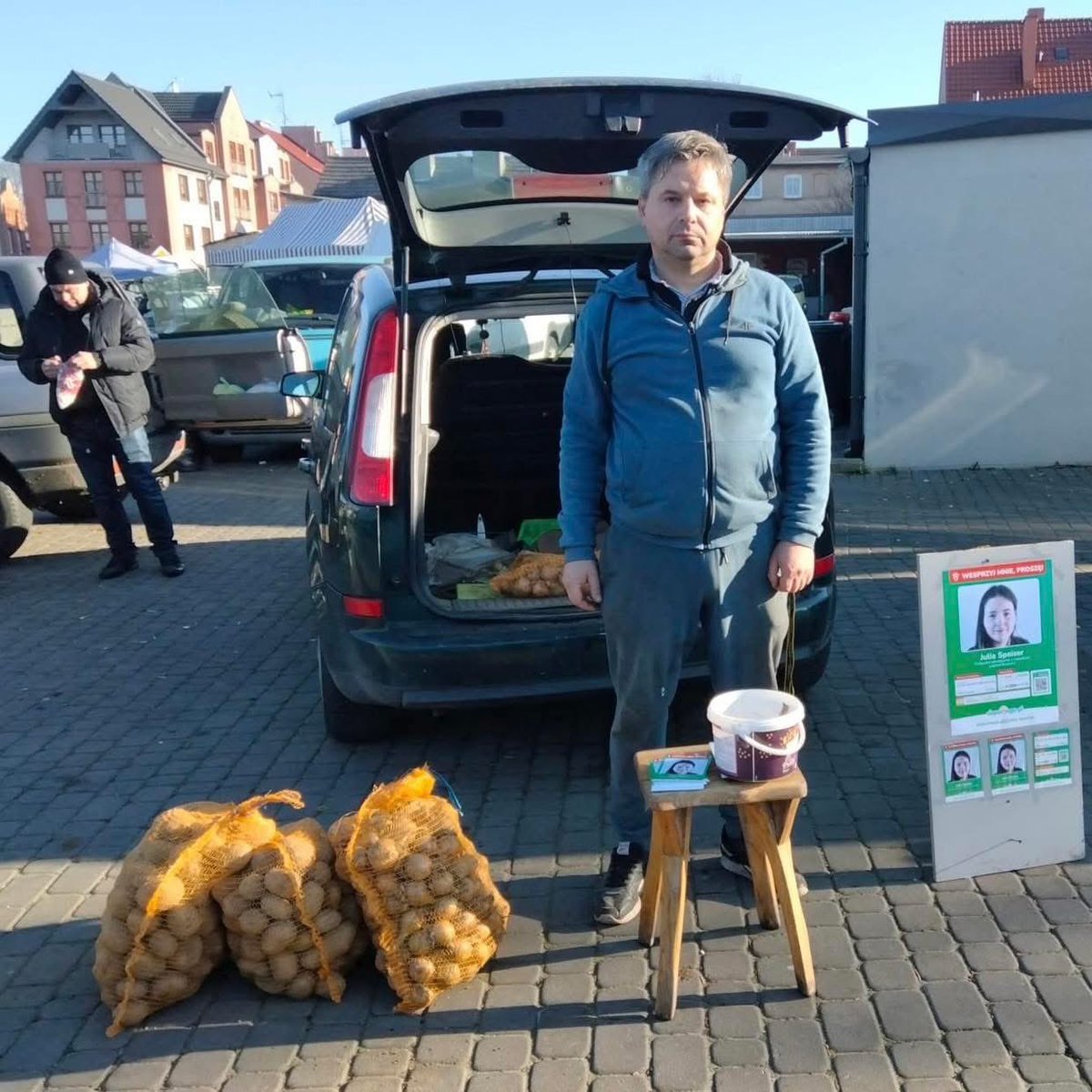
Jednak 45 letniego mężczyznę, na malutkim ryneczku w Sławnie kojarzą wszyscy.
Przyjeżdża tu gdy tylko…uzbiera trochę cebuli i ziemniaków z pól od okolicznych rolników.
Pewnie ktoś pomyśli: pracowity, dobry sposób na dorobienie! Jednak pan Sebastian nie dorabia, a rolnicy pozwalają mu chodzić po swoich polach z wyjątkowego powodu: ziemniaki i cebula to jedyny sposób załamanego taty, który chcę za wszelka cenę ratować swoją córkę.
Kiedy pan Sebastian własnymi rękami zbiera ziemniaki (a potem jeszcze je czyści i pakuje) jego oczko w głowie, córka Julia, walczy o to by żyć. Dziewczynka dziennie ma do 50 ataków padaczki, bywają tak ciężkie, że momentalnie traci przytomność.
Ile za te ziemniaki, proszę pana? - pyta kobieta przechodząca przez targ.
Co łaska, zbieram by ratować córkę - pan Sebastian pokazuje tekturowy plakat, który stawia zawsze obok worków. Rozdaje też ulotki: „to Julia, proszę o niej przeczytać.”
Przyjeżdża małym autem, wystawia kilka worków i czeka aż ktoś zwróci na niego uwagę.
To jest przykład człowieka, który czuje ogromną bezradność wobec tych, których kocha. Nie potrafię wyobrazić sobie co czuje ojciec, który przez cały dzień „pracy na polu” (ludzie przecież on nie ma maszyn ani nic, zbiera rękami, a następnie przygotowuje je pod sprzedaż w domu) zbierze 200-300 zł.
Mimo wszystko nie poddaje się i wstaje kolejny dzień by znów zebrać ziemniaki i cebule.
Dwa dni temu w Polsce spadł śnieg, zbiory ziemniaków i cebuli nie mają już prawa bytu.
Pan Sebastian stracił swoją ostatnią „deskę ratunku”.
Gdy zadzwoniłem dziś do niego, rozpłakał się i nie wierzył. Pomyślałem na początku, że to miłe, że mnie kojarzy bo wtedy zawsze „łatwiej” mi rozmawiać. Dopiero gdy powiedział: „tyle na pana czekałem, nie wierzę” - zrozumiałem, że mężczyzna dobijał się gdzie mógł, ale był niezauważony. Gdy po telefonie czytałem jego wiadomości z ostatnich tygodni mam ogromny żal do samego siebie, że dopiero dziś go „zobaczyłem”.
Tak bardzo bym chciał byście „co łaska” kupili jeden wirtualny worek ziemniaków od pana Sebastiana. Bądźmy szczerzy, nigdy do Was nie dotrze, ale obiecuję Wam, to będą najsmaczniejsze ziemniaki w waszym życiu.
Jeśli Was nie przekonałem, rozumiem, proszę jednak spójrzcie na pana Sebastiana.
Będę wdzięczny za każdą reakcję pod tym postem. Julia już nie ma czasu, a pan Sebastian nadziei.
Ja to tu tylko zostawię.
https://t.co/qA6v4xE7Uy
Z profilu Łukasza Litewki.
Kochani… bardzo ważny post.
Proszę o pilne RT🙏
Proszę, przeczytajcie go do końca. ❤️
Dołączam do pięknej akcji.
Jeśli nie masz z kim wrócić do domu po porodzie, jeśli boisz się jechać sama, jeśli nie wyobrażasz sobie tłuc się autobusem czy taksówką w taki zimny dzień po prostu napisz do mnie.
Odwiozę Ciebie i maluszka za darmo, bezpiecznie, spokojnie, bez stresu.
Pomogę także przenieść rzeczy do mieszkania, żebyś nie musiała się z tym sama męczyć.
Nie wyobrażam sobie, żeby świeżo upieczona mama, po takim przeżyciu, miała wracać komunikacją miejską…
Nie w takich temperaturach.
Nie w takiej sytuacji.
Kochani, nagłośnijmy tę akcję.
Może jedna podanie dalej sprawi, że jakaś mama poczuje się bezpieczniej.
Sosnowiec, Dąbrowa Górnicza, Czeladź, Będzin, Jaworzno, Katowice i okolice.
"My name's Raymond. I'm 73. I work the parking lot at St. Joseph's Hospital. Minimum wage, orange vest, a whistle I barely use. Most people don't even look at me. I'm just the old man waving cars into spaces.
But I see everything.
Like the black sedan that circled the lot every morning at 6 a.m. for three weeks. Young man driving, grandmother in the passenger seat. Chemotherapy, I figured. He'd drop her at the entrance, then spend 20 minutes hunting for parking, missing her appointments.
One morning, I stopped him. "What time tomorrow?"
"6:15," he said, confused.
"Space A-7 will be empty. I'll save it."
He blinked. "You... you can do that?"
"I can now," I said.
Next morning, I stood in A-7, holding my ground as cars circled angrily. When his sedan pulled up, I moved. He rolled down his window, speechless. "Why?"
"Because she needs you in there with her," I said. "Not out here stressing."
He cried. Right there in the parking lot.
Word spread quietly. A father with a sick baby asked if I could help. A woman visiting her dying husband. I started arriving at 5 a.m., notebook in hand, tracking who needed what. Saved spots became sacred. People stopped honking. They waited. Because they knew someone else was fighting something bigger than traffic.
But here's what changed everything, A businessman in a Mercedes screamed at me one morning. "I'm not sick! I need that spot for a meeting!"
"Then walk," I said calmly. "That space is for someone whose hands are shaking too hard to grip a steering wheel."
He sped off, furious. But a woman behind him got out of her car and hugged me. "My son has leukemia," she sobbed. "Thank you for seeing us."
The hospital tried to stop me. "Liability issues," they said. But then families started writing letters. Dozens. "Raymond made the worst days bearable." "He gave us one less thing to break over."
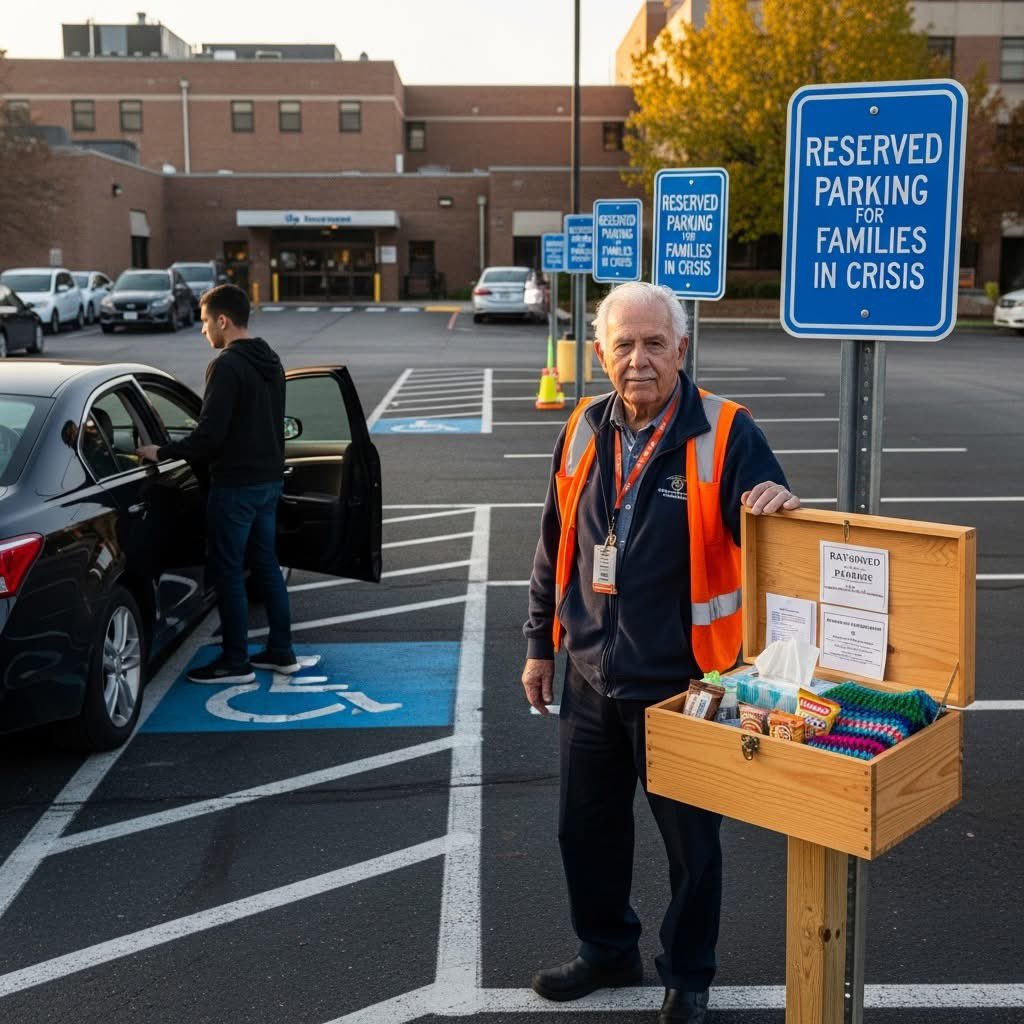
Last month, they made it official. "Reserved Parking for Families in Crisis." Ten spots, marked with blue signs. And they asked me to manage it.
But the best part? A man I'd helped two years ago, his mother survived, came back. He's a carpenter. Built a small wooden box, mounted it by the reserved spaces. Inside? Prayer cards, tissues, breath mints, and a note,
"Take what you need. You're not alone. -Raymond & Friends"
People leave things now. Granola bars. Phone chargers. Yesterday, someone left a hand-knitted blanket.
I'm 73. I direct traffic in a hospital parking lot. But I've learned this: Healing doesn't just happen in operating rooms. Sometimes it starts in a parking space. When someone says, "I see your crisis. Let me carry this one small piece."
So pay attention. At the grocery checkout, the coffee line, wherever you are. Someone's drowning in the little things while fighting the big ones.
Hold a door. Save a spot. Carry the weight no one else sees.
It's not glamorous. But it's everything."
Let this story reach more hearts....
Credit: Mary Nelson
@simonmaechling The dragon in the garage seems to be a fear coping mechanism.
When one falls for rejecting reality, it may be rooted in fear.
It's easier to imagine there is somewhere someone that is involved with whom one can deal. Reality does not care and is ruthless.
@PhysInHistory What if there is one universe with complexified spacetime (like in Twistor theory), but we only see the real part of it? Then, every orientation in that universe wild be perceived as a 'universe'. As a result, one could have 'infinite' universes in one.
How would you like that?:)