Help!
I'm looking for people to blog for @EducationElf
In a nutshell you'll summarise and share your ideas about how to implement research around education...
I will provide support & guidance. Yes you are good enough..
Interested? Email [email protected]
Please RT
Meta-analysis finds a small but significant positive impact of the whole-school approach on pupils’ social and emotional adjustment, behavioural adjustment, and internalising symptoms.
Read @JuliaRBadger 's summary of this recent review
https://t.co/0ewgdhUGvf
Evidence supports taking a whole-school approach to enhancing social, emotional and behavioural development, but implementing it in schools is not always straightforward.
Which approach is right for you?
Great new blog today by @JuliaRBadger
https://t.co/0ewgdhD5DH
Today @JuliaRBadger summarises a review on the effectiveness of interventions adopting a #WholeSchoolApproach to enhancing social and emotional development.
https://t.co/0ewgdhD5DH
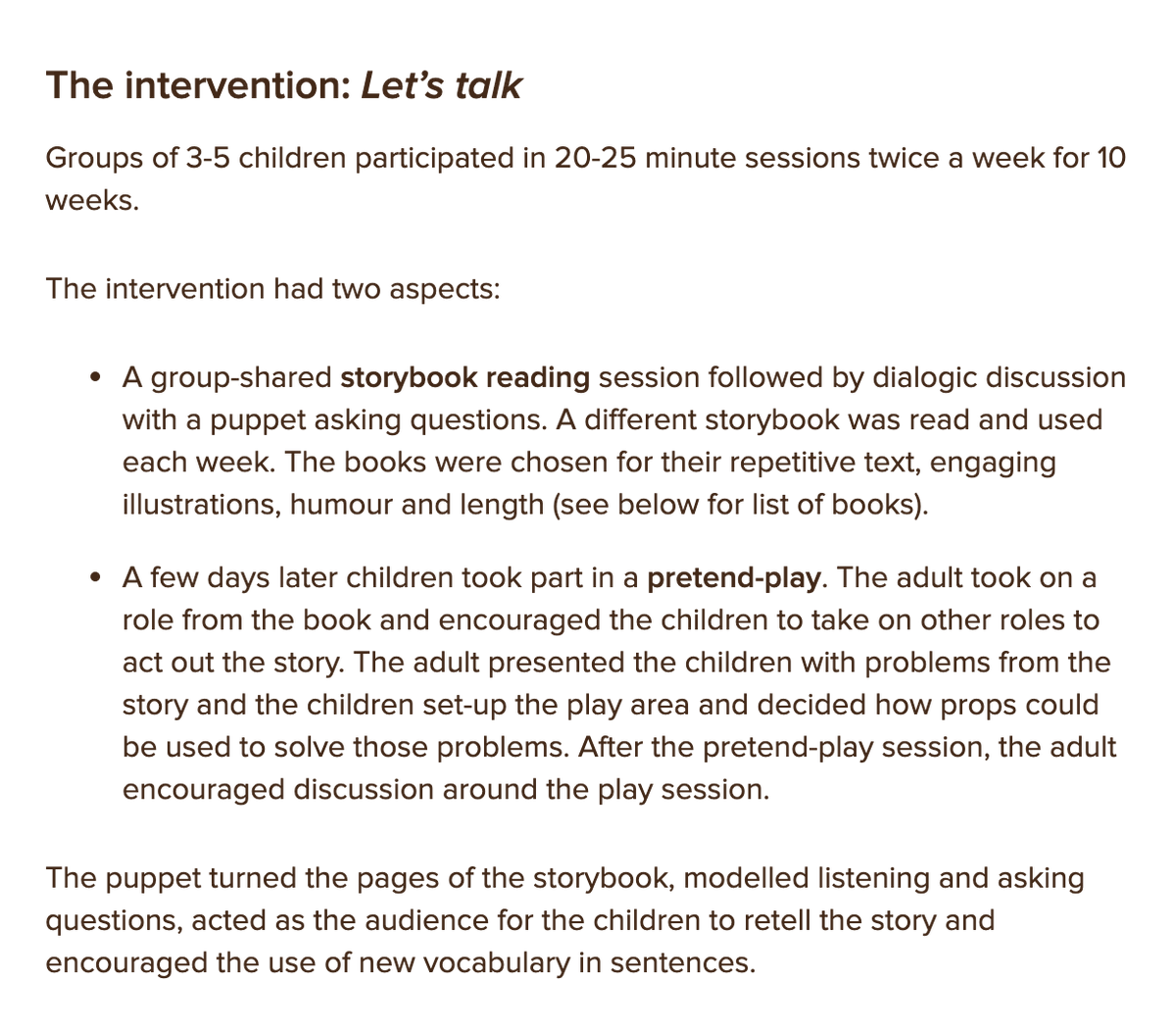
"The Let’s Talk intervention is simple to use, has good developmental outcomes & requires minimal training. It can be adapted to resources available & is easy to embed into a pre-school day."
Great blog on children’s language development by @JuliaRBadger
https://t.co/V67S1T8f1A
Hey primary school teachers!
What do you think of the Let's Talk intervention?
Find out more in this new blog by @JuliaRBadger summarising the research by @gillian_purcell https://t.co/V67S1T8f1A
"The Let’s Talk intervention improved children’s receptive and productive vocabulary and narrative ability independent of executive function."
Read more about supporting children’s language development in our new blog today by @JuliaRBadger
https://t.co/V67S1T8f1A
Today @JuliaRBadger summarises a recent RCT testing the Let’s Talk intervention for improving children’s language development.
"Let’s Talk was designed to find a balance between adult involvement & children’s independent exploration of new material."
https://t.co/V67S1T8f1A
"When adjusting for pupil background, schools from more affluent areas do less well, whilst those from more deprived areas do far better."
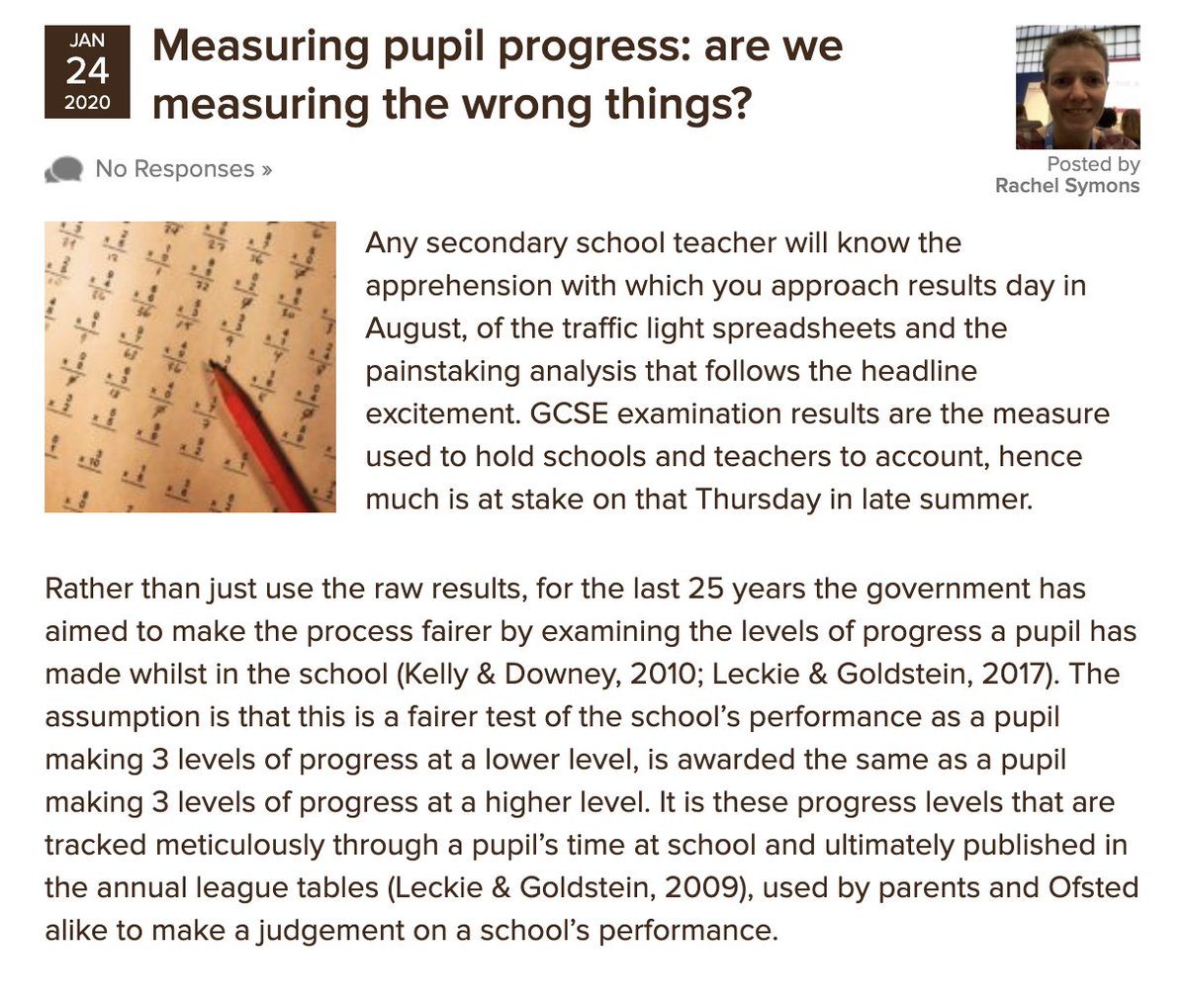
New blog from @RachelSymons1 on progress 8, school accountability & importance of adjusting for pupil background
https://t.co/XwuJ3aWuN2
Today @RachelSymons1 summarises the Progress 8 accountability measure and why it’s important to consider school and pupil background when interpreting exam results https://t.co/XwuJ3be5EA
Progress 8 measures the progress of students from Key Stage 2 through to GCSE. The government argue it is fairer than publishing raw attainment scores, but critics argue there needs to be adjustment for pupil and school background.
https://t.co/XwuJ3aWuN2
"The more often parents gave children inflated praise in the early stages of the research, the lower a child’s self-esteem became by the end of the project."
Read more about the dangers of #InflatedPraise in our blog today by @LeenaAsha & @salmckeown https://t.co/K3dM2umQcb
"We should replace overpraising achievements with realistic praise and engagement in a dialogue eliciting the child’s views and ideas."
Great blog today on praise, self-esteem & narcissism, by @LeenaAsha & @salmckeown
https://t.co/K3dM2umQcb
Interesting review here ⬇️ verbal praise is key in #primary school aged #children ✅ but overinflated (unrealistic) praise is not helpful 👎. The reviewer notes NON-VERBAL communication (facial expression etc ) is not discussed & would be an important addition #InspireIncredible
Today @LeenaAsha & @salmckeown on research showing that parents’ inflated praise:
- predicted lower self-esteem in children
- predicted higher narcissism, but only in children with high self-esteem
https://t.co/K3dM2umQcb
@EducationElf Interesting findings but the study was conducted in 7-11 year olds. I would anticipate/ hope the effects of praise wld be more positive and less complex in preschoolers?