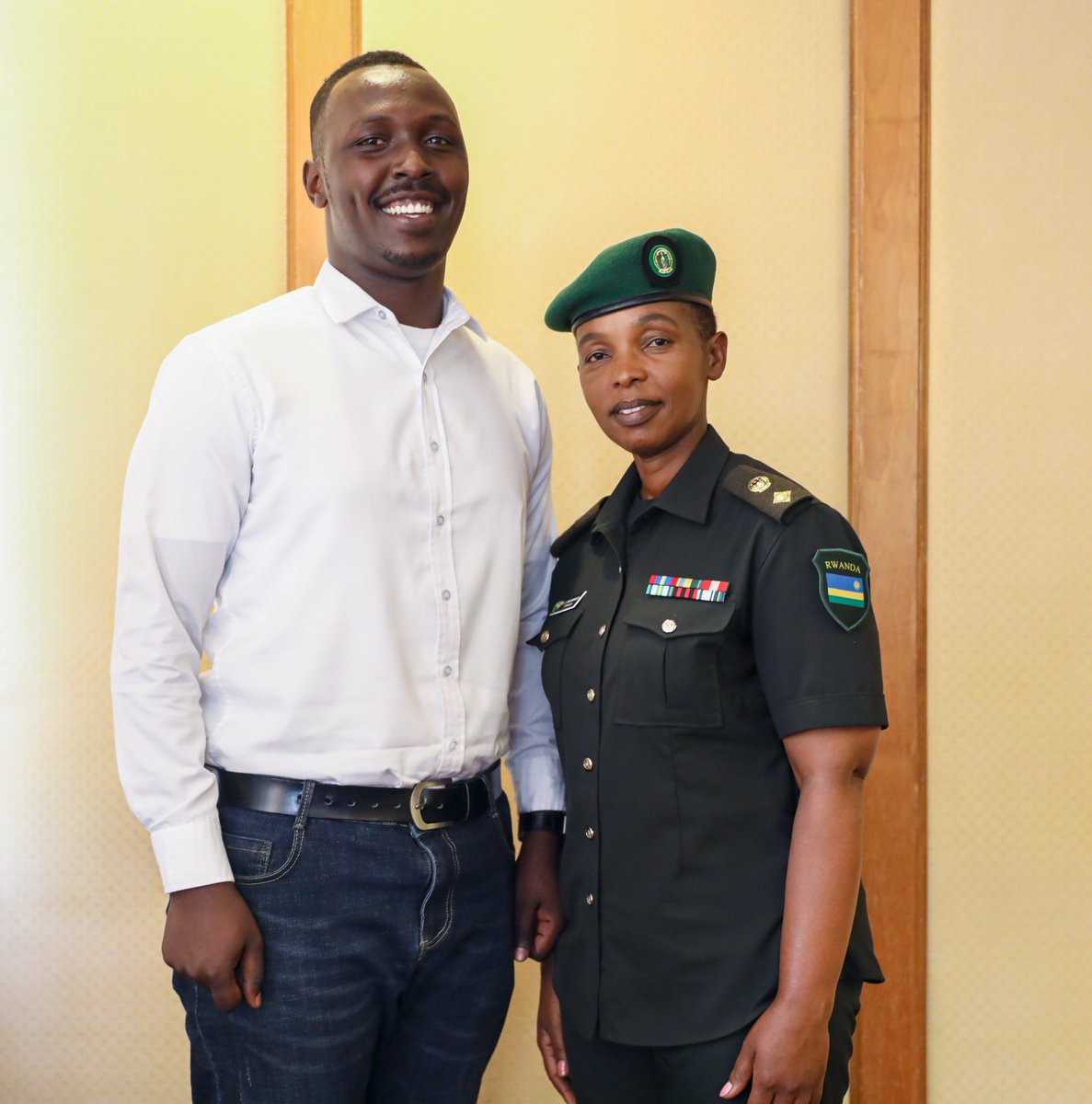
Afande Lydia has fond memories of the liberation struggle.
But, she told @NewTimesRwanda , one will NEVER leave her memory.
"The day we got Umukotanyi, our first uniform, the first boots, the morale, the atmosphere and everything changed."
#Kwibohora29
https://t.co/PxudcwyBjb
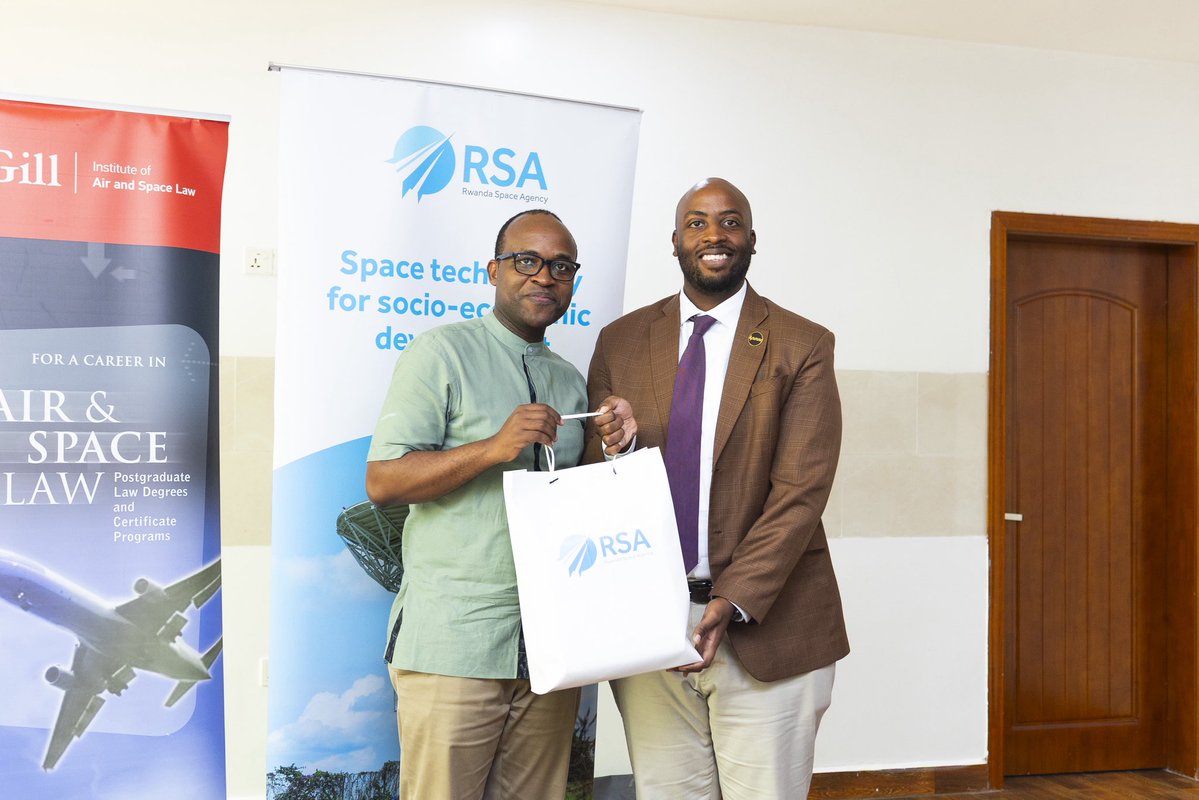
Today, the Rwanda Space Agency signed an MoU with the Institute of Air and Space Law at @mcgillu to strengthen capacity building and facilitate knowledge exchange in space law, policy, and governance.
This partnership will support the development of robust space regulations, creating an enabling environment for the private sector in space.
Petero my brother, despite your miserable and painful writing skills of typing in lowercase, which speaks volumes to your character as a lowercase person, I don't think you are in any position to criticize the appointment of @adoniaayebare.
In fact, any level-headed person would recognize that this is a very deliberate appointment made to serve a very deliberate cause.
Your ignorance of political details only exposes your intellectual weakness bro (am sorry to say).
Nations appoint whom they want, while other nations consider how a new appointment advances their mutual interests (if you could only read between the lines but will you?)
🇷🇼 Rwanda Coding Academy: In just six years, students have built 70+ tech projects solving real-world challenges across education, health, and security.
🧵 @RwCodingAcademy
🎥In partnership with the @UN Department of Global Communications and @stannswarehouse, @RwandaUN invites you to watch “Inside Hate Radio: The Broadcast That Helped Kill.”
The short film reflects on the dangers of #HateSpeech and the Radio Télévision Libre des Mille Collines (#RTLM)’s central role in fueling the 1994 Genocide against the Tutsi.
🔗Watch on Youtube: https://t.co/JeG76uKsvo
#Rwanda’s Digital Acceleration Program, supported by the @WorldBankGroup, is helping startups scale—unlocking funding, strengthening support systems, and driving innovation across sectors.
https://t.co/FEiiJUjZvi
"My children, how have so many of you come to visit this early, is everything alright? Come inside, let me give you milk."
Those are the last words, Rosalie Gicanda, the last Queen of Rwanda, told the people who had come to kill her. It was on this day, in 1994
We remember her 💔 #Kwibuka32
First in my lineage to work on TV, run 5 businesses, start a farm, buy my mom a house, get 4 degrees, work as adjunct faculty, soon starting a PhD….
And I am not even 35 yet.😎
Dear Survivor,
Your testimony stays with us — the small, impossible choices you were forced to make as a child.
Giving away the little money you had, hoping it might save a sibling.
Wearing layers of clothing, prepared for nights in the cold.
Being told to run in different directions — trusting that, God willing, you would meet again.
We also remember those who, though not targeted, chose to risk everything to protect others — affirming, even in the darkest moments, the possibility of humanity.
These are not just memories. They are truths that shape our collective responsibility.
As President @PaulKagame reminded us on 7 April, your strength is a reservoir of humanity that continues to define who we are.
Your loved ones live on in our memory, and in every step this country takes forward.
May you find moments of peace, and the strength to continue, at your own pace.
#Kwibuka32
#LongPostAlert I #ExpertOpinion
Dear @UgandaMediaCent, here is some free (but expensive-sounding) advice on patching your brand before attempting to fix ‘brand Uganda’.
To be honest. Right now, the centre feels more like a notice board. In a world where governments are building media ecosystems, the centre still issues statements and communicates as if it’s 2003. Here are 10 expert suggestions for how you can fix it.
1⃣. The centre has no identity, or does it? If it does, it’s a borrowed identity. The national emblem is not your logo in its entirety. It’s everyone’s logo. If you want to be taken seriously as a modern communications institution, build a distinct visual identity, including colours, fonts, templates, and brand elements (that can easily be associated with Uganda). You need to start thinking less of the “coat of arms” and be cleaner, sharper, and more recognisable. Even the central banks and revenue authorities have distinctive identities.
2⃣. What exactly are you as a media centre? Are you an NRM government mouthpiece? A national information hub? A media liaison? President Museveni’s personal media dissemination centre? Right now, you’re trying to be everything and, honestly, landing nowhere. Clear positioning builds trust. Without it, you are just another voice in an already noisy government choir.
3⃣. The media centre needs to communicate like humans. Like Ugandans! Not like circulars. Ugandans don’t read statements. A majority of today’s news consumers scroll on their phones. If your communication sounds like it was drafted by three government committees and approved by ten people, it’s already lost. Simplify. Be direct. Be understood. Also, your press releases are a little too frequent. Your press conferences are too long. You might need to review that.
4⃣. Your digital presence needs an urgent revamp. Let’s not sugarcoat it. Your digital platforms feel scattered, inconsistent, and underwhelming. Your website is not befitting. It’s ugly. You have a paltry 7K followers on Instagram, and your Instagram page looks like a content-dumping ground. You have no strong LinkedIn presence (you’re missing out on engaging policymakers, professionals, and global stakeholders). There is an unbranded YouTube channel for a certain Uganda Media Centre with a paltry 700 subscribers (they should at least be double that). Visibly, there is no real YouTube content strategy beyond numerous clips of press briefings. No Flickr presence, your visual assets and depository. No Tik Tok. Visual identity? Inconsistent at best. Meanwhile, globally, over 60% of people now consume news via social media. That means your first impression is digital, and right now, it’s your weakest entry.
Here is what you (could) need:
▪️A cohesive visual system across platforms.
▪️A content strategy, not just uploads. Invest in a studio setup and podcast format (owned and managed by Uganda Media Centre).
▪️Create some engaging formats featuring Ugandan voices from business, tourism, sports, and culture. Uganda is not short of interesting personalities for this. You have @wekesa_amos for tourism, and Joshua Baraka (currently a major export of Ugandan music). You have @rkabushenga et al. You can also partner with leading clean podcasters in the diaspora. The idea is for you to create a community. Please note that news narratives are no longer sourced; they are now scripted and produced.
5⃣. Not everything warrants a press briefing. The weekly podium-style media engagement format (with shabby banners in the background) needs to evolve. It’s tired and boring. Shouldn’t the media centre be a centre of excellence? Shouldn’t it be a brand custodian for the whole country? To break away from, or at least mix in with, these many press briefings, start by turning lesser-known policies into short videos, infographics, and explainers. That recent AI-generated video from filmmaker Loukman Ali was a weak attempt at content creation. For example, the recent copyright law that provoked debate among different stakeholders could have been fodder for the kind of content the media centre can break down for the public. What can you tell a 22-year-old Ugandan about it? If a Gen-Z doesn’t find your press briefings impressive in 30 seconds, you’ve lost an entire generation.
6⃣. Once again, media relations are not necessarily about hosting press conferences. Journalists don’t need an open-tent gathering every now and then; they need a partner. Build relationships. Visit newsrooms. Engage and cultivate media influencers. Recognise them monthly. Rethink the idea of media awards. Blogger awards. The most influential TikToker or YouTuber. Work with credible digital voices. Better yet, train and empower emerging media creators. If you don’t shape the narrative ecosystem, the naysayers will, and they already are.
7⃣. How ready are you for crisis communication? Uganda’s PR challenge is not breaking news, and we all know what is missing. ‘Bad news from Uganda’ is beginning to seem normal. The centre needs structured responses, including up-to-date fact sheets, rapid-response messaging, and consistent alignment among spokespersons. Recently, we were in a crisis over news that Uganda would send troops to Iran to defend Israel. This was triggered by X tweets from top officials. A Ugandan UN ambassador responded differently. A foreign affairs official responded differently. A friend of the top official involved in the debacle responded as well, differently. Uganda Media Centre didn’t pronounce itself on the matter. The centre was silent. The silence on such issues creates confusion and erodes reputation.
8⃣. Too many voices, no single message! With Uganda’s PR and communications today, the Uganda Police say one thing, the parliament’s spokesperson says another, the judiciary adds spice, and the Minister of Youth voices yet another opinion. The result? Confusion and, most times, global embarrassment. The Uganda Media Centre should coordinate messaging rather than compete with it.
9⃣. Not All Audiences Are the Same (And that’s the point). Gen Z, foreign investors, foreign diplomats, and foreign media are all different. And yet the Media Centre should be designed to speak to all of them using different tones. How does one respond to an article in The Economist, a professor at Harvard, a would-be Chinese investor, or a disgruntled youth in the Middle East? Segment your communication. Tailor your tone.
🔟. Lastly, the big question is: Who trusts you?
Have you ever measured your credibility? The Uganda Media Centre needs to carry out surveys and perception audits, gather feedback loops (from the Ugandans it serves), and, from this, build thought leadership by publishing insights, issuing newsletters, hosting experts, inviting scholars, and creating a network of credible voices tied to its platform.
This article is originally published on the Business Insights Africa I @Afro_Insights website here [link] https://t.co/SNHHPlvydn
#BrandUganda
Now on @netflix
Narrated by Sir David Attenborough, this documentary captures rare and intimate moments from the lives of Rwanda’s mountain gorillas in @VolcanoesPark.
#VisitRwanda
Truly honored to be appointed Adjunct Associate Professor at the Geisel School of Medicine at Dartmouth. I am deeply grateful to the mentors, colleagues, and learners who continue to inspire this work. Looking forward to strengthening partnerships in oncology education, research, and equitable cancer care.
In line with this year's 32nd Commemoration of the 1994 Genocide against the Tutsi, the High Commission of Rwanda in Kenya in collaboration with The @PLO_Foundation, Pan African Institute, @lukenyaunidig, and @uonbi are organizing a Symposium on Genocide Prevention.
The symposium will run under the theme "From Ashes to Ambition: Rwanda's Journey of Renewal and the Quest of a United Africa".
You are all invited!
🗓️ Wednesday, April 22, 2026
📍University of Nairobi, Main Campus, Taiffa Hall
⏰9:30 a.m.
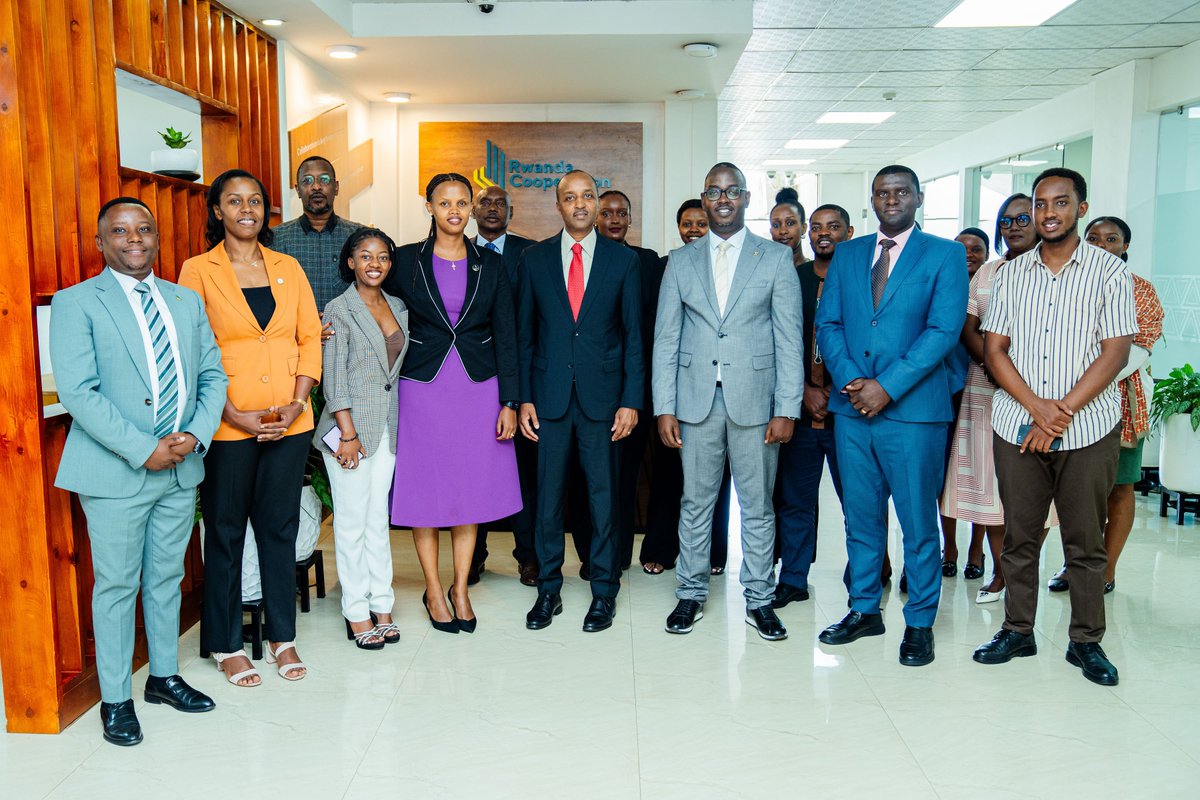
Today, Rwanda Cooperation Initiative marked a leadership transition with the handover from outgoing CEO @Eng_Patricie to incoming CEO @RNiwenshuti1 witnessed by the Permanent Secretary @FidelisMironko at @RwandaMFA.






![kezio_musoke's tweet photo. #LongPostAlert I #ExpertOpinion
Dear @UgandaMediaCent, here is some free (but expensive-sounding) advice on patching your brand before attempting to fix ‘brand Uganda’.
To be honest. Right now, the centre feels more like a notice board. In a world where governments are building media ecosystems, the centre still issues statements and communicates as if it’s 2003. Here are 10 expert suggestions for how you can fix it.
1⃣. The centre has no identity, or does it? If it does, it’s a borrowed identity. The national emblem is not your logo in its entirety. It’s everyone’s logo. If you want to be taken seriously as a modern communications institution, build a distinct visual identity, including colours, fonts, templates, and brand elements (that can easily be associated with Uganda). You need to start thinking less of the “coat of arms” and be cleaner, sharper, and more recognisable. Even the central banks and revenue authorities have distinctive identities.
2⃣. What exactly are you as a media centre? Are you an NRM government mouthpiece? A national information hub? A media liaison? President Museveni’s personal media dissemination centre? Right now, you’re trying to be everything and, honestly, landing nowhere. Clear positioning builds trust. Without it, you are just another voice in an already noisy government choir.
3⃣. The media centre needs to communicate like humans. Like Ugandans! Not like circulars. Ugandans don’t read statements. A majority of today’s news consumers scroll on their phones. If your communication sounds like it was drafted by three government committees and approved by ten people, it’s already lost. Simplify. Be direct. Be understood. Also, your press releases are a little too frequent. Your press conferences are too long. You might need to review that.
4⃣. Your digital presence needs an urgent revamp. Let’s not sugarcoat it. Your digital platforms feel scattered, inconsistent, and underwhelming. Your website is not befitting. It’s ugly. You have a paltry 7K followers on Instagram, and your Instagram page looks like a content-dumping ground. You have no strong LinkedIn presence (you’re missing out on engaging policymakers, professionals, and global stakeholders). There is an unbranded YouTube channel for a certain Uganda Media Centre with a paltry 700 subscribers (they should at least be double that). Visibly, there is no real YouTube content strategy beyond numerous clips of press briefings. No Flickr presence, your visual assets and depository. No Tik Tok. Visual identity? Inconsistent at best. Meanwhile, globally, over 60% of people now consume news via social media. That means your first impression is digital, and right now, it’s your weakest entry.
Here is what you (could) need:
▪️A cohesive visual system across platforms.
▪️A content strategy, not just uploads. Invest in a studio setup and podcast format (owned and managed by Uganda Media Centre).
▪️Create some engaging formats featuring Ugandan voices from business, tourism, sports, and culture. Uganda is not short of interesting personalities for this. You have @wekesa_amos for tourism, and Joshua Baraka (currently a major export of Ugandan music). You have @rkabushenga et al. You can also partner with leading clean podcasters in the diaspora. The idea is for you to create a community. Please note that news narratives are no longer sourced; they are now scripted and produced.
5⃣. Not everything warrants a press briefing. The weekly podium-style media engagement format (with shabby banners in the background) needs to evolve. It’s tired and boring. Shouldn’t the media centre be a centre of excellence? Shouldn’t it be a brand custodian for the whole country? To break away from, or at least mix in with, these many press briefings, start by turning lesser-known policies into short videos, infographics, and explainers. That recent AI-generated video from filmmaker Loukman Ali was a weak attempt at content creation. For example, the recent copyright law that provoked debate among different stakeholders could have been fodder for the kind of content the media centre can break down for the public. What can you tell a 22-year-old Ugandan about it? If a Gen-Z doesn’t find your press briefings impressive in 30 seconds, you’ve lost an entire generation.
6⃣. Once again, media relations are not necessarily about hosting press conferences. Journalists don’t need an open-tent gathering every now and then; they need a partner. Build relationships. Visit newsrooms. Engage and cultivate media influencers. Recognise them monthly. Rethink the idea of media awards. Blogger awards. The most influential TikToker or YouTuber. Work with credible digital voices. Better yet, train and empower emerging media creators. If you don’t shape the narrative ecosystem, the naysayers will, and they already are.
7⃣. How ready are you for crisis communication? Uganda’s PR challenge is not breaking news, and we all know what is missing. ‘Bad news from Uganda’ is beginning to seem normal. The centre needs structured responses, including up-to-date fact sheets, rapid-response messaging, and consistent alignment among spokespersons. Recently, we were in a crisis over news that Uganda would send troops to Iran to defend Israel. This was triggered by X tweets from top officials. A Ugandan UN ambassador responded differently. A foreign affairs official responded differently. A friend of the top official involved in the debacle responded as well, differently. Uganda Media Centre didn’t pronounce itself on the matter. The centre was silent. The silence on such issues creates confusion and erodes reputation.
8⃣. Too many voices, no single message! With Uganda’s PR and communications today, the Uganda Police say one thing, the parliament’s spokesperson says another, the judiciary adds spice, and the Minister of Youth voices yet another opinion. The result? Confusion and, most times, global embarrassment. The Uganda Media Centre should coordinate messaging rather than compete with it.
9⃣. Not All Audiences Are the Same (And that’s the point). Gen Z, foreign investors, foreign diplomats, and foreign media are all different. And yet the Media Centre should be designed to speak to all of them using different tones. How does one respond to an article in The Economist, a professor at Harvard, a would-be Chinese investor, or a disgruntled youth in the Middle East? Segment your communication. Tailor your tone.
🔟. Lastly, the big question is: Who trusts you?
Have you ever measured your credibility? The Uganda Media Centre needs to carry out surveys and perception audits, gather feedback loops (from the Ugandans it serves), and, from this, build thought leadership by publishing insights, issuing newsletters, hosting experts, inviting scholars, and creating a network of credible voices tied to its platform.
This article is originally published on the Business Insights Africa I @Afro_Insights website here [link] https://t.co/SNHHPlvydn
#BrandUganda](https://pbs.twimg.com/media/HGHPKJEWoAAnrk4.jpg)