Onchocerca volvulus is a parasitic filarial nematode that causes onchocerciasis (commonly known as river blindness). O. volvulus distribution follows that of the dipteran vectors. Black flies breed in fast-running water of mountainous streams in regions of Africa and South and Central America and have a fairly long flight range. Thus, onchocerciasis can be found several miles from the nearest endemic breeding site. Because much of the world’s coffee is grown on mountainous hillsides, the prevalence of onchocerciasis among workers on coffee plantations is high.
Page 285 📕 Parasitic Diseases, Eighth Edition
Download a copy for free! https://t.co/xu6cN9ap8Z
@ruth_millington As per first reply, unfortunately not
But I’ve seen images and photographs of works of art there that reflect the influences on a country that is at the crossroads of very different cultures
@ruth_millington Well done for being invited to a country off the tourist trail, with a complex history
I’ve not been there, so more “postcards” appreciated
@BellaWallerstei A situation that I have known, too
And solved in creatively different ways
Family and societal expectations can be met,
and you can have an enjoyable and interesting time too
Feel free to DM
@PublicDomainRev@kukukadoo Thank you for this nourishing intellectual fare
So important, when selective quotes are amplified exponentially, and the gold, to which Erasmus referred, intentionally is obscured in the ever-increasing dung hill
Free speech survives with freedom, education, critical thought
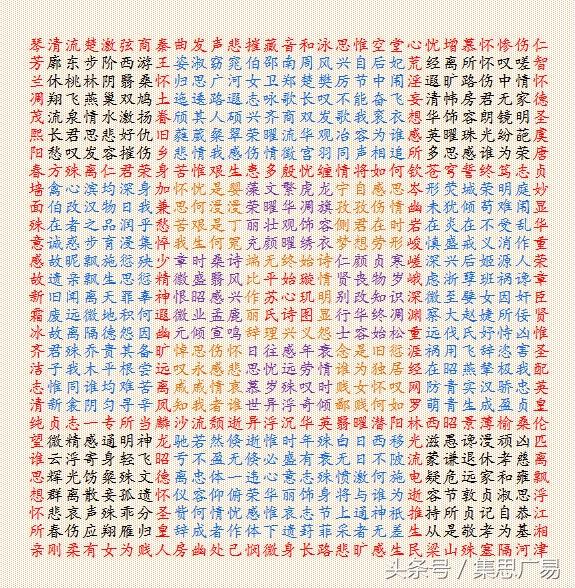
This strange square 👇 is undoubtedly the most extraordinary work of literature in human history. Yet, unfortunately, barely anyone in the West has ever heard of it.
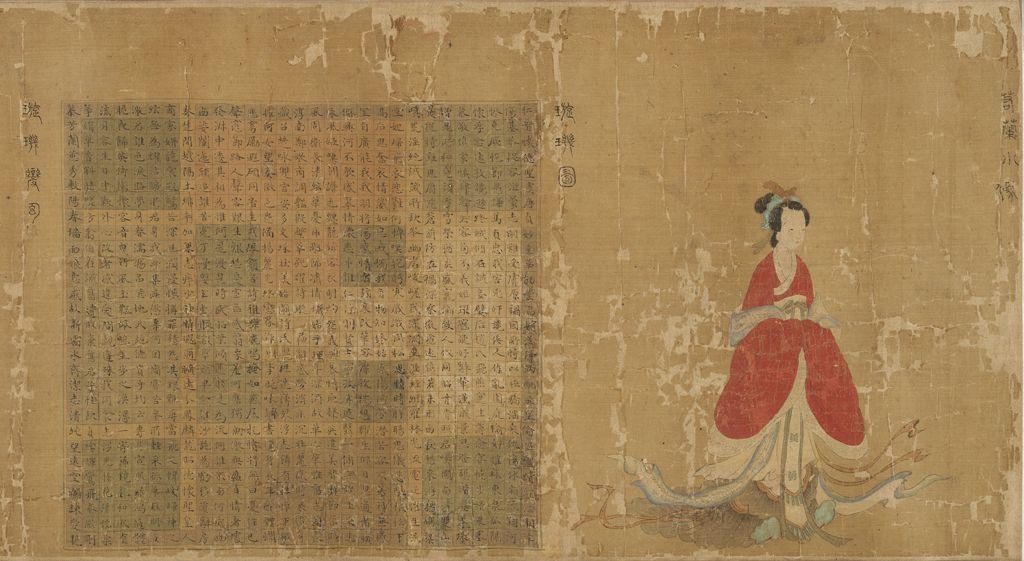
There was this woman poet in 4th century China called Su Hui (蘇蕙), a child genius who had reportedly mastered Chinese characters by age 3.
At 21 years old, heartbroken by her husband who left her for another woman, she decided to encode her feelings in a structure so intricate, so beautiful, so intellectually staggering that it still baffles scholars to this day.
Came to be known as the Xuanji Tu (璇璣圖) - the "Star Gauge" or "Map of the Armillary Sphere" - it's a 29 by 29 grid of 841 characters that can produce over 4,000 different poems.
Read it forward. Read it backward. Read it horizontally, vertically, diagonally. Read it spiraling outward from the center. Read it in circles around the outer edge. Each path through the grid produces a different poem - all of them coherent, all of them beautiful, all of them rhyming, all of them expressing variations on the same themes of longing, betrayal, regret, and undying love.
The outer ring of 112 characters forms a single circular poem - believed to be both the first and longest of its kind ever written. The interior grid produces 2,848 different four-line poems of seven characters each. In addition, there are hundreds of other smaller and longer poems, depending on the reading method.
At the center a single character she left implied but unwritten: 心 (xin) - "heart." Later copyists would add it explicitly, but in Su Hui's original the meaning was even more beautiful: 4,000 poems, all orbiting the space where her heart used to be.
Take for instance the outer red grid of the Star Gauge. Starting from the top right corner and reading down, you get this seven-character quatrain:
仁智懷德聖虞唐,
貞志篤終誓穹蒼,
欽所感想妄淫荒,
心憂增慕懷慘傷。
In pinyin, it is:
Rén zhì huái dé shèng yú táng,
zhēnzhì dǔ zhōng shì qióng cāng,
qīn suǒ gǎnxiǎng wàng yín huāng,
xīn yōu zēng mù huái cǎn shāng.
Notice how it rhymes? táng / cāng / huāng / shāng
The rough translation in English is: "The benevolent and wise cherish virtue, like the sage-kings Yao and Shun, With steadfast will I swear to the heavens above, What I revere and feel - how could it be wanton or dissolute? My heart's sorrow grows, longing brings only grief."
Now read it from the bottom to the top and you get this entirely different seven-character quatrain:
傷慘懷慕增憂心,
荒淫妄想感所欽,
蒼穹誓終篤志貞,
唐虞聖德懷智仁。
The pinyin:
Shāng cǎn huái mù zēng yōu xīn,
huāngyín wàngxiǎng gǎn suǒ qīn,
cāngqióng shì zhōng dǔzhì zhēn,
táng yúshèngdé huái zhì rén.
It rhymes too: xīn and qīn, zhēn and rén
And the meaning is just as beautiful and coherent: "Grief and sorrow, longing fills my worried heart, Wanton and dissolute fantasies - is that what you revere? I swear to the heavens my constancy is true, May we embody the sage-kings' virtue, wisdom, and benevolence."
That's just 2 poems out of the over 4,000 you can construct from the Xuanji Tu!
At the very center of the grid, the 8 red characters wrapped around the central heart, she "signed" her poem with a hidden message:
詩圖璇玑,始平蘇氏。 "The poem-picture of the Armillary Sphere, by Su of Shiping."
Or reversed:
蘇氏詩圖,璇玑始平。 "Su's poem-picture - the Armillary Sphere begins in peace."
Many scholars, and even emperors, throughout Chinese history have been completely obsessed by Su Hui's puzzle.
For instance, in the Ming dynasty, a scholar named Kang Wanmin (康萬民) devoted his entire life to the poems (https://t.co/4exP9zpqbc), ending up documenting twelve different reading methods - forward, backward, diagonal, radiating, corner-to-corner, spiraling - and extracting 4,206 poems. His book on the subject ("Reading Methods for the Xuanji Tu Poems", 璇璣圖詩讀法) runs to hundreds of pages.
Empress Wu Zetian herself, the legendary woman emperor of the Tang dynasty, wrote a preface to the Xuanji Tu around 692 CE (https://t.co/yW7aR73MPc).
Incredibly, there's even far more complexity to the Xuanji Tu than just the poems:
- The name 璇玑 (Xuanji) - Armillary Sphere - is astronomical in meaning and the way the poems can be read mirrors the way celestial bodies orbit around a fixed center. It's a model of the heavens.
- Her original work, with the characters woven on silk brocade, was in five colors (red, black, blue/green, purple, and yellow) which correspond to the Five Elements (五行) - the foundational Chinese philosophical system that explains how the universe operates. So it's also a model of the entire cosmic order according to ancient Chinese philosophy.
- It's also of course deeply mathematical with this 29 x 29 perfect square grid, with sub-squares, lines and rectangles, and a structure which allows for symmetrical reading patterns in all directions
- Last but not least, the content of the poems themselves contain multiple registers. On top of expressing her personal grief and longing for her husband, it's also filled with accusations against the concubine (Zhao Yangtai) he left her for, reflections on politics (with many references to sage-kings) and philosophical reflections.
So the Star Gauge is simultaneously:
- A love letter (expressing personal longing)
- A legal brief (arguing her case against her rival)
- A cosmological model (structured like the heavens)
- A Five Element diagram (encoding the fundamental structure of the world according to ancient Chinese philosophy)
- A mathematical construction with perfect symmetry and precision
And yet, for all this complexity, we should not forget this was all ultimately in service of the simplest human message imaginable: a 21-year-old woman asking the love of her life "come back to me".
Her husband did, eventually. According to what empress Wu Zetian herself wrote in her preface to the Xuanji Tu, when he received Su's brocade he was so "moved by its supreme beauty" that he sent away his concubine and returned to his wife. As the story goes, they lived together until old age.
The heart at the center was filled after all.
@ruth_millington I hope that you were able to see the exhibition at the Musée Guimet of “Angkor Royal Bronzes”
Today is the last day and, by good fortune, I am seeing it again
The exceptional collections exhibited and the beauty of the pieces stayed with me since I first visited
@ruth_millington Also, though these are “selling exhibitions”
Parcours des Mondes - free
Rue des Beaux Arts…
9-14 Sept
World’s best fair of African & Oceanic art; Asian art; Archaeological artefacts
The Fine Arts Biennale - tickets!
Grand Palais
20-24 Sept
earlier this year, to avoid the cold
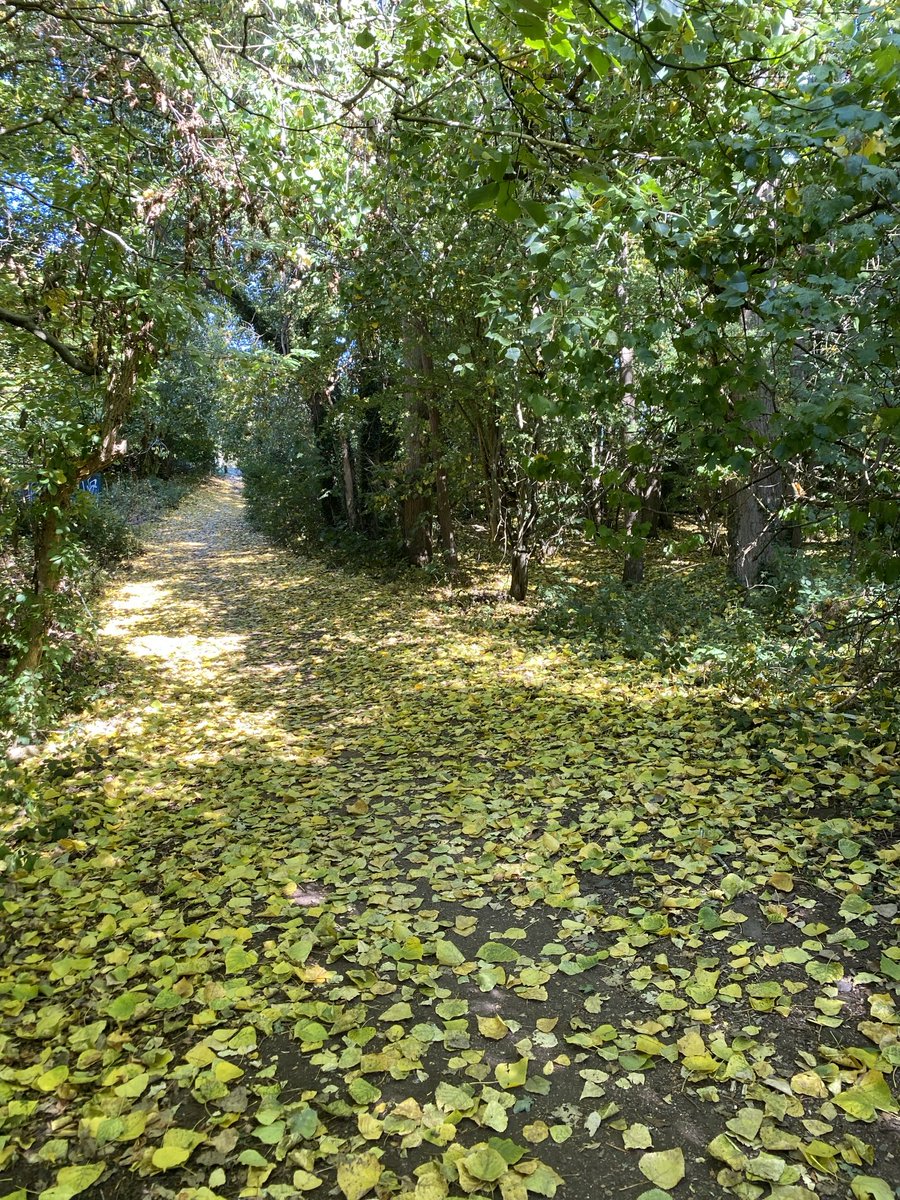
@cmoMD Yes, and thinking, while walking, of the death of a friend from Medical School who had been very aware of how and why our climate is changing
Nature as a reflection of our emotional state - pathetic fallacy - is out of poetical fashion, but I’ve never been a follower of fashion
@jubbishjay I can understand why…
It’s a great photograph: clever framing and composition, subtle colours and textures, lovely balance between lines and fractals