𝗧𝗛𝗘 𝗥𝗘𝗔𝗟 𝗔𝗗𝗩𝗔𝗡𝗧𝗔𝗚𝗘 𝗜𝗡 𝗔𝗜 𝗜𝗦 𝗡𝗢𝗧 𝗝𝗨𝗦𝗧 𝗕𝗘𝗧𝗧𝗘𝗥 𝗠𝗢𝗗𝗘𝗟𝗦, 𝗕𝗨𝗧 𝗕𝗘𝗧𝗧𝗘𝗥 𝗔𝗖𝗖𝗘𝗦𝗦 𝗧𝗢 𝗧𝗛𝗘𝗠
AI development is moving quickly, but access to powerful models is only one part of the equation.
That is what makes https://t.co/HiwfUBISfp's November 16–22 update worth examining. The week's developments were not limited to adding new models.
They touched several practical decisions that shape how users experience and build with AI.
𝗢𝗡𝗘 𝗣𝗟𝗔𝗧𝗙𝗢𝗥𝗠, 𝗠𝗢𝗥𝗘 𝗪𝗔𝗬𝗦 𝗧𝗢 𝗪𝗢𝗥𝗞
The latest integrations expand the range of tasks users can approach:
➝ Qwen4-Max: Its reported 1-million-token context window and support for video inputs of up to two hours create more room for processing extensive documents and analyzing lengthy video material.
➝ MiniMax-H3-Image: Support for up to 16 reference images and native 4K output gives creators more control when developing and refining visual content. The Highspeed version also offers a faster option for iterative production.
➝ Hy4-Flash: With a 1-million-token context window and decoding speeds above 150 tokens per second, it targets workflows that need substantial context without sacrificing responsiveness.
➝ GPT-6.2 Astra and Sol: Their different task orientations, adjustable reasoning levels, computer-use capabilities, and multi-agent features give developers more options for handling complex and routine workflows.
The important distinction is that more model choices should lead to better task selection, not simply more model switching. A long-context model, an image-generation model, and a reasoning-focused model solve different problems. Choosing appropriately can improve both workflow efficiency and spending decisions.
𝗧𝗛𝗘 𝗨𝗦𝗘𝗥 𝗘𝗫𝗣𝗘𝗥𝗜𝗘𝗡𝗖𝗘 𝗜𝗦 𝗣𝗔𝗥𝗧 𝗢𝗙 𝗧𝗛𝗘 𝗜𝗡𝗙𝗥𝗔𝗦𝗧𝗥𝗨𝗖𝗧𝗨𝗥𝗘
The iOS beta launch is significant because accessibility influences whether people can make AI part of their regular routines.
With 11 supported languages and a built-in checker for available API and Web routes, https://t.co/HiwfUBISfp is addressing two practical needs: mobile access and visibility into connection availability.
These details may not attract the same attention as a major model launch, but they matter when users want to move between devices and identify usable service endpoints.
𝗖𝗢𝗦𝗧 𝗘𝗙𝗙𝗜𝗖𝗜𝗘𝗡𝗖𝗬 𝗡𝗘𝗘𝗗𝗦 𝗠𝗢𝗥𝗘 𝗧𝗛𝗔𝗡 𝗗𝗜𝗦𝗖𝗢𝗨𝗡𝗧𝗦
Reducing DeepSeek-V4.1-Flash to 50% of its standard pricing makes the model more accessible to users managing frequent API calls. Other models also received different promotional rates.
However, a lower token price does not automatically mean a lower total development cost. Output quality, response speed, reliability, and the number of retries required all influence the actual economics of using a model.
For developers, the useful question is not simply which model is cheapest, but which one delivers the required result at an acceptable overall cost.
𝗦𝗘𝗥𝗩𝗜𝗖𝗘 𝗖𝗛𝗔𝗡𝗚𝗘𝗦 𝗔𝗥𝗘 𝗣𝗔𝗥𝗧 𝗢𝗙 𝗧𝗛𝗘 𝗕𝗨𝗜𝗟𝗗𝗜𝗡𝗚 𝗣𝗥𝗢𝗖𝗘𝗦𝗦
The planned retirement of Hy4-preview on December 7, 2026, is a reminder that developers must pay attention to model lifecycles.
Updating model IDs, testing compatibility, checking agent workflows, and backing up important conversations are not optional administrative details. They help prevent avoidable disruption when a service is discontinued.
https://t.co/HiwfUBISfp's Community Voices × Tech Talk initiative adds another useful layer by explaining API access options and ways to verify usage.
The reported Chinese model rankings for November 13–19 showed Zhipu moving to second place, with token usage increasing 90.29% week over week and request volume rising 140.93%.
The more valuable question is how users are applying these models and whether increased activity translates into useful, repeatable outcomes.
@BAI_AGI@justinsuntron
#TRONEcoStar
𝗕𝗜𝗧𝗧𝗢𝗥𝗥𝗘𝗡𝗧’𝗦 𝗕𝗨𝗬𝗕𝗔𝗖𝗞 𝗠𝗘𝗖𝗛𝗔𝗡𝗜𝗦𝗠 𝗠𝗔𝗥𝗞𝗦 𝗔 𝗡𝗘𝗪 𝗘𝗖𝗢𝗡𝗢𝗠𝗜𝗖 𝗖𝗛𝗔𝗣𝗧𝗘𝗥 𝗙𝗢𝗥 $𝗕𝗧𝗧
The evolution of a decentralized ecosystem is not measured only by the services it provides, but also by how its economic model adapts as the network matures.
BitTorrent's first quarterly BTT buyback and burn introduces a deflationary mechanism that adds another dimension to its token economics.
The interesting part is not simply the amount burned, but how this mechanism connects the project's economic activity with long-term token supply management.
𝗪𝗛𝗔𝗧 𝗔 𝗕𝗨𝗬𝗕𝗔𝗖𝗞 & 𝗕𝗨𝗥𝗡 𝗠𝗘𝗖𝗛𝗔𝗡𝗜𝗦𝗠 𝗖𝗔𝗡 𝗔𝗖𝗛𝗜𝗘𝗩𝗘
A buyback and burn process involves repurchasing tokens and permanently removing them from circulation, reducing the available supply.
With the reported first quarterly BTT burn of 21.62 trillion tokens, BitTorrent is establishing a recurring mechanism rather than relying on a one-time supply reduction event.
→ Quarterly execution creates a framework for tracking the mechanism over time.
→ On-chain records allow the community to verify the burn rather than relying exclusively on reported figures.
→ A deflationary structure introduces a supply-management dimension to the broader BitTorrent ecosystem.
However, a reduction in supply does not automatically translate into increased token value. Its economic significance depends on the funding source, continued execution, demand for BTT, and the real utility generated across the ecosystem.
𝗧𝗛𝗘 𝗕𝗜𝗚𝗚𝗘𝗥 𝗣𝗜𝗖𝗧𝗨𝗥𝗘 𝗜𝗦 𝗘𝗖𝗢𝗡𝗢𝗠𝗜𝗖 𝗦𝗨𝗦𝗧𝗔𝗜𝗡𝗔𝗕𝗜𝗟𝗜𝗧𝗬
BitTorrent's broader ambition extends beyond its original identity as a file-sharing protocol. Its infrastructure direction encompasses decentralized storage, data distribution, cross-chain connectivity, and an evolving digital ecosystem.
For a token-based ecosystem, the strongest long-term foundation is the relationship between actual utility and token economics.
Burn mechanisms can influence supply, but meaningful demand must come from ecosystem participation, infrastructure relevance, useful services, and continued activity. Without those fundamentals, deflation alone is an incomplete value proposition.
The quarterly structure makes future rounds worth observing, particularly whether the mechanism remains consistent and how it evolves alongside the ecosystem.
𝗧𝗛𝗘 𝗕𝗜𝗚𝗚𝗘𝗥 𝗜𝗗𝗘𝗔
The first BTT quarterly buyback and burn is not just about removing tokens. It marks the beginning of a mechanism whose long-term significance will be determined by consistency, transparency, and the economic activity supporting it.
A deflationary model becomes more meaningful when it is paired with an ecosystem that continues to build, deliver utility, and generate reasons for people to participate.
Supply reduction can shape token economics, but sustainable ecosystem growth is what gives those economics a foundation.
@justinsuntron@BitTorrent #TRONEcoStar
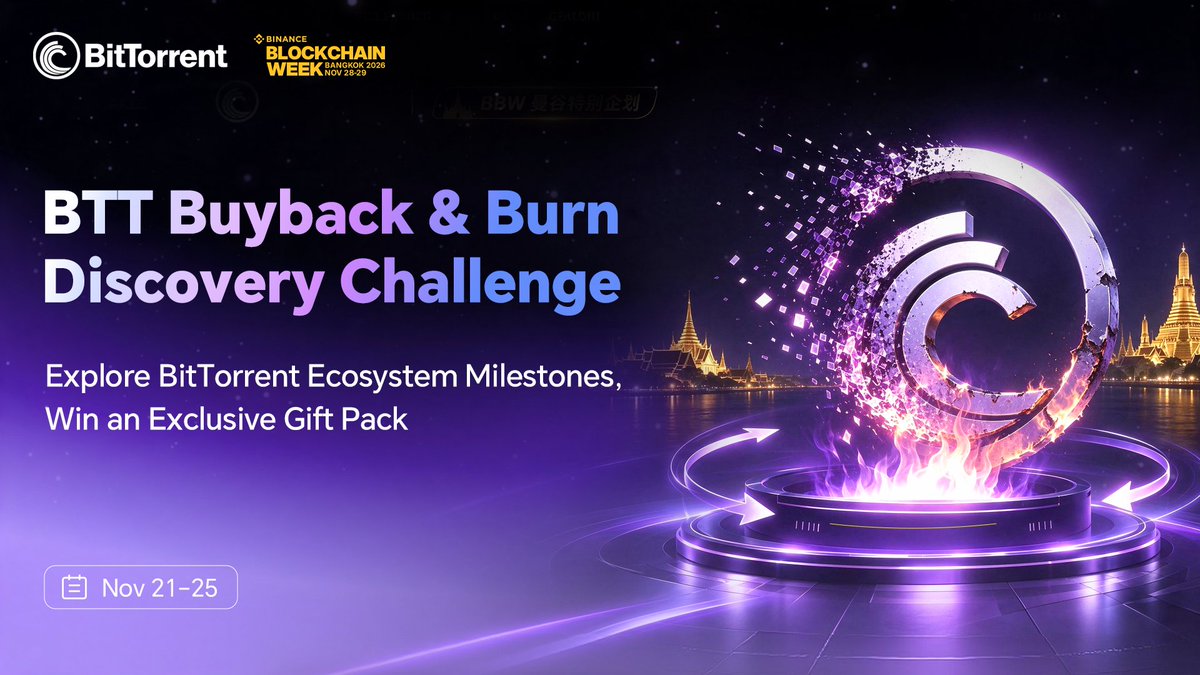
Following the master brand upgrade, BitTorrent has established a deflationary economic model through the first quarterly $BTT buyback and burn.
Verify the $BTT on-chain burn data to join the BBW giveaway. 10 #TRONEco merch bundles are available from Nov 21 to 25.
How to participate:
▫️ Follow @BitTorrent, like, and QRT.
▫️ Take a screenshot of the data page: https://t.co/CZyk83LmkQ
▫️ Reply with the screenshot, tag 3 friends, and the exact text: "BitTorrent has burned 21.62 trillion $BTT."
Please note that due to international logistics and shipping restrictions, the organizer reserves the right to adjust physical prizes, with final arrangements subject to official notice.
#BinanceBlockchainWeek #TRONEcoBBW
𝗙𝗜𝗙𝗧𝗬-𝗧𝗪𝗢 𝗕𝗨𝗬𝗕𝗔𝗖𝗞 𝗥𝗢𝗨𝗡𝗗𝗦 𝗦𝗨𝗚𝗚𝗘𝗦𝗧 𝗖𝗢𝗡𝗦𝗜𝗦𝗧𝗘𝗡𝗖𝗬, 𝗕𝗨𝗧 𝗧𝗛𝗘 𝗘𝗖𝗢𝗡𝗢𝗠𝗜𝗖𝗦 𝗕𝗘𝗛𝗜𝗡𝗗 𝗧𝗛𝗘 𝗕𝗨𝗥𝗡𝗦 𝗠𝗔𝗧𝗧𝗘𝗥 𝗠𝗢𝗥𝗘
Completing 52 buyback and burn rounds is a notable milestone for https://t.co/PvNJ5EJeMB, but the more important story is what repeated execution tells us about a token's economic design.
Buybacks and burns are often discussed through the lens of scarcity. Yet scarcity alone is not a complete economic thesis. The source of buyback funding, consistency of execution, ecosystem demand, and the utility surrounding a token all determine whether a supply-reduction mechanism has lasting significance.
𝗪𝗛𝗔𝗧 𝟱𝟮 𝗥𝗢𝗨𝗡𝗗𝗦 𝗠𝗘𝗔𝗡 𝗙𝗢𝗥 𝗧𝗛𝗘 𝗘𝗖𝗢𝗦𝗬𝗦𝗧𝗘𝗠
A recurring buyback and burn mechanism creates a process that can be observed over time rather than evaluated through a single event.
→ Repeated rounds provide a history of implementation and allow the community to examine cumulative progress.
→ Public burn records make the mechanism more transparent and give users an opportunity to independently verify the reported figures.
→ Supply reduction introduces a tokenomics dimension that becomes more meaningful when accompanied by ecosystem activity, demand, and sustainable funding.
The number of completed rounds establishes a record of execution, but it should not be confused with the amount of economic value created or the future performance of SUN.
𝗧𝗥𝗔𝗡𝗦𝗣𝗔𝗥𝗘𝗡𝗖𝗬 𝗜𝗦 𝗪𝗛𝗔𝗧 𝗠𝗔𝗞𝗘𝗦 𝗧𝗛𝗘 𝗠𝗘𝗖𝗛𝗔𝗡𝗜𝗦𝗠 𝗩𝗘𝗥𝗜𝗙𝗜𝗔𝗕𝗟𝗘
The cumulative burn dashboard is an important part of this process because it gives the community a reference point beyond promotional announcements.
When token mechanisms are publicly documented, holders can examine the progress, compare historical rounds, and develop their own understanding of how supply changes over time.
This distinction matters in DeFi. Credibility is strengthened when users can verify execution themselves instead of relying entirely on narratives surrounding tokenomics.
𝗧𝗛𝗘 𝗘𝗖𝗢𝗡𝗢𝗠𝗜𝗖𝗦 𝗠𝗨𝗦𝗧 𝗚𝗢 𝗕𝗘𝗬𝗢𝗡𝗗 𝗕𝗨𝗥𝗡𝗜𝗡𝗚
A burn reduces token supply, but its long-term implications depend on several interconnected factors.
If ecosystem participation weakens, demand declines, or the funding mechanism becomes unsustainable, reducing supply alone may not translate into lasting value.
The stronger model is one where ecosystem activity supports a sustainable economic mechanism while token utility and demand continue to develop alongside it.
That is the distinction between a visible token event and a meaningful long-term economic strategy.
𝗧𝗛𝗘 𝗕𝗜𝗚𝗚𝗘𝗥 𝗜𝗗𝗘𝗔
Fifty-two rounds represent more than a number on a dashboard. They provide a history that the community can inspect, question, and evaluate.
The real strength of a buyback and burn mechanism is not measured solely by how many tokens are removed from circulation, but by the economic foundation that allows the process to continue and the ecosystem value that develops around it.
Transparency makes the progress visible. Sustainable utility gives that progress context.
@justinsuntron@OfficialSUNio
#TRONEcoStar
52 rounds of $SUN Buyback & Burn completed, and counting! 🔥🌞
As part of the TRON ECO × BBW 2026 celebration, we’re inviting the community to explore $SUN’s burn progress and win exclusive rewards!
How to Join:
1️⃣ Follow @OfficialSUNio
2️⃣ Like and repost this post
3️⃣ Visit the dashboard, take a screenshot of the latest cumulative $SUN burn total, and share it in the comments with the following message:
"https://t.co/E4QwBX9M8G has bought back and burned XXX $SUN! https://t.co/i6y5o0eILn @Friend1@Friend2 @Friend3"
📅 Campaign Period: November 21–25, 2026
🎁 Rewards: 10 lucky winners will each receive a https://t.co/E4QwBX9M8G gift pack!
@BinanceWallet #BinanceBlockchainWeek #TRONEcoBBW
𝗔𝗜𝗡𝗙𝗧'𝗦 𝗕𝗥𝗢𝗔𝗗𝗘𝗥 𝗩𝗜𝗦𝗜𝗢𝗡 𝗥𝗘𝗤𝗨𝗜𝗥𝗘𝗦 𝗔 𝗖𝗢𝗡𝗡𝗘𝗖𝗧𝗘𝗗 𝗘𝗖𝗢𝗦𝗬𝗧𝗘𝗠, 𝗡𝗢𝗧 𝗝𝗨𝗦𝗧 𝗔 𝗦𝗜𝗡𝗚𝗟𝗘 𝗙𝗘𝗔𝗧𝗨𝗥𝗘
AINFT's evolution from NFT-centered infrastructure toward a broader AI × Web3 ecosystem is an ambitious transition.
The challenge is connecting its different layers into something users can understand and actually benefit from.
𝗧𝗛𝗘 𝗘𝗖𝗢𝗦𝗬𝗧𝗘𝗠 𝗖𝗢𝗡𝗡𝗘𝗖𝗧𝗜𝗢𝗡
➝ AI access for everyday users.
➝ Creative tools for digital production.
➝ NFT infrastructure for asset creation and discovery.
➝ Agent frameworks for task-oriented automation.
➝ Blockchain capabilities for verifiable interactions.
➝ Creator and community participation.
𝗪𝗛𝗔𝗧 𝗪𝗜𝗟𝗟 𝗗𝗘𝗧𝗘𝗥𝗠𝗜𝗡𝗘 𝗪𝗛𝗘𝗧𝗛𝗘𝗥 𝗜𝗧 𝗪𝗢𝗥𝗞𝗦
The ecosystem must avoid becoming a collection of disconnected features.
Integration should create understandable user journeys, practical use cases, and real reasons for one capability to complement another.
𝗧𝗛𝗘 𝗕𝗜𝗚𝗚𝗘𝗥 𝗜𝗗𝗘𝗔
An ecosystem is not defined by the number of components it contains.
It is defined by how effectively those components work together to produce value that individual products could not deliver as easily on their own.
🔗 https://t.co/GFAsFPXaRk
@AINFTcom@justinSuntron
#TRONEcoStar
𝗚𝗢𝗩𝗘𝗥𝗡𝗔𝗡𝗖𝗘 𝗜𝗦 𝗠𝗢𝗥𝗘 𝗠𝗘𝗔𝗡𝗜𝗡𝗚𝗙𝗨𝗟 𝗪𝗛𝗘𝗡 𝗣𝗔𝗥𝗧𝗜𝗖𝗜𝗣𝗔𝗧𝗜𝗢𝗡 𝗖𝗔𝗡 𝗜𝗡𝗙𝗟𝗨𝗘𝗡𝗖𝗘 𝗥𝗘𝗔𝗟 𝗗𝗘𝗖𝗜𝗦𝗜𝗢𝗡𝗦
A governance token is often discussed in terms of ownership or market activity.
But governance becomes more meaningful when token holders can participate in decisions that affect the direction of an ecosystem.
AINFT's governance vision raises an important question about how communities should contribute to protocol decisions.
𝗪𝗛𝗔𝗧 𝗚𝗢𝗢𝗗 𝗚𝗢𝗩𝗘𝗥𝗡𝗔𝗡𝗖𝗘 𝗥𝗘𝗤𝗨𝗜𝗥𝗘𝗦
➝ Proposals that are clearly explained.
➝ Transparent voting rules.
➝ Accessible information.
➝ Meaningful participation.
➝ Accountability for implementation.
➝ Reporting on decisions and outcomes.
𝗧𝗛𝗘 𝗥𝗜𝗦𝗞 𝗢𝗙 𝗧𝗢𝗞𝗘𝗡-𝗢𝗡𝗟𝗬 𝗣𝗔𝗥𝗧𝗜𝗖𝗜𝗣𝗔𝗧𝗜𝗢𝗡
Voting power may become concentrated.
Participation can be low.
Complex proposals can exclude ordinary holders.
Governance must therefore consider the quality of decision-making rather than treating voting activity as proof of decentralization.
𝗧𝗛𝗘 𝗕𝗜𝗚𝗚𝗘𝗥 𝗜𝗗𝗘𝗔
A community becomes more than an audience when it has meaningful opportunities to shape direction.
The real value of governance is measured by the quality, transparency, and consequences of participation.
🔗 https://t.co/GFAsFPXaRk
@AINFTcom@justinSuntron
#TRONEcoStar
𝗧𝗛𝗘 𝗗𝗘𝗩𝗘𝗟𝗢𝗣𝗘𝗥 𝗘𝗖𝗢𝗦𝗬𝗧𝗘𝗠 𝗜𝗦 𝗔 𝗖𝗥𝗜𝗧𝗜𝗖𝗔𝗟 𝗧𝗘𝗦𝗧 𝗢𝗙 𝗔𝗜𝗡𝗙𝗧'𝗦 𝗟𝗢𝗡𝗚-𝗧𝗘𝗥𝗠 𝗩𝗜𝗦𝗜𝗢𝗡
Products may attract users.
Developer infrastructure is what allows other people to build products on top of them.
AINFT's APIs, agent tools, documentation, SDK direction, and developer resources are important because they create opportunities for functionality beyond the original platform experience.
𝗪𝗛𝗔𝗧 𝗗𝗘𝗩𝗘𝗟𝗢𝗣𝗘𝗥𝗦 𝗡𝗘𝗘𝗗
➝ Clear documentation.
➝ Predictable APIs.
➝ Reliable examples.
➝ Testing environments.
➝ Understandable error responses.
➝ Version stability.
➝ Appropriate support for integration.
𝗪𝗛𝗬 𝗘𝗖𝗢𝗦𝗬𝗧𝗘𝗠 𝗕𝗨𝗜𝗟𝗗𝗜𝗡𝗚 𝗠𝗔𝗧𝗧𝗘𝗥𝗦
The number of developers who can successfully build and maintain useful applications may become a stronger indicator of infrastructure maturity than feature announcements alone.
Developer experience directly affects the speed and quality of innovation.
𝗧𝗛𝗘 𝗕𝗜𝗚𝗚𝗘𝗥 𝗜𝗗𝗘𝗔
The strongest platforms do not only create products for users.
They create foundations that allow others to develop new ideas, services, and applications the platform itself did not have to invent.
🔗 https://t.co/GFAsFPXaRk
@AINFTcom@justinSuntron
#TRONEcoStar
𝗧𝗛𝗘 𝗜𝗡𝗧𝗘𝗥𝗘𝗦𝗧𝗜𝗡𝗚 𝗣𝗔𝗥𝗧 𝗢𝗙 𝗔𝗜 × 𝗪𝗘𝗕𝟯 𝗜𝗦 𝗪𝗛𝗘𝗥𝗘 𝗧𝗛𝗘𝗬 𝗦𝗢𝗟𝗩𝗘 𝗘𝗔𝗖𝗛 𝗢𝗧𝗛𝗘𝗥'𝗦 𝗟𝗜𝗠𝗜𝗧𝗦
AI is good at interpreting information, generating content, organizing tasks, and helping users navigate complex workflows.
Blockchain infrastructure can provide asset ownership records, programmable transactions, verifiable execution, and open financial systems.
AINFT's ecosystem sits within this intersection.
𝗪𝗛𝗔𝗧 𝗘𝗔𝗖𝗛 𝗟𝗔𝗬𝗘𝗥 𝗖𝗔𝗡 𝗖𝗢𝗡𝗧𝗥𝗜𝗕𝗨𝗧𝗘
➝ AI can make interfaces more intuitive.
➝ Blockchain can provide verifiable records.
➝ Agents can connect decisions with supported actions.
➝ Digital assets can become part of programmable workflows.
➝ Users can interact through more accessible experiences.
𝗪𝗛𝗘𝗥𝗘 𝗧𝗛𝗘 𝗥𝗘𝗔𝗟 𝗖𝗛𝗔𝗟𝗟𝗘𝗡𝗚𝗘 𝗟𝗜𝗘𝗦
Integrating two technologies does not automatically produce useful products.
The experience must be coherent, security must remain strong, and the underlying use case must justify the added complexity.
𝗧𝗛𝗘 𝗕𝗜𝗚𝗚𝗘𝗥 𝗜𝗗𝗘𝗔
AI and Web3 become compelling when they solve complementary problems.
The objective is not to force two technologies together. It is to create an experience where their combination provides a genuine advantage.
🔗 https://t.co/GFAsFPXaRk
@AINFTcom@justinSuntron
#TRONEcoStar
𝗧𝗛𝗘 𝗕𝗘𝗦𝗧 𝗔𝗜 𝗙𝗘𝗔𝗧𝗨𝗥𝗘𝗦 𝗠𝗔𝗬 𝗕𝗘 𝗧𝗛𝗘 𝗢𝗡𝗘𝗦 𝗧𝗛𝗔𝗧 𝗦𝗢𝗟𝗩𝗘 𝗔 𝗥𝗘𝗔𝗟 𝗣𝗥𝗢𝗕𝗟𝗘𝗠
Technology can attract attention through impressive demonstrations.
But users ultimately return because a product helps them accomplish something.
AINFT's AI ecosystem should be evaluated through this practical lens.
𝗪𝗛𝗔𝗧 𝗥𝗘𝗔𝗟 𝗨𝗧𝗜𝗟𝗜𝗧𝗬 𝗟𝗢𝗢𝗞𝗦 𝗟𝗜𝗞𝗘
➝ A creator completing a visual concept.
➝ A developer debugging a difficult issue.
➝ A user understanding a blockchain transaction.
➝ A researcher comparing different sources.
➝ A business reducing repetitive work.
These are outcomes rather than feature lists.
𝗧𝗛𝗘 𝗣𝗥𝗢𝗗𝗨𝗖𝗧 𝗧𝗘𝗦𝗧
Can the platform make the task easier?
Does it improve quality?
Does it save time?
Is the result reliable enough to use?
Can the user understand what was produced?
These questions are more meaningful than simply counting how many tools are available.
𝗧𝗛𝗘 𝗕𝗜𝗚𝗚𝗘𝗥 𝗜𝗗𝗘𝗔
AI adoption will become stronger when platforms are judged by the real problems they help people solve.
Utility is demonstrated through outcomes, not announcements alone.
🔗 https://t.co/GFAsFPXaRk
@AINFTcom@justinSuntron
#TRONEcoStar
𝗪𝗘𝗕𝟯 𝗔𝗗𝗢𝗣𝗧𝗜𝗢𝗡 𝗖𝗔𝗡 𝗦𝗟𝗢𝗪 𝗗𝗢𝗪𝗡 𝗪𝗛𝗘𝗡 𝗧𝗛𝗘 𝗨𝗦𝗘𝗥 𝗠𝗨𝗦𝗧 𝗨𝗡𝗗𝗘𝗥𝗦𝗧𝗔𝗡𝗗 𝗧𝗢𝗢 𝗠𝗨𝗖𝗛 𝗧𝗘𝗖𝗛𝗡𝗜𝗖𝗔𝗟 𝗗𝗘𝗧𝗔𝗜𝗟
Web3 has powerful infrastructure.
Yet users may still encounter wallet setup, signing requests, network selection, transaction fees, contract interactions, and unfamiliar terminology before completing a simple task.
AINFT's AI × Web3 direction has an interesting opportunity to reduce the cognitive burden without hiding important consequences.
𝗪𝗛𝗔𝗧 𝗔𝗜 𝗖𝗔𝗡 𝗛𝗘𝗟𝗣 𝗘𝗫𝗣𝗟𝗔𝗜𝗡
➝ Why a transaction is required.
➝ What a wallet signature means.
➝ Which network is being used.
➝ Why a fee is being charged.
➝ What an approval allows.
➝ What happens after execution.
𝗪𝗛𝗔𝗧 𝗔𝗜 𝗦𝗛𝗢𝗨𝗟𝗗 𝗡𝗢𝗧 𝗗𝗢
It should not obscure transaction details, fabricate assurances, or pressure users into approving actions they do not understand.
Simplification should preserve informed consent.
𝗧𝗛𝗘 𝗕𝗜𝗚𝗚𝗘𝗥 𝗜𝗗𝗘𝗔
AI can become a translation layer between complex blockchain infrastructure and everyday users.
The goal should not be to remove user understanding. It should be to make understanding easier to achieve.
🔗 https://t.co/GFAsFPXaRk
@AINFTcom@justinSuntron
#TRONEcoStar
𝗕𝗟𝗢𝗖𝗞𝗖𝗛𝗔𝗜𝗡 𝗧𝗥𝗔𝗡𝗦𝗣𝗔𝗥𝗘𝗡𝗖𝗬 𝗗𝗢𝗘𝗦 𝗡𝗢𝗧 𝗥𝗘𝗠𝗢𝗩𝗘 𝗧𝗛𝗘 𝗡𝗘𝗘𝗗 𝗙𝗢𝗥 𝗜𝗡𝗧𝗘𝗥𝗘𝗣𝗥𝗘𝗧𝗔𝗧𝗜𝗢𝗡
One of the advantages of blockchain infrastructure is the ability to inspect transactions and recorded activity.
But raw information can be difficult to interpret.
A transaction hash does not automatically explain the user's experience, the economic purpose of an operation, or the risks associated with the action.
AINFT's blockchain-oriented ecosystem provides an opportunity to think about the difference between transparent information and understandable information.
𝗪𝗛𝗔𝗧 𝗔 𝗨𝗦𝗘𝗙𝗨𝗟 𝗘𝗫𝗣𝗟𝗔𝗡𝗔𝗧𝗜𝗢𝗡 𝗦𝗛𝗢𝗨𝗟𝗗 𝗜𝗡𝗖𝗟𝗨𝗗𝗘
➝ What happened.
➝ Which assets were involved.
➝ What the operation was intended to achieve.
➝ What fees were incurred.
➝ What risks or consequences may remain.
𝗪𝗛𝗬 𝗧𝗛𝗜𝗦 𝗠𝗔𝗧𝗧𝗘𝗥𝗦
Interpretation makes information actionable.
Users need the ability to move from inspecting technical records to understanding the implications of those records.
𝗧𝗛𝗘 𝗕𝗜𝗚𝗚𝗘𝗥 𝗜𝗗𝗘𝗔
Transparency is the foundation.
Comprehension is what allows transparency to create real value for the people interacting with the system.
🔗 https://t.co/GFAsFPXaRk
@AINFTcom@justinSuntron
#TRONEcoStar
𝗔𝗜 𝗜𝗡𝗙𝗥𝗔𝗦𝗧𝗥𝗨𝗖𝗧𝗨𝗥𝗘 𝗦𝗛𝗢𝗨𝗟𝗗 𝗠𝗔𝗞𝗘 𝗘𝗫𝗣𝗘𝗥𝗜𝗘𝗡𝗧𝗔𝗧𝗜𝗢𝗡 𝗔𝗙𝗙𝗢𝗥𝗗𝗔𝗕𝗟𝗘, 𝗡𝗢𝗧 𝗝𝗨𝗦𝗧 𝗔𝗖𝗖𝗘𝗦𝗦𝗜𝗕𝗟𝗘
Access is the first step.
Experimentation is what allows users to discover the practical value of AI.
When testing an idea requires expensive usage, confusing payment systems, or complicated onboarding, users may abandon exploration before they understand what the technology can offer.
AINFT's gateway approach is relevant to this challenge.
𝗪𝗛𝗔𝗧 𝗔 𝗚𝗢𝗢𝗗 𝗘𝗫𝗣𝗘𝗥𝗜𝗘𝗡𝗖𝗘 𝗦𝗛𝗢𝗨𝗟𝗗 𝗣𝗥𝗢𝗩𝗜𝗗𝗘
➝ Clear access pathways.
➝ Transparent usage information.
➝ Appropriate model options.
➝ Predictable payment experiences.
➝ Easy opportunities to compare results.
𝗧𝗛𝗘 𝗖𝗢𝗡𝗦𝗘𝗤𝗨𝗘𝗡𝗖𝗘 𝗢𝗙 𝗟𝗢𝗪𝗘𝗥 𝗙𝗥𝗜𝗖𝗧𝗜𝗢𝗡
More experimentation can help users develop better workflows and discover productive applications.
However, accessibility must be paired with responsible usage, clear cost expectations, and the ability to understand limitations.
𝗧𝗛𝗘 𝗕𝗜𝗚𝗚𝗘𝗥 𝗜𝗗𝗘𝗔
The next stage of AI adoption may be driven by how easily people can test, learn, refine, and eventually build something useful.
🔗 https://t.co/GFAsFPXaRk
@AINFTcom@justinSuntron
#TRONEcoStar
𝗧𝗛𝗘 𝗩𝗔𝗟𝗨𝗘 𝗢𝗙 𝗔𝗜 𝗠𝗔𝗬 𝗕𝗘 𝗗𝗜𝗙𝗙𝗘𝗥𝗘𝗡𝗧 𝗙𝗢𝗥 𝗘𝗩𝗘𝗥𝗬 𝗨𝗦𝗘𝗥
AI adoption is often discussed as though everyone is trying to accomplish the same thing.
In reality, a student may need explanations, a developer may need debugging assistance, an artist may need visual exploration, and a business may need workflow efficiency.
AINFT's multi-model ecosystem has an opportunity to serve this diversity without forcing users into a single use case.
𝗪𝗛𝗬 𝗗𝗜𝗩𝗘𝗥𝗦𝗜𝗧𝗬 𝗢𝗙 𝗨𝗦𝗘 𝗠𝗔𝗧𝗧𝗘𝗥𝗦
➝ Different users have different knowledge levels.
➝ Different tasks require different capabilities.
➝ Different workflows have different cost constraints.
➝ Different people value different types of output.
𝗪𝗛𝗔𝗧 𝗔 𝗣𝗟𝗔𝗧𝗙𝗢𝗥𝗠 𝗦𝗛𝗢𝗨𝗟𝗗 𝗔𝗩𝗢𝗜𝗗
A single interface should not make every user feel that they must become an AI specialist before receiving value.
Clear onboarding, understandable tools, and appropriate defaults can help reduce that barrier.
𝗧𝗛𝗘 𝗕𝗜𝗚𝗚𝗘𝗥 𝗜𝗗𝗘𝗔
AI becomes more inclusive when it adapts to the needs of people rather than requiring everyone to adapt to the complexity of AI.
🔗 https://t.co/GFAsFPXaRk
@AINFTcom@justinSuntron
#TRONEcoStar
𝗠𝗢𝗗𝗘𝗟 𝗙𝗔𝗟𝗟𝗕𝗔𝗖𝗞𝗦 𝗖𝗔𝗡 𝗣𝗥𝗘𝗩𝗘𝗡𝗧 𝗔 𝗦𝗜𝗡𝗚𝗟𝗘 𝗣𝗥𝗢𝗩𝗜𝗗𝗘𝗥 𝗙𝗥𝗢𝗠 𝗕𝗘𝗖𝗢𝗠𝗜𝗡𝗚 𝗔 𝗦𝗜𝗡𝗚𝗟𝗘 𝗣𝗢𝗜𝗡𝗧 𝗢𝗙 𝗙𝗔𝗜𝗟𝗨𝗥𝗘
AI-powered workflows increasingly depend on external model providers.
An outage, rate limit, model retirement, or unexpected service degradation can interrupt the entire workflow.
AINFT's multi-provider AI ecosystem makes resilience an important consideration.
𝗪𝗛𝗔𝗧 𝗙𝗔𝗟𝗟𝗕𝗔𝗖𝗞 𝗗𝗘𝗦𝗜𝗚𝗡 𝗖𝗔𝗡 𝗢𝗙𝗙𝗘𝗥
➝ Alternative models for appropriate tasks.
➝ Reduced dependency on a single endpoint.
➝ Better continuity during provider disruptions.
➝ Flexibility when cost or latency changes.
𝗧𝗛𝗘 𝗙𝗔𝗟𝗟𝗕𝗔𝗖𝗞 𝗧𝗥𝗔𝗗𝗘-𝗢𝗙𝗙
Different models can produce different outputs.
A fallback is not automatically equivalent to the original. Critical workflows may require revalidation, and switching models during a task could alter quality, structure, or interpretation.
𝗧𝗛𝗘 𝗕𝗜𝗚𝗚𝗘𝗥 𝗜𝗗𝗘𝗔
Resilience comes from having alternatives and understanding their differences.
AI infrastructure should not only make powerful capabilities accessible. It should also prepare users for the reality that services change and disruptions happen.
🔗 https://t.co/GFAsFPXaRk
@AINFTcom@justinSuntron
#TRONEcoStar
𝗧𝗛𝗘 𝗙𝗨𝗧𝗨𝗥𝗘 𝗢𝗙 𝗔𝗜 𝗔𝗖𝗖𝗘𝗦𝗦 𝗠𝗔𝗬 𝗕𝗘 𝗔𝗕𝗢𝗨𝗧 𝗦𝗘𝗟𝗘𝗖𝗧𝗜𝗢𝗡 𝗥𝗔𝗧𝗛𝗘𝗥 𝗧𝗛𝗔𝗡 𝗦𝗖𝗔𝗥𝗖𝗜𝗧𝗬
AI capability is expanding rapidly.
The challenge for users is becoming less about whether a model exists and more about whether the right capability is accessible when it is needed.
AINFT's model gateway approach can help make AI selection more flexible, but the long-term value lies in helping users navigate that choice.
𝗪𝗛𝗔𝗧 𝗧𝗛𝗘 𝗨𝗦𝗘𝗥 𝗡𝗘𝗘𝗗𝗦
➝ The appropriate model for the task.
➝ A clear understanding of limitations.
➝ Predictable access.
➝ Transparent usage cost.
➝ A convenient workflow.
➝ Reliable alternatives when a service changes.
𝗧𝗛𝗘 𝗖𝗛𝗔𝗟𝗟𝗘𝗡𝗚𝗘 𝗢𝗙 𝗔𝗕𝗨𝗡𝗗𝗔𝗡𝗖𝗘
More choices can create confusion if they are poorly organized.
AI platforms need to make selection meaningful by providing understandable information and reducing the cognitive burden of navigating an expanding catalog.
𝗧𝗛𝗘 𝗕𝗜𝗚𝗚𝗘𝗥 𝗜𝗗𝗘𝗔
Access is not simply the number of models available.
Access means making the right capabilities understandable, usable, and practical for real people.
🔗 https://t.co/GFAsFPXaRk
@AINFTcom@justinSuntron
#TRONEcoStar
𝗔𝗜 𝗨𝗦𝗘𝗥 𝗘𝗫𝗣𝗘𝗥𝗜𝗘𝗡𝗖𝗘 𝗖𝗔𝗡 𝗙𝗔𝗜𝗟 𝗕𝗘𝗖𝗔𝗨𝗦𝗘 𝗢𝗙 𝗦𝗠𝗔𝗟𝗟 𝗗𝗘𝗦𝗜𝗚𝗡 𝗗𝗘𝗖𝗜𝗦𝗜𝗢𝗡𝗦
People often focus on model intelligence while overlooking the interface.
Confusing navigation, unclear loading states, unexpected errors, hidden costs, or difficult account management can make a technically powerful platform frustrating to use.
AINFT's expanding AI experience is a reminder that infrastructure and interface quality must evolve together.
𝗧𝗛𝗘 𝗦𝗠𝗔𝗟𝗟 𝗗𝗘𝗧𝗔𝗜𝗟𝗦 𝗧𝗛𝗔𝗧 𝗠𝗔𝗧𝗧𝗘𝗥
➝ Clear feedback when a task is processing.
➝ Honest indication when an operation fails.
➝ Understandable usage and billing information.
➝ Accessible controls.
➝ Easy recovery from errors.
➝ Predictable navigation.
𝗪𝗛𝗬 𝗨𝗫 𝗜𝗦 𝗡𝗢𝗧 𝗝𝗨𝗦𝗧 𝗗𝗘𝗖𝗢𝗥𝗔𝗧𝗜𝗢𝗡
Interface design influences user behavior.
A confusing approval screen can create mistakes. A misleading loading state can encourage duplicate submissions. A poorly explained fee can damage trust.
𝗧𝗛𝗘 𝗕𝗜𝗚𝗚𝗘𝗥 𝗜𝗗𝗘𝗔
Good AI infrastructure is not only powerful behind the scenes.
It must also communicate clearly with the people using it, especially when actions, costs, or consequences are involved.
🔗 https://t.co/GFAsFPXaRk
@AINFTcom@justinSuntron
#TRONEcoStar
𝗧𝗛𝗘 𝗡𝗘𝗫𝗧 𝗖𝗛𝗔𝗣𝗧𝗘𝗥 𝗢𝗙 𝗔𝗜𝗡𝗙𝗧 𝗦𝗛𝗢𝗨𝗟𝗗 𝗕𝗘 𝗠𝗘𝗔𝗦𝗨𝗥𝗘𝗗 𝗕𝗬 𝗪𝗛𝗔𝗧 𝗣𝗘𝗢𝗣𝗟𝗘 𝗖𝗔𝗡 𝗔𝗖𝗛𝗜𝗘𝗩𝗘
The AI × Web3 narrative is easy to describe.
Making it useful is the harder work.
AINFT's ambition connects several different areas: intelligent interfaces, model access, digital art, NFTs, agent systems, blockchain interaction, and creator infrastructure.
The opportunity is significant, but the outcome will depend on execution rather than narrative alone.
𝗪𝗛𝗔𝗧 𝗧𝗛𝗘 𝗘𝗖𝗢𝗦𝗬𝗧𝗘𝗠 𝗠𝗨𝗦𝗧 𝗗𝗘𝗟𝗜𝗩𝗘𝗥
➝ Reliable products.
➝ Clear and accessible interfaces.
➝ Useful AI capabilities.
➝ Responsible agent execution.
➝ Secure asset interactions.
➝ Sustainable creator participation.
➝ A developer environment that encourages real innovation.
𝗧𝗛𝗘 𝗥𝗘𝗔𝗟 𝗧𝗘𝗦𝗧 𝗜𝗦 𝗔𝗗𝗢𝗣𝗧𝗜𝗢𝗡
Can users solve meaningful problems?
Can creators reach new audiences?
Can developers build applications that people actually need?
Can the infrastructure remain reliable as complexity grows?
These are the questions that will matter over time.
𝗧𝗛𝗘 𝗕𝗜𝗚𝗚𝗘𝗥 𝗜𝗗𝗘𝗔
AINFT's future should not be defined by how many technologies it connects.
It should be defined by how much those connections improve the experience of creating, owning, building, and participating in the digital economy.
🔗 https://t.co/GFAsFPXaRk
@AINFTcom@justinSuntron
#TRONEcoStar
𝗔 𝗖𝗥𝗘𝗔𝗧𝗜𝗩𝗘 𝗣𝗟𝗔𝗧𝗙𝗢𝗥𝗠 𝗡𝗘𝗘𝗗𝗦 𝗧𝗢 𝗖𝗢𝗡𝗦𝗜𝗗𝗘𝗥 𝗧𝗛𝗘 𝗥𝗘𝗧𝗨𝗥𝗡 𝗝𝗢𝗨𝗥𝗡𝗘𝗬, 𝗡𝗢𝗧 𝗝𝗨𝗦𝗧 𝗧𝗛𝗘 𝗙𝗜𝗥𝗦𝗧 𝗦𝗘𝗦𝗦𝗜𝗢𝗡
A user may try an AI platform once because a feature looks exciting.
Whether that user returns depends on a different set of factors: the quality of results, clarity of controls, reliability, ease of access, and whether the platform genuinely helps solve recurring problems.
AINFT's AI gateway and creative ecosystem face the same long-term product challenge.
𝗪𝗛𝗔𝗧 𝗖𝗥𝗘𝗔𝗧𝗘𝗦 𝗥𝗘𝗧𝗨𝗥𝗡 𝗨𝗦𝗘
➝ Useful outcomes.
➝ Predictable experience.
➝ Clear model selection.
➝ Fair and understandable costs.
➝ Saved workflows or repeatable processes.
➝ A product that improves with user feedback.
𝗪𝗛𝗔𝗧 𝗦𝗛𝗢𝗨𝗟𝗗 𝗕𝗘 𝗠𝗘𝗔𝗦𝗨𝗥𝗘𝗗
A growing user count may be useful, but retention, successful task completion, and user satisfaction can reveal whether the platform is becoming part of people's actual workflow.
𝗧𝗛𝗘 𝗕𝗜𝗚𝗚𝗘𝗥 𝗜𝗗𝗘𝗔
Sustainable AI adoption is not only about attracting curiosity.
It is about becoming useful enough that people choose the product again when they have a real task to complete.
🔗 https://t.co/GFAsFPXaRk
@AINFTcom@justinSuntron
#TRONEcoStar
𝗧𝗛𝗘 𝗖𝗥𝗘𝗔𝗧𝗢𝗥 𝗥𝗘𝗠𝗔𝗜𝗡𝗦 𝗧𝗛𝗘 𝗗𝗜𝗥𝗘𝗖𝗧𝗢𝗥 𝗘𝗩𝗘𝗡 𝗪𝗛𝗘𝗡 𝗔𝗜 𝗗𝗢𝗘𝗦 𝗧𝗛𝗘 𝗣𝗥𝗢𝗗𝗨𝗖𝗧𝗜𝗢𝗡
AI can generate images, videos, drafts, ideas, and variations.
But the abundance of output creates a new problem: deciding what is worth keeping.
AINFT's creative AI ecosystem should be understood through the role of human direction rather than the assumption that generation itself equals creativity.
𝗪𝗛𝗔𝗧 𝗧𝗛𝗘 𝗖𝗥𝗘𝗔𝗧𝗢𝗥 𝗦𝗧𝗜𝗟𝗟 𝗗𝗘𝗖𝗜𝗗𝗘𝗦
➝ The concept.
➝ The intention.
➝ The style.
➝ The selection.
➝ The editing.
➝ The meaning of the finished work.
𝗪𝗛𝗬 𝗧𝗛𝗜𝗦 𝗠𝗔𝗧𝗧𝗘𝗥𝗦
When production becomes easier, taste, judgment, originality, and direction may become more important differentiators.
AI can generate numerous possibilities. The creator is responsible for turning those possibilities into a coherent piece of work.
𝗧𝗛𝗘 𝗕𝗜𝗚𝗚𝗘𝗥 𝗜𝗗𝗘𝗔
The strongest creative relationship with AI is not necessarily one where the human disappears.
It is one where technology expands what the human can explore while the human remains responsible for the vision.
🔗 https://t.co/GFAsFPXaRk
@AINFTcom@justinSuntron
#TRONEcoStar
𝗔𝗜 𝗩𝗜𝗗𝗘𝗢 𝗠𝗔𝗬 𝗕𝗘 𝗕𝗘𝗦𝗧 𝗔𝗦 𝗔 𝗣𝗥𝗢𝗧𝗢𝗧𝗬𝗣𝗜𝗡𝗚 𝗧𝗢𝗢𝗟 𝗕𝗘𝗙𝗢𝗥𝗘 𝗜𝗧 𝗕𝗘𝗖𝗢𝗠𝗘𝗦 𝗔 𝗣𝗥𝗢𝗗𝗨𝗖𝗧𝗜𝗢𝗡 𝗧𝗢𝗢𝗟
Generative video is changing the economics of visual experimentation.
A creator can test scenes, explore transitions, examine atmosphere, and communicate a visual idea without beginning with a traditional production pipeline.
AINFT's AI video capabilities open interesting possibilities for early-stage creative development.
𝗪𝗛𝗘𝗥𝗘 𝗧𝗛𝗘 𝗧𝗢𝗢𝗟 𝗖𝗔𝗡 𝗔𝗗𝗗 𝗩𝗔𝗟𝗨𝗘
➝ Rapid concept visualization.
➝ Early storyboard exploration.
➝ Mood and scene experimentation.
➝ Draft promotional visuals.
➝ Creative direction testing.
𝗪𝗛𝗘𝗥𝗘 𝗛𝗨𝗠𝗔𝗡 𝗪𝗢𝗥𝗞 𝗥𝗘𝗠𝗔𝗜𝗡𝗦 𝗜𝗠𝗣𝗢𝗥𝗧𝗔𝗡𝗧
Consistency, editing, timing, narrative coherence, visual continuity, and factual accuracy may still require significant intervention.
A generated clip is often a starting point rather than a finished production.
𝗧𝗛𝗘 𝗕𝗜𝗚𝗚𝗘𝗥 𝗜𝗗𝗘𝗔
AI video may change who can experiment with cinematic ideas.
The real creative advantage comes from combining faster iteration with a clear vision, disciplined selection, and deliberate refinement.
🔗 https://t.co/GFAsFPXaRk
@AINFTcom@justinSuntron
#TRONEcoStar