Easily most exploited instruments at disposal of both Tripoli & Benghazi admins...
Subsidised fuel system in place since before 2011 in #Libya worth billions of USD feeds not only armed drug cartels through informal economy, its also a driver of conflict https://t.co/Gn4N5BVgzR
#ليبيا#libya
عضو مجلس إدارة مصرف ليبيا المركزي السابق مراجع غيث:
-ليبيا تنفق مليارات على دعم الوقود، فيما يُهرب جزء كبير منه عبر الحدود والبحر على حساب المال العام.
-نسبة تهريب الوقود قد تصل إلى 30% من الكميات المستوردة، وربما قبل وصول بعض الشحنات إلى السوق المحلية.
-تسعيرة الوقود الحالية ما زالت مرتبطة بفترة كان فيها سعر الدولار نحو 1.30 دينار، رغم التغيرات الكبيرة في سعر الصرف.
-من المنطقي مراجعة تسعيرة الوقود لسد الفجوة السعرية، دون أن يعني ذلك رفع الدعم أو إلغاؤه.
-يمكن أن يبلغ سعر لتر البنزين نحو 72 قرشا مع الإبقاء على الدعم.
-تكلفة استيراد لتر البنزين تقارب 5.30 دينار، بينما يباع محليا بـ15 قرشاً فقط.
-من الإجراءات العاجلة المقترحة قصر بيع الوقود على وسائل الدفع الإلكتروني للحد من التهريب والتلاعب.
-الجهات العامة مطالبة بسداد قيمة الوقود الذي تستهلكه من مخصصاتها المالية المعتمدة.
-على المصارف تشديد الرقابة بعدم قبول إيداعات نقدية أو صكوك كبيرة من شركات ومحطات الوقود إلا في حدود ضيقة ومبررة.
#Libya's National #Oil Corporation signed a final agreement with #UAE's Trasta on Monday ending the foreign partnership within LERCO and transferring the Ras Lanuf complex and refinery to full Libyan sovereignty and management. @Reuters#OOTT
“قد أصبح ملف ليبيا في المجلس عابر ويًطرح كنشرة إخبارية مكررة ودون تقدم حقيقي. يجب العمل على عدم تكرار أخطاء الماضي، والقيام بمراجعة موضوعية للسابق حتى لا يستمر نمط إدارة الأزمة فقط …وليس حلها، وهو ما أدى إلى البقاء في حلقة مفرغة، وتعميق فجوة الثقة بين الأطراف الليبية، وأزمة ثقة بين الشعب الليبي والمجتمع الدولي.…”
The Arkenu scheme still appears alive and well.
Worth noting that without ensuring that all of Libya's oil proceeds are deposited in the sovereign accounts of the NOC at the Libyan Foreign Bank, the US-sponsored unified spending agreement may as well be a paper promise.
Yet there still isnt a transparent mechanism by which NOC records & publishes these numbers.
Its important to scrutinise these figures particularly when the NOC have been questioned by CBL over accuracy of these numbers related to revenue
#libya#accountability#oil
Libya has increased oil production to 1.40 million (bpd),hits the highest level in over a decade which is can be prove crucial as supplies of crude oil in the region.
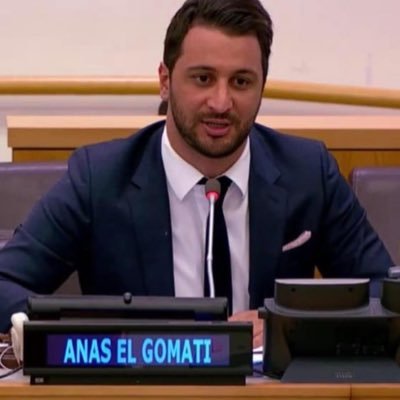
As US is in a war of choice in same region, its also attempting a form of diplomacy in #Libya with "the same transactional logic: stability without accountability, commercial arrangements w/o democratic legitimacy...so the #oil keeps moving" says @AGomati
https://t.co/mO6MFx8QBa
Tankers struck on the Mediterranean. Pipelines blown up in the Libyan desert. A deal keeping Europe’s oil flowing quietly collapsed this week. The world has one Hormuz.
It cannot survive two. My piece today for @AJEnglish https://t.co/mgb3uRJy9R
These deals are never neatly packaged where numbers all align in terms of debt & cost of cargo to balance books
Historically these 2 states havent enjoyed good relationship when it comes to politics of energy & finance
A fragile arrangement
#libya#egypt https://t.co/2pgFnIIKuI
Egypt is set to purchase two crude cargoes from Libya, each ~600,000 barrels (total ~1.2 million bbl), priced in line with Brent Crude Oil benchmarks and standard market practices.
This is not a structural shift—just routine supply diversification. Egypt has traditionally relied on Gulf sources, hence the current media noise.
On the other side, Libya had accumulated electricity import debts to Egypt exceeding $400M. About $350M was repaid in early March, reducing the outstanding balance to roughly $140M.
At current government contract pricing (~$85–95/bbl), this remaining balance is broadly equivalent to the value of ~1.2 million barrels—the same volume now being traded.
From an accounting perspective, a partial offset—settling part of the debt against the value of these oil cargoes—is a plausible and standard mechanism in state-to-state energy arrangements.
بخطاب يحمل الطابع السياسي والإعلامي موجها للرأي العام لا لاقامة العدل والمحاسبة وبعيدًا عن صيغة القرارات الحكومية الرسمية ليتضمن عبارات مثل (حملات واسعة) و (دس الإشاعات) بما يعكس توجها لاحتواء الغضب الشعبي والتظاهر بالحرص على مصلحة الليبيين. والاكتفاء بالحديث عن "إنهاء اتفاقية التطوير المشار إليها" دون التطرق إلى إجراءات قانونية أشمل كحلّ الشركة رغم أن اعتماد الاتفاقية في الأصل صدر بقرار رسمي.
وفي ظل غياب الثقه بين المواطن ومن يتصدرون المشهد يبقى التساؤل المهم: هل ستتم محاسبة كل المتورطين في الفساد؟ وهل ستتخذ خطوات حقيقية لاسترداد ما لا يقل عن 7 مليارات دولار من أموال الليبيين؟
"Arkenu exported large quantities of crude #oil by, the report said, relying on subsidiaries of well-established and large traders, such as the #UAE’s "based entity" BGN Energy" w/origins in #Turkey#pt#Libya#corruption
More info
https://t.co/YBadPSTlLc
https://t.co/mPewfSU5st
#UN panel’s investigations found that armed groups linked to Ibrahim Dbeibah and Saddam Haftar “have developed & honed their capability to exert control over the National #Oil Corp (NOC) at every level of the decision-making process”
#Libya#corruption https://t.co/VPxN5MDisw
Panel of experts' report seen by MEE says Arkenu, Libya's first privately owned oil company, is 'indirectly controlled' by Saddam Haftar
https://t.co/ZNr4ikg9kP
Not first risky salvage operation conducted in #Libya territorial waters in the last few years. Normally #Maritime authorities rely on capabilities on oil sector & its private sector to support with salvage ops. Overcoming sanctions possible…cargo not commercial grade anymore
Libya attempts high-risk salvage of sanctioned Russian LNG tanker after 3 March blast left it adrift. Normally such emergency efforts are remit of a handful specialised companies, but sanctions created layers of red tape difficult (though not impossible) to overcome.
See our analysis 👇👇
https://t.co/zDAgRcXgof
I hate to be the bearer of bad news but if infrastructure like this 👇 gets blown up, as of this moment it will take at least a decade to recover from this war - and the truth is that the world's energy picture is probably changed forever.
This single facility 👇produced roughly 20% of global LNG supply (https://t.co/76QERytREH) and, as of 2011, had taken $70 billion to build (https://t.co/iZvv2SvxBe).
What makes this even worse is that Iran's strike on this was retaliation after Israel attacked their South Pars gas field which draws from the same natural gas reservoir, which is the world's largest by far (9,700 km² - about the size of Qatar itself).
Heck, on the list of the 25 largest natural gas fields (https://t.co/m5TmQ2Zkc8) this single reservoir holds roughly 40% of their combined recoverable reserves - and is nearly 6 times bigger than the 2nd biggest field in the world. And, unlike many of the others on the list, it's only at 10% depletion (meaning 90% of the gas is still there).
Which means that, probably for many years, a huge share of the gas from the world's largest reservoir simply won't be extractable, as infrastructure on both sides - Qatar's and Iran's - has now been blown up.
From a global energy supply perspective, we're deep into worst-case scenario territory.
The timing of these events in the #energy sector cripple the economies of those that produce within the conflict zones & hurt consumer states that heavily rely on imports & low barrel price to maintain their grip on poorly run economies ie developing countries across MENA
#libya
Akakus Oil Operations manages the Sharara oil field sharing agreement between Libya’s National Oil Corporation, Spain’s Repsol, France’s Total, Austria’s OMV and Norway’s Equinor.
#OOTT#Libya
The complex that houses the world’s largest liquefied natural gas export plant has suffered “extensive damage” after an Iranian attack, hours after Tehran warned of threats to energy facilities across the Gulf. https://t.co/ooEvOfnKxz
Important to mention who might be unfamiliar with the leather developments, this is already part of country’s proven #gas reserves and not exploration in an undiscovered block.
#Libya#energy#offshore#pt
https://t.co/Iye4HijHIQ
Major offshore gas discovery in Libya.
@eni confirms two new gas finds — BESS-2 and BESS-3 — holding over 1 Tcf of gas, located near the Bahr Essalam field offshore Libya.
The proximity to existing infrastructure means fast-track development is possible, strengthening Libya’s gas supply to the domestic market and Europe via the Mediterranean corridor.
A significant milestone for Libya’s energy sector in cooperation with @NOC_Libya.
“Bahr Essalam South 2 and Bahr Essalam South 3 new wells are located 85 kilometres (53 miles) offshore, 16 kilometres south of Bahr Essalam field”
ENI NOC JV around Sabratha platform area, to be linked with Area A and E investments
#Libya Natural #Gas#energy#offshore
Eni discovers over 1 trillion cubic feet of gas offshore #Libya
The gas produced will be supplied to the Libyan domestic market and for export to #Italy#OOTT
https://t.co/cHayGS26Kb
Haftar "political life began with betrayal", history suggests that it may end in betrayal because to project or "transfer power in a system that depends on institutions that function only because no one admits who controls them" is the rise/downfall of #Libya'n leaders since 1969
"Each experience taught him the same truth: power does not require a throne. The space between what everyone knows and what no one can say, that is where he rules."
A hollow truth, a legacy to be exploited by his children & others
Super @AGomati#Libya
https://t.co/kXrEXH5o0Q
As bombs fall on Iran with the promise that force will deliver freedom, there is a country where that promise was already made, and broken. A CIA-trained warlord now controls Libya's oil, its migration routes to Europe, and the bases feeding Sudan's war. He holds no elected office. No one will tell you this story. So I wrote it. My @guardian long read.
https://t.co/Kp5Y3pjGwT
NOC #Hydrocarbon trades revenue still not reaching CBL behind scenes. While @Reuters Robert, Ahmed, @enestunagur report move away from Russian fuels...
But BGN & partners (mediators) still pulling strings on over 1/3 of major oil production #oott#Libya https://t.co/huWuvWoGTy
This pivot is being driven more by finance than politics.
With no earmarked budget, Libya’s NOC has had to seek upfront funding to import fuel. Creditors have tied support to stricter vetting of suppliers & fuel origin - accelerating the shift away from Russia & brokers like BGN.
https://t.co/x1iHfY3kAs
And if oil proceeds don't reach #Libya's CBL, its legitimate institution then #economy will cont to suffer & ppl will see further devaluation of Dinar due to dependence on being a petro-dollar state & exploited public sector budget...below might be reality
https://t.co/w1vI0T74N9
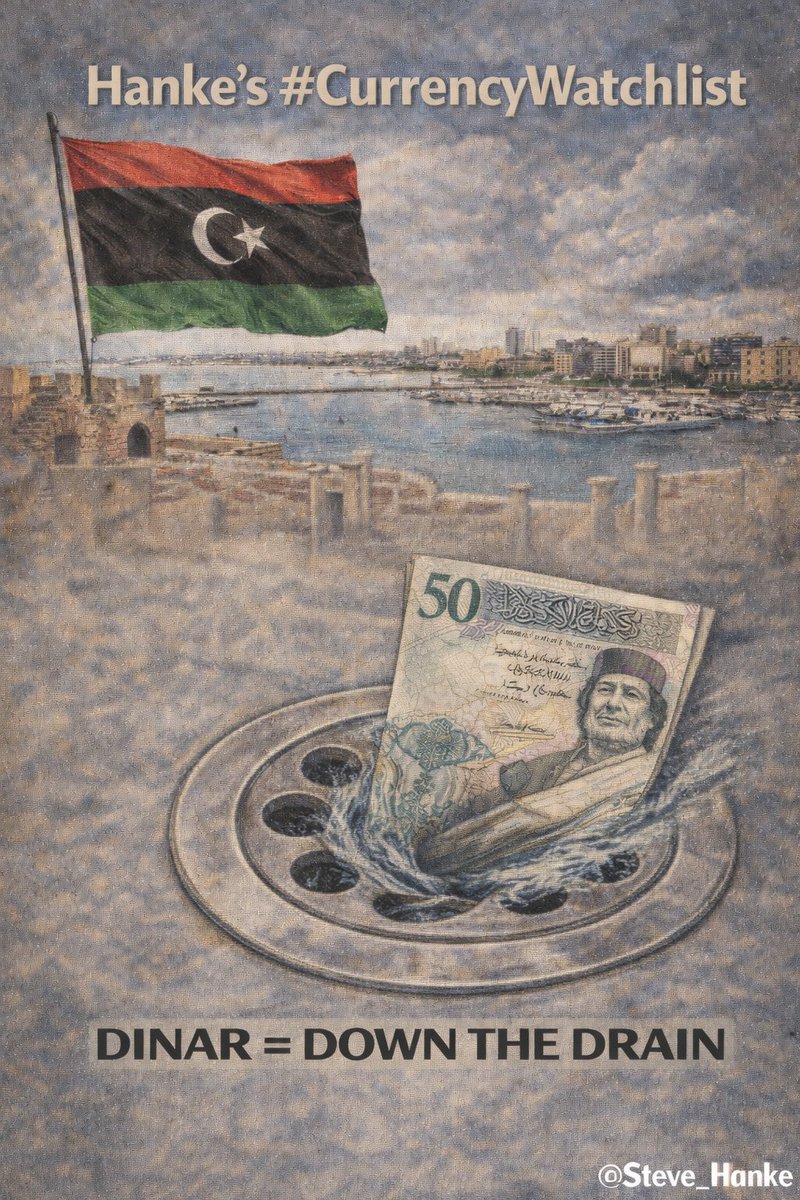
On this week's Hanke's #CurrencyWatchlist, the Libyan dinar ranks as the WORLD'S 5TH WORST currency.
The dinar has depreciated by over 29% against the USD in the past year.
IT’S TIME TO GET RID OF THE DINAR AND REPLACE IT WITH THE US DOLLAR.