The APC Campaign Council: Nigerians Deserve a New Direction
I have taken note of the recently constituted APC Presidential Campaign Council, whose composition offers Nigerians a clear picture of the choice before us in the 2027 general election.
The council brings together many of the same political actors who have supported, defended or participated in the present administration. Their coming together raises a fundamental question: what exactly are they asking Nigerians to vote for in 2027, a new beginning, or the continuation of the same system that has brought severe hardship to our people?
The truth is, I see the 2027 election as a struggle between the oppressed Nigerian masses and those who have benefited from, defended and sustained the system responsible for their hardship.
It is concerning to all well-meaning Nigerians whose across the country, their families are struggling with the rising cost of food and basic necessities. Young Nigerians face unemployment and diminishing opportunities. Farmers and businesses are struggling to survive, while millions continue to live with insecurity. Our education, healthcare and other essential public services remain under enormous pressure.
This ruling campaign structure presents another scenario between the oppressors and the oppressed. We must use it come 2027 election to reject continued oppression and demand accountable, people-centred governance. If Osun people can do it, so can all other parts of the country.
I particularly appeal to my brother, Senator Abdul’aziz Yari, who has accepted to serve as Director-General of the APC Presidential Campaign Council, to reflect deeply and reconsider accepting this responsibility.
As a former governor of Zamfara State and a prominent leader from the North-West, I believe Senator Yari has a clear understanding of the devastating consequences of insecurity, poverty, unemployment, displacement and the destruction of livelihoods in the region and the country at large.
I therefore will be surprised if in his good conscience, will lead a campaign whose principal objective is to secure the continuation of a government under which many of the people he once governed, and other innocent Nigerians remain trapped in these challenges?
There is also a serious institutional question concerning the inclusion of the Executive Chairman of the Nigeria Revenue Service, Dr Zacch Adedeji, and the Director-General of the Budget Office of the Federation, Dr Tanimu Yakubu Kurfi, in the campaign’s fundraising and finance structures.
The leadership of critical public institutions demands neutrality, integrity and public confidence. It is therefore legitimate to ask whether the responsibilities of senior officials entrusted with managing public revenue and national finances can appropriately coexist with senior partisan campaign roles.
The government and the APC should explain how such arrangements are consistent with institutional neutrality and public trust.
Ultimately, no campaign council is more powerful than the Nigerian people. - RMK
I can see the future very clearly.
I see a South East where millions of children are no longer educated merely to pass examinations, but to build things the world will buy.
I see 13- and 14-year-olds building toys for Christmas, designing automated home systems, creating energy solutions, manufacturing electronics, solving security issues through technology and building drones in their hundreds of thousands to solve real African problems.
And then something extraordinary will happen: children will become creators of wealth before they are old enough to look for jobs. Some will become multimillionaires as teenagers, not from speculation, but from knowledge, engineering and solving real problems.
This is bigger than education.
We are laying the foundation for an industrial revolution.
We are raising a generation that will not look at technology and ask, “Where can we import this from?”
They will ask, “How can we build it ourselves?”
I can already feel this wave beginning. The energy is building. The mindset is changing. And once millions of young minds discover that mathematics, science and engineering give them the power to create, it will be incredibly difficult to stop them.
So I will say this now, while it is still early:
Start investing in the South East.
A generation of builders is coming.
And they are going to build things Africa has never seen before.
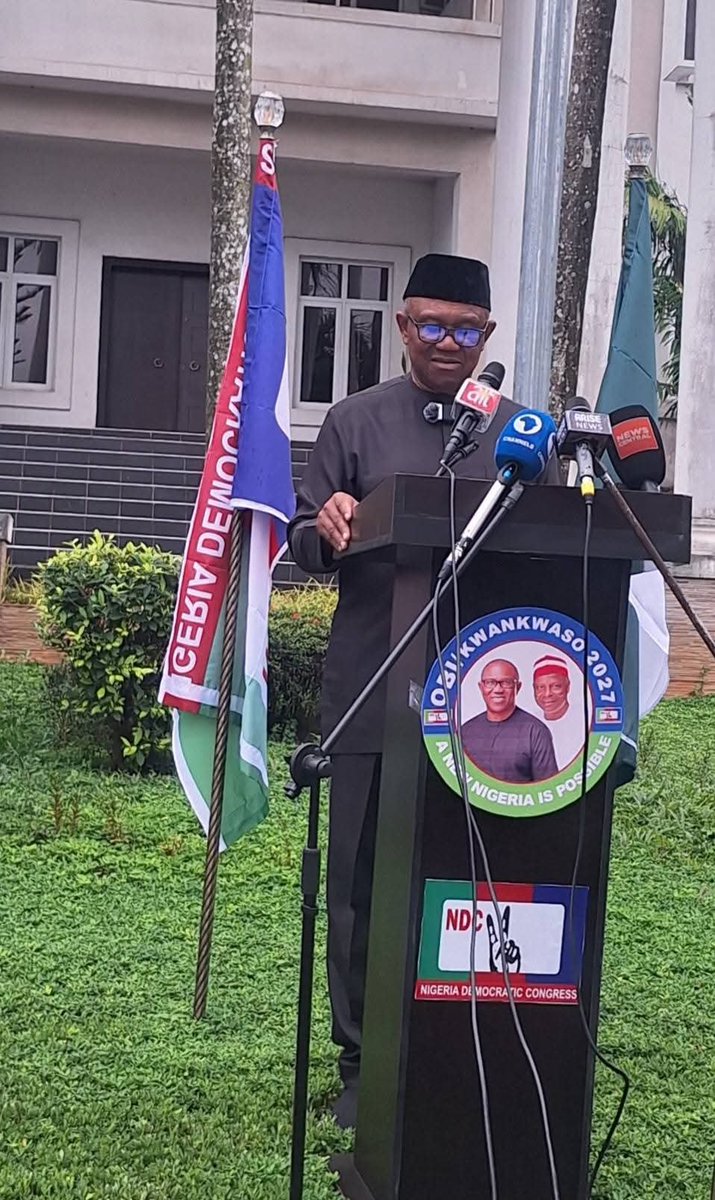
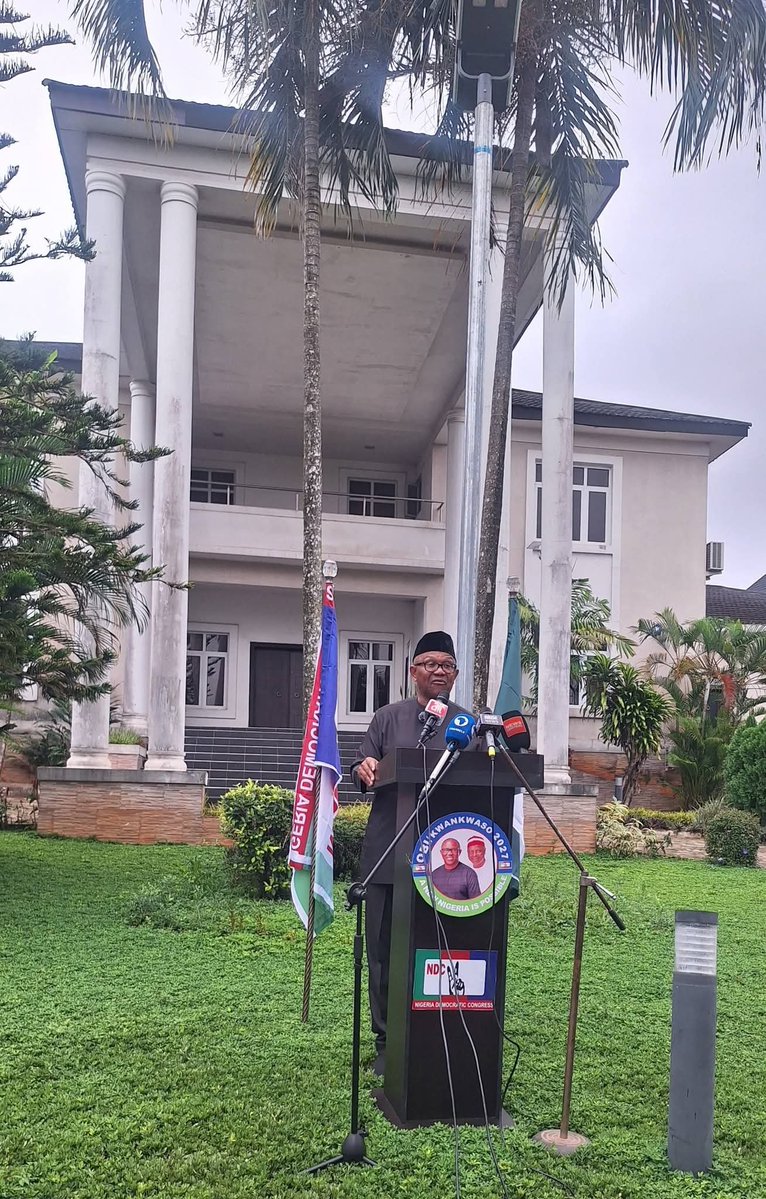
MY ADDRESS TO MARK THE COMMENCEMENT OF THE 2027 PRESIDENTIAL AND NATIONAL ASSEMBLY CAMPAIGNS
21 August 2026
Dear Compatriots,
Members of the Press,
Distinguished ladies and gentlemen,
Wednesday, 19 August 2026, marked the official start of the campaign period for the 2027 Presidential and National Assembly elections.
There is no doubt that this is a defining moment for our democracy. This moment gives Nigerians the opportunity to assess the records, ideas, and plans of those seeking their mandate to lead their country at a time of grave uncertainty in our rapidly changing world.
I consider myself quite privileged to be one of those seeking your mandate to deal with these challenges facing our country.
I enter this contest with one firm conviction: Nigeria can work, and Nigeria must work.
Nigeria faces several serious challenges. Some of them are indeed of existential proportions.
According to the IMF, 63%, or over 140 million Nigerians, live at or below the national poverty line, while humanitarian agencies estimate that 35 million people will need food assistance during the 2026 lean season. About 3.6 million Nigerians remain internally displaced, largely because of conflict and insecurity. Each year, millions of young people enter the labour market, yet too many struggle to find productive opportunities. Weak infrastructure, unreliable power, insecurity, and the excessive cost of doing business continue to burden households and constrain enterprise.
These are more than statistics. They reflect the daily realities of Nigerian families, farmers, workers, students, and businesses.
Yet I do not believe Nigeria lacks the ability to overcome these challenges. We have the people, resources, market, talent, and enterprise. What we must do now is turn these strengths into security, productivity, and shared prosperity.
LEADERSHIP MUST DELIVER RESULTS
My successful private-sector experience, studies in institutions of repute on policy and business matters, and my service as Governor of Anambra State have shaped my understanding of public leadership. Government must manage resources responsibly, set clear priorities, and measure the outcomes of its decisions. Public office is not a reward; it is a responsibility to the people.
In Anambra, I prioritised the foundations of long-term development: education, healthcare, infrastructure, fiscal discipline, and institutional capacity. I do not present that record as perfect, but as an experience from which Nigerians can draw their own conclusions.
Senator Rabiu Musa Kwankwaso brings a different but complementary governing experience.
As Governor of Kano State, he focused strongly on education, technical training, scholarships, infrastructure, and human-capital development. His administration’s investments in education and skills showed an understanding that the people are a state’s most important long-term resource.
Our experiences are different, but our conclusion is the same: Nigeria must invest in its people and manage public resources with discipline.
BUILDING AN ECONOMY THAT WORKS
Nigeria needs more than reactive reforms. We must focus on the questions that matter:
Are Nigerians better off than they were four years ago? Can they afford food, education, and healthcare? Can businesses produce, expand, and create jobs? Can young people find productive work? Can farmers work safely and get their produce to market?
Yesterday Saturday 15th August morning, I visited Grimard College of Nursing Sciences, Ayingba in Dekina LGA of Kogi State. A few years ago, the institution faced a threat to its accreditation due to the lack of a bus for student clinical placements.
It gives me great satisfaction to note that, thanks to my intervention and the subsequent provision of a school bus, the school has successfully retained its accreditation and continues to play a vital role in educating nurses and other healthcare professionals.
My visit today was a continuation of this commitment. I contributed ₦10 million towards establishing a Skills Laboratory Centre for the school.
I reaffirmed my ongoing support to the institution’s management, staff, and students. Specifically, I urged the students to dedicate themselves to their studies. A career in nursing offers extensive opportunities and equips individuals with the necessary knowledge and skills to excel and make significant contributions globally.
Every nation striving for sustainable development and an improved quality of life for its citizens must deliberately invest in two crucial sectors: education and healthcare. These are not areas to be overlooked. Governments have a responsibility to prioritise them, and it is equally important for conscientious individuals and organisations to support these efforts.
A renewed Nigeria is achievable. -PO
By Making Excuses for Unverified Certificates, We Are Planting Poison in the Soul of Our Society
A nation that tolerates unverified academic credentials at any level of leadership, regardless of who is involved, risks destroying the very standards upon which a society is built. The issue is not about an individual. It is about standards, accountability, and the values we choose to pass on to the next generation.
We cannot continue to excuse blurred, missing, questionable, or unverified credentials simply because they belong to someone we support. The process through which people attain positions of responsibility matters greatly. How we get into leadership is as important as what we do with leadership.
If we normalise the abandonment of basic verification today, tomorrow we may have professors who never attended a university, doctors who never studied medicine, and judges who never studied law.
That is the dangerous precedent we must never allow. Nigeria cannot sacrifice its future on the altar of today's transactional politics. We must build a society where truth is not partisan, standards are not negotiable, and accountability applies equally to everyone.
History will judge us not only by those we defended, but by the principles we were willing to defend. We must choose truth over convenience, standards over sentiments, and the future over political expediency.
A New Nigeria is possible, but only if we are willing to do the right thing, even when it is inconvenient. -PO
This 14-year-old boy, Eze Bryan Chinny from White Cloud College, Abakaliki, Ebonyi State, won today’s Sterling Bank Online Maths Quiz. He won the N500k prize.
He took first position at the elimination stage and also won the live show.
He is the best in Maths in Nigeria for the month of August.
He is in SS1, and is also the best student overall in his class. He is a genius.
What a star!
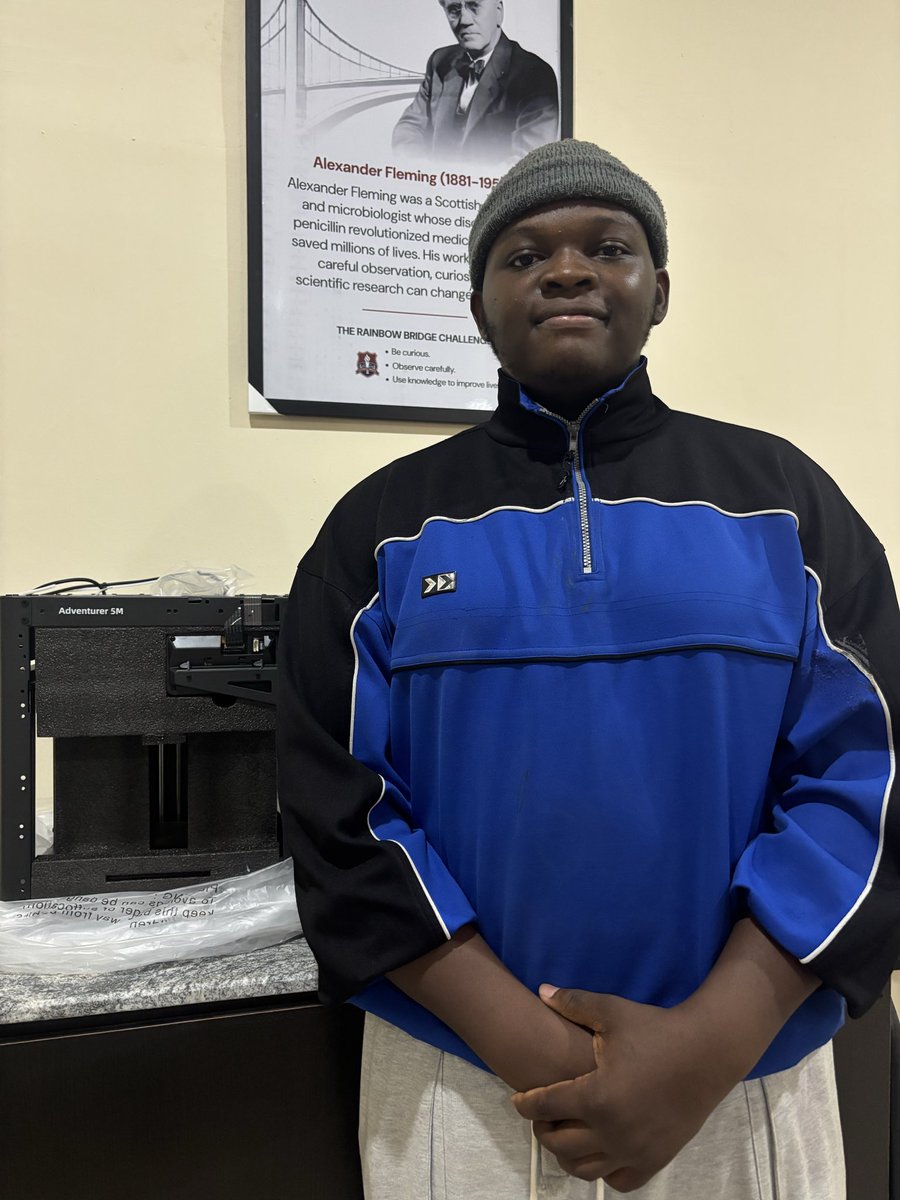
Kayode Williams built a drone from scratch, and he is just 20 years old.
He arrived in Enugu today and will be with us for the next 4 weeks to teach our children how to make real-life drones from scratch during the bootcamp.
What we want to solve is making low-cost drones to improve security in the East and also to dispatch emergency items like pallets, drugs, and other supplies.
These 4 weeks are going to be hot in Enugu.
We have geniuses hidden everywhere, and we will create millions of them in a few years.
When a Government Declares War on the Truth
President Donald Trump of America recently described Nigeria as “a now disgraced country.” The painful reality is that Nigeria’s challenges continue to deepen. Each passing day reveals deeper signs of decline, especially when a government becomes increasingly intolerant of truth and hostile to those who speak about the suffering of the people.
The Catholic Church has never functioned as an opposition party in Nigeria. Across military regimes and successive democratic administrations, the Catholic Bishops’ Conference of Nigeria (CBCN) has maintained a principled voice on national issues and the nation’s conscience, commending governments when they deserved commendation and speaking the truth whenever national conscience demanded it. Its interventions are driven by a moral obligation, rooted in Christian social teaching, to defend truth, justice, and the common good.
The same applies to Nigeria’s major religious organisations. Bodies such as Jama’atu Nasril Islam (JNI), the Supreme Council for Shari’ah in Nigeria (SCSN), the Christian Association of Nigeria (CAN), and the Nigerian Supreme Council for Islamic Affairs (NSCIA) have repeatedly raised concerns over economic hardship, inflation, and insecurity. Living among the people, religious leaders often encounter the suffering of citizens firsthand. They speak because they witness families struggling with rising food prices, unemployment, and the fear created by kidnappings and insecurity.
As leaders, we should be gracious enough to listen to people and organisations that speak the truth to us and genuinely criticise us when things are not going in the right direction. As Governor, I had the opportunity of working with a very strong Council of Traditional Rulers, led by the Obi of Onitsha, and religious bodies that consistently criticised me and offered suggestions. This contributed greatly to our success in Anambra State, especially in critical areas like education and health.
Against this background, the attacks on the CBCN, and especially on His Eminence, John Cardinal Onaiyekan, are deeply troubling. Even in 1998, when Pope John Paul II visited Nigeria and told General Abacha some hard truths, including about the incarceration of Chief Moshood Abiola, nobody vilified him.
During the inauguration of Pope Leo XIV in Rome, to demonstrate his purported commitment to and respect for the Catholic Church, President Bola Tinubu arrived in Rome days before the event, ahead of most other visiting dignitaries, including Catholics such as the U.S. Vice President, JD Vance. He participated in the liturgy, queued with other world leaders to greet the Holy Father, and displayed deep respect for the moral authority of the Church. Back in Nigeria, however, that posture has now changed completely.
What is playing out today also reveals how political leaders sometimes exploit religion and ethnicity to divide the people. Even when it was obvious that the CBCN was speaking on issues affecting Nigerians across religious and ethnic boundaries, aides to the President immediately reduced it to a “religious affair.” The question is: are insecurity, poverty, inflation, unemployment, and hardship problems exclusive to a particular faith? Do these challenges recognise religious or tribal boundaries?
The bishops merely expressed what millions of Nigerians experience daily: insecurity has worsened, poverty is deepening, inflation is crippling families, businesses are struggling, and hope is fading. These are realities echoed by religious leaders across the country, to whom successive governments gave thanks and promised to look into their observations.
Rather than address these concerns or explain the measures in place to ameliorate them, President Bola Ahmed Tinubu’s aides and supporters responded with vicious attacks, particularly against Cardinal John Onaiyekan, with little regard for his age, stature, and accomplishments.
I commend the Catholic Bishops' Conference of Nigeria (CBCN) for demonstrating courage and patriotism by drawing attention to the realities confronting our nation.
Their concerns regarding the rising cost of living, worsening insecurity, declining public confidence, and the hardship faced by millions of Nigerians are neither partisan nor isolated; they reflect the daily experiences of ordinary citizens across every region of our country.
Nigeria is blessed with abundant human and natural resources, yet millions of our people continue to struggle under the weight of economic hardship, unemployment, insecurity, poor access to quality education and healthcare, and diminishing opportunities. These challenges demand urgent, sincere, and people-centred responses from those entrusted with leadership.
I encourage all well-meaning Nigerians to continue constructively engaging the Federal Government and other leaders at all levels whenever the opportunity arises, advocating for good governance, accountability, and policies that prioritise the security, welfare, and prosperity of our people.
It is through such collective commitment and responsible leadership that we can build a more peaceful, united, and prosperous Nigeria.
May Almighty Allah continue to bless the Federal Republic of Nigeria. - RMK
When I look into his eyes, all I see is a man that's determined, not ready to back down and wouldn't let what happened in 2023 to repeat.
My people the liberation is here.
@MobilePunch@KateObi21111 Nigerians across Nigeria 🇳🇬 from the North to the South, and in diaspora back Bishops. Those supporting Tinubu are thieves looting Nigeria 🇳🇬 alongside Tinubu.
They will all perish.
Ladies and Gentlemen, Atiku Abubakar has released Fire 🔥, lets see how the APC would respond.
"Primary school NILL
Secondary school NILL
Then University degree, HOW?
2027, Let us vote for Character, Competence and not School forger and Drug Baron." -Atiku Abubakar
I think the opposition is ready, there won't be a repeat of 2023.
No monopoly of madness anymore.
PRESS RELEASE
02/08/2026
Timi Frank commends Catholic Bishops for telling Tinubu truth
Former Deputy National Publicity Secretary of the All Progressives Congress (APC), Comrade Timi Frank, has commended members of the Catholic Bishops’ Conference of Nigeria (CBCN) for their courage in telling President Bola Tinubu about the poor state of the economy and warning against one-party state.
Frank in a statement in Abuja, said the bishops deserved commendation for looking the President “in the face” and telling him what he described as the bitter truth about the state of the nation.
He urged other Christian and Muslim religious leaders to emulate the Catholic bishops by speaking truth to power and demanding accountability from the government.
“We commend the Catholic leaders for their courage. We have not seen this kind of courage from religious leaders in Nigeria for a long time. They were brave enough to look the President in the face and tell him the bitter truth,” Frank said.
He urged Tinubu to heed the bishops’ advice, saying doing so would save the President from further embarrassment.
“The President should heed their advice. By doing so, he will save himself from embarrassment. These are true leaders, and we expect other religious bodies to follow the example set by the Catholic leaders,” he said.
Frank, however, accused some religious leaders, particularly some Pentecostal leaders, of failing to speak truthfully to the government after visiting the Presidential Villa.
“Unfortunately, some religious leaders, particularly some Pentecostal leaders, go to the Villa, drink tea with the President and forget what they went there to say. They come back with envelopes and the story becomes different,” he alleged.
He said religious leaders should not restrict themselves to praying for the President when, according to him, they are aware of the challenges confronting the country.
“When they have the opportunity to tell the President the truth, they simply say they are praying for him. But they know the truth. They know the damage that has been done in this country. How long will they continue to sit and pray when they should be speaking the truth?” Frank asked.
The former APC chieftain also accused the Tinubu administration of worsening corruption, insecurity, poverty and unemployment, while alleging that the government had weakened democratic institutions and political parties.
“What legacy is President Tinubu going to leave behind? What will Nigerians remember about his administration when he leaves office?
“Unfortunately, the legacy Nigerians are seeing is corruption taken to another level and insecurity taken to another level. Poverty and unemployment have also reached unprecedented levels,” he said.
Frank further alleged that the administration was working towards manipulating the 2027 elections because, according to him, Tinubu would not win a free and fair election.
“He knows that if there is a free and fair election today, he is not going to come back. Instead of being desperate to destroy political parties and democratic institutions, the President should do the right thing: conduct free and fair elections,” he said.
He also accused the government of using the judiciary to weaken opposition political parties and urged the President to respect democratic institutions.
“He should stop doing everything possible to manipulate the electoral process, including using the judiciary to weaken or destroy opposition political parties. There is too much interference in the judiciary and in democratic institutions,” Frank said.
Frank also appealed to Muslim and other Christian leaders to demonstrate the same courage as the Catholic bishops by openly challenging government policies they considered harmful to Nigerians.
“We urge other religious leaders, both Christian and Muslim, to be courageous enough to follow the example of the Catholic leaders. They should look the President in the face and tell him the truth.
“
Schools attended as published by INEC:
Peter Obi:
1. St. Augustine's Primary School, Anambra, 1973
2. Christ the King College, 1978
3. University of Nigeria, Nsukka, 1984
Bola Tinubu:
1. Primary School - EMPTY
2. Secondary School - EMPTY
3. Higher School - B. Sc 1979
Idris Abdulrasheed Adeiza just shared his 200-level, 1st-semester result with me.
I discovered this star boy in a remote village in Okene, Kogi State in 2024.
I saw his zeal and determination and decided to take a bet on him. It worked out.
He is currently studying Software Engineering at the Federal University of Technology, Akure.
We have lots of stars hidden in remote places like Idris that are yet to be discovered.
Listen to this boy’s story. He attends a government school in Imo State.
We have transformed his life through Mathematics. He went from a novice to a pro in a short period of time.
Watch out for him. He is a star.
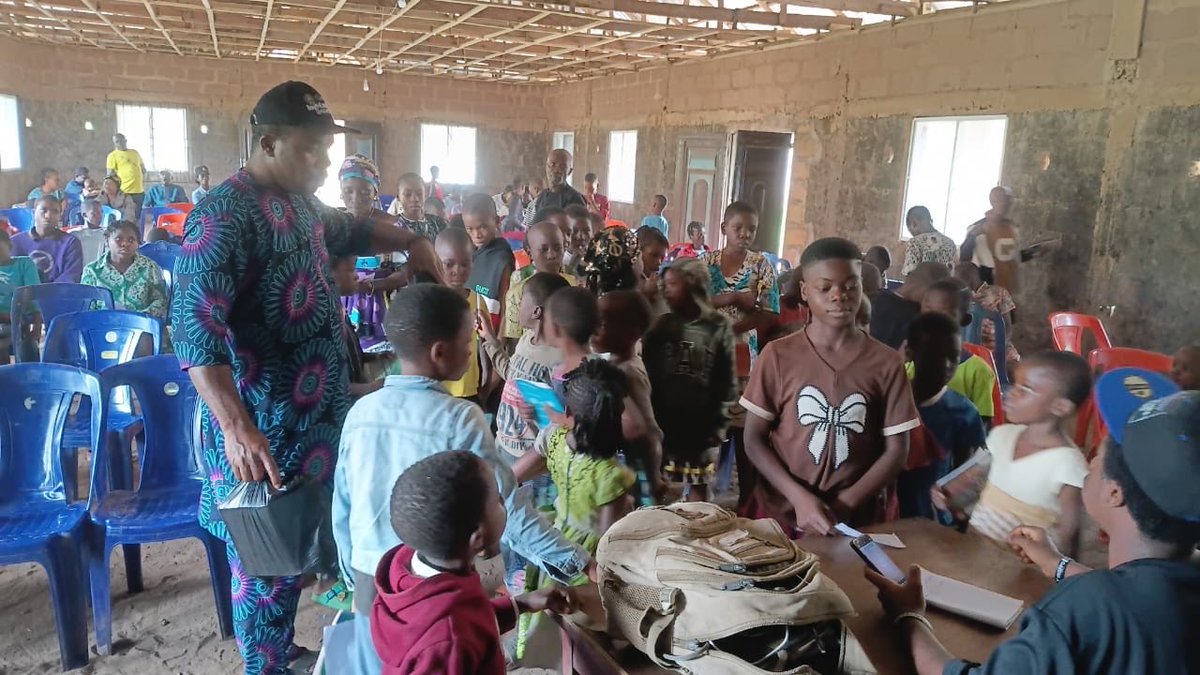
We gathered about 1,000 children across two community learning centres in Nwangele LGA, Imo State to learn the foundations in Maths:
Duru Nwaneri na Onyikwa Hall, Osogwu, Dim na Nume, Isu
Umunaba Hall, Isi Obiato, Dim na Nume, Isu
What happened surprised all of us.
The children were fully engaged, and word spread so quickly that children from neighbouring villages started coming to join the classes.
We honestly didn’t expect that.
At this rate, we may have to expand the experiment to more villages sooner than we planned.
I’m beginning to think this could be one practical way to bridge the learning gap between children in rural communities and those in more privileged areas.
We’re still learning and improving the model every day, but this is looking really promising.
What else do you think we should test as part of this experiment?