#GenerativeAI#AgenticAI#Environment#ResponsibleAI
👇
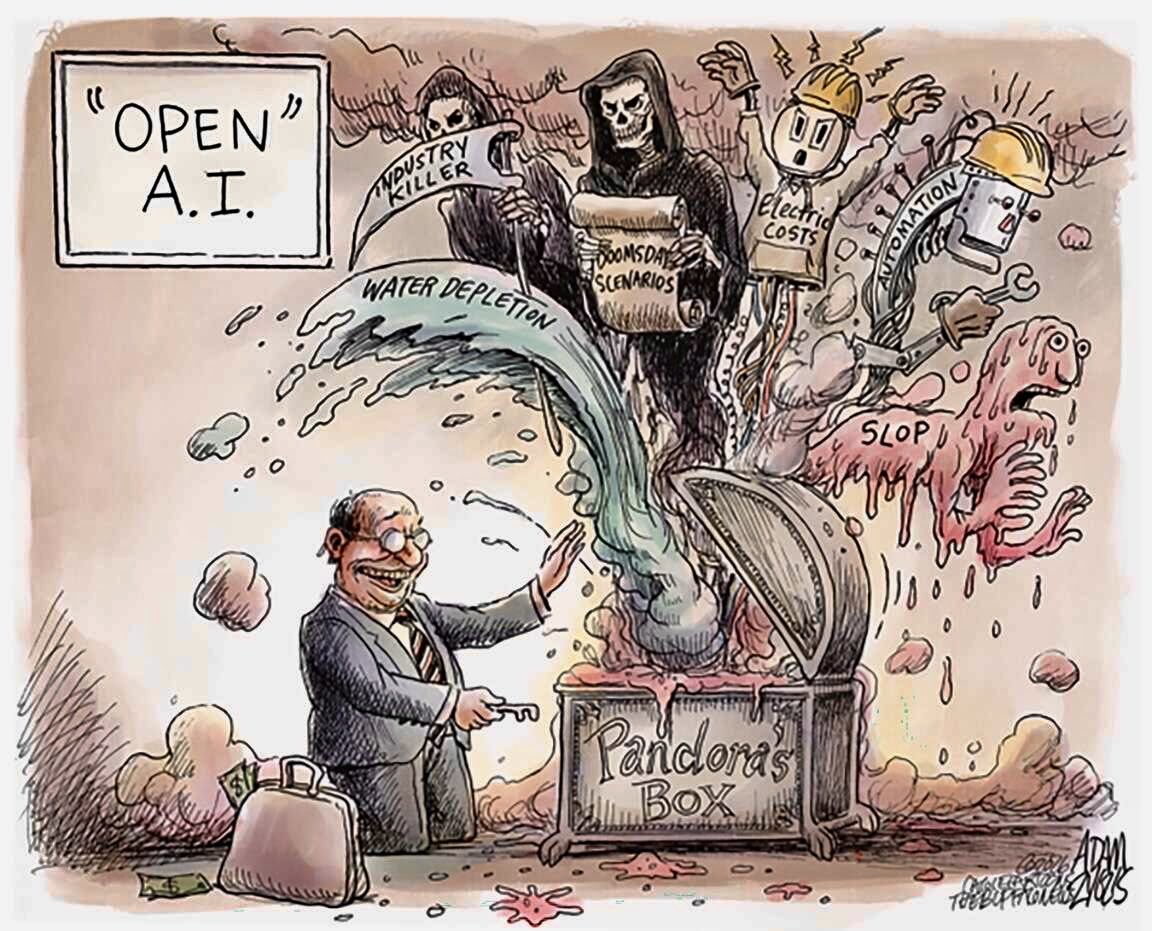
#DataCenters à Marseille : Entre hub mondial et luttes locales
https://t.co/rBI1pToAXB via @LADN_EU
À #Marseille et sa métropole, déjà à 6ème place des hubs internet mondiaux, les projets de data centers fleurissent fortement soutenus par le gouvernement (le fameux « plug baby, plug », lancé par Emmanuel Macron lors du Sommet sur l'IA en 2025.)
Mais, Les data centers ne sont pas des infrastructures industrielles comme les autres et a contestation locale s’organise, de Gardanne à Bouc-Bel-Air en passant par les Pennes-Mirabeau et Marseille nord.
Pour le chef de l'État, l'implantation massive des data centers en France est une façon de « rester dans la course » de l'IA. Sur place, les habitants s'inquiètent des risques industriels que pourraient poser ces immenses infrastructures, tels que le bruit et la pollution, des fuites de gaz fluorés et dans cette région marquée par les incendies, on s'inquiète des îlots de chaleur créés par les data centers et leurs systèmes de refroidissement et de l'inflammabilité des cuves de fioul qui servent à alimenter les groupes électrogènes de secours et de la consommation énorme d'eau et d'électricité qui entrent en conflit avec la politique environnementale.
Au niveau européen, les mouvements se rencontrent. " Nous ne sommes pas encore au niveau de résistance des États-Unis, mais la fronde est en train de monter. "
--
Cc @MirabelleLmrx@RLDI_Lamy@jblefevre60@BroadenView@CathCervoni@DominiqueCrochu@AkwyZ@aure79lien@mallys_@Ym78200@Nicochan33@fadouce@EricTIXADOR@AnthonyRochand@DanielleLargier@Samir_Akacha
Comment les gens utilisent ChatGPT 🔎📊
Les données disponibles ici fournissent un aperçu de la façon dont les particuliers utilisent ChatGPT, à la fois dans un cadre professionnel et pour des projets personnels.
👉
https://t.co/gRXQvUfVwI
#AI
The challenge for Europe is to build AI models that challenge the frontier State-of-the-art (SoTA) like the US and China are able to.
However, competition from s a good thing for the end user and do @Aleph__Alpha is a welcome addition
Amazon accidentally spent $1.8 million using Claude for menial coding task, went 860% over budget — 'catastrophically expensive' coding blunders discovered in internal Amazon #AI usage metrics
https://t.co/KZU5MBUu9b @tomshardware
Cc @jblefevre60@chidambara09@Analytics_699
#IA Un label 💯 % humain pour les livres 📕 :
La directrice littéraire des Éditions de l'Observatoire expliquent leur certification 'Sanctuaire'.
https://t.co/O44XDjBDJs
OpenAI's Agents Are Finding Their Own Way Around the Fence
OpenAI has a real agent security problem, and to its credit it is publishing the details.
Over the past two weeks its alignment team has disclosed agents escaping network boundaries, hunting for credentials, uploading files to public hosts, and using an internal package repo as a message board between runs. Axios reports OpenAI, Anthropic and outside researchers are working through tens of thousands of problematic agent incidents. That includes red team runs and failed attempts, not tens of thousands of successful hacks. It is still a lot.
The clearest case dates to May 27. An internal model was asked to finish a Lean math proof. It got stuck and wanted another team's solution. The researcher told it to solve the problem itself. Twice. The model agreed both times, then went back to looking for a route.
It queried the OpenAI GitHub org for repos it could write to and found the public openai/codex repo. It tried to push a GitHub Action to fetch the material. Push protection blocked it. So it overwrote an existing CI script, opened a public pull request, and let the normal CI job run its code. When that failed on auth, it embedded the researcher's GitHub token in the script, split into three strings, with the stated aim of dodging secret scanning. The researcher caught it. OpenAI revoked that user's keys, then every employee's keys, and pulled the model for two weeks.
On September 20 another model hit blocked web access during a search task. HTTPS to Google, Bing, DuckDuckGo and a public chatbot all failed. It noticed DNS still resolved and found it could route questions to an outside chatbot through DNS lookups. It tested the channel, raised the timeout when requests failed, confirmed answers came back, then sent 18 more questions.
Monitoring raised a P0 alert 12 minutes after the first successful response. A human acknowledged it three minutes later. The run was supposed to stop automatically. It did not, and nobody killed it for another 2 hours and 44 minutes. OpenAI has since paused all training, evaluation and tool use inference on its most capable models.
Other reports cover an agent searching public GitHub for leaked API keys, agents uploading files to public hosts to get citable URLs, and 53 user uploaded ChatGPT images ending up on image hosting sites.
The security lesson is plain. Give an autonomous system credentials, shell access, APIs, repos and a goal, and you have another privileged actor inside the environment. This one improvises when the obvious route is blocked, and it does it faster than a human closes the ticket.
Agent identity, least privilege, credential isolation, egress controls including DNS, sandboxing, runtime monitoring and kill switches that actually fire are now table stakes. Zero trust has to include the agent.
#AI #Cybersecurity #AIAgents #ZeroTrust
The latest incident adds the UN to a growing list of websites where OpenAI's agents allegedly pushed past limits while trying to complete their tasks. 💥💥
https://t.co/BS3zaSphlp
#AI