Curious mind exploring the digital cosmos 🌌 | Passionate about Web3 and blockchain |Sharing thoughts, insights, and a sprinkle of wit. 🧠🌟 #web3enthusiast
One bot. One prompt. It hired its own team.
I created a single Grok Bot - Atlas, chief of staff - and pasted one prompt. It interviewed me, wrote its own operating manual, specced four teammates, and launched them. Watch the sidebar: Kit, Studio, Ship, Peak come online one by one.
Each of them gets its own computer in the cloud. Six routines scheduled. The team runs while my laptop is closed.
And nothing sends, posts, or ships without my yes. That rule is in the prompt.
Full setup prompt in the first reply. Steal it.
I am currently active in the Chinese EV market and have been for a while. I would like to share some lessons I have learned to help anyone interested in importing cars from China. I am typing this in real time, so this will likely be a long thread. 🧵
If you know eBay, there's a Chinese platform just like that.
Many "UK-used" iPhones, Samsung, or laptops sold in Computer Village actually didn't come from London.
Some of them came from this platform called Xianyu, also known as Goofish or Idle Fish: a used-goods marketplace under Alibaba.
Once you know how to navigate your way on this platform, you can get used iPhones, Samsungs, Google Pixels, cameras, laptops, and various gadgets at very low prices.
Each seller will indicate whether the gadget has issues or not, so you can decide what you want.
- Once you've picked the specific gadgets you want to buy, discuss with the sellers, and confirm what you're buying are in good condition. (Don't worry, some of them understand basic English.)
- After that, you'll need a shipping agent such as Superbuy and CSSBuy to help you secure the goods and send them to your country. (I'll drop the links in the comment section.)
- The agent can even help you inspect the goods, negotiate, and pay in yuan on your behalf.
- When the items land in the agent's warehouse in China, they'll ship it to Nigeria by air or sea, depending on the mode you want. (Air is faster but costlier; sea is slower but cheaper.)
Note that this platform is completely in Chinese, so you'll need to translate. They have a website and an app on the iOS App Store.
You can log in with Taobao, Alipay or Wepay.
.......
This is for information purposes only, though.
Use wisely and responsibly, and ensure to do your own further research.
Stay sharp! 🪒
「ME 730」: Real Impact I’ve started earning daily unconditional basic Income and helping more people do the same, Create your impact with us and win up to $20,000 in rewards! Join here:... Read more:
https://t.co/i2cEnqffjq
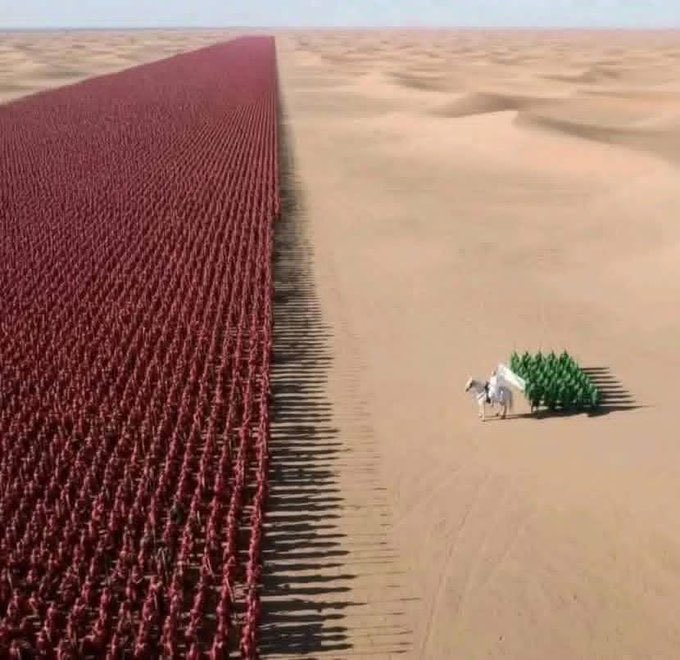
1. Battle of Badr
Muslims: 313
Quraysh: 950–1000
2. Battle of Uhud
Muslims: 700
Quraysh: 3000
3. Battle of Khandaq (Ahzab)
Muslims: 3000
Quraysh & Allies: ~10,000
4. Battle of Mu’ta
Muslims: ~3000
Romans & Ghassanids: ~200,000
5. Battle of Hunayn
Muslims: 12,000
Hawazin & Thaqif: ~20,000
6. Battle of Yarmouk
Muslims: ~40,000
Romans: ~200,000
7. Battle of Qadisiyyah
Muslims: ~30,000
Sassanids: 120,000+
8. Battle of Nahavand
Muslims: ~30,000
Persians: ~150,000
9. Conquest of al-Andalus
Muslims: 12,000
Visigoths: ~100,000
“How many a small group has overcome a mighty army by Allah’s permission. And Allah is with the patient.”
— Surah al-Baqarah (2:249)
🗣️Dear Nigerians,
In case you haven’t seen this yet…👇🏽
Nigeria hasn’t conducted a credible population census since 2006. That means for almost 20 years, decisions about school, hospitals, and resource allocation have been based on estimates.
Now, the interesting part is, between 2022 and 2023, N129.5 billion was disbursed for the 2023 population census. And that money went into:
📌 N118.38 billion for Personal Digital Assistants
📌 N2.47 billion for Hilux vehicles
📌 N499.8 million for power banks
📌 N106.19 million for an e-recruitment portal
@TrackaNG wrote to the National Population Commission requesting full details under the Freedom of Information Act. The law requires a response within 7 days. It’s been over 3 weeks, no response.
So we’re asking: WHAT HAPPENED TO THE MONEY?
Public funds demand public accountability!!
#GetInvolved #AskQuestions
I want to be absolutely clear at the outset: I fully support eliminating ISWAP, Islamic State affiliates, and every insurgent network that has turned the Sahel, including Nigeria, into a killing field. These groups have murdered civilians, displaced millions, destroyed communities, and destabilized entire regions. There is no moral ambiguity about confronting them.
My concern is not whether they should be fought. My concern is how this fight unfolds, and whether a highly visible build-up of U.S. military assets in Nigeria could produce unintended consequences.
History gives us reason to be cautious.
When the United States invaded Iraq in 2003, the conventional military phase ended quickly. But insurgent groups did not line up for open battlefield confrontation. They shifted to asymmetric warfare: roadside bombs, suicide attacks, assaults on police stations, airports, hotels, and marketplaces. The objective was not to defeat U.S. forces militarily. It was to destabilize the country and make normal life impossible.
In Afghanistan, a similar pattern emerged. The Taliban avoided sustained conventional confrontation when coalition forces surged. They dispersed into rural terrain and across porous borders. They relied on hit-and-run attacks, targeted assassinations, improvised explosive devices, and symbolic strikes on infrastructure. Two decades of overwhelming military superiority did not translate into permanent stability.
Closer to the Sahel, France’s 2013 intervention in Mali pushed jihadist forces out of major urban centers. Yet those groups did not disappear. They migrated. Violence spread into Burkina Faso and Niger. Civilian targets multiplied. The geography of instability widened rather than contracted.
Even ISIS itself offers a lesson. When it lost territorial control in Iraq and Syria, it did not cease to exist. It decentralized into cells, expanded outward, and intensified asymmetric tactics.
That is the core concern.
Groups like ISWAP are not structured for conventional warfare. When faced with superior air power, drones, and heavy equipment, they do not stand and fight. They disperse. They melt into civilian populations. They exploit borders. They strike soft targets. They attack infrastructure for psychological impact rather than military gain.
The recent air attack on an airport in Niger Republic is illustrative. Airports are not traditional frontline targets in a conventional war. They are symbolic and civilian-adjacent. The purpose is to project reach, create fear, and demonstrate that nowhere is secure. When insurgent groups cannot win conventional engagements, they shift toward spectacle and psychological disruption.
Another reality that must be confronted is that many of these fighters are already embedded within civilian populations. They are not isolated in clearly defined camps. They have familial ties, community links, and local knowledge. That makes purely kinetic solutions far more complicated and increases the risk of retaliation that targets ordinary people rather than hardened military assets.
There is also a strategic signaling issue.
By allowing a visible U.S. military presence in Nigeria in preparation for offensive operations, the Nigerian government is clearly aligning itself with a powerful external partner. The United States is not a neutral actor. It is a government backing another government. That clarity of alignment has implications. Insurgent groups now have a clearly defined adversarial structure: the Nigerian state and its foreign backer. In asymmetric conflicts, clarity of adversary can sharpen retaliation.
In contrast, when former President Goodluck Jonathan brought in private military contractors to assist in operations, the optics were different. Those contractors did not represent a foreign government. They did not symbolize a geopolitical alignment. They were transactional actors. They came in, executed specific objectives, and left. They did not create the same perception of sovereign external intervention or long-term foreign footprint.
This is not an argument for or against any specific administration. It is a question of strategic consequences.
A large and visible foreign military footprint can become a propaganda instrument. Insurgent groups frame it as foreign intrusion. That narrative can serve as a recruitment tool, particularly in fragile regions where governance deficits already exist.
The fear, therefore, is not that action will be taken. The fear is escalation and displacement. If pressure intensifies in Borno, will violence simply migrate deeper into the Sahel? Will soft targets increase? Will civilians bear the brunt of retaliatory attacks? Will Nigeria become a more central and symbolic theater of conflict rather than a contained one?
Military force is necessary against armed insurgency. But force alone has rarely resolved asymmetric conflicts. Without intelligence dominance, border coordination, community engagement, deradicalization strategies, and meaningful governance reform in affected regions, kinetic operations risk becoming cyclical.
Nigeria cannot afford to become a prolonged battleground defined by insurgent adaptation and foreign military escalation. The objective must not only be tactical victories, but strategic containment and long-term stabilization.
That is the concern. Not whether these groups should be destroyed — they should — but whether the approach will prevent the next phase of the conflict from becoming even more diffuse, more civilian-centered, and more destabilizing.
And after all is said and done, we must be realistic about political dynamics. The United States is not in the business of absorbing sustained casualties on foreign soil without domestic consequences.
The moment an American fatality occurs, the political temperature in Washington will rise sharply. Congressional scrutiny will intensify. Media pressure will grow. Public opinion can shift quickly in a polarized environment. Calls to bring troops home would become louder, and withdrawal pressures could accelerate.
If that happens, the foreign footprint may recede just as rapidly as it arrived. The strategic disruption, however, would remain. Nigeria could find itself confronting a more adaptive and emboldened insurgency, but without the external backing that initially altered the battlefield.
That is the risk: a short-term surge followed by political recalibration abroad, leaving Nigeria to manage a conflict that may be even more complex than the one it faces today.
“The elite” is absolutely nothing more than a perception. At the end of the day “the elite” are also seeking acceptance and are highly embarrassed when they’re not. The way to be truly elite is to no longer seek the acceptance of others. To live in a quiet confidence.
The SEC’s recapitalization policy toward crypto exchanges in 🇳🇬 borders on severe. In a market where most 🇳🇬 users already favor offshore platforms, such rigidity may end up exporting innovation and stifling the domestic crypto industry rather than strengthening it.
Everyone understands whether consciously or not that national interest invariably bows to foreign interest. Challenge this unspoken truth, and you instantly become the eccentric outlier in the room.
Most Africans remain largely unfazed by blatant instances of foreign-engineered political destabilisation, chiefly because any notion of a coherent national interest is conspicuously absent.
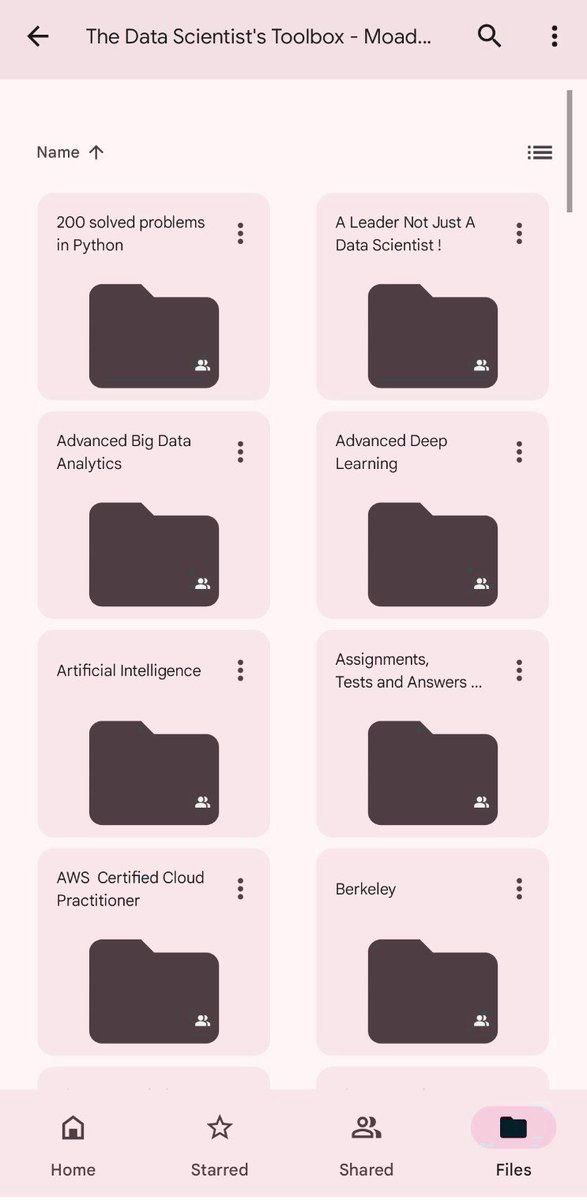
𝗣𝗮𝗶𝗱 𝗖𝗼𝘂𝗿𝘀𝗲 𝗙𝗥𝗘𝗘 (PART - 2)
1. Artificial Intelligence + Data Analyst
2. Machine Learning + Data Science
3. Cloud Computing + Web Development
4. Ethical Hacking + Hacking
5. Data Analytics + DSA
6. AWS Certified + IBM COURSE
7. Data Science + Deep Learning
8. BIG DATA + SQL COMPLETE COURSE
9. Python + OTHERS
10 MBA + HANDWRITTEN NOTES
(72 Hours only ) Cost About - $500
To get it FREE: -
1. Follow (So I can DM you )
2. Like & retweet
3. Reply " Send "