Next big move in BTC assets
Almost nowhere launches and swaps RGB.
A few clicks. Dark Horse Knight NFT, and 1,000 Horseshoes.
@RGBHorse can become the Pump on Bitcoin.
Link: https://t.co/9VFvDbWRTQ
I'm trading the @myfundedperps October Competition 🏆
Up for grabs: the new iPhone Duo, a PS5, a MacBook, 100 challenge accounts & more
Join if you haven't already 👇
https://t.co/svvoaonoYJ
Just claimed my free trade case on @MyFundedPerps 🎁
Crypto, stocks, indices, commodities & forex, 24/7, on a firm built by the team behind @MyFundedFutures
Grab yours 👇
https://t.co/b7mYkmQOgh
🌐 Community Question: With soaring investment and valuations in AI, is the AI bubble real or a myth?
Viewpoint A: The AI Bubble Is a Myth
Supporters argue that AI reflects a fundamental shift in computing. Demand for AI infrastructure continues to grow rapidly as industries adopt AI across areas such as healthcare, robotics, and digital biology. They also point to falling compute costs, improving reasoning capabilities, and expanding real-world applications as evidence that the growth is driven by genuine technological progress rather than speculation.
Viewpoint B: The AI Bubble Is Real
Critics warn that AI valuations and investment could be driven by hype and expectations of rapid breakthroughs. They argue that spending on infrastructure and startups could outpace real revenue and adoption, creating risks of market correction similar to the Dot-com Bubble.
👇 Drop A or B and share your perspective
🌐 Community Question: With soaring investment and valuations in AI, is the AI bubble real or a myth?
Viewpoint A: The AI Bubble Is a Myth
Supporters argue that AI reflects a fundamental shift in computing. Demand for AI infrastructure continues to grow rapidly as industries adopt AI across areas such as healthcare, robotics, and digital biology. They also point to falling compute costs, improving reasoning capabilities, and expanding real-world applications as evidence that the growth is driven by genuine technological progress rather than speculation.
Viewpoint B: The AI Bubble Is Real
Critics warn that AI valuations and investment could be driven by hype and expectations of rapid breakthroughs. They argue that spending on infrastructure and startups could outpace real revenue and adoption, creating risks of market correction similar to the Dot-com Bubble.
👇 Drop A or B and share your perspective
🩺 Community Question
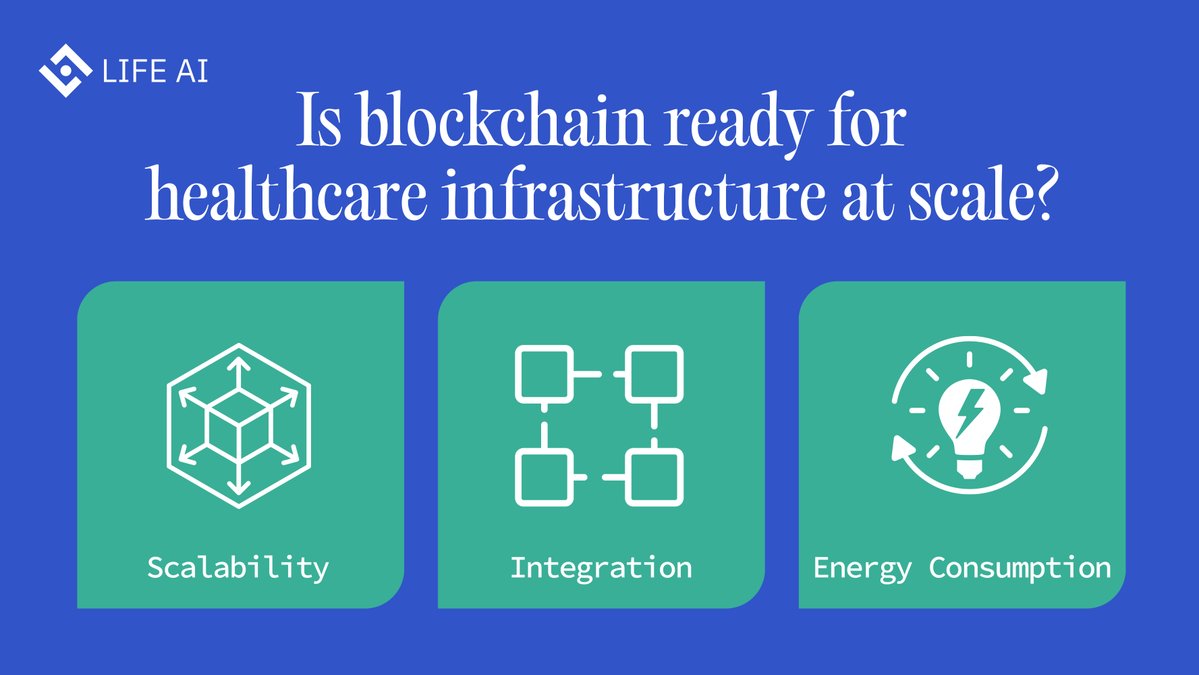
Is blockchain ready for healthcare infrastructure at scale?
Viewpoint A: Structural barriers remain.
Blockchain still struggles with scalability for large health datasets, integration with legacy hospital systems, and regulatory compliance. Operational adoption remains limited, with most initiatives still at the pilot stage.
Viewpoint B: The technology is maturing.
New blockchain architectures are improving speed, efficiency, and scalability. Hybrid models are advancing interoperability with existing healthcare systems. Early pilots also show progress toward secure, patient controlled data sharing.
👇 Comment A or B and share your perspective.
🩺 Community Question
Is blockchain ready for healthcare infrastructure at scale?
Viewpoint A: Structural barriers remain.
Blockchain still struggles with scalability for large health datasets, integration with legacy hospital systems, and regulatory compliance. Operational adoption remains limited, with most initiatives still at the pilot stage.
Viewpoint B: The technology is maturing.
New blockchain architectures are improving speed, efficiency, and scalability. Hybrid models are advancing interoperability with existing healthcare systems. Early pilots also show progress toward secure, patient controlled data sharing.
👇 Comment A or B and share your perspective.
Help open new directions in healthcare by questioning what no one questions.
Your voice can spark movement.
Discuss with me: https://t.co/HlaQw6Lvyf
Code: PQFWLVM
#LifeAITestnet#HealthcareAI
🩺 Community Question:
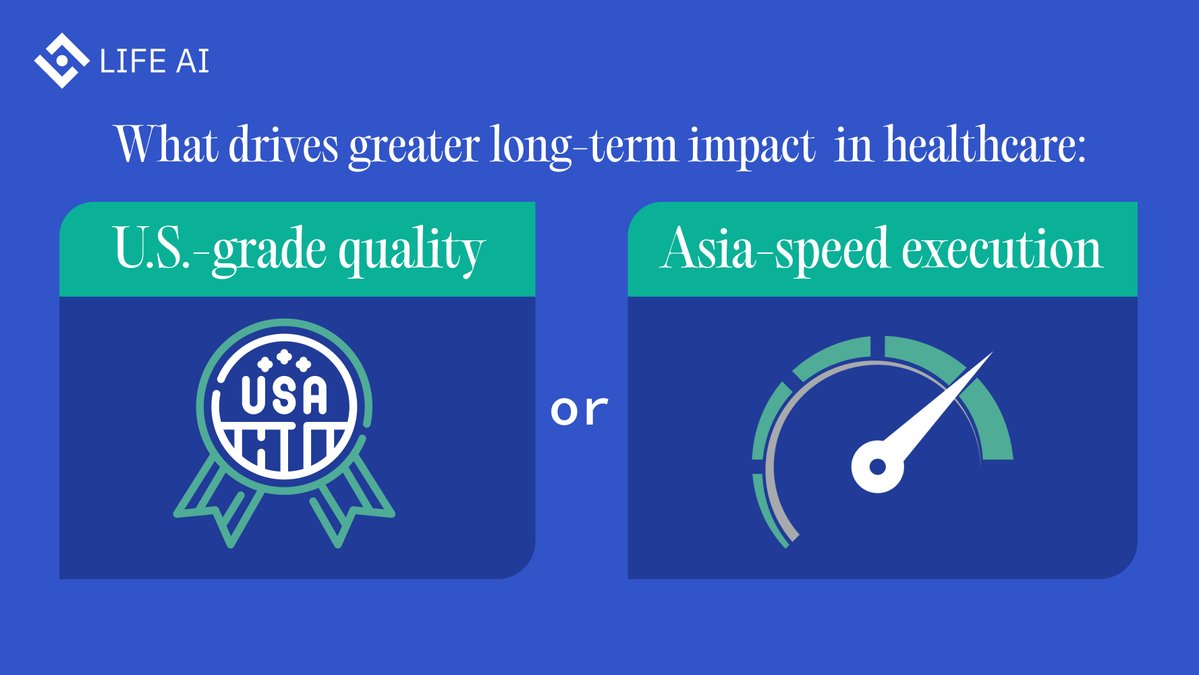
In medical innovation, what drives greater long-term impact:
U.S.-grade quality for rigorous validation and strict regulation
or Asia-speed execution for faster approvals and rapid scale?
Viewpoint A: U.S.-Grade Quality
Through institutions like the U.S. Food and Drug Administration, the U.S. emphasizes deep clinical validation before approval.
Rigor reduces risk, protects trust, and supports durable breakthrough innovation.
Viewpoint B: Asia-Speed Execution
Countries such as China and India accelerate approvals and deploy innovations at scale.
Faster access can save lives, especially in high-burden diseases.
👇 Drop A or B and share your perspective.
🩺 Community Question:
In medical innovation, what drives greater long-term impact:
U.S.-grade quality for rigorous validation and strict regulation
or Asia-speed execution for faster approvals and rapid scale?
Viewpoint A: U.S.-Grade Quality
Through institutions like the U.S. Food and Drug Administration, the U.S. emphasizes deep clinical validation before approval.
Rigor reduces risk, protects trust, and supports durable breakthrough innovation.
Viewpoint B: Asia-Speed Execution
Countries such as China and India accelerate approvals and deploy innovations at scale.
Faster access can save lives, especially in high-burden diseases.
👇 Drop A or B and share your perspective.
🩺 Community Question
Should preventive healthcare justify large-scale investment and widespread adoption?
Viewpoint A:
Preventive care involves significant upfront costs and carries risks of overdiagnosis and overtreatment, potentially increasing anxiety and spending without clear mortality gains.
Viewpoint B:
Prevention through screening and lifestyle interventions can reduce disease burden, hospitalizations, and long-term costs, while improving life expectancy and quality of life.
Is prevention a cost-effective long-term strategy or an overextended approach with uncertain net benefit?
👇 Drop A, B, or share your perspective.
🩺 Community Question
Should preventive healthcare justify large-scale investment and widespread adoption?
Viewpoint A:
Preventive care involves significant upfront costs and carries risks of overdiagnosis and overtreatment, potentially increasing anxiety and spending without clear mortality gains.
Viewpoint B:
Prevention through screening and lifestyle interventions can reduce disease burden, hospitalizations, and long-term costs, while improving life expectancy and quality of life.
Is prevention a cost-effective long-term strategy or an overextended approach with uncertain net benefit?
👇 Drop A, B, or share your perspective.