This is wild.
143 million people thought they were catching Pokémon. They were actually building one of the largest real-world visual datasets in AI history.
Niantic just disclosed that photos and AR scans collected through Pokémon Go have produced a dataset of over 30 billion real-world images. The company is now using that data to power visual navigation AI for delivery robots.
Players didn't just walk around with their phones. They scanned landmarks, storefronts, parks, and sidewalks from every angle, at every time of day, in lighting and weather conditions that staged photography would never capture. They documented the physical world at a scale no mapping company with a fleet of vehicles could have replicated on the same timeline or budget.
Niantic collected this systematically, data point by data point, across eight years, while users thought the only thing at stake was catching a rare Charizard.
The most valuable AI training datasets in the world aren't being assembled in data centers. They're being built by people who have no idea they're building them.
@Bybit_Official 6. Tested randomly another P2P Vendor for Revolut transfer on @Bybit_Official, vendor stated the payment went through, then I filed the appeal, the vendor started to send message to ask me to cancel the appeal, could we trust any OTC service here?
Just noticed there are still lots of phising OTC vendors on major exchanges. I encountered a P2P vendor scam on @Bybit_Official & have already flagged it to their security team.
1. The scam began when the vendor insisted on using Bybit internal transfer and askedto send an emai
The big narratives have already been tested from last circles, what stays are the ones survived through bear time.
Crypto companies need to unit to get into mainstream. Or there will be no narrative left.
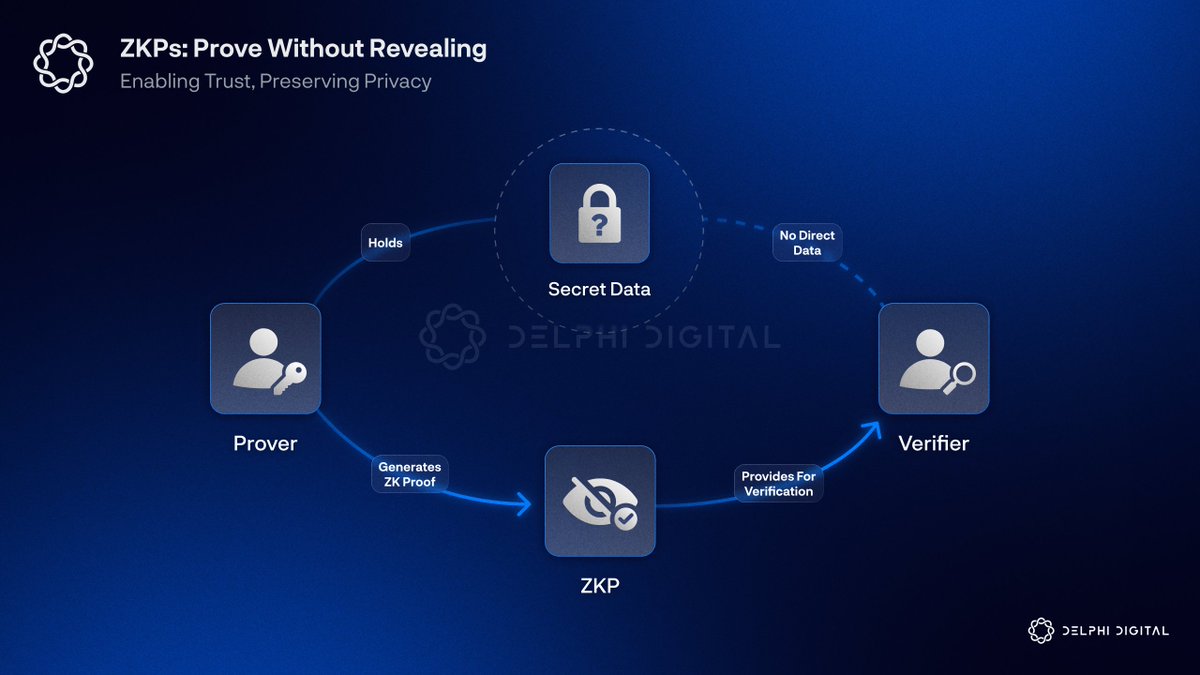
The Internet's proof system is broken. We overshare personal information to verify the smallest claims.
zkTLS allows you to verify everything while exposing nothing. Here are three projects making this happen.
@reclaimprotocol transforms any Web2 data into cryptographic proofs for Web3. Pick a data source and enter credentials in their secure form.
Reclaim's proxy attestor converts the web request into proofs. Your device then runs a zkSNARK to extract just what you need to prove, hiding everything else.
You can prove your social following without sharing your handle or verify income without exposing transactions. Proof generation can be done in under 4 seconds.
@zkPass aims for a similar goal, but bets on adaptability over simplicity.
zkPass specializes in private data verification with its hybrid Three-party TLS system, which combines MPC and proxy-based models, adapting to changing network conditions and server requirements on the fly.
When you want to prove something, ZKPass creates a TLS session either via their decentralized MPC network or a direct proxy, depending on the scenario.
You can prove data from essentially any site, not just specific providers. The MPC portion ensures no single node can forge a session to maintain security.
ZKPass has already been utilized in private credit scoring, financial transactions, and online voting. By not boxing themselves into one model, they've proven you can mix and match proxy/MPC to meet different client needs.
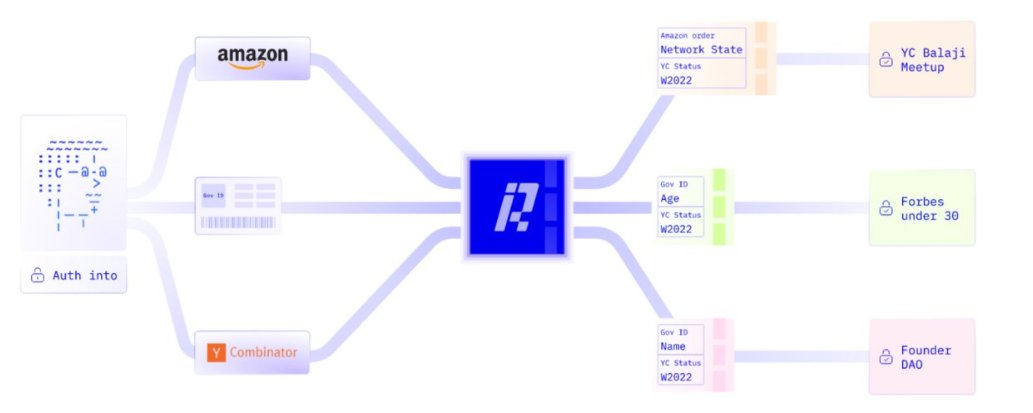
@onflowxyz is a newcomer offering a "ZK on-chain passport" solution.
By creating attestable identities called "Sundial passports," Onflow allows you to KYC once and satisfy future checks with one click.
By running processes locally, verifiers and protocols learn nothing beyond the proof they need to verify the user.
Unlike Reclaim and zkPass which prove any data, Onflow focuses on identity verification.
zkTLS isn’t coming. It’s already here.
“We Love Korea” (한국 사랑해요)
Suddenly every project founder loves Korea.
They love us so much they jet in, host local meetups, toss a few hundred bucks at attendees, and reserve airdrop allocations for the loudest Korean CT yappers.
The playbook works! Innocent Koreans yap a couple times, show up to a meetup, pocket good money. “Wow, they’re so generous!”
CT amplifies, newcomers copy the meta, and next thing you know office dads and moms who think metamask is skincare are queueing for meetup stickers.
Traction looks incredible. Photos of packed halls, endless threads about how deeply these projects adore Korea. Must be a serious team, right?
Then listing day hits. Token drops on Upbit or Bithumb, airdrop lands, yappers and insiders dump, and everyone applauds the founders’ generosity.
Latecomers ape because “everyone was talking about it,” charts nosedive, and (surprise) after TGE the love letters dry up—fewer meet-ups, slower replies, community who?
You know the story.
For many projects Korea isn’t a growth market; it’s exit liquidity. It always has been. Now rumor has it some meetups double as off-chain cashout desks: pay 100 real attendees, claim 500 showed up, funnel the rest into ghost wallets. Clean extraction.
I wasn’t vocal about it, but it’s getting stinkier by the day.
I won’t name names. You know who you are.
If you actually care about Korea, drop the cheap noise. Ship product, create value, build real businesses that actually stick here.