new in ai studio ⬇️
we’ve integrated @nanobanana to automatically create custom image assets for your app as it generates
plus, the newly redesigned edit tool now gives you visual control of your app, allowing you to update components, annotate your app, and swap image assets
First time trying this amazing technique and is awesome!
Happy cinco de Mayo short animation using this BPT storyboard smart shot and seedance 2.0
Thanks Olivio for the super prompt and workflow.
I created a character sheet using ChatGPT image 2.0 to help AI video creators to create professionally directed video.
Try the prompt below inside GPT image 2.0....
"Create a cinematic, film-production-grade character design sheet intended for a director, casting team, and costume department. This must feel like a high-budget animated film pitch board, not a generic model sheet. CORE DIRECTIVE (NON-NEGOTIABLE)No generic layouts No evenly spaced grids No symmetry for the sake of neatness Composition must feel art-directed, intentional, slightly asymmetrical Every section should feel placed, not auto-generated CHARACTER IDENTITY Name: [Full character name] Alias / ID: [Nickname, codename, symbolic title] Age: [Real or stylized age logic] Height: [Exact height in cm/ft] Build: [Detailed body type with nuance — proportions, weight distribution, posture tendencies] Ethnicity / Design Language:[Real-world influence or stylized hybrid approach — Pixar-esque, anime-inspired, culturally grounded, etc.] FACE DESIGN Structure:[Face shape, bone structure, exaggeration level, asymmetry] Skin / Surface:[Texture, tone, subsurface softness, imperfections, stylization level] Eyes:[Size, spacing, color, expressiveness, quirks] Hair:[Style, texture, behavior (physics), imperfections, movement logic] Distinct Features:[Any defining traits — scars, dimples, stretch, elasticity, etc.] PSYCHOLOGICAL PROFILE (DRIVES PERFORMANCE) Core Traits:[3–5 dominant personality traits] Internal Conflict:[What they want vs what sabotages them] Behavior Patterns: [Habit 1] [Habit 2] [Habit 3] Emotional Baseline:[Default emotional state + how quickly it shifts] PERFORMANCE DIRECTION (CRITICAL) Character must feel like a real actor caught mid-moment, not posing. Expression Notes: Micro-expressions required (lip tension, eye movement, eyebrow shifts) Avoid staged symmetry Capture transitional emotion (before/after reaction) Body Language: [Posture tendencies] [Movement rhythm: stiff, bouncy, dragging, sharp, etc.] [Idle behavior: fidgeting, stillness, tension] WARDROBE (PRODUCTION-REALISTIC WITH STYLIZATION) Primary Outfit: [Garment 1: fabric type, wear, imperfections] [Garment 2: fit, distortion, stitching details] [Layering logic] Footwear:[Material, wear patterns, realism vs stylization] Accessories:[Functional + character-revealing items] Props:[Objects frequently carried that reinforce personality] MATERIAL & TEXTURE ACCURACY Fabrics must show stretch, stitching, wrinkles, wear Surfaces must avoid plastic look unless intentionally stylized Skin should have soft light interaction, slight bounce Include imperfections: dirt, smudges, aging, usage marks TURNAROUND REQUIREMENTS (STRICT CONSISTENCY) Generate full-body turnaround with identical proportions and design fidelity: Front View 3/4 View Side View Back View 3/4 Back View No drift in proportions, face, or costume. HEAD STUDY (ACTOR REFERENCE QUALITY) Include expressive head variations: Front (neutral or controlled expression) 3/4 (primary personality expression) Profile (structure clarity) Looking Down (emotion: [insert]) Looking Up (emotion: [insert]) Dynamic Angle (emotion: [insert intense state]) Expressions must feel captured mid-thought, not posed. CINEMATIC PORTRAIT (FILM STILL) Environment:[Specific location tied to character behavior] Lighting:[Motivated sources — practical lights, ambient glow, contrast level] Color Tone:[Palette direction — warm, cool, mixed, stylized] Expression:[Specific narrative moment] Camera:[Real-world lens feel — 50mm, 85mm, etc.] Shallow depth of field, cinematic realism CAMERA + LIGHTING SPECIFICATIONS Full Body: Lens: [e.g., 35mm] Lighting: soft key + bounce Natural exposure, no HDR Portrait: Lens: [e.g., 85mm] Depth of field: shallow Focus priority: eyes and expression COMPOSITION & LAYOUT Clean but art-directed sheet layout Neutral background (gray or soft tone) for turnaround Structured but visually dynamic section placement Include: Height scale reference Annotation callouts (fabric stretch, personality cues, prop usage) Wardrobe breakdown section Notes for production Layout must feel like a premium studio presentation board STYLE [Define clearly] Examples: Pixar-style stylized realism Hyper-expressive animation realism Semi-realistic cinematic character design Must include: Appealing exaggeration Soft geometry Cinematic lighting High emotional readability CONSISTENCY RULE (STRICT) Face, proportions, costume, and details must remain identical across all views and sections No reinterpretation between angles. OUTPUT QUALITY Extremely high detail Sharp focus Production-ready fidelity Suitable for film development, merchandising, and pitch decks
"
Toca reflexión:
Hace casi 3 meses me propuse empezar un Bootcamp de Programación gratuito y diferente. Uno con la filosofía de aprender los fundamentos entendiendo lo que haces, y no centrándote en el hype del momento, memorizando pautas o siguiendo una serie de pasos rápidos para terminar y pasar a otra cosa.
El Bootcamp está funcionando muy bien. Llevamos 13 clases, 12.400 horas de visualización y se han pasado más de 15.000 personas. Hemos terminado 3 de las 5 fases de las que consiste, pero sobre todo he recibido muchísimos comentarios positivos, prácticamente todos en la misma línea.
¡Gracias a todos por la buena acogida del proyecto! Espero que sigan aprendiendo de forma que consigan lo que realmente me pasa a mi: que disfrutes aprendiendo y entendiendo lo que haces.
Recuerda que tienes todo disponible y gratis. Nos vemos el domingo con la siguiente clase.
👇 Links
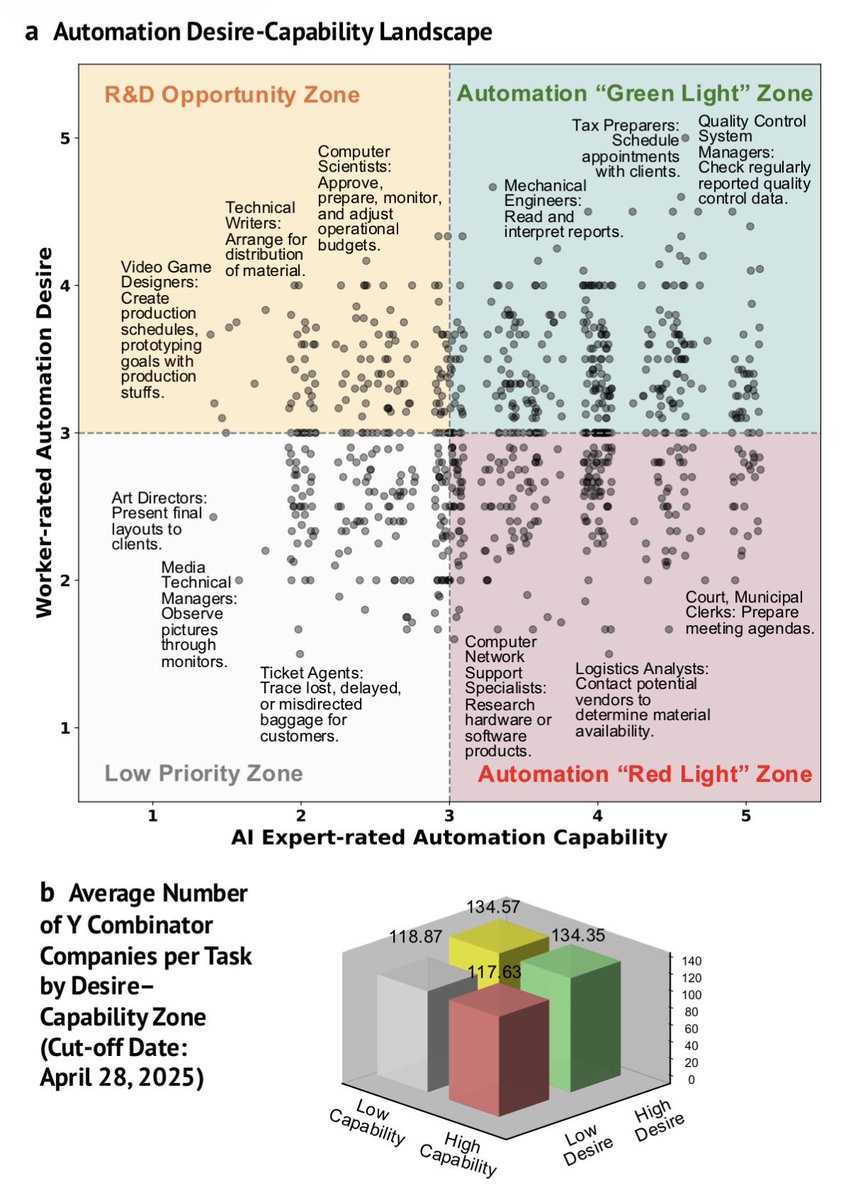
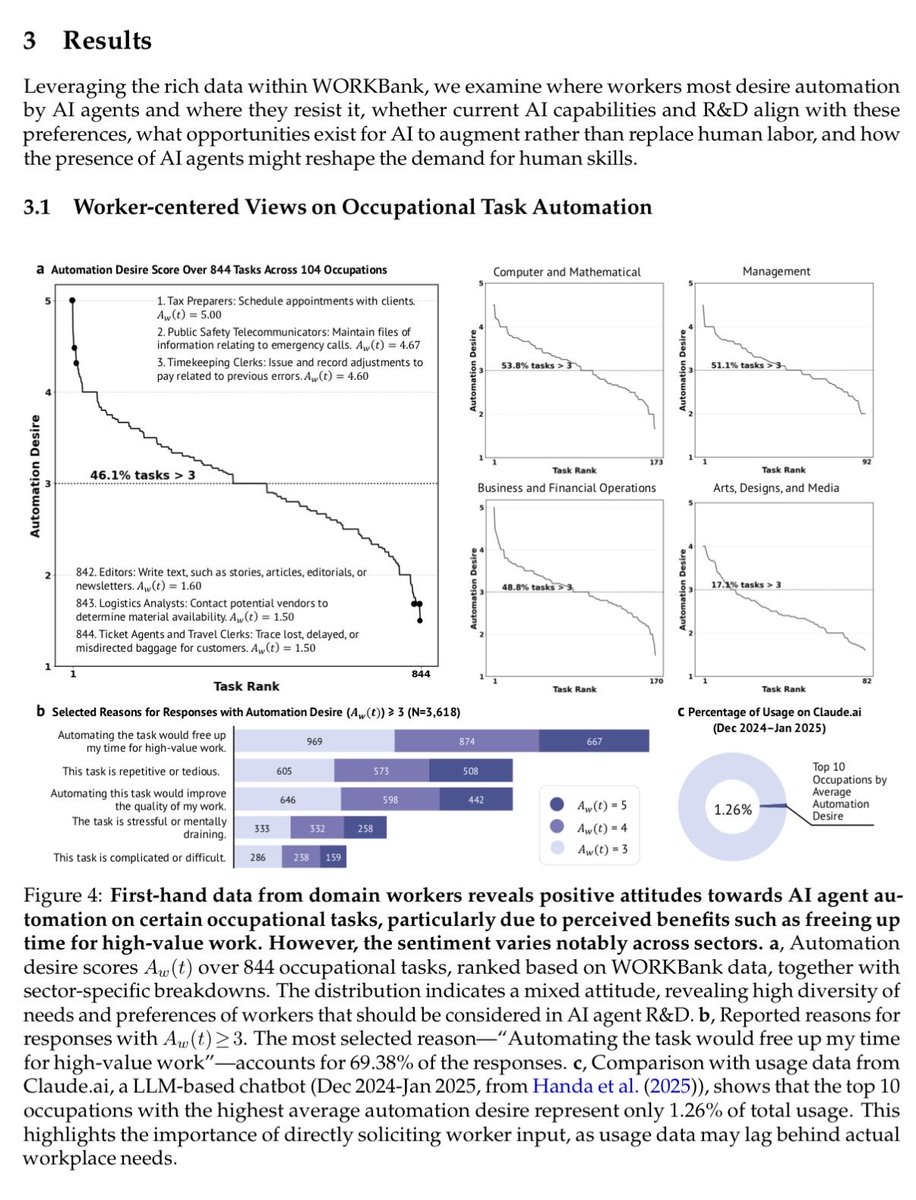
El Futuro del Trabajo con Agentes de IA según un estudio de @Stanford
Se analizan Agentes de IA: sistemas capaces de ejecutar secuencias de tareas complejas de forma autónoma. La gran pregunta no es qué puede hacer la IA, sino qué queremos que haga y dónde está la tecnología hoy.
Los investigadores crearon una base de datos masiva llamada WORKBank, cruzando datos de:
• 1,500 trabajadores reales (104 ocupaciones).
• 52 expertos en IA.
• 844 tareas ocupacionales específicas. Esto permite un "mapeo de realidad" entre el deseo humano y la capacidad técnica.
El estudio divide el futuro del trabajo en un cuadrante basado en Deseo del Trabajador vs. Capacidad de la IA:
🟢 Zona de Luz Verde: Alto deseo y alta capacidad. (Tareas repetitivas/tediosas listas para automatizar).
🔴 Zona de Luz Roja: Alta capacidad pero bajo deseo. Tareas que la IA puede hacer, pero los humanos prefieren mantener (por ética, placer o control).
💡 Zona de Oportunidad R&D: Alto deseo pero baja capacidad actual. Aquí es donde la ciencia debe enfocar sus esfuerzos.
💤 Zona de Baja Prioridad: Bajo deseo y baja capacidad.
El paper introduce la Escala de Agencia Humana. Ya no es una opción binaria (o lo hace el humano o la máquina). La HAS mide niveles de colaboración. El hallazgo más interesante es una tendencia en "U invertida": la mayoría de las tareas no buscan automatización total, sino una colaboración estrecha donde el humano mantiene el juicio crítico.
Aquí está el dato crítico: Los desarrolladores de IA están enfocados mayoritariamente en tareas de programación y lógica, pero los trabajadores claman por ayuda en tareas administrativas, burocráticas y de gestión de datos tediosos que la IA aún no maneja perfectamente. Hay un divorcio entre lo que se crea y lo que se necesita.
A medida que los agentes de IA absorben tareas de "procesamiento de información", el valor del trabajador se desplaza. Las competencias que se vuelven "oro" no son las técnicas, sino las interpersonales y de juicio. La IA se encarga de los datos; el humano se encarga de las personas y las decisiones difíciles.
Conclusión: El futuro del empleo con agentes de IA no es un reemplazo, es una redistribución de la agencia. El éxito de la integración de la IA dependerá de respetar la "Luz Roja" (lo que el humano quiere seguir haciendo) y cerrar la brecha de la "Zona de Oportunidad".
Se acabaron los malos prompts.
Acaban de lanzar una skill gratuita para Claude que escribe el prompt perfecto para cualquier IA a la primera.
Sin reintentos.
Sin créditos tirados a la basura.
Se llama Prompt Master y funciona con:
→ ChatGPT
→ Claude
→ Midjourney
→ Cursor
→ ElevenLabs
→ y 13 más
Una instalación. +18 herramientas. Open source.
Enlace abajo 👇
Un solo comando puede encontrar todas tus cuentas en internet.
Han creado una herramienta llamada Sherlock que localiza perfiles asociados a un usuario en más de 400 plataformas.
Tiene más de 82.4k stars en GitHub, es gratis y open-source.
Aquí te explico cómo funciona 👇
Stop wasting hours trying to learn AI. 📘📚
I have already done it for you.
With one list. Zero confusion. And no fluff
📹 Videos:
1. LLM Introduction: https://t.co/YkuDFVmW9e
2. LLMs from Scratch: https://t.co/u3kSz5SGuJ
3. Agentic AI Overview (Stanford): https://t.co/W6rzVHGSgC
4. Building and Evaluating Agents: https://t.co/sEl8vVax3F
5. Building Effective Agents: https://t.co/c7fD4aWFYO
6. Building Agents with MCP: https://t.co/GlMdR6htgA
7. Building an Agent from Scratch: https://t.co/kUQ9jPuI0R
8. Philo Agents: https://t.co/8JHvqw0DKn
🗂️ Repos
1. GenAI Agents: https://t.co/cyHPvOAjlK
2. Microsoft's AI Agents for Beginners: https://t.co/zFJAN74JQe
3. Prompt Engineering Guide: https://t.co/liUshX2XsP
4. Hands-On Large Language Models: https://t.co/TXFhbiboZY
5. AI Agents for Beginners: https://t.co/zFJAN74JQe
6. GenAI Agentshttps://lnkd.in/dEt72MEy
7. Made with ML: https://t.co/lkXP6itwK0
8. Hands-On AI Engineering:https://t.co/zB8EEctE4Y
9. Awesome Generative AI Guide: https://t.co/lF7CuIQHRw
10. Designing Machine Learning Systems: https://t.co/XlYUZYOoVi
11. Machine Learning for Beginners from Microsoft: https://t.co/hF5UzZoMJB
12. LLM Course: https://t.co/4tLAwy8fOQ
🗺️ Guides
1. Google's Agent Whitepaper: https://t.co/0OEKVLgF34
2. Google's Agent Companion: https://t.co/r0Dxe4VvDO
3. Building Effective Agents by Anthropic: https://t.co/I0ZyuwiOS3.
4. Claude Code Best Agentic Coding practices: https://t.co/HIBC2TwwAP
5. OpenAI's Practical Guide to Building Agents: https://t.co/1I8n0wnjHQ
📚Books:
1. Understanding Deep Learning: https://t.co/XEzhyAcWbq
2. Building an LLM from Scratch: https://t.co/4sZmBnHPEg
3. The LLM Engineering Handbook: https://t.co/IkAYNFkVNI
4. AI Agents: The Definitive Guide - Nicole Koenigstein: https://t.co/KsFnET47hx
5. Building Applications with AI Agents - Michael Albada: https://t.co/lJhMLtsLql
6. AI Agents with MCP - Kyle Stratis: https://t.co/C2lhD8uTDL
7. AI Engineering: https://t.co/34EyUiIVMv
📜 Papers
1. ReAct: https://t.co/kfQ8tWysne
2. Generative Agents: https://t.co/wbfqXq8KZK.
3. Toolformer: https://t.co/OQ7m49YWls
4. Chain-of-Thought Prompting: https://t.co/XeNgLQdTIL.
🧑🏫 Courses:
1. HuggingFace's Agent Course: https://t.co/tUZyPEGhni
2. MCP with Anthropic: https://t.co/wx1DAIWis0
3. Building Vector Databases with Pinecone: https://t.co/8XsQzDstTB
4. Vector Databases from Embeddings to Apps: https://t.co/9n6DvZGTMN
5. Agent Memory: https://t.co/OxFAaM0fp7
Repost for your network ♻️
Si querés aprender IA pero no sabés por dónde arrancar, te recomiendo el certificado oficial de Google.
Son siete cursos que suman once horas, pensados para principiantes. Vas desde los fundamentos de IA generativa y cómo escribir buenos prompts, hasta investigación profunda y NotebookLM, análisis de datos en Sheets con Gemini, creación de imágenes y videos y al final armás tu propia app sin programar.
Los primeros 7 días son gratis y te alcanzan para completarlo si le metés. Después son 29 dólares al mes. Como bonus, te dan 3 meses de Google AI Pro.
El contenido está en inglés, pero con traducción al español muy digna y los videos llevan subtítulos.
Al terminar, te queda un certificado firmado por Google para poner en LinkedIn. Este curso me parece un gran primer paso para tener una noción general y elegir en qué profundizar después.
Se llama Certificado profesional de IA de Google y lo encontrás en Coursera.
Subite al tren de la inteligencia artificial. Todavía es temprano.
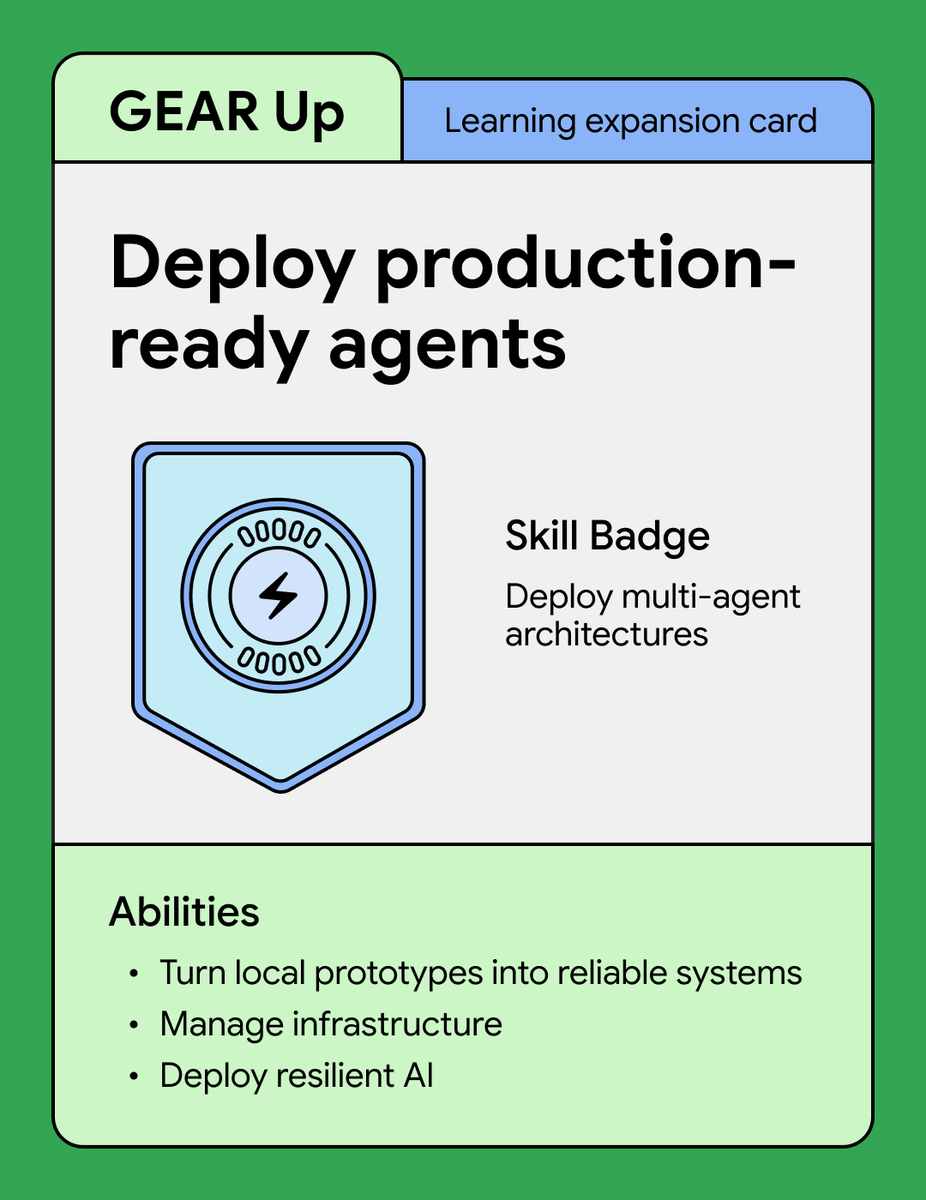
New GEAR learning paths are officially LIVE.
Master enterprise agent scaling and production deployment to earn exclusive new skill badges.
✅ 35 monthly credits? Ready.
✅ New paths? Launched.
✅ Your AI career? Accelerated.
Get started: https://t.co/e1SiSihvtE
The DESIGN.md upgrade is officially live in Stitch! 🚀
Yesterday we open-sourced the spec, and today we are giving you more tools to use it:
📄 Start with DESIGN.md: Attach a DESIGN.md right at the start of a project. Don't have one? Our new wizard will help you extract one from your code base or the web.
🔄 DESIGN.md to Design System: Upload a DESIGN.md file to generate a Design System on the canvas.
🧩 Token Support: Design Systems now support design tokens from DESIGN.md! Add them to your file and Stitch will seamlessly incorporate them.
🗑️ Clean Up: (You asked, we listened) You can now easily delete a design system.
We’re excited to build the open design standard together. 👇
Nvidia tiene +100 modelos de IA gratis por API y muy pocos lo están aprovechando
DeepSeek, Llama, Qwen, Mistral, MiniMax, GLM, Gemma, Nemotron… todos optimizados y listos para llamar
No hace falta tarjeta
No hace falta servidor
Solo solicitar tu API key
Lo mejor: es compatible con OpenClaude, Claude Code, Cursor, Zed IDE y API estándar tipo OpenAI.
Cómo empezar:
1.Crea cuenta en https://t.co/8Ydmc5w8mR
2.Genera tu API key
3.base_url: https://t.co/ghbUAo7lwc
4.Elige modelo y listo
Si estás prototipando o experimentando con agentes, esto es un regalo
40 peticiones por minuto en el tier gratuito. Más que suficiente para probar ideas.
Guárdalo antes de que lo quiten 🔖
Sorteo 5 libros de Git y GitHub desde cero para celebrar su tercer aniversario por el día de libro!
✅ Sígueme
❤️ Dale Like
🔁 Comparte
🌐 Válido para todo el mundo. El viernes 24 publico el resultado.
Google guardó cada foto que alguna vez tomaste, incluso las que eliminaste.
Capturas de pantalla de tu cuenta bancaria. Fotos de pasaporte. Documentos fiscales. Fotos que pensaste que se habían ido para siempre.
Ve a photos google com/trash ahora mismo.
Encontrarás archivos "eliminados permanentemente" que aún están en sus servidores.
Aquí te explico cómo encontrarlos y destruirlos de verdad:
Registration is now open for the 5-Day AI Agents: Intensive Vibecoding Course with @Google 🚀
This no-cost course is designed to help builders learn how to design, build, and use AI agents using the latest concepts, technologies and skills.









![Fujimoto_hina's tweet photo. Create with GPT 2 on ChatGPT
Prompt:
{
"type": "cinematic_character_design_sheet",
"intent": "film_production_pitch_board",
"core_directive": {
"layout_rules": [
"no generic layouts",
"no evenly spaced grids",
"no forced symmetry",
"intentional asymmetry",
"art-directed composition"
]
},
"character_identity": {
"name": "[Full character name]",
"alias": "[Nickname / codename]",
"age": "[Real or stylized age]",
"height": "[Exact height cm/ft]",
"build": "[Detailed body proportions, weight distribution, posture]"
},
"ethnicity_design_language": "[Hybrid style: Pixar / anime / cultural realism]",
"face_design": {
"structure": "[Face shape, bone structure, asymmetry]",
"skin": "[Texture, tone, imperfections]",
"eyes": "[Size, spacing, color, quirks]",
"hair": "[Style, physics, imperfections]",
"distinct_features": "[Scars, dimples, unique traits]"
},
"psychological_profile": {
"core_traits": ["trait1", "trait2", "trait3"],
"internal_conflict": "[Desire vs sabotage]",
"behavior_patterns": [
"[Habit 1]",
"[Habit 2]",
"[Habit 3]"
],
"emotional_baseline": "[Default state + shift speed]"
},
"performance_direction": {
"expression_notes": [
"micro-expressions",
"no staged symmetry",
"transitional emotion"
],
"body_language": {
"posture": "[Tendencies]",
"movement": "[Rhythm]",
"idle_behavior": "[Fidget/stillness]"
}
},
"wardrobe": {
"primary_outfit": [
"[Garment 1: fabric + wear]",
"[Garment 2: fit + stitching]",
"[Layering logic]"
],
"footwear": "[Material + wear]",
"accessories": "[Functional + character items]",
"props": "[Recurring objects]"
},
"materials_textures": {
"fabric": "visible stretch, wrinkles, stitching",
"surface": "no plastic look unless intentional",
"skin": "soft light bounce",
"imperfections": "dirt, aging, smudges"
},
"turnaround": [
"front_view",
"3_4_view",
"side_view",
"back_view",
"3_4_back_view"
],
"head_study": {
"views": [
"front_neutral",
"3_4_primary_expression",
"profile",
"looking_down_[emotion]",
"looking_up_[emotion]",
"dynamic_angle_[intense_emotion]"
]
},
"cinematic_portrait": {
"environment": "[Story-driven location]",
"lighting": "[Practical + ambient]",
"color_tone": "[Warm/cool palette]",
"expression": "[Narrative moment]",
"camera": "[Lens + shallow DOF]"
},
"camera_lighting": {
"full_body": {
"lens": "35mm",
"lighting": "soft key + bounce",
"exposure": "natural"
},
"portrait": {
"lens": "85mm",
"depth_of_field": "shallow",
"focus": "eyes"
}
},
"composition_layout": {
"background": "neutral gray",
"elements": [
"height scale",
"annotation callouts",
"wardrobe breakdown",
"production notes"
],
"style": "premium studio board"
},
"style": {
"type": "[e.g. Pixar-style realism]",
"features": [
"appealing exaggeration",
"soft geometry",
"cinematic lighting",
"high emotional readability"
]
},
"consistency_rule": "no variation across views",
"output_quality": [
"high detail",
"sharp focus",
"production-ready",
"pitch-deck quality"
]
}](https://pbs.twimg.com/media/HHiKxMhbsAAKE1A.jpg)
![beginnersblog1's tweet photo. I created a character sheet using ChatGPT image 2.0 to help AI video creators to create professionally directed video.
Try the prompt below inside GPT image 2.0....
"Create a cinematic, film-production-grade character design sheet intended for a director, casting team, and costume department. This must feel like a high-budget animated film pitch board, not a generic model sheet. CORE DIRECTIVE (NON-NEGOTIABLE)No generic layouts No evenly spaced grids No symmetry for the sake of neatness Composition must feel art-directed, intentional, slightly asymmetrical Every section should feel placed, not auto-generated CHARACTER IDENTITY Name: [Full character name] Alias / ID: [Nickname, codename, symbolic title] Age: [Real or stylized age logic] Height: [Exact height in cm/ft] Build: [Detailed body type with nuance — proportions, weight distribution, posture tendencies] Ethnicity / Design Language:[Real-world influence or stylized hybrid approach — Pixar-esque, anime-inspired, culturally grounded, etc.] FACE DESIGN Structure:[Face shape, bone structure, exaggeration level, asymmetry] Skin / Surface:[Texture, tone, subsurface softness, imperfections, stylization level] Eyes:[Size, spacing, color, expressiveness, quirks] Hair:[Style, texture, behavior (physics), imperfections, movement logic] Distinct Features:[Any defining traits — scars, dimples, stretch, elasticity, etc.] PSYCHOLOGICAL PROFILE (DRIVES PERFORMANCE) Core Traits:[3–5 dominant personality traits] Internal Conflict:[What they want vs what sabotages them] Behavior Patterns: [Habit 1] [Habit 2] [Habit 3] Emotional Baseline:[Default emotional state + how quickly it shifts] PERFORMANCE DIRECTION (CRITICAL) Character must feel like a real actor caught mid-moment, not posing. Expression Notes: Micro-expressions required (lip tension, eye movement, eyebrow shifts) Avoid staged symmetry Capture transitional emotion (before/after reaction) Body Language: [Posture tendencies] [Movement rhythm: stiff, bouncy, dragging, sharp, etc.] [Idle behavior: fidgeting, stillness, tension] WARDROBE (PRODUCTION-REALISTIC WITH STYLIZATION) Primary Outfit: [Garment 1: fabric type, wear, imperfections] [Garment 2: fit, distortion, stitching details] [Layering logic] Footwear:[Material, wear patterns, realism vs stylization] Accessories:[Functional + character-revealing items] Props:[Objects frequently carried that reinforce personality] MATERIAL & TEXTURE ACCURACY Fabrics must show stretch, stitching, wrinkles, wear Surfaces must avoid plastic look unless intentionally stylized Skin should have soft light interaction, slight bounce Include imperfections: dirt, smudges, aging, usage marks TURNAROUND REQUIREMENTS (STRICT CONSISTENCY) Generate full-body turnaround with identical proportions and design fidelity: Front View 3/4 View Side View Back View 3/4 Back View No drift in proportions, face, or costume. HEAD STUDY (ACTOR REFERENCE QUALITY) Include expressive head variations: Front (neutral or controlled expression) 3/4 (primary personality expression) Profile (structure clarity) Looking Down (emotion: [insert]) Looking Up (emotion: [insert]) Dynamic Angle (emotion: [insert intense state]) Expressions must feel captured mid-thought, not posed. CINEMATIC PORTRAIT (FILM STILL) Environment:[Specific location tied to character behavior] Lighting:[Motivated sources — practical lights, ambient glow, contrast level] Color Tone:[Palette direction — warm, cool, mixed, stylized] Expression:[Specific narrative moment] Camera:[Real-world lens feel — 50mm, 85mm, etc.] Shallow depth of field, cinematic realism CAMERA + LIGHTING SPECIFICATIONS Full Body: Lens: [e.g., 35mm] Lighting: soft key + bounce Natural exposure, no HDR Portrait: Lens: [e.g., 85mm] Depth of field: shallow Focus priority: eyes and expression COMPOSITION & LAYOUT Clean but art-directed sheet layout Neutral background (gray or soft tone) for turnaround Structured but visually dynamic section placement Include: Height scale reference Annotation callouts (fabric stretch, personality cues, prop usage) Wardrobe breakdown section Notes for production Layout must feel like a premium studio presentation board STYLE [Define clearly] Examples: Pixar-style stylized realism Hyper-expressive animation realism Semi-realistic cinematic character design Must include: Appealing exaggeration Soft geometry Cinematic lighting High emotional readability CONSISTENCY RULE (STRICT) Face, proportions, costume, and details must remain identical across all views and sections No reinterpretation between angles. OUTPUT QUALITY Extremely high detail Sharp focus Production-ready fidelity Suitable for film development, merchandising, and pitch decks
"](https://pbs.twimg.com/media/HHjjM-nbsAAJaw1.jpg)