Our latest work on #phaseseparation! We know changing environments can alter protein phase separation in cells, but can genetic changes do so as well? We addressed this by analyzing the phase-separation of a synthetic system in the yeast KO library 👇 https://t.co/bUnSoMTRhP
We, the Weizmann Institute of Science community, deeply mourn the passing of Prof. Ada Yonath of the Institute’s Chemical and Structural Biology Department. Prof. Yonath pioneered the study of the ribosome, the cell’s protein factory, and was awarded the 2009 Nobel Prize in Chemistry for her research in this field. Her decades-long scientific journey led to an understanding of how various antibiotics work, helping pave the way for the development of new antibiotics and the fight against antibiotic-resistant bacteria.
Yonath, the first Israeli woman scientist to win a Nobel Prize, also received dozens of other awards and honors, including the Israel Prize in Chemistry and the Wolf Prize in Chemistry. Prof. Yonath exemplified how scientific vision, the courage to choose a major scientific question and unwavering dedication to its pursuit can lead to extraordinary achievements and expand the boundaries of knowledge for the future of humanity.
May her memory be a blessing.
https://t.co/HXKGqen1k5
Huge kudos to @WeizmannScience's @Sys_Immunology Yifat Merbl, included in @Nature's 10.
This scientist found a new trick of the immune system by digging through cellular rubbish https://t.co/yEfSQc3XfB
Our new AI model CLSS that can co-embed protein sequences and structures is out at https://t.co/b03jvIrQOl.
We use a CLIP-like lean contrastive model (~35M million trained parameters!) and have super-exciting results.
With Guy Yanai, Gaby Axel, @LiamLongo, and Nir Ben-Tal.
Years ago, we discovered that missense mutations in homomeric proteins can induce their supramolecular assembly, as in the 📽️👇 - Question: how are such aberrant assemblies of *folded* proteins handled in a eukaryotic cell? The answer here: https://t.co/WyLwfeDPLQ + 🧵 below
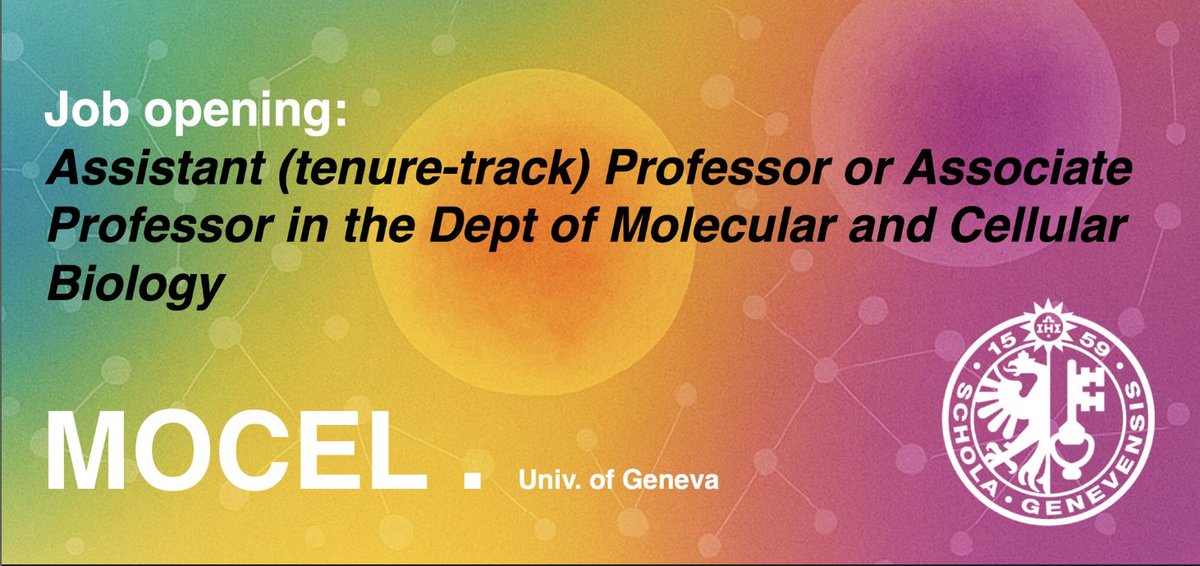
We want you! Join the Department of Molecular and Cellular Biology @MoCel_Geneva at the University of Geneva @unige_en@UNIGEnews@sciences_UNIGE
and become our new colleague!
Assistant (tenure-track) Professor or Associate Professor! Please RT - thanks
https://t.co/mQzmG00cxA
Exciting to see our protein binder design pipeline BindCraft published in its final form in @Nature ! This has been an amazing collaborative effort with Lennart, @csche11h, @sokrypton, @befcorreia and many other amazing lab members and collaborators.
https://t.co/PTMoqQqwcU
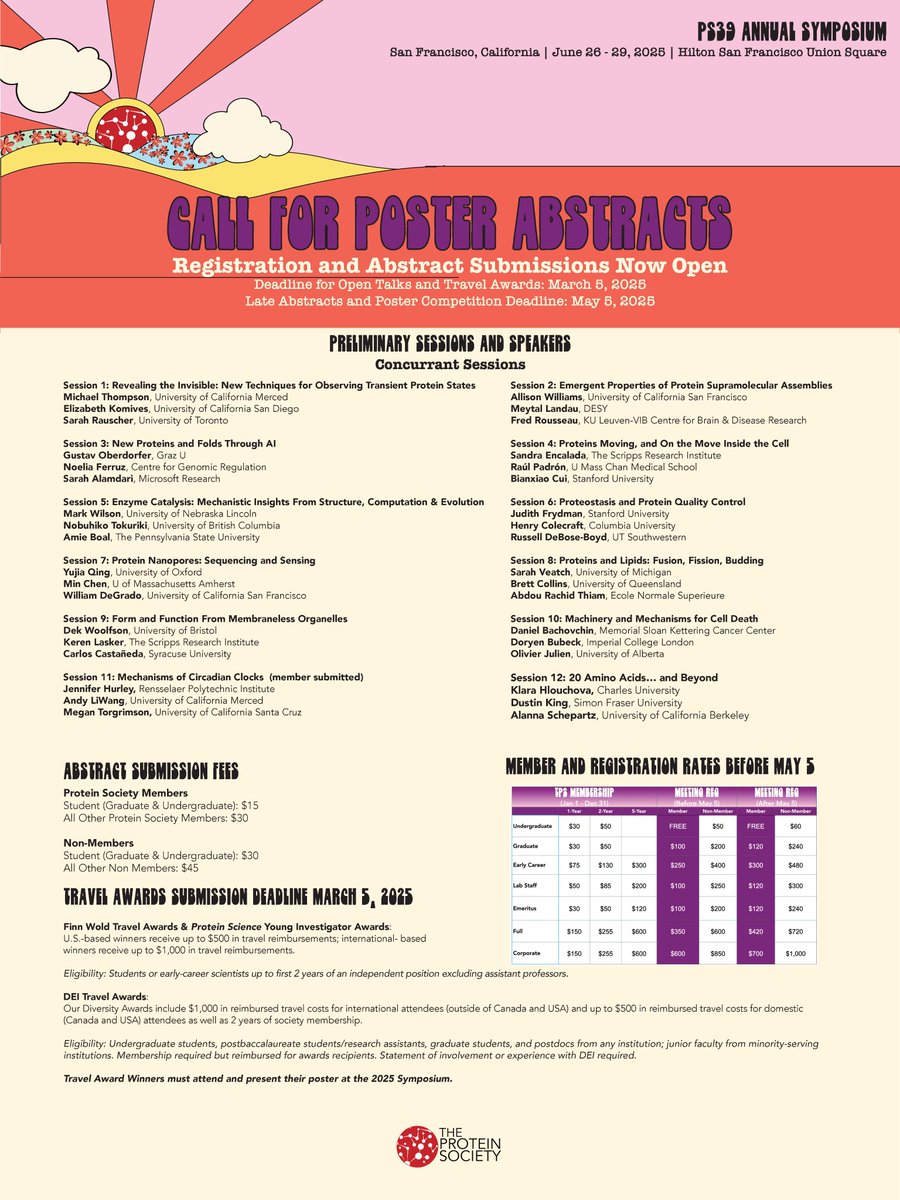
March 19 deadline - don't forget to submit your abstract for $500/$1000 Travel Awards and Open Talks for our 39th Annual Symposium in San Francisco. Abstract submission fee is $15 for student members and $30 for all other students. The Protein Society is committed to awarding 100 travel awards to support students world-wide.
Foldseek-Multimer is a strategy for complex-to-complex protein structure alignment to quickly perform large-scale structural comparisons between complexes. @thesteinegger @ElevyLab
https://t.co/WqKhvWpdKQ
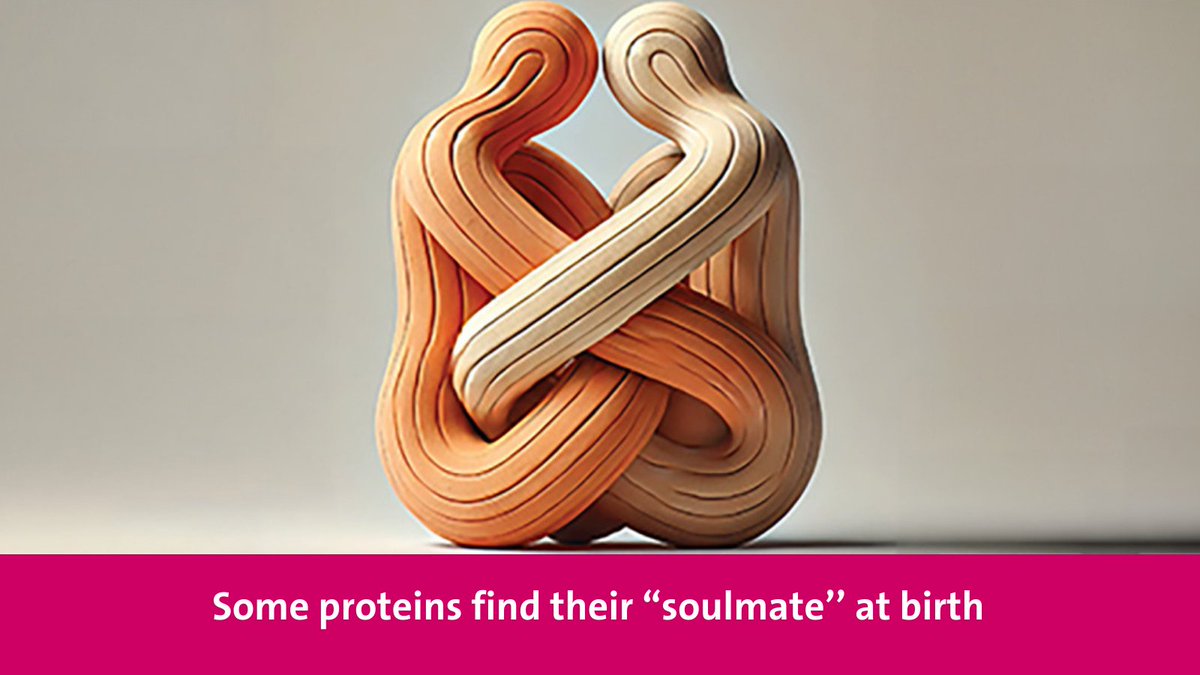
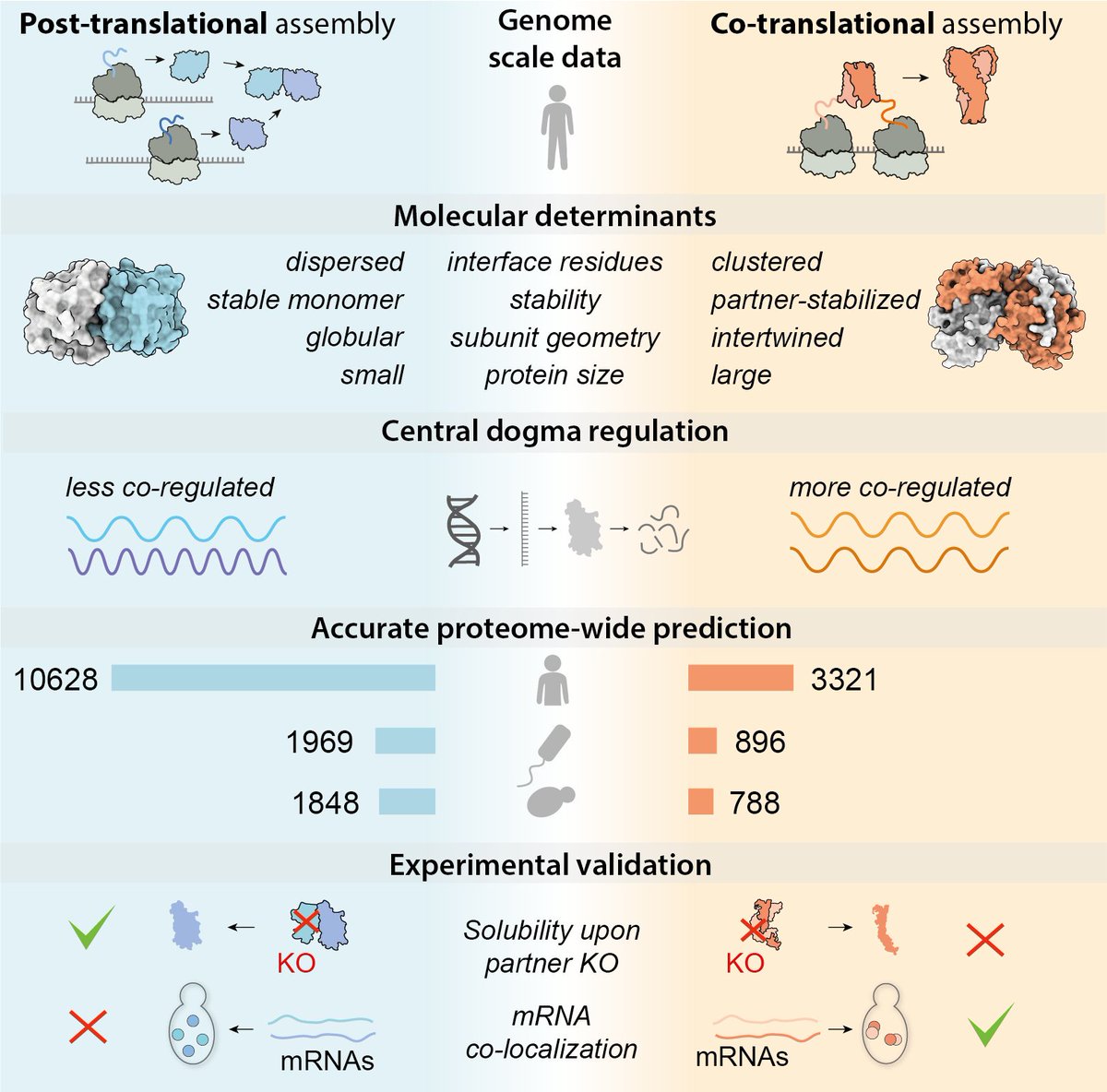
A study by UNIGE and the Weizmann Institute reveals how certain proteins assemble as soon as they are synthesized, ensuring their stability and efficiency. @WeizmannScience@sciences_UNIGE#UNIGE#biology#research
https://t.co/sCtzjuFLsN
Congratulations @ElevyLab for your latest publication in @CellCellPress : Structural determinants of co-translational protein complex assembly @MoCel_Geneva@sciences_UNIGE
👉Full text: https://t.co/SxfOein6C6
I am thrilled to say that our work is now online @CellCellPress ! I've analysed protein structures for quite some time, but @Robb_Mallik, who co-led this work, took these analyses to yet another level - 🧵👇
https://t.co/BaNJYKow4I
🔥Cell biology meets structuromics🔥 1000s of proteins assemble co-translationally but we don't know why🤷♂️ @Robb_Mallik found it’s all about protein 🧩structure🧩, with implications for #gene_expression, #proteostasis, #evolution & #mRNAlocalization 🧵👇
https://t.co/I1novampB6
Super cool simulations from the HarmonLab model a synthetic system from our lab that exhibits phase-boundaries measurable in cells. The simulations relate PS behavior to protein shape/conformation. Now I want to design conformation-regulated PS! https://t.co/A0XoP1CpPm
Accelerated computing is revolutionizing protein structure prediction, starting with lightning-fast multiple sequence alignments.
Read more about #AlphaFold and #MMseqs2GPU:
https://t.co/Jv45k1PEmO
Apply Now for the Max Planck-Weizmann Joint Postdoctoral Program in the fields of:
• Life Sciences
• Chemistry
• Physics
• Earth Science
• Math
• Computer science
Includes a fully funded four-year position, split equally between the two institutions >>