World's First Particle Accelerator ⚛
The world’s first particle accelerator, the cyclotron, was invented by Ernest O. Lawrence in 1929–1930 at the University of California, Berkeley, and patented in 1932. A cyclotron accelerates charged particles outwards from the center of a flat cylindrical vacuum chamber along a spiral path. The particles are held to a spiral trajectory by a static magnetic field and accelerated by a rapidly varying electric field. Lawrence was awarded the 1939 Nobel Prize in Physics for this invention.
The cyclotron was the first “cyclical” accelerator, meaning that it could accelerate particles many times by making them follow a circular or spiral path. The energy gained by the particles was limited by the maximum electrical potential that could be achieved across the accelerating region. This potential was in turn limited by electrostatic breakdown to a few million volts. In a cyclotron, by contrast, the particles encounter the accelerating region many times by following a spiral path, so the output energy can be many times the energy gained in a single accelerating step.
The cyclotron was the most powerful particle accelerator technology until the 1950s, when it was superseded by the synchrotron. Despite no longer being the highest-energy accelerator, they are still widely used to produce particle beams for nuclear medicine and basic research. As of 2020, close to 1500 cyclotrons were in use worldwide for the production of radionuclides for nuclear medicine. In addition, cyclotrons can be used for particle therapy, where particle beams are directly applied to patients.
[Image courtesy: Lawrence Berkeley National Laboratory]
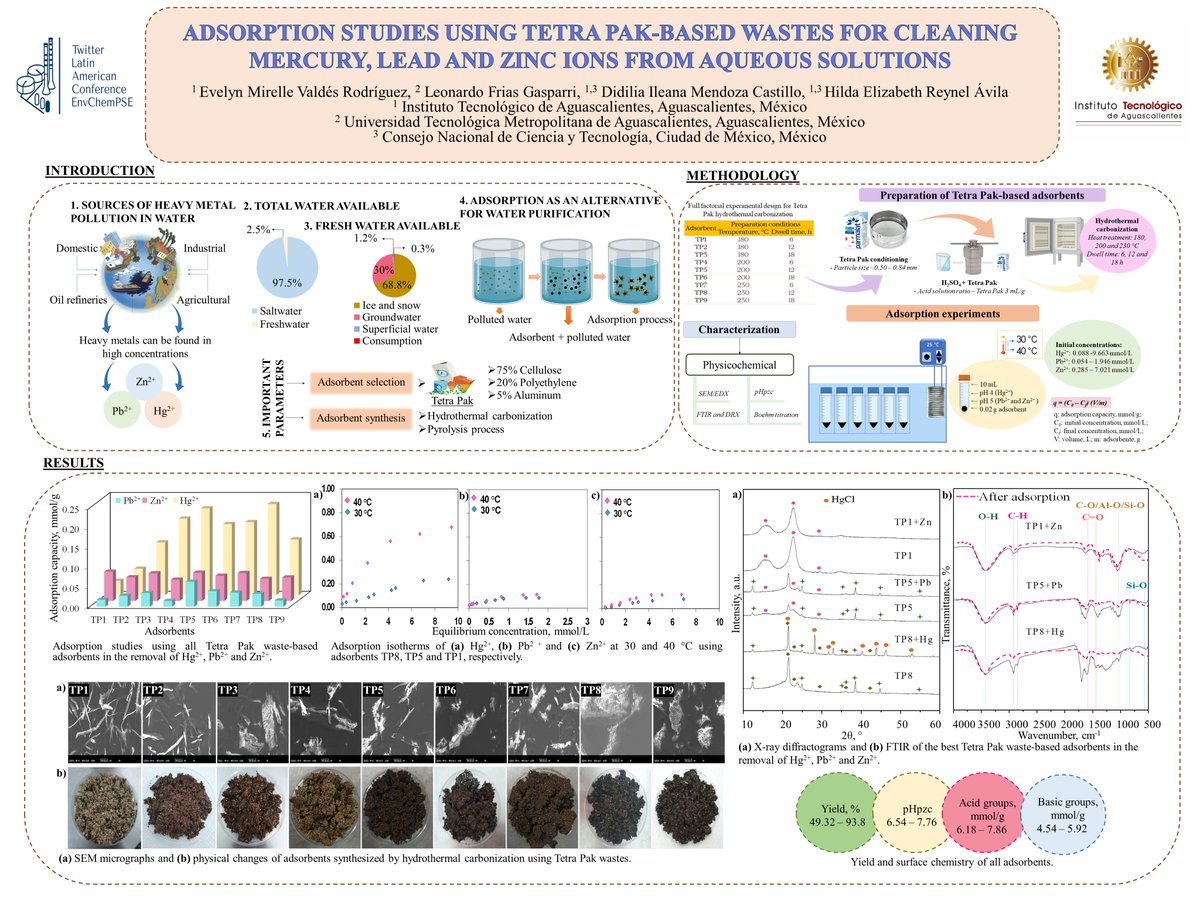
Hello @LatEnvChemPSE community. I share our work "Adsorption studies using Tetra Pak-based wastes for cleaning mercury, lead and zinc ions from aqueous solutions". I will be very happy to answer your questions and receive your comments. #PSEMatEngAppl#Adsorption#TetraPak
Hola comunidad de @LatEnvChemPSE
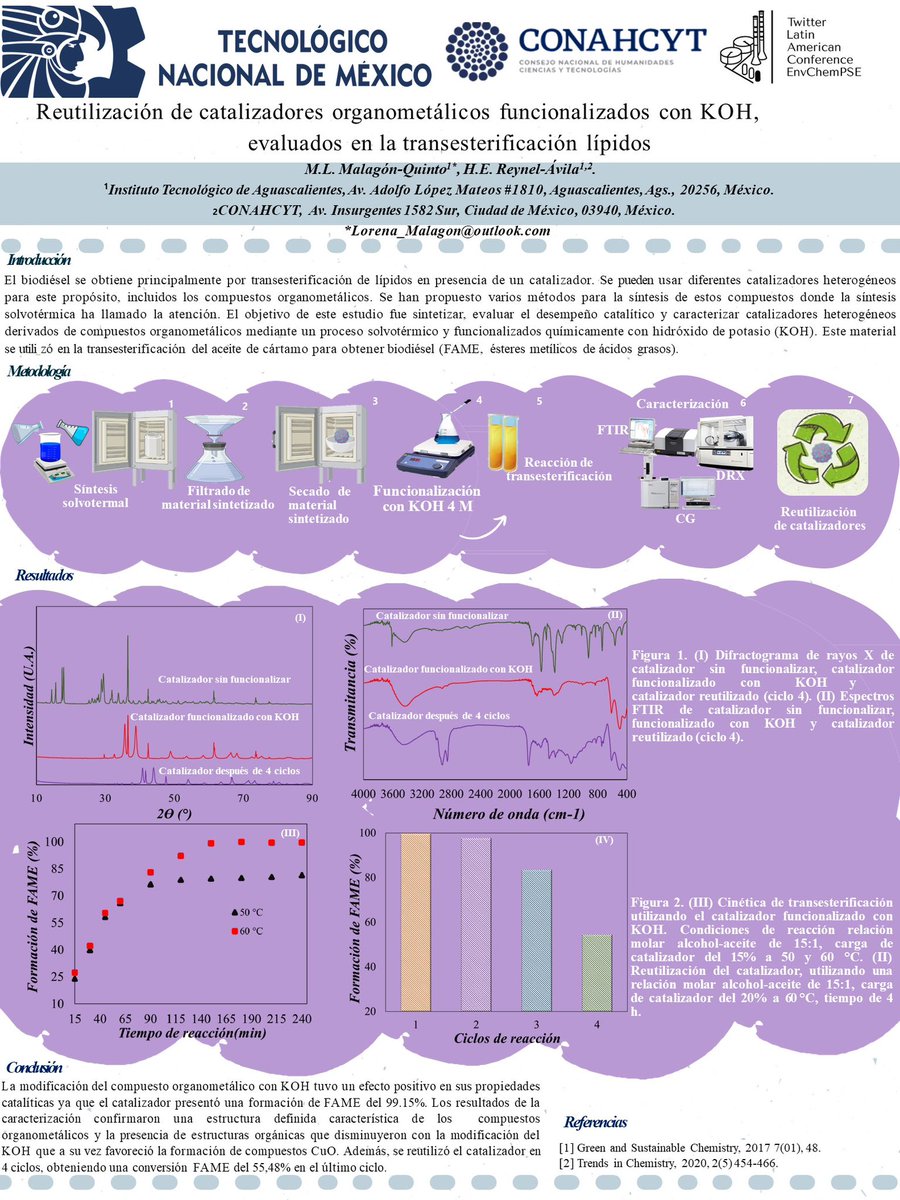
Estoy feliz de compartir mi trabajo "Reutilización de catalizadores organometálicos funcionalizados con KOH, evaluados en la transesterificación de lípidos ". Gracias por la oportunidad. #PSEMatEngAppl
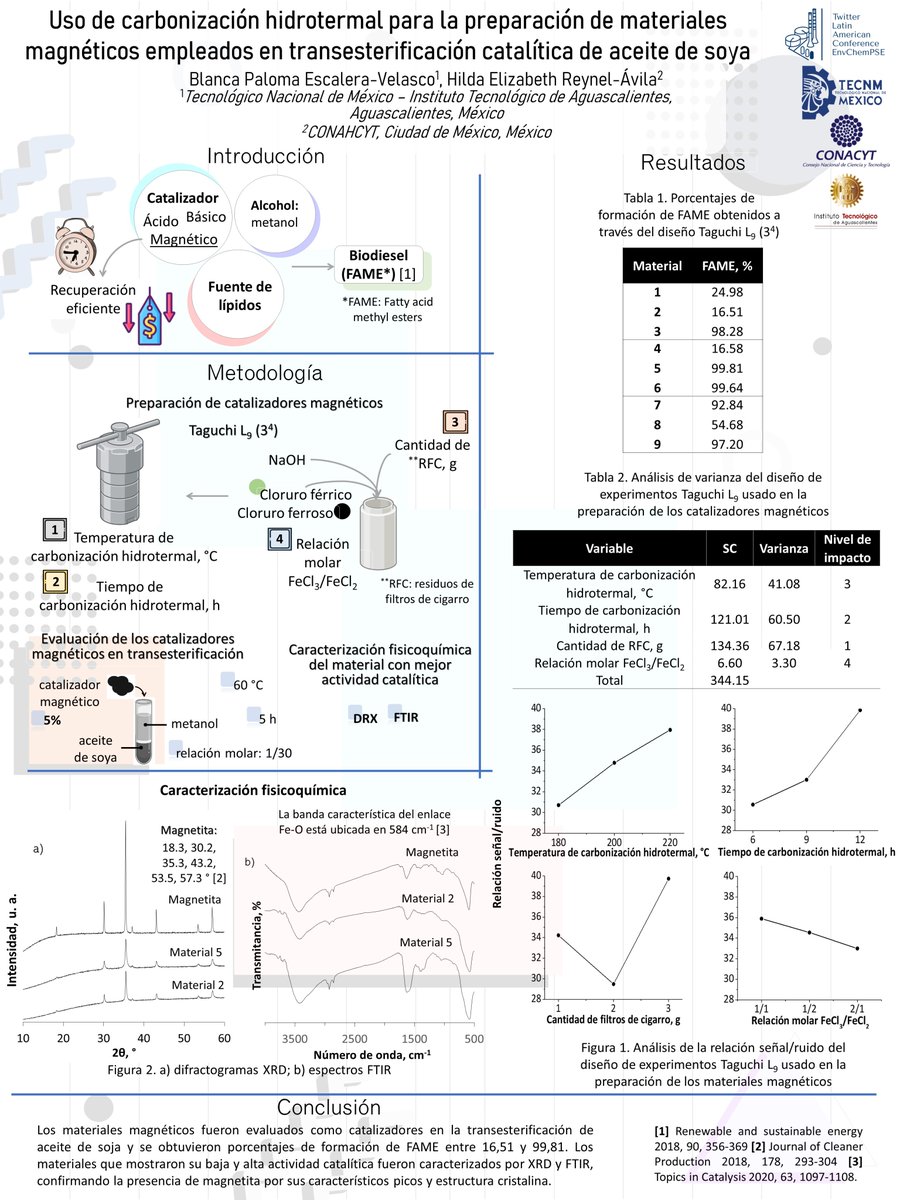
¡Hola! Les comparto el póster de nuestro trabajo titulado “Uso de carbonización hidrotermal para la preparación de materiales magnéticos empleados en transesterificación catalítica de aceite de soya”. @LatEnvChemPSE#PSEMatEngAppl
Hello everyone I want to share my poster of my master's thesis "Preparation of heterogeneous catalysts to produce biolubricants" @LatEnvChemPSE#PSEBiomassOEI
Hola a todos!
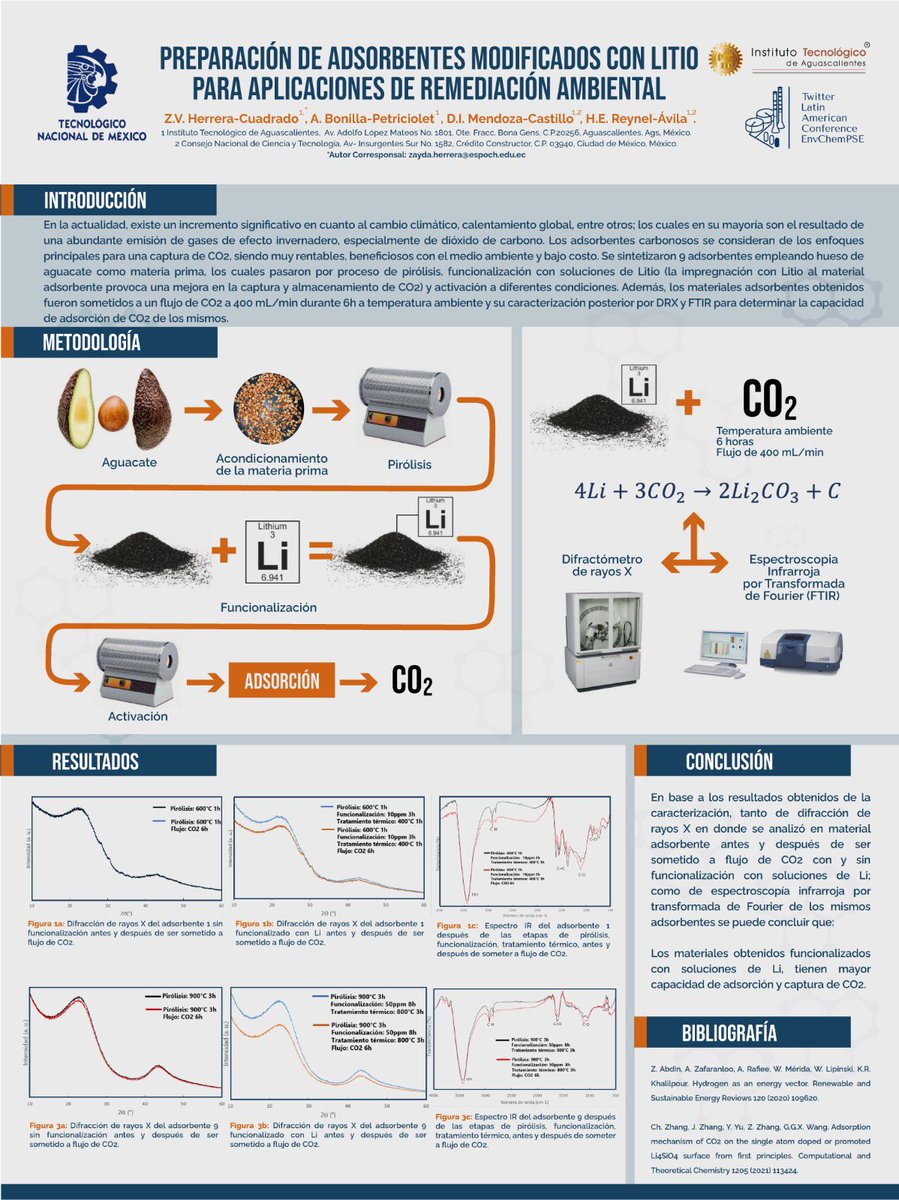
Es un placer presentarles el siguiente póster de mi trabajo de investigación titulado: “PREPARACIÓN DE ADSORBENTES MODIFICADOS CON LITIO PARA APLICACIONES DE REMEDIACION AMBIENTAL”
@LatEnvChemPSE#PSEBiomassOEI
Hola @LatEnvChemPSE !!
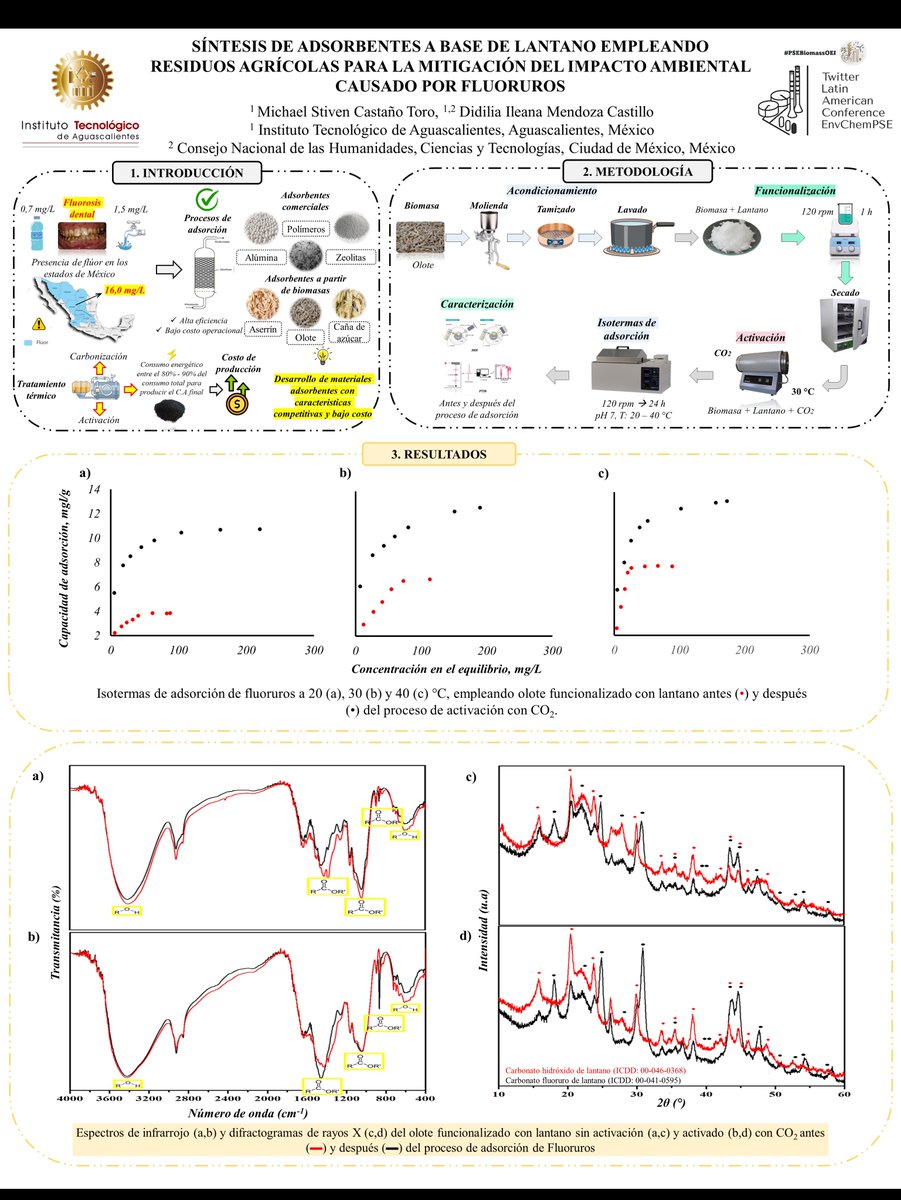
A continuación comparto mi cartel titulado "Síntesis de Adsorbentes a base de Lantano empleando resudios agrícolas para la mitigación del impacto ambiental causado por fluoruros"
Pueden hacer sus preguntas en EN, ES, PT
#LatinEnvChemPSE, #PSEBiomassOEI
Después de cierta edad, te das cuenta que los amores más bonitos y duraderos no se buscan, ni son instantáneos y fulminantes; sino que se construyen día a día, a través de conversaciones, interacciones, experiencias, ausencias, silencios, certezas, acuerdos y libertad.
Esto es un poco de lo que hacemos en el laboratorio 👩🔬y que además ha permitido tener vinculación con varias universidades del 🌎, promoviendo las vocaciones científicas, el cuidado del ambiente y el amor ❤️por la ciencia 📝🔍.
Además estudiamos la recuperación por adsorción de moléculas plataforma como el ácido itacónico que se produce por fermentación y que es fundamental para construir polímeros. Preparamos adsorbentes de bajo costo y selectivos a partir de la cáscara de 🥥. DOI: 10.1155/2022/7333005


![PhysInHistory's tweet photo. World's First Particle Accelerator ⚛
The world’s first particle accelerator, the cyclotron, was invented by Ernest O. Lawrence in 1929–1930 at the University of California, Berkeley, and patented in 1932. A cyclotron accelerates charged particles outwards from the center of a flat cylindrical vacuum chamber along a spiral path. The particles are held to a spiral trajectory by a static magnetic field and accelerated by a rapidly varying electric field. Lawrence was awarded the 1939 Nobel Prize in Physics for this invention.
The cyclotron was the first “cyclical” accelerator, meaning that it could accelerate particles many times by making them follow a circular or spiral path. The energy gained by the particles was limited by the maximum electrical potential that could be achieved across the accelerating region. This potential was in turn limited by electrostatic breakdown to a few million volts. In a cyclotron, by contrast, the particles encounter the accelerating region many times by following a spiral path, so the output energy can be many times the energy gained in a single accelerating step.
The cyclotron was the most powerful particle accelerator technology until the 1950s, when it was superseded by the synchrotron. Despite no longer being the highest-energy accelerator, they are still widely used to produce particle beams for nuclear medicine and basic research. As of 2020, close to 1500 cyclotrons were in use worldwide for the production of radionuclides for nuclear medicine. In addition, cyclotrons can be used for particle therapy, where particle beams are directly applied to patients.
[Image courtesy: Lawrence Berkeley National Laboratory]](https://pbs.twimg.com/media/F1zzUg3WwAABPDo.jpg)