Always an honor to work on these unprecedented transactions!!! It’s been a rewarding experience for me and my team as we assisted the lenders as lead counsel on this financing… Congratulations to parties and everyone involved!!
@IGIHE This company used to own & manage KH building. Following the acquisition of the building by Yyussa, KHDC became a purely shell company as the building was (technically) its sole asset. The shareholders have now decided to dissolve it, which is a sensible thing to do.
I am going to say this, and this will probably be my last take on this issue.
A minority group of privileged people has a problem with state guidance on decency. They turn it into a problem of the majority, take to social media claiming to speak for that majority, and then, when a loophole in implementation presents itself, demand that the entire country come to a standstill.
I am 100 percent sure the majority of Rwandans understood or agree with the President and the institutional guidance on decency.
Let me be clear again: the biggest issue facing the ordinary Rwandan woman today is not whether the dress she wants to wear is short or long, or whether the state is telling her how to wear it. For many women, the bigger question is whether they can afford that dress in the first place, while also feeding and taking care of their children.
Then you have another group, so privileged that they have so much to wear, whose biggest concern has become having the right to wear next to nothing.
This is the situation we have at hand.
You cannot convince me that a group whose biggest concerns in this conversation are how to dress and access BK Arena or public areas is speaking for the majority of Rwandan women. No.
I have also seen people saying, “I can't get out of the house.” That creates the impression that Rwanda is some kind of unsafe hell for women. It is not. In fact, if I were the Government, that is one of the things I would be concerned about.
Rwanda is a safe country for women. We know this.
But the recent social media outrage has made it sound as though women and girls are living in constant fear. It has also painted men broadly as abusers and harassers, which is simply not true.
The safety of a country cannot be measured by one or two incidents arising from implementation, particularly when those incidents have been addressed.
At the same time, let's not lose sight of the real problem. There are men who harass women on the streets because of how they are dressed. There are moto riders, fundis and other men who engage in harassment and abuse. They should be arrested. We should not tolerate that.
We need a society where women and girls can walk around freely and safely. We need quick and effective reporting mechanisms so that, for example, when a woman is harassed in Nyabugogo, she knows exactly where to report it and action can be taken against the perpetrator. Moto cooperatives need to take responsibility for their members. These are problems that can be tackled, and I believe they are being tackled.
But there are many pressing women's rights issues to fight for. Look around and you will find them.
How skimpy someone can dress in order to reveal a hidden tattoo at BK Arena is not one of them.
We are focusing our energy on the wrong priorities.
Wishing you nothing but peace. 🙏🏾✊🏿
I have been reflecting on the debate around how some of our young people dress, and I wonder whether we are asking ourselves the deeper questions.
When concerns are raised about increasingly revealing fashion trends, the conversation quickly becomes: “Why does the State want to police our bodies?”
But perhaps we should also ask: who is shaping these trends in the first place, and why?
Parents in different parts of the world have pointed out something interesting: clothes marketed to little girls are often shorter, tighter or more appearance-conscious than equivalent clothes for little boys of the same age.
Why?
Why are girls introduced so early to the idea that femininity is connected to displaying the body? And why, as they grow older, is that message reinforced through fashion, advertising, music, dance, films, music videos and social media, where the female body is so often presented through the lens of sexual desirability?
This is not an argument that the female body is inherently provocative. It is not. Nor should women and girls be made responsible for managing other people’s sexuality by simply being told to cover themselves.
The question is not what is wrong with the female body. The question is why our culture and commercial industries so persistently commodify it.
And there is another dimension to this conversation that matters to me: cultural identity.
For many years, much of what we wore was imported—not only the clothes themselves, but increasingly the ideas of what was fashionable, modern, attractive or desirable.
But modernity does not have to mean cultural erasure.
Across our continent, we can see powerful examples of societies that have made their cultural identity part of contemporary fashion. Nigeria, among others, has demonstrated how local fabrics, patterns, craftsmanship and aesthetics can be worn with pride and continuously reimagined for modern lifestyles.
That should challenge us too.
What does contemporary Rwandan fashion look like when it is confident enough to draw from who we are, while remaining creative, youthful and open to the world?
This is not about freezing culture in the past, prescribing one acceptable way of dressing, or rejecting influences from elsewhere. Culture has always evolved. The question is whether we are participating in that evolution as creators, or simply consuming what others create for us.
Industries manufacture aspiration. Algorithms amplify it. Celebrities normalize it. Markets profit from it. And when we do not produce enough of our own cultural references, other people’s definitions of beauty, desirability and modernity can very easily become our own.
So before reducing every conversation about these trends to “the State wants to control our bodies,” perhaps we should encourage our young people—girls and boys alike—to exercise something even more important than the freedom to choose: the critical thinking to interrogate the choices being presented to them.
Who benefits from this trend?
Who defined this as desirable?
Why is sexual visibility so disproportionately expected of the female body?
What parts of ourselves are we losing when we imitate without questioning?
And what could we create if we looked at our own culture not as something belonging to the past, but as material for the future?
Freedom is not only the ability to choose. It is also the ability to understand what is shaping our choices—and the confidence to create alternatives of our own.
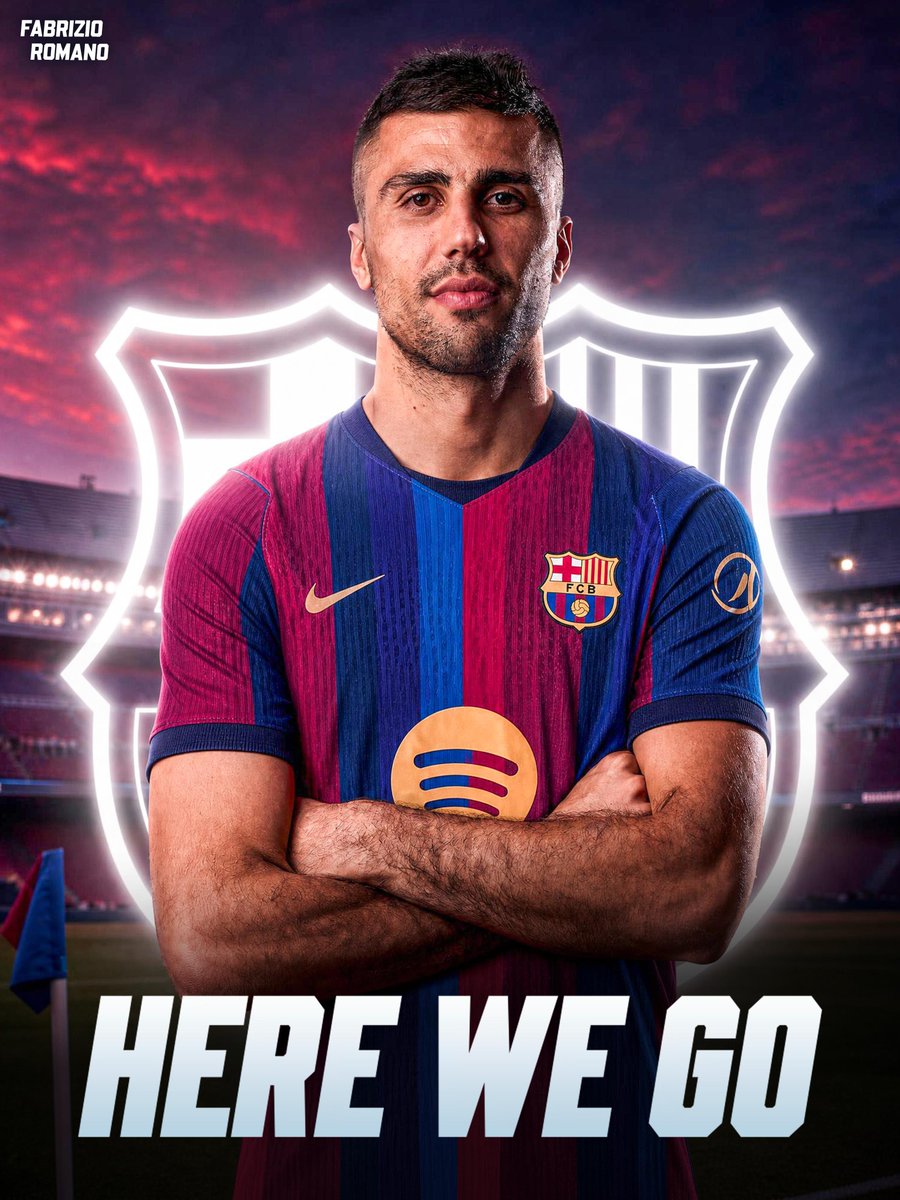
🚨🔵🔴 EXCLUSIVE: RODRI TO BARCELONA, HERE WE GO! 💥
Deal agreed for Spanish midfielder to join Barça from Man City, all done for the former Ballon d’Or.
Green light from Man City to last Barcelona bid.
More follows. 💣